44° and Overcast
Image




MINNEAPOLIS, MN (October 30, 2026).
Minnesota's professional sports calendar was relatively quiet Thursday, but the lone team in action delivered enough drama to fill the evening. In St. Paul, the Minnesota Wild rallied twice from one-goal deficits against the New York Islanders, including a late third-period equalizer from Matt Boldy, before falling 4-3 in overtime at Grand Casino Arena.
The defeat ended the Wild's three-game winning streak and marked their first home loss of the season, although the overtime result allowed Minnesota to collect a point and remain atop the Central Division. The Wild finished the night with a 9-3-3 record, while the Islanders improved to 7-4-2.
The outcome also provided a reminder of how quickly a hockey game can change. Minnesota had forced overtime with fewer than four minutes remaining in regulation, only to see Islanders defenseman Matthew Schaefer score the winner 33 seconds into the extra period.
Elsewhere in Minnesota sports, the undefeated Vikings continued preparing for Sunday's NFC North matchup against the Detroit Lions, Minnesota United FC carried momentum from Wednesday's victory over Sporting Kansas City, and the Timberwolves approached another early-season assignment. The Lynx, Twins and Frost remained outside regular-season competition as their organizations looked toward their respective next chapters.
The Wild could hardly have asked for a faster start Thursday.
Just 27 seconds after the opening faceoff, Joel Eriksson Ek scored from the high slot to give Minnesota a 1-0 advantage. It was the kind of opening that can establish momentum for a home team, particularly one entering the game with three consecutive victories.
New York, however, refused to allow the early goal to determine the direction of the contest.
Schaefer, the Islanders' 19-year-old defenseman, tied the game at 16:36 of the first period when he converted a rebound following a shot by Emil Heineman. The goal began what would become an exceptional individual performance from one of the NHL's emerging young players.
The Islanders moved ahead early in the second period when Bo Horvat redirected a Simon Holmstrom pass into the net during a power play at 1:41. Schaefer received a secondary assist on the goal, adding another contribution to an increasingly productive evening.
Minnesota responded through Quinn Hughes, whose sharp-angle backhand shot beat Islanders goaltender Ilya Sorokin at 17:21 of the second period. Hughes finished with a goal and an assist, continuing his importance to Minnesota's offensive production from the blue line.
The teams entered the third period tied 2-2, with neither having established sustained control of the scoreboard.
At 7:14 of the final regulation period, New York regained the advantage. Adam Pelech fired a shot from the point that deflected off Minnesota forward Michael McCarron's leg and changed direction before passing Wild goaltender Jesper Wallstedt.
The Islanders now led 3-2, leaving Minnesota with fewer than 13 minutes to recover.
For much of the remaining period, New York appeared positioned to protect its lead. But the Wild found another opportunity when Schaefer attempted to clear the puck from the Islanders' defensive zone.
Boldy intercepted the clearing attempt, moved into shooting position and sent a low shot between Sorokin's pads with 3:53 remaining.
The goal tied the contest 3-3 and ended Boldy's six-game stretch without scoring. It also gave the Wild another opportunity to extend their winning streak.
That opportunity lasted only 33 seconds.
In overtime, Schaefer joined a two-on-one rush into Minnesota's zone. With Simon Holmstrom moving toward the far side of the net, Schaefer elected to shoot from the right faceoff circle. His wrist shot struck the left post and entered the goal, ending the contest and securing New York's victory.
The sequence was especially notable because Schaefer had been responsible for the turnover that helped Minnesota force overtime. Rather than allowing the mistake to define his night, he delivered the decisive play moments later.
Schaefer finished with two goals and an assist. According to the NHL, he became the first teenage defenseman in league history to score three career overtime goals, surpassing Cam Fowler's previous mark of two. His fifth career multigoal game also tied Phil Housley for the most by a teenage NHL defenseman.
The performance reflected both Schaefer's offensive talent and his ability to recover from a costly mistake under pressure.
For Minnesota, the defeat exposed a narrower but important distinction between resilience and execution. The Wild demonstrated enough persistence to recover from multiple deficits, yet they could not convert that recovery into a victory.
The statistical comparison reinforced how closely contested the game had been. Each team recorded 25 shots on goal. Sorokin made 22 saves for New York, while Wallstedt stopped 22 shots for Minnesota.
Special teams provided one of the more consequential differences. New York converted one of its two power-play opportunities, while Minnesota failed to score on three chances with the man advantage.
Wild coach John Hynes acknowledged afterward that his team had not delivered its strongest overall performance, while recognizing the determination that allowed Minnesota to remain competitive.
The Islanders also had to overcome a personnel setback. Defenseman Ryan Pulock left the game with an upper-body injury after only two shifts, forcing New York to complete much of the contest with five defensemen.
Despite that disadvantage, the Islanders maintained their defensive structure long enough to secure the victory.
For the Wild, the result was disappointing without being catastrophic. Minnesota still earned a standings point, remained at the top of its division and demonstrated the ability to recover when trailing.
The larger challenge will be improving execution in games where the margin between winning and losing is exceptionally small.
Minnesota returns to action Sunday on the road against the Washington Capitals.
While the Wild were battling the Islanders in St. Paul, the Minnesota Vikings were continuing preparations for one of their most consequential early-season matchups.
Minnesota enters Sunday's November 1 meeting with the Detroit Lions at Ford Field carrying a 6-0 record. Detroit stands at 4-2, making the matchup an important divisional contest as the NFL season approaches its midpoint.
The game is scheduled for noon Central Time and will be televised on FOX.
For Minnesota, the central storyline is whether the Vikings can maintain their unbeaten start against a familiar opponent capable of challenging them in several phases of the game.
The Vikings' defense has been a major part of their success. Under defensive coordinator Brian Flores, Minnesota has developed an aggressive approach that combines pressure packages, disguised coverages and personnel movement designed to complicate opposing quarterbacks' decisions.
That approach will face a significant examination against Detroit.
The Lions have developed an offensive identity built around physical play, a productive rushing attack and the ability to create opportunities through the passing game. Minnesota's defensive preparation must therefore account for both Detroit's capacity to sustain drives and its ability to generate explosive plays.
The Vikings' challenge will extend beyond the number of defenders they send toward the quarterback. Effective pressure requires disciplined coverage behind the rush, containment along the defensive front and the ability to prevent manageable situations from becoming extended possessions.
For Minnesota's offense, the matchup also presents an opportunity to establish consistency against a divisional opponent.
Wide receiver Justin Jefferson has an extensive history of production against Detroit. According to the Vikings' official matchup information, Jefferson has recorded 82 receptions for 1,285 yards in 12 career games against the Lions.
Those figures illustrate his importance in the rivalry, although Minnesota's offensive success Sunday will depend on more than one player.
The Vikings will need dependable protection, productive early-down execution and the ability to finish drives with touchdowns rather than settling for field goals.
The history between the franchises adds another dimension. Minnesota won its previous meeting at Ford Field, 27-24, on November 2, 2025, and enters Sunday's game having won the past two meetings between the teams.
Past results, however, do not guarantee future outcomes. The Vikings will have to establish their own advantage against a Detroit team with significant experience competing in high-pressure divisional games.
Sunday's contest will provide a clearer indication of how Minnesota's undefeated start translates into a demanding stretch of its schedule.
Minnesota United FC did not play Thursday, having completed its most recent assignment the previous evening.
The Loons defeated Sporting Kansas City 3-1 on Wednesday, October 28, providing a positive result as the club continued its late-season campaign.
A two-goal victory offers encouragement, but the more consequential questions concern how Minnesota can sustain its attacking production and maintain defensive discipline in its subsequent matches.
For a team navigating the competitive demands of Major League Soccer, converting opportunities while limiting defensive errors is essential. The result against Kansas City gives Minnesota a foundation on which to build, but the value of that performance will ultimately be measured by how effectively the club carries it forward.
The next stage will require consistency rather than reliance on an isolated result.
The Minnesota Timberwolves were also idle Thursday, with attention shifting toward their next scheduled game.
Their previous contest ended in a narrow 127-125 overtime defeat against the Cleveland Cavaliers on October 26, a result that underscored how quickly early-season NBA games can be decided by execution in the closing possessions.
For Minnesota, the immediate concern is turning competitive performances into victories.
The Timberwolves have the offensive personnel to challenge opposing defenses, but their effectiveness depends on more than scoring production. Defensive rebounding, transition coverage, turnovers and late-game decision-making will all influence their ability to secure results against difficult opponents.
Friday's scheduled meeting with the Los Angeles Clippers at Target Center provides another opportunity to evaluate those areas.
The matchup also brings attention to the NBA Cup portion of the schedule, where group-stage results create an additional competitive objective alongside the regular-season standings.
For Minnesota, the broader priority remains developing a sustainable balance between offensive efficiency and defensive reliability.
The Minnesota Lynx were not in competition Thursday, having completed their 2026 WNBA playoff campaign.
The offseason now provides an opportunity for organizational evaluation, including roster construction, player development and the strategic adjustments required for another competitive season.
For a franchise with an established history of championship success, the expectations extend beyond simply reaching the postseason.
The Lynx must consider how their existing personnel, potential roster additions and long-term development priorities fit together.
Those decisions will shape the team's preparation for the next WNBA season.
The Minnesota Twins have moved into their Major League Baseball offseason, a period that will bring decisions about personnel, payroll allocation and roster construction.
Although the club was not competing Thursday, the work required to prepare for the following season continues.
Front-office attention will turn toward arbitration-eligible players, possible transactions, organizational depth and the financial considerations that influence roster decisions.
The Twins' offseason will also provide an opportunity to assess the club's performance and identify areas where improvements are necessary.
For supporters, the most meaningful developments will come as the organization begins translating those evaluations into personnel decisions.
The Minnesota Frost were also outside regular-season competition Thursday, with preparations continuing for the next Professional Women's Hockey League campaign.
The preseason period offers opportunities to evaluate player combinations, establish team systems and prepare returning and incoming personnel for the demands of competition.
For the Frost, the focus will be on maintaining the standards that have made Minnesota a significant presence in professional women's hockey.
As the league continues developing its identity and audience, Minnesota's role remains important both competitively and within the broader growth of women's professional sports.
The approaching season will bring renewed attention to the team's roster, leadership and ability to compete against an increasingly demanding field.
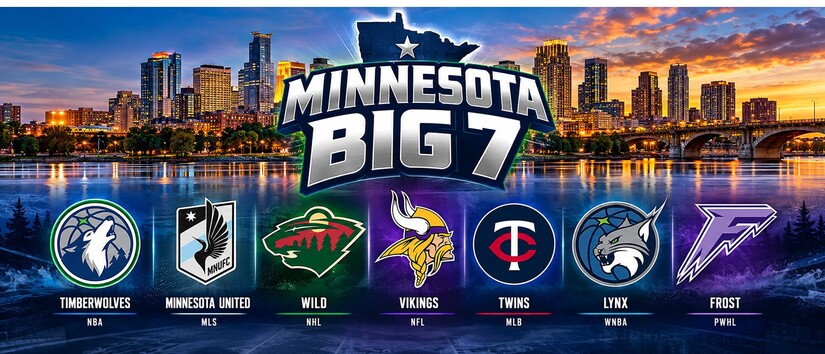
Thursday's results illustrated the different stages of competition across Minnesota's seven major professional sports franchises.
The Wild were the only team playing, and their overtime defeat supplied the night's central drama. Minnesota United carried momentum from its Wednesday victory, while the Timberwolves prepared for their next basketball assignment.
The Vikings, meanwhile, approached a potentially defining divisional matchup in Detroit.
For the Lynx, Twins and Frost, the immediate work involved preparation and evaluation rather than game-day competition.
Taken together, the developments reflect the continuous nature of Minnesota's professional sports calendar. One franchise may be approaching a major divisional confrontation while another is recovering from a difficult loss, and still others are making decisions that will shape their next seasons.
The Wild's defeat also offered a useful reminder about the narrow margins that separate competitive performances from victories. Minnesota did enough to force overtime, but New York made the decisive play when the opportunity appeared.
For the Vikings, that same principle will matter Sunday. Remaining unbeaten requires more than an impressive record entering a game. It requires the ability to execute against a capable opponent when the outcome is still undecided.
Minnesota's sports weekend now turns toward those next opportunities, with the Timberwolves returning to the court, the Vikings preparing for Detroit and the Wild looking to recover on the road.
THE TAKEAWAY
Minnesota's seven professional franchises are operating on different schedules, but the expectations surrounding them share a common theme: progress must eventually be demonstrated through results.
The Wild collected a point Thursday but surrendered the victory. Minnesota United earned a win Wednesday and must now build on it. The Timberwolves have another opportunity to respond to a close defeat, while the Vikings face a direct test of their unbeaten record.
For the Lynx, Twins and Frost, the decisions made away from competition will become visible when their respective seasons resume.
Thursday belonged to the Wild on Minnesota's professional sports calendar, but Friday and Sunday will offer new opportunities for the state's teams to shape the next chapter of their seasons.

Local stories matter. Subscribe free to MinneapoliMedia and receive independent news, community reporting and important updates from Minneapolis, the North Metro and communities across Minnesota.
SUBSCRIBE FREE: https://minneapolimedia.town.news/subscribe
MinneapoliMedia | Community. Culture. Civic Life


Overcast, with a high of 55 and low of 40 degrees. Partly Cloudy during the morning, overcast in the afternoon,