54° and Clear
Image



MINNEAPOLIS, MN (November 19, 2026).
Minnesota's annual Give to the Max Day arrives Thursday as nonprofit organizations across the state confront rising demand for services, disruptions in government and institutional funding, and growing uncertainty about their ability to sustain essential programs.
Food shelves, community service organizations, educational institutions, cultural nonprofits, and other charitable organizations are seeking contributions from residents who are themselves managing higher household expenses and difficult financial decisions.
The circumstances have placed renewed attention on the role of individual donors in sustaining Minnesota's nonprofit sector and the challenges organizations face in attracting and retaining financial support.
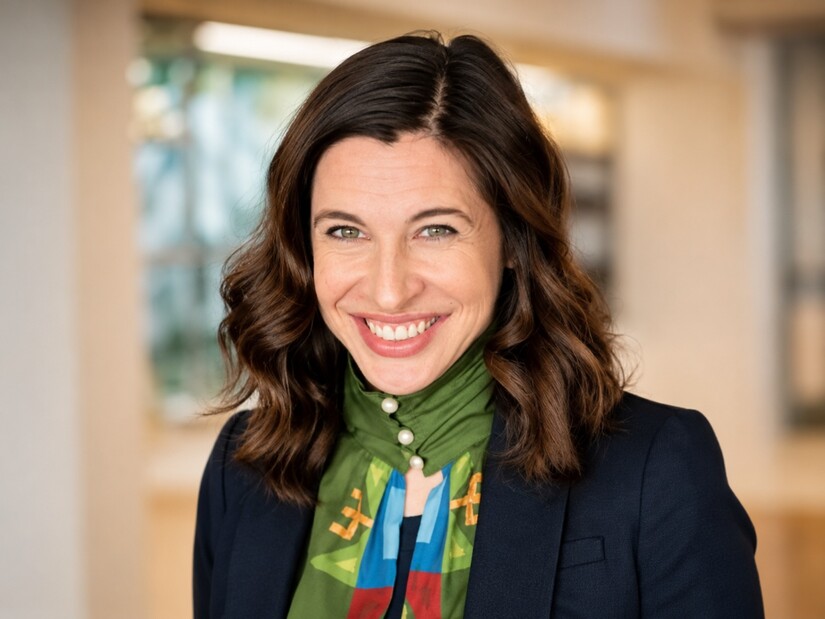
Jenna Ray, chief executive officer of GiveMN, believes Minnesota's charitable community remains capable of responding to those challenges. She also questions whether declining participation in charitable giving should be interpreted as evidence that people have become less generous.
"I don't believe, Tom, that we have a generosity crisis," Ray told MinneapoliMedia during an exclusive interview on October 29. "I actually think what we have is an issue with messaging, relevance, and connection."
Ray's assessment reflects a concern that charitable organizations have not always communicated effectively about their work or helped residents understand the relationship between nonprofit services and everyday community life.
Her comments came during a follow-up interview with MinneapoliMedia founder and publisher Tom Akaolisa, who first spoke with her during Give to the Max Day in November 2025, several months after she assumed leadership of GiveMN.
The conversation examined the challenges of her first full year as chief executive, the results of the previous fundraising campaign, the financial condition of Minnesota nonprofits, and GiveMN's efforts to broaden participation in charitable giving.
Ray also discussed the influence of Indigenous teachings on her understanding of leadership and outlined her goals for the organization's future.
Give to the Max Day began in 2009 as a statewide online fundraising initiative connecting donors with Minnesota nonprofits and schools. The campaign has since become one of the state's established annual charitable events, providing organizations with an opportunity to raise money, attract new supporters, and strengthen relationships with existing donors.
The 2025 campaign produced record-breaking fundraising results despite financial pressures affecting households and charitable organizations.
For Ray, who became GiveMN's chief executive in July 2025, the response was an encouraging development during a challenging first year.
MINNEAPOLIMEDIA: Jenna, when we spoke last November, you had been leading GiveMN for only a few months. Nearly a year later, how has the experience been for you?
JENNA RAY: "This has been a year that has tested our communities and our team has stepped up. Nonprofits have stepped up. Minnesotans have stepped up, and that gives me a lot of hope and a lot of purpose and a lot of energy."
Ray said the commitment of nonprofit organizations and community supporters had helped sustain her confidence during a year marked by uncertainty.
She described organizations continuing to serve residents despite financial and operational challenges, while donors maintained their support for causes they considered important.
MINNEAPOLIMEDIA: Looking back at the 2025 Give to the Max Day campaign, what were the most important accomplishments, surprises, or lessons, and how are those experiences influencing preparations for 2026?
JENNA RAY: "I think the greatest delight and surprise was a record-breaking year and the way that Minnesotans came together to achieve that."
Ray acknowledged that Minnesota households had been making difficult decisions about spending, saving, and charitable contributions. Nevertheless, residents continued supporting nonprofit organizations.
One example stood out to her.
During the 2025 campaign, a donation of less than $100 resulted in a small nonprofit receiving a $10,000 Super-Sized Golden Ticket prize.
The additional funding provided a substantial benefit to an organization that might otherwise have struggled to attract a contribution of that size.
Ray said the experience demonstrated the importance of providing fundraising opportunities for organizations with limited financial resources and donor networks.
She was also encouraged by the determination of nonprofit leaders who continued delivering services despite difficult operating conditions.
Give to the Max Day is generally evaluated by the amount of money raised during the campaign. Ray believes the longer-term consequences of those contributions deserve equal consideration.
Donations made in November can support services delivered months later, particularly when nonprofit organizations face unexpected increases in demand.
MINNEAPOLIMEDIA: Beyond the fundraising totals, what evidence are you seeing that Give to the Max Day contributions are creating lasting improvements in Minnesota communities? Are there particular examples from the past year that have stayed with you?
JENNA RAY: Ray explained that people frequently make charitable contributions because they have seen or heard about an organization's previous accomplishments. However, those donations provide resources for work that has yet to take place.
"The gift we make to an organization on Give to the Max Day is really an investment in the future," she said.
She cited food shelves that used November contributions to develop new delivery methods and continue providing assistance during January, February, and March.
She also discussed nonprofit organizations responding to increased immigration enforcement operations, wildfires in northeastern Minnesota, and drought-related hardships affecting families in southwestern Minnesota.
In each case, organizations were called upon to provide assistance under difficult circumstances.
Ray said the impact of charitable contributions can be difficult to measure immediately because organizations may use those resources to respond to needs that arise later.
She emphasized that the continued availability of community services depends on organizations having sufficient resources to operate and respond when residents need assistance.
Minnesota's nonprofit sector has experienced significant financial pressures during the past year.
Ray cited survey findings from the Minnesota Council of Nonprofits indicating that approximately half of responding organizations had experienced decreases or disruptions in government, foundation, or corporate funding.
Individual contributions presented a mixed picture. Some organizations reported stable giving, others experienced reductions, and approximately one-third reported increases.
The findings illustrate the uncertainty facing organizations that depend on several sources of revenue to maintain their operations.
MINNEAPOLIMEDIA: When we last spoke, you identified disruptions in federal funding as one of the most serious challenges facing nonprofits. How has that situation evolved over the past year? What are you hearing from organizations about staffing, program reductions, financial stability, and their ability to meet growing community needs?
JENNA RAY: "It continues to be a problem. It's one that we haven't solved yet."
Ray said nonprofit organizations had responded creatively to financial pressures, but the underlying challenges remained.
She reported that approximately 70 percent of organizations were experiencing increased demand for services while operating with fewer resources.
The financial pressures have encouraged some organizations to reconsider their fundraising strategies.
Ray said nonprofits are placing greater emphasis on individual donors rather than depending as heavily on federal and other public grants.
She encouraged organizations to develop those relationships and urged residents to respond to fundraising appeals.
Individual contributions, she explained, can provide more predictable revenue while allowing donors to support the organizations and services they believe their communities need.
Ray also connected charitable participation to civic responsibility.
Residents make decisions about their communities through elections and public engagement. They can also influence the availability of community services through their charitable contributions.
Although individual giving cannot necessarily replace substantial government grants, a broader donor base can provide organizations with additional financial support and reduce dependence on individual funding sources.
One of GiveMN's continuing priorities is to make charitable giving more accessible to organizations and donors who have not traditionally participated in large fundraising campaigns.
The challenge is particularly relevant to smaller nonprofits, including organizations serving rural communities and historically underrepresented populations.
Many operate without professional fundraising departments or extensive donor networks. Their leaders often manage programs, administration, staffing, and fundraising simultaneously.
MINNEAPOLIMEDIA: Last year, you spoke passionately about making philanthropy accessible to everyone. Have you seen progress in helping smaller, rural, Indigenous-led, Black-led, and immigrant-led nonprofits secure greater visibility and financial support? Where do the most persistent gaps remain?
JENNA RAY: Ray described changes in charitable participation that GiveMN has observed over the past year.
The organization has received increased support from donors outside Minnesota who want to contribute to nonprofits working in the state.
GiveMN has also seen growth in contributions involving noncash assets, including donor-advised funds and retirement-related giving.
Ray welcomed those developments but said more work was needed to broaden participation.
She explained that GiveMN wants Minnesota to become the nation's most generous state, with generosity measured partly by whether residents feel welcomed and able to contribute.
She identified middle-class donors, millennials, and Generation Z as groups whose participation GiveMN hopes to strengthen.
Her concern is that many people care about community causes but may not consider themselves philanthropists or understand how they can participate in charitable giving.
GiveMN is working to address those barriers through fundraising tools, communications, and collaborative promotional campaigns.
The campaigns are intended to introduce donors to organizations they may not previously have encountered.
Ray said participating nonprofits can choose whether to take part in those promotional efforts.
The objective is to help organizations reach people who are interested in their causes but may be unfamiliar with their work.
For smaller nonprofits, such opportunities can provide additional visibility without requiring the same level of fundraising infrastructure available to larger institutions.
MinneapoliMedia also raised concerns about smaller and emerging nonprofit organizations that may miss fundraising opportunities because they are unfamiliar with participation requirements or lack the administrative capacity to complete registration.
Ray said GiveMN provides direct assistance to organizations seeking to participate.
MINNEAPOLIMEDIA: What is GiveMN doing to reach smaller and emerging nonprofits, and what practical steps should an organization take if it wants to participate in Give to the Max Day for the first time?
JENNA RAY: Ray encouraged interested organizations to contact GiveMN at help@givemn.org.
"A real person reviews every one of those messages and responds," she said. "It's not a chatbot."
She explained that GiveMN staff can help organizations understand registration requirements and available fundraising resources.
The organization is also developing collaborative campaigns to introduce nonprofits to potential donors who may be interested in their work.
Ray emphasized that organizations must consent to participation in those promotional efforts.
Asked about eligibility requirements, she said participating organizations generally must hold recognized 501(c)(3) status or operate through an eligible fiscal sponsor.
They must also meet applicable requirements involving good standing with the Internal Revenue Service and the Minnesota Attorney General's Office.
Fiscal sponsorship can provide a pathway for emerging charitable initiatives that have not yet obtained independent federal tax-exempt recognition.
Ray encouraged organizations with questions about eligibility or registration to contact GiveMN directly.
Give to the Max Day depends heavily on individual donors, many of whom contribute modest amounts.
According to Ray, most donations made during the campaign are less than $100.
That pattern makes broad participation particularly important.
MINNEAPOLIMEDIA: Much of Give to the Max Day's success comes from ordinary Minnesotans contributing $5, $10, or $50 at a time. With households facing financial pressures, what would you say to someone who genuinely wants to help but worries that a small contribution will not make much difference?
JENNA RAY: "I would encourage anybody who is feeling generous to give what makes sense and give what you can."
Ray acknowledged that families throughout Minnesota are making difficult financial decisions.
She emphasized that contributions of different sizes support the campaign and that donors should not underestimate the value of modest gifts.
During the interview, she described visiting an organization that was embroidering a quilt.
As she helped stitch letters into the fabric, she began thinking about how individual threads contributed to the completed work.
Each thread had a purpose, but the fabric became stronger as the threads were joined together.
Ray compared that process to charitable giving.
An individual contribution may be relatively small, but thousands of donations can provide substantial financial support for participating organizations.
She connected the analogy to this year's campaign theme, Minnesota Stitched, which emphasizes the collective importance of individual contributions.
For Ray, the campaign's success depends on encouraging people to participate according to their circumstances rather than making them feel that only large donations are meaningful.
GiveMN is continuing several initiatives intended to expand participation in Give to the Max Day and direct additional fundraising opportunities toward communities throughout Minnesota.
The efforts include regional philanthropic partnerships and events hosted by local businesses.
MINNEAPOLIMEDIA: What should Minnesotans expect from Give to the Max Day 2026? Are there new initiatives, partnerships, regional incentives, or fundraising opportunities that distinguish this year's campaign, particularly for organizations outside the Twin Cities?
JENNA RAY: Ray said GiveMN is continuing its Regional Amplifiers program, which works with philanthropic partners to support organizations serving Greater Minnesota.
She identified the Northwest Minnesota Foundation, West Central Initiative, Southwest Minnesota Foundation, Southern Minnesota Initiative Foundation, and Initiative Foundation as participating partners.
The program is intended to provide additional fundraising opportunities for rural communities.
Ray also discussed the expansion of GiveMN's Pour Forward initiative.
The program encourages taprooms and coffee shops to host events supporting charitable organizations.
Coffee shops are participating for the first time this year, she said.
The events allow residents to learn about nonprofit organizations and contribute to charitable causes in familiar community settings.
GiveMN is also concentrating on increasing organizational registration and directing fundraising prizes into communities throughout the state.
The campaign's Minnesota Stitched theme emphasizes the contributions of individual donors and their combined importance to nonprofit organizations.
Ray said the theme reflects GiveMN's belief that charitable participation can strengthen relationships among residents, organizations, and communities.
The interview also addressed concerns about declining participation in charitable giving.
Nonprofit organizations across the country have been examining changes in donor behavior, including reports that fewer individuals are making charitable contributions even when total donation amounts remain substantial.
The trend has prompted discussion of a national generosity crisis.
Ray questioned whether that description accurately identifies the underlying problem.
MINNEAPOLIMEDIA: You've spoken about what the nonprofit sector calls a generosity crisis, where charitable participation can decline even when total donations remain substantial. Do you believe Minnesota is experiencing that challenge? How can GiveMN help cultivate a new generation of donors, volunteers, and community philanthropists?
JENNA RAY: "I recognize that there are fewer people participating in charitable giving to nonprofits all across the country, but I don't believe, Tom, that we have a generosity crisis."
She identified what she considers the more significant challenge.
"I actually think what we have is an issue with messaging, relevance, and connection."
Ray explained that nonprofit organizations provide services that residents encounter regularly without necessarily recognizing them as charitable institutions.
She cited neighborhood food shelves, libraries, schools, theaters, churches, and clinics as examples of organizations and institutions that contribute to community life.
Residents may benefit from their services without understanding the role charitable support plays in sustaining them.
Ray believes GiveMN can help people recognize those relationships.
She wants residents to understand that philanthropy includes supporting organizations already contributing to their daily lives.
The challenge, she explained, is to help people connect their experiences with nonprofit services to the organizations responsible for providing them.
Her assessment suggests that nonprofit organizations must devote greater attention to communicating their work and developing relationships with potential supporters.
Ray pointed to Minnesota's record-breaking 2025 Give to the Max Day campaign as evidence that residents remain willing to contribute when they understand the importance of a cause.
She believes charitable organizations must continue finding ways to engage people who have not traditionally participated in formal philanthropy.
For GiveMN, that work extends beyond the annual fundraising campaign.
The conversation also returned to a personal subject Ray discussed during her first interview with MinneapoliMedia: the influence of Indigenous teachings on her understanding of generosity and leadership.
Ray has spoken about the importance of abundance, reciprocity, and mutual care in shaping her values.
During the October interview, she reflected on how those principles have influenced her approach to organizational leadership.
MINNEAPOLIMEDIA: Last year, you spoke about Indigenous traditions of generosity, abundance, and mutual care, and how those values influence your leadership. As you've navigated the responsibilities of leading GiveMN, have there been moments when those teachings helped you make a difficult decision or reconsider what successful philanthropy should look like?
JENNA RAY: "I love that question, and I've been spending a lot of time with it."
Ray explained that she had been examining the relationship between power, care, and leadership.
"One of the teachings in my community is that leadership isn't about power, it's about care," she said.
She described an evolving understanding of leadership in which authority and care are not necessarily competing principles.
Instead, Ray has been considering how leaders can exercise their positional authority while remaining attentive to the needs of colleagues, communities, and the people affected by organizational decisions.
She connected that reflection to Indigenous teachings about abundance and reciprocity.
Her comments were particularly relevant to philanthropic leadership, where decisions about organizational priorities, funding, and community engagement can have substantial consequences.
Ray acknowledged that her first year leading GiveMN had prompted her to examine how she exercises authority and how she can ensure that care remains central to her decisions.
The discussion provided insight into the values informing her leadership and the questions she continues to consider as GiveMN's chief executive.
The interview concluded with a question about the future of GiveMN and charitable giving in Minnesota.
MinneapoliMedia asked Ray to imagine returning for another conversation five years from now and to describe what meaningful success would look like.
MINNEAPOLIMEDIA: Imagine that we're having this conversation again five years from now. What would you most want to have changed about philanthropy in Minnesota? What would meaningful success look like for GiveMN, the thousands of organizations depending on community support, and the Minnesotans whose lives are affected by their work?
JENNA RAY: Ray envisioned a Give to the Max Day raising more than $40 million, with donors participating from every Minnesota county and contributions supporting causes throughout the state.
She also hoped to see more than 6,000 participating organizations and tens of thousands of donors who feel welcomed and supported in philanthropy.
Her goals extended beyond fundraising totals.
Ray wants more residents to participate in charitable giving and more organizations to benefit from the campaign.
One objective was particularly important to her: she hopes every participating organization that registers and asks for support will receive at least one contribution.
For a small or emerging nonprofit, a first donation can provide encouragement and establish a relationship with a supporter who may continue contributing.
Ray's vision reflects her belief that successful philanthropy should be measured not only by the amount raised but also by the number of people and organizations able to participate.
She wants GiveMN to help create a fundraising environment in which organizations of different sizes can find support and donors with different financial circumstances can contribute.
Give to the Max Day 2026 arrives at a consequential moment for Minnesota's nonprofit sector.
Organizations are responding to increased demand while managing uncertainty surrounding government and institutional funding. Some are reconsidering their fundraising strategies and developing stronger relationships with individual supporters.
For smaller nonprofits, the challenges can be especially demanding. Limited staffing and administrative resources may make it difficult to secure funding, promote services, and reach potential donors.
GiveMN's regional partnerships, collaborative campaigns, and registration assistance are intended to help address some of those barriers.
The campaign also provides an opportunity for residents to support organizations whose work they consider important.
Contributions made today may help food shelves continue distributing groceries, community organizations maintain programs, or nonprofits respond to unexpected emergencies in the months ahead.
Those outcomes cannot be measured entirely by the amount collected before the campaign concludes.
Ray believes Minnesota's willingness to give remains strong despite the financial and organizational challenges facing the charitable sector.
She argues that nonprofit organizations must communicate more effectively about their work, establish stronger relationships with supporters, and help residents recognize the services that charitable organizations provide.
Her five-year vision combines ambitious fundraising goals with a commitment to broader participation.
For GiveMN, the objective is to increase charitable support while ensuring that more organizations and residents can participate.
As Thursday's campaign unfolds, the results will provide another measure of Minnesota's charitable participation.
The longer-term consequences will become apparent in the months ahead, when nonprofit organizations use the contributions received to maintain services, support their communities, and respond to new challenges.
Ray's message is that the future of Minnesota philanthropy depends on strengthening the relationship between charitable organizations and the people who believe in their work.
Give to the Max Day takes place Thursday, November 19, 2026.
Minnesotans interested in supporting participating nonprofits and schools can visit https://www.givemn.org/gtmd to search for organizations and make contributions.
Organizations seeking information about registration, eligibility, fiscal sponsorship, or fundraising assistance can contact GiveMN at help@givemn.org.
Editor's Note: This feature is based on MinneapoliMedia's exclusive October 29, 2026, follow-up interview with Jenna Ray, chief executive officer of GiveMN. The conversation has been organized by subject and edited for readability. Responses include direct quotations and attributed paraphrases. Nonprofit-sector survey findings are attributed to Ray.

Local stories matter. Subscribe free to MinneapoliMedia and receive independent news, community reporting and important updates from Minneapolis, the North Metro and communities across Minnesota.
SUBSCRIBE FREE: https://minneapolimedia.town.news/subscribe
MinneapoliMedia | Community. Culture. Civic Life

Sunny, with a high of 54 and low of 42 degrees. Sunny for the morning, partly cloudy during the afternoon, overcast during the evening, clear overnight.