44° and Overcast
Image
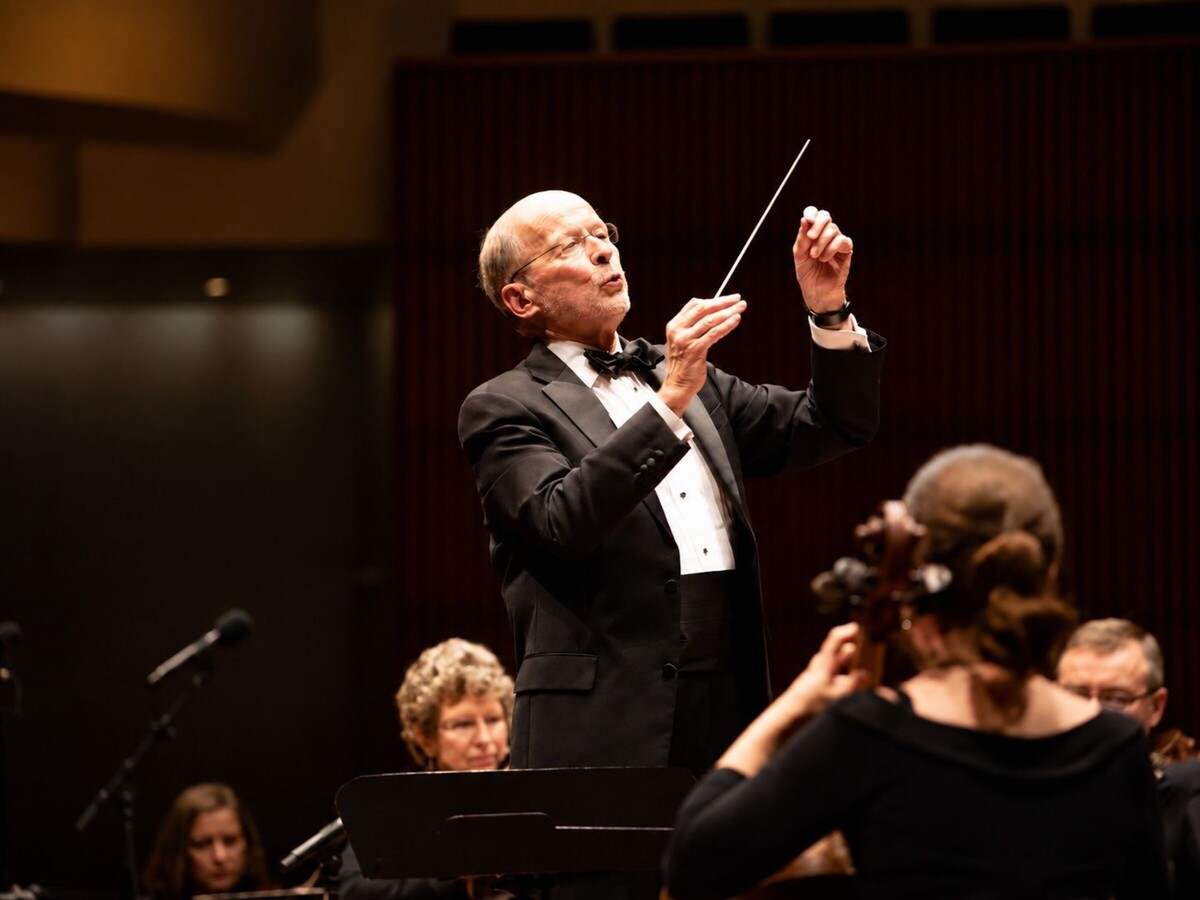



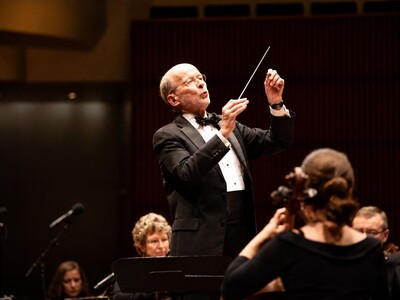
SAINT PAUL, MN (October 30, 2026). When Philip Brunelle steps before the assembled musicians at the Cathedral of Saint Paul on Friday evening, the occasion will represent considerably more than the opening of another concert season. It will bring together more than 200 singers, a full symphony orchestra, twelve harps, and one of the most demanding works in the French choral repertoire, all within a building whose architecture will play an essential role in the performance.
For VocalEssence, the organization Brunelle founded in 1969, the concert marks the beginning of its 58th season. For Minnesota, it offers another opportunity to consider the extraordinary musical institution that has developed around Brunelle's belief that choral music should be both artistically ambitious and accessible to people whose experiences, backgrounds, and musical interests differ considerably.
The opening program, Lineage: French Choral Masterworks, culminates in Hector Berlioz's monumental Te Deum. It is a work conceived on a scale that makes ordinary concert arrangements inadequate. The organ and orchestra are intended to occupy different positions, creating a musical dialogue across the performance space. At the Cathedral of Saint Paul, that separation becomes part of the experience rather than an obstacle to be concealed.
The choice is characteristic of Brunelle's approach. He has spent decades finding ways to make audiences encounter familiar musical traditions from unfamiliar perspectives, whether through new compositions, unexpected collaborations, neglected repertoire, or performances that challenge conventional expectations about what a choir can accomplish.
Yet the significance of the evening extends beyond its size. The 2026–2027 season is organized around questions that have defined Brunelle's career: How does musical knowledge pass between generations? What responsibility does an established institution have to emerging composers? How can historical masterpieces remain relevant to contemporary audiences? And what happens when musical traditions rooted in different cultures are allowed to inform one another?
These are not merely artistic considerations. They concern education, opportunity, cultural memory, and the place of the arts in the life of a community.
Berlioz completed his Te Deum in 1849, although the work did not receive its first performance until 1855 at the Church of Saint-Eustache in Paris. Its musical demands are considerable, requiring a large chorus, orchestra, organ, and, in the VocalEssence presentation, an expanded complement of twelve harps.
The work's physical arrangement presents a particular challenge. Sound does not travel instantaneously across a large cathedral, and the reverberation that gives sacred music much of its grandeur can also complicate rhythmic coordination and clarity.
A conductor working in such a space must account for what musicians hear, what they see, and how the sound reaches listeners seated in different parts of the building. Musical precision cannot depend entirely on the immediate acoustic feedback performers receive.
That is one reason the Cathedral of Saint Paul is especially appropriate for the undertaking. Its dimensions permit the spatial relationship between organ and orchestra that Berlioz envisioned, allowing the audience to experience the work as something larger than a conventional performance presented from a single stage.
In announcing the concert, Brunelle emphasized the scale of the undertaking and the suitability of the venue. He described the prospect of presenting 200 voices, a full orchestra, and twelve harps with unmistakable enthusiasm, noting that the cathedral could accommodate the separation between organ and orchestra.
The production also brings together the VocalEssence Chorus, Ensemble Singers, Festival Choir, tenor Andy McCullough, and symphony orchestra, with Brunelle and associate artistic director G. Phillip Shoultz III conducting.
The program does not begin with Berlioz. Instead, it traces relationships among generations of French composers, including Charles-Marie Widor, Marcel Dupré, Maurice Duruflé, Francis Poulenc, Pierre Villette, Olivier Messiaen, and Camille Saint-Saëns.
This is an important distinction. The opening concert is not simply a demonstration of musical force. Its title, Lineage, reflects an examination of how composers influence one another, how teachers shape students, and how artistic traditions develop through continuity and reinterpretation.
Widor taught Dupré. Duruflé taught Villette, whose musical language was also influenced by Poulenc. By placing their works in conversation, VocalEssence invites listeners to recognize relationships that might otherwise remain hidden behind individual names in a concert program.
The evening therefore becomes an exploration of musical inheritance, with the monumental Berlioz work serving as its conclusion.
For an organization founded by a musician whose own career has involved teaching, mentoring, commissioning, and creating opportunities for younger artists, the subject is particularly appropriate.
During an earlier conversation with MinneapoliMedia for the Builders of Minnesota series, Brunelle reflected on the experiences and decisions that shaped his career, including his childhood in southern Minnesota, the opportunities that helped him develop as a musician, and the commitment to artistic discovery that eventually became central to VocalEssence.
His story is inseparable from the growth of Minnesota's choral culture.
Born in 1943, Brunelle developed his musical abilities at an early age. His career brought him into contact with major musical institutions and artists, but he continued to build much of his professional life in Minnesota, where he believed substantial artistic work could be created and sustained.
When he founded what became VocalEssence in 1969, the organization began as the Plymouth Music Series. Over time, it expanded into an institution recognized for performances of established repertoire, commissions of new music, educational programming, and collaborations involving musicians from different cultural and artistic traditions.
Its influence cannot be measured solely by concert attendance or the number of performances it has presented.
VocalEssence has helped create a professional environment in which composers can hear their work performed, singers can develop their abilities, and audiences can encounter music they might otherwise never experience.
The organization reports that its performance history includes hundreds of commissions and world premieres. That commitment represents a substantial investment in the future of the repertoire.
A musical tradition survives partly because people preserve its achievements. It develops because someone is willing to take a chance on work that has not yet established an audience.
Brunelle has consistently recognized both responsibilities.
His career also challenges the assumption that artistic excellence must be concentrated in a handful of internationally recognized cultural capitals. Minnesota's place in American choral music did not emerge by accident. It developed through institutions, educators, performers, composers, and audiences willing to sustain serious artistic work over generations.
Brunelle has been one of the central figures in that development, although the broader achievement belongs to a community of musicians whose contributions extend well beyond any single conductor.
That collective dimension is essential to understanding VocalEssence. The institution has never depended entirely on presenting the work of one generation to another. It has also sought to connect people who might otherwise remain separated by age, geography, cultural experience, or musical training.
One of the strongest indications that VocalEssence remains committed to artistic development is its continued investment in living composers.
The 2026–2027 season includes a newly commissioned work by Minnesota composer Shruthi Rajasekar, scheduled for its world premiere during the organization's Welcome Christmas concerts in December.
Rajasekar's composition is set to poetry by Christina Rossetti, placing a contemporary musical voice in conversation with a nineteenth-century literary figure.
The pairing illustrates a broader principle of artistic creation: new work does not always require abandoning the past. Sometimes innovation begins by returning to familiar material and discovering possibilities that previous generations did not explore.
For an organization with VocalEssence's history, commissioning is more than a programming decision. It gives composers the resources and opportunity to develop work intended for performance by accomplished musicians before a public audience.
Such opportunities are particularly consequential in choral music, where the practical challenges of assembling performers, securing rehearsal time, and introducing unfamiliar repertoire can discourage organizations from taking risks.
A newly commissioned composition also enters the world without the protections enjoyed by established masterpieces. Audiences do not arrive already knowing what to expect. Performers must develop their interpretation without decades of recordings and performance traditions to guide them.
That uncertainty is part of the value.
The Rajasekar commission also reflects VocalEssence's interest in musical voices shaped by varied cultural influences. The future of American choral composition is unlikely to emerge from a single tradition or narrowly defined understanding of musical identity.
It will depend increasingly on composers whose experiences connect different histories, languages, communities, and approaches to sound.
By continuing to support such work, VocalEssence contributes to a repertoire that future conductors and singers may eventually regard as part of the established tradition.
The December program will also revisit Conrad Susa's Carols and Lullabies: Christmas in the Southwest, originally commissioned in 1992. Presenting an earlier commission alongside a new one allows audiences to hear how contemporary work can become part of an institution's musical memory.
That continuity is one of the clearest expressions of the season's larger theme.
Perhaps the most socially consequential program in the upcoming season is WITNESS: The Poet Sings, scheduled for February 28, 2027, at Orchestra Hall in Minneapolis.
The concert will explore relationships among music, poetry, storytelling, and social change, drawing connections between West African griot traditions, African American literary expression, and contemporary forms of spoken word and hip-hop.
Minneapolis-based hip-hop artist Nur-D is scheduled to participate alongside the VocalEssence Chorus, Singers Of This Age, and Vintage Voices.
The intergenerational structure matters. It brings younger singers, adult performers, and older community members into a shared artistic project while examining traditions in which knowledge, identity, and social experience are transmitted through words and music.
The griot tradition has long held an important place in West African societies, where oral historians, musicians, and storytellers preserve collective memory and communicate social values. African American poetry and musical expression have likewise played significant roles in documenting injustice, affirming dignity, and shaping public conversations about freedom and belonging.
By placing these traditions alongside contemporary hip-hop and spoken-word performance, VocalEssence is proposing a connection across generations rather than treating the forms as unrelated cultural categories.
The program's ambition deserves serious attention because collaborations of this kind carry responsibilities as well as opportunities.
Presenting culturally significant traditions requires more than placing different performers on the same stage. Their histories must be understood, their contributions respected, and their artistic voices given room to speak on their own terms.
The quality of the eventual performance will depend partly on how successfully VocalEssence meets those responsibilities.
The WITNESS series has long been an important part of the organization's efforts to engage African American musical heritage and broaden the repertoire heard by Minnesota audiences.
Its continued development also raises a question relevant to cultural institutions throughout the country: How can established organizations create meaningful space for communities whose artistic contributions have not always received equal recognition?
For MinneapoliMedia, which has consistently examined the relationship between cultural expression, community identity, and public life, this aspect of the season deserves attention beyond the concert announcement.
The inclusion of a Black Owned Business and Storytellers Showcase further connects the program with people and enterprises outside the conventional concert setting.
It suggests that the organization understands community engagement as something that can extend beyond performance itself.
Whether that ambition succeeds will ultimately be judged through the experiences of the participating artists, audiences, and communities. But the decision to make such work part of the season reflects a broader understanding of what a choral institution can contribute to civic and cultural life.
The 2026–2027 calendar also includes a visit by the Choir of King's College, Cambridge, scheduled for April 16, 2027, at the Cathedral of Saint Paul.
The ensemble, directed by Daniel Hyde, represents one of the most recognizable traditions in British choral music. Its history is associated with a particular approach to vocal training, liturgical repertoire, and ensemble sound that has influenced musicians internationally.
For Minnesota audiences, the visit offers an opportunity to encounter that tradition in a setting particularly suited to sacred choral performance.
The concert is presented in collaboration with the Cathedral Heritage Foundation. VocalEssence itself is not scheduled to perform, an important distinction that nevertheless reinforces the organization's role in bringing significant musical experiences to the region.
An institution contributes to a community's cultural life not only through what its own performers accomplish but also through the artists and traditions it makes available to local audiences.
The Cambridge visit may be especially valuable for younger singers who are developing their understanding of ensemble discipline, interpretation, and the different musical traditions that exist beyond their immediate experience.
It also invites a comparison that should not be reduced to a competition between British and American approaches.
Minnesota's choral culture has developed its own strengths, including extensive community participation, educational institutions, professional ensembles, and a sustained interest in contemporary repertoire.
The presence of an internationally celebrated visiting choir offers an opportunity to appreciate those differences and consider how musical traditions can learn from one another.
The season's breadth becomes clearer when the remaining concerts are considered together.
In early December, VocalEssence will collaborate with the Bach Society of Minnesota on selections from Johann Sebastian Bach's Christmas Oratorio, using period instruments and featuring conductors Brunelle and Matthias Maute.
The performances, scheduled for December 4 in Saint Paul and December 5 in St. Louis Park, will include Cantatas 1, 2, and 6, along with Cantata BWV 41.
The program reflects another form of musical stewardship: the effort to approach historical repertoire through performance practices associated with the period in which it was composed.
A week later, Welcome Christmas will bring a different atmosphere to Plymouth Congregational Church in Minneapolis, with holiday music, instrumental variety, audience participation, and performances involving VocalEssence's four choirs.
The contrast between the two December programs is instructive. One emphasizes historical interpretation and the formal architecture of Bach's music. The other invites a more participatory encounter with holiday traditions and newly commissioned repertoire.
Neither approach needs to displace the other.
The season will conclude on May 14, 2027, at Ted Mann Concert Hall with Temptation to Tranquility, a program pairing Gabriel Fauré's Requiem with SEVEN: A Cycle of Sins.
The latter brings together seven composer-lyricist teams working across musical traditions that include opera, Broadway, jazz, and experimental composition. Each contribution examines one of the seven deadly sins: lust, gluttony, sloth, envy, wrath, greed, and vanity.
The program is scheduled to feature the Midwest premiere of the cycle, which VocalEssence identifies as a co-commission.
Its placement alongside Fauré's Requiem creates an unusual artistic relationship.
The contemporary cycle examines human failings and the pressures that accompany moral choice. Fauré's work, by contrast, is widely associated with consolation, tenderness, and an understanding of death that emphasizes peace rather than terror.
Together, the compositions invite listeners to consider whether reflection, compassion, and reassurance can coexist with an honest examination of human weakness.
The pairing also demonstrates that artistic programming can communicate an argument without prescribing a single conclusion.
An audience member may hear the two works as a journey from temptation toward forgiveness. Another may interpret them as contrasting responses to the uncertainties of human existence. Still another may be drawn primarily to their differences in musical language.
The important point is that the program creates room for those interpretations.
That is a meaningful artistic choice for an organization whose history has involved placing established works alongside compositions that challenge audiences to listen differently.
It would be easy to describe the season as another impressive collection of performances by a respected Minnesota institution.
The larger significance lies in the decisions behind the programming.
VocalEssence is opening with a monumental nineteenth-century composition that requires exceptional coordination and an unusual performance environment. It is investing in new music by a Minnesota composer. It is presenting work that connects African and African American storytelling traditions with contemporary artistic expression. It is bringing an internationally celebrated British choir to Saint Paul. And it is closing with a program that places seven contemporary examinations of human behavior alongside one of the most contemplative works in the choral repertoire.
These choices suggest an organization determined to resist the assumption that longevity requires predictability.
That matters at a time when arts organizations face difficult questions about financial sustainability, audience development, artistic relevance, and the changing expectations of the communities they serve.
The challenges are not unique to VocalEssence. Across the country, cultural institutions must determine how to preserve the achievements of earlier generations while making room for artists and audiences whose experiences have not always been reflected in traditional programming.
There are no simple solutions.
Commissioning new music requires financial support and a willingness to accept uncertainty. Large productions demand substantial organizational capacity. Educational and community programs depend on relationships that must be maintained long after an individual performance ends.
Even established institutions cannot assume that their historical achievements guarantee future relevance.
The responsibility is to continue earning the attention, trust, and participation of the public.
VocalEssence's 58th season offers one model for approaching that responsibility, although its success will depend on the performances themselves and the lasting relationships they create.
For Brunelle, the challenge is particularly interesting because he has already accomplished much of what a musician might reasonably hope to achieve during a lifetime.
He has built an institution, helped develop a substantial body of commissioned repertoire, collaborated with artists across musical disciplines, and contributed to Minnesota's international reputation as a center of choral excellence.
Yet the coming season suggests that the work remains unfinished.
That observation is consistent with something Brunelle shared during his earlier Builders of Minnesota conversation with MinneapoliMedia. Asked to identify a word that described him, he chose curiosity.
It was a revealing answer.
Curiosity is not the same as ambition, although the two can reinforce each other. Ambition often concerns the achievement of a particular goal. Curiosity encourages continued exploration even after important goals have been reached.
For an artist whose career spans more than six decades, that distinction may help explain the continued interest in unfamiliar music, new composers, and challenging collaborations.
The 2026–2027 season offers considerable evidence that VocalEssence intends to keep exploring.
When the opening concert begins Friday evening, the audience at the Cathedral of Saint Paul will experience the immediate results of months of planning, preparation, rehearsal, and artistic coordination.
The singers must listen to one another. The instrumentalists must respond to the conductors. The organ and orchestra must communicate across a vast interior. The musical relationships developed during rehearsal must hold together in a setting where sound behaves differently from an ordinary concert hall.
If the performance achieves its ambitions, listeners will hear more than the technical accomplishment of assembling a large ensemble.
They will experience what happens when individual musicians accept responsibility for a collective artistic result.
That principle has relevance beyond the cathedral.
Choral music depends on the relationship between individual contribution and shared purpose. Each singer brings a distinct voice, but the success of the performance requires attention to the voices surrounding it.
The discipline does not erase individuality. At its best, it makes individual expression part of something that could not exist without cooperation.
For an organization whose work increasingly connects artistic performance with education, cultural exchange, and community participation, that relationship is especially meaningful.
Brunelle's legacy is already secure in important respects. VocalEssence has become an enduring institution, and Minnesota's musical life is richer because of the opportunities it has created for performers, composers, and audiences.
But the more consequential question is not what Brunelle has already built.
It is whether the artistic culture he helped establish can continue to welcome unfamiliar voices, support new ideas, and maintain the standards that made its achievements possible.
The 58th season offers an opportunity to examine that question in public, through music rather than institutional declarations.
At the Cathedral of Saint Paul, the opening answer will come from more than 200 singers, a full orchestra, twelve harps, and the extraordinary imagination of Hector Berlioz, brought together under the direction of Philip Brunelle and G. Phillip Shoultz III.
Nearly six decades after founding VocalEssence, Brunelle is preparing to lead another season that asks audiences to listen beyond what they already know.
For Minnesota, that continuing invitation may be among his most important contributions.
OPENING NIGHT INFORMATION
Performance: VocalEssence, Lineage: French Choral Masterworks
Date: Friday, October 30, 2026
Time: 7:30 p.m. to 9:30 p.m. Central Time
Venue: Cathedral of Saint Paul, 239 Selby Avenue, Saint Paul, Minnesota
Conductors: Philip Brunelle and G. Phillip Shoultz III
Featured performers: VocalEssence Chorus, VocalEssence Ensemble Singers, Festival Choir, symphony orchestra, and tenor Andy McCullough
Tickets: $30 ~ $45, with some seating subject to restricted views
Official information: https://vocalessence.org/event/concert-lineage-french-choral-masterworks/

Local stories matter. Subscribe free to MinneapoliMedia and receive independent news, community reporting and important updates from Minneapolis, the North Metro and communities across Minnesota.
SUBSCRIBE FREE: https://minneapolimedia.town.news/subscribe
MinneapoliMedia | Community. Culture. Civic Life


Overcast, with a high of 55 and low of 40 degrees. Partly Cloudy during the morning, overcast in the afternoon,