56° and Clear
Minnesotans Fought for the Right to Grow Their Own Cannabis. A Federal Rule Could Take It Back.


When Minnesota legalized adult-use cannabis in 2023, it didn't just open the door to dispensaries. It gave ordinary Minnesotans something rarer: the legal right to grow their own. Under state law, any adult 21 or older can cultivate up to eight plants at home, no license, no dispensary markup, no middleman. According to the state's own Office of Cannabis Management, one in four cannabis consumers here already does exactly that.
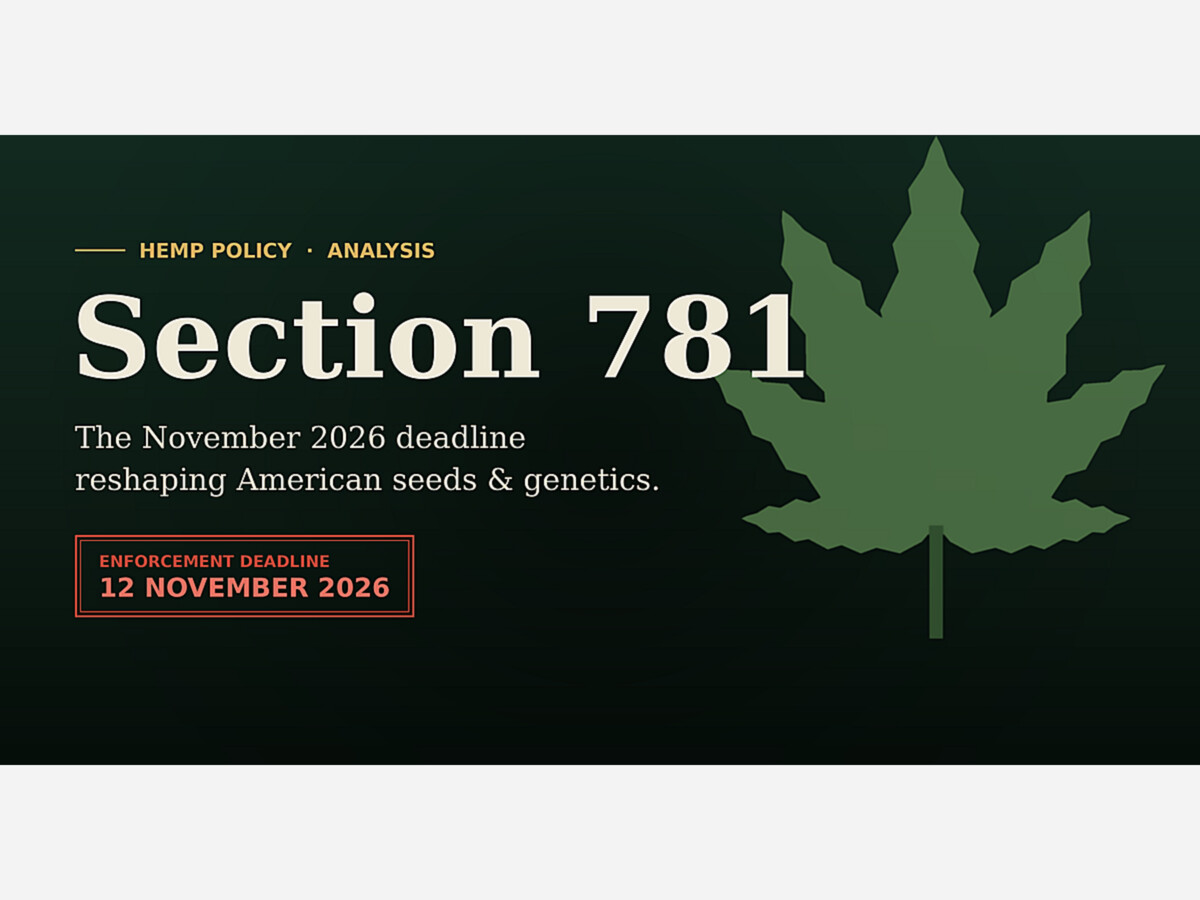
That right is about to collide with a section of a federal rule almost no one in Minnesota has heard of. It's called Section 781, and if it takes effect as written this November, it could throw the seeds behind every legal home grow in this state into legal limbo.
Section 781 was signed into law in November 2025 and is set to take effect on November 12, 2026. It reclassifies hemp seeds and genetics based not on what they are, but on what they might one day become. If a seed grows into a plant that tests above the federal 0.3% THC limit, the line that separates hemp from marijuana, that seed could be treated as a Schedule I controlled substance, the same federal tier as heroin, before it is ever put in the ground.
Here is what makes that absurd to anyone who has actually grown a plant. As one Minnesota home grower told FOX 9, seeds are "a genetic roll of the dice." How much THC a plant produces depends on sunlight, soil, water, temperature, and timing, variables that change from one backyard to the next, one season to the next. A seed that is perfectly compliant in theory could produce a noncompliant plant through nothing more than a hot Minnesota July. Under Section 781, that difference is the difference between a garden and a federal felony, and no grower or business can predict which side of the line they'll land on.
The damage wouldn't stop at backyards. Minnesota's young legal market depends on a genetics supply chain that runs through small seed sellers, including businesses right here in the Twin Cities, and the breeders who supply them. Those seed banks are already sounding the alarm. As Erin Walloch, CEO of CannaJoy, a Minnesota Seed Bank and Cannabis Dispensary put it, “Restricting businesses from purchasing or selling seeds after November creates direct economic harm for small operators across the nation, including our mom and pop seed bank and dispensary. Restrictions disproportionately affect microbusinesses, local seed sellers and independent breeders in the state and throughout the country. The reclassification of seeds directly affects our small business since seeds are a retail product, a great entry point for new growers and crushes repeat-purchases from growers returning for their next batch of seeds."
And the chilling effect reaches into exactly the industries our policymakers say they want to build: hemp for low-carbon building materials, sustainable textiles, and cleaning contaminants out of farm soil. You cannot breed better, lower-THC plants for any of those uses if the act of breeding itself becomes a crime.
I'm not alone in raising this. A national coalition, the American Seed Innovation and Growth Alliance (ASIGA), has launched a public legal fund to push for a fix before the deadline arrives.
But this is a federal law, which means the people who can fix it work for us in Washington. Minnesota's Congressional representatives, along with U.S. senators, Amy Klobuchar and Tina Smith, sit in the chamber that can amend or delay Section 781 before it takes effect. They should hear from the Minnesotans this rule actually touches, the home growers, the small business owners, the medical patients, before a provision written without us in mind quietly undoes a freedom this state chose for itself.
Minnesota didn't wait for Washington to lead on cannabis. We shouldn't have to wait for Washington to stop us from growing a plant in our own backyards. The clock runs out November 12, 2026.
How can people support efforts to change Section 781?
Industry groups including the American Seed Innovation and Growth Alliance (ASIGA) are coordinating legal and legislative responses and accepting contributions through a public fundraiser to support that work ahead of the November 2026 deadline.
Kasey Kollross is a Senior Advisor at Natural Harvest, a US-based Seed Bank, and serves on the National Cannabis Industry Association (NCIA) Board of Directors for the 2026–2028 term.