Image



EAST BETHEL, Minn.
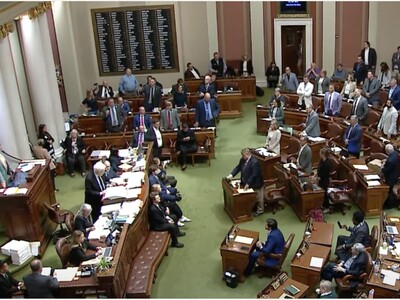
The East Bethel City Council unanimously approved the city’s 2026 budget and property tax levy on Dec. 8, adopting a financial plan that includes a 3.8% increase in the city levy, a move officials say is necessary to address rising personnel costs, contractual obligations, and state mandated programs while maintaining essential services.
The budget and levy were approved on a 4-0 vote, with Council Member Suzanne Erkel absent. By the same vote, the council also approved the 2026 budgets and levies for the East Bethel Economic Development Authority and Housing and Redevelopment Authority.
City officials said the levy increase will have a modest impact on homeowners. Using a $400,000 home as an example, Finance Director Mike Jeziorski said the increase translates to about $4 more per month, with the city portion of the tax bill totaling $1,276.56 annually, or $106.38 per month.

East Bethel’s total city levy for 2026 is $6,638,600, up from $6,392,500 in 2025. Jeziorski explained that the increase reflects a 6% increase in the general fund levy, partially offset by an 8% decrease in the city’s debt service levy.
The city’s general fund, which supports core services such as public safety, public works, administration, and elections, is projected to grow by 7%, with revenues increasing from $6,976,300 in 2025 to $7,455,700 in 2026. General fund expenditures are projected to rise by the same percentage.
Property taxes account for 77% of East Bethel’s general fund revenue, according to budget documents.
Under Minnesota’s truth in taxation process, the levy approved by the council represents the maximum amount the city may collect for 2026. While the levy can be reduced before final certification, it cannot be increased.
Jeziorski said the city follows a yearlong budget development process, using a financial model that incorporates the previous two years of actual financial activity, the current year budget, and projections for the upcoming year. The model includes updated salary, benefit, and debt service figures and is reviewed through a series of council meetings and a public hearing prior to adoption.
Before presenting the 2026 budget, Jeziorski highlighted several financial indicators. In 2024, general fund revenues came in at 102% of budgeted amounts, while expenditures were 95% of budget. As of Dec. 31, 2024, the city’s general fund balance stood at $5.2 million, equal to approximately 75% of the 2025 budget.
Jeziorski said East Bethel maintains dedicated capital funds for equipment, streets, parks, and buildings, completes annual audits, and holds an AA2 credit rating. The city also has an approved union contract through 2028.
According to Jeziorski, East Bethel has the fifth lowest tax rate among 21 Anoka County cities, at 31.914%.
Personnel expenses were among the most significant drivers of the 2026 budget. The city will employ 22 full time employees in 2026, all receiving an 8% cost of living adjustment, along with a $1,500 monthly cafeteria contribution. Nine employees are also eligible for step increases.
In addition to elected officials, East Bethel employs 35 paid on call firefighters, two seasonal summer public works employees, and five seasonal winter public works employees.
Among city staff, all six administration employees are nonunion. One of five community development employees is union. Eight of nine public works employees are union, while both fire department employees are nonunion.
Several contracted services increased for 2026, including a $110,000 increase in the city’s law enforcement contract, a $10,000 increase to the city attorney contract, a $1,000 increase to the audit contract, and a $13,000 increase to information technology services.
Department level changes from 2025 to 2026 include an increase in general government expenditures from $1,373,800 to $1,526,200, a slight decrease in community development expenditures from $678,900 to $674,200, and an increase in public safety expenditures from $2,452,100 to $2,635,100. Engineering expenditures remain unchanged at $20,000, while public works expenditures rise from $1,685,000 to $1,773,700. Transfers to other funds increase from $760,000 to $820,000.
The city’s 2026 debt service fund includes two outstanding bond issues with a combined principal balance of $14,365,000. Debt service expenditures are projected to increase from $943,500 in 2025 to $993,000 in 2026.
The overall 2026 budget includes the general fund, special revenue funds such as recycling, the Economic Development Authority and Housing and Redevelopment Authority funds, debt service funds, and capital funds for equipment, streets, parks, and buildings. Enterprise funds include water, sewer, and the city’s ice arena.
During public comment, residents raised concerns about property valuations and the city’s reliance on property taxes.
Resident Kory Jorgensen said his home’s assessed value increased by $41,000 after an assessor visited while he was not home. He said he was later told the visit was unnecessary because the home is slab on grade.
“I can’t understand how on God’s green earth my house went up $41,000 in one year,” Jorgensen said, adding that no changes had been made to the home since it was built eight years ago.
Another resident, Mitchell Webb, questioned the city’s reliance on property taxes for 77% of its revenue. Webb, who owns several commercial properties, said tax rates in East Bethel were significantly higher than comparable properties in Blaine.
“What my tax rate on a building is in the city of Blaine, compared to commercial stuff in the city of East Bethel, is not even comparable,” Webb said. He urged the city to explore alternative revenue sources, including taxes on cannabis and hemp related businesses.
City officials said the approved budget positions East Bethel to meet its financial obligations, maintain strong reserves, and continue delivering essential services in 2026, while acknowledging the concerns raised by residents as part of the ongoing budget and taxation discussion.



Patchy rain nearby, with a high of 51 and low of 46 degrees. Don't forget your umbrella! Patchy rain nearby during the morning, overcast in the afternoon, patchy rain nearby overnight.