Image
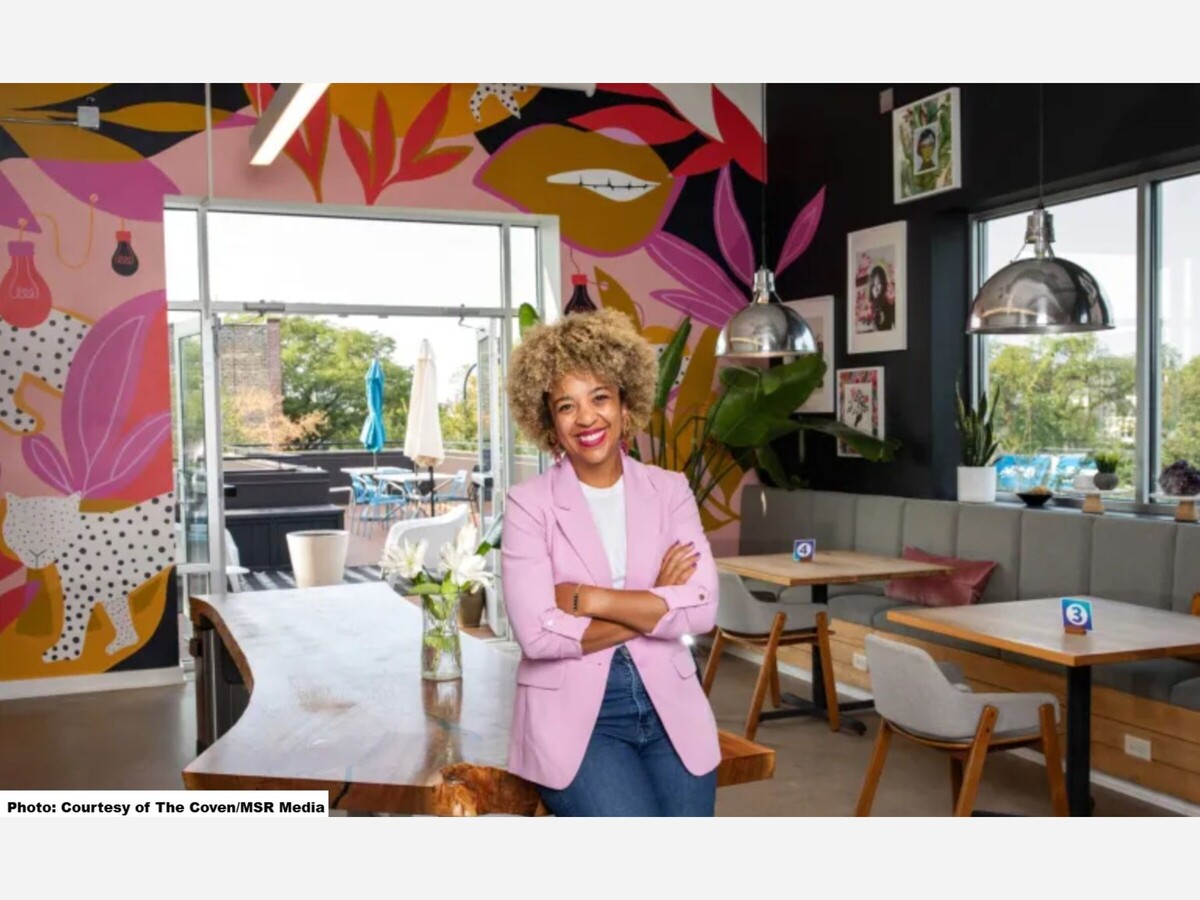



The new year had barely settled when Alex West Steinman joined MinneapoliMedia for a conversation that felt less like an interview and more like an offering.
Rested from time spent with family, grounded, present, and unmistakably human, Steinman arrived without pretense. She did not speak in headlines or slogans. She spoke in memory, relationship, and lived truth.
When she was welcomed into The Power of Her, she received the words the series reserves for women whose work reshapes Minnesota’s civic and economic landscape. She listened, paused, and thanked us, not out of formality, but with a generosity that would come to define the entire exchange.
Before there was a company, before national recognition, before The Coven became a model replicated across communities, there was a child watching the women around her live without apology.

Steinman began where all enduring leadership begins: with lineage.
She spoke of growing up surrounded by strong women and men who chose entrepreneurship, public service, and leadership not as ambition, but as responsibility. As a millennial raised by Gen X parents, she had an early, unfiltered view into what working life could look like when women were not constrained by expectation.
Her grandmother loomed large in this telling.
A nurse who became a hospital evaluator, traveling to all fifty states, Steinman’s grandmother lived expansively in a time that rarely encouraged women to do so. Raised in rural Minnesota, a single parent, she built a life defined not by limitation, but by possibility.
Steinman remembered picking her up at the airport, back when families could walk right up to the gate. She remembered watching planes together, unafraid of the world’s scale. With her grandmother, there were no bounds.
She spoke of her passing with grief tempered by gratitude. Her grandmother lived to eighty-seven, joyful, powerful, and fully herself. That spirit, Steinman said, lives on through her mother, her aunt, and now through her.
What she inherited was not just an example, but permission. Permission to choose. Permission to try. Permission to figure things out.
“Everything is figureoutable,” one of her co-founders often says. Steinman carries that belief not as optimism, but as practice. It removes fear. It reframes barriers as invitations.
Before founding The Coven, Steinman spent more than a decade in public relations, advertising, and political communications. She worked on national brands, Super Bowl campaigns, and high-stakes creative projects that demanded speed, insight, and invention.
Advertising taught her that there is always a solution if you are willing to see differently.
Political campaigns taught her something deeper.
Campaigns, she explained, are storytelling sprints. In a matter of months, you build a full organization, manage staff and volunteers, respond to crises, and translate community hopes into public narrative. You stand up a business and dismantle it just as quickly.
What mattered most to her was alignment. She chose candidates whose values mirrored her own. She listened to communities describe how they wanted to be represented and then wove those needs into campaigns that felt honest and alive.
Campaign work was exhausting, exhilarating, and deeply instructive. It showed her what leadership looks like under pressure. It showed her how quickly trust can be built or lost. And it gave her a front-row seat to the power of proximity.
When campaigns ended, there was always a quiet reckoning. The balloon popped. The sprint was over. And the question remained: what now?
The answer arrived not in a boardroom, but in exhaustion.
After the birth of her second child, Steinman returned to agency life and found a culture that asked for everything while offering little in return. Few women held leadership roles. Fewer still were mothers. She slept at work. Showered at work. Worked around the clock in a system that treated burnout as currency.
She noticed something else. She was being paid less than her peers. She was doing the labor of diversity, equity, and inclusion without institutional investment. The work was celebrated rhetorically and neglected structurally.
Across agencies and industries, she and her future co-founders kept finding each other in the margins, asking the same question.
What if work did not have to feel like this?
What if we built a space designed around care rather than extraction?
What if we centered women, knowing that when women succeed, everyone does?
The vision was not exclusive. It was expansive. Gender-agnostic. Industry-agnostic. Human-centered.
Hospitality became the model. Care became the currency.
She smiled as she described men walking into The Coven for the first time and marveling at the scent, the quiet, the simple offer of tea. Care, she noted, is not gendered. Everyone benefits when dignity is built into space.
From the very beginning, they knew the impact would be real.
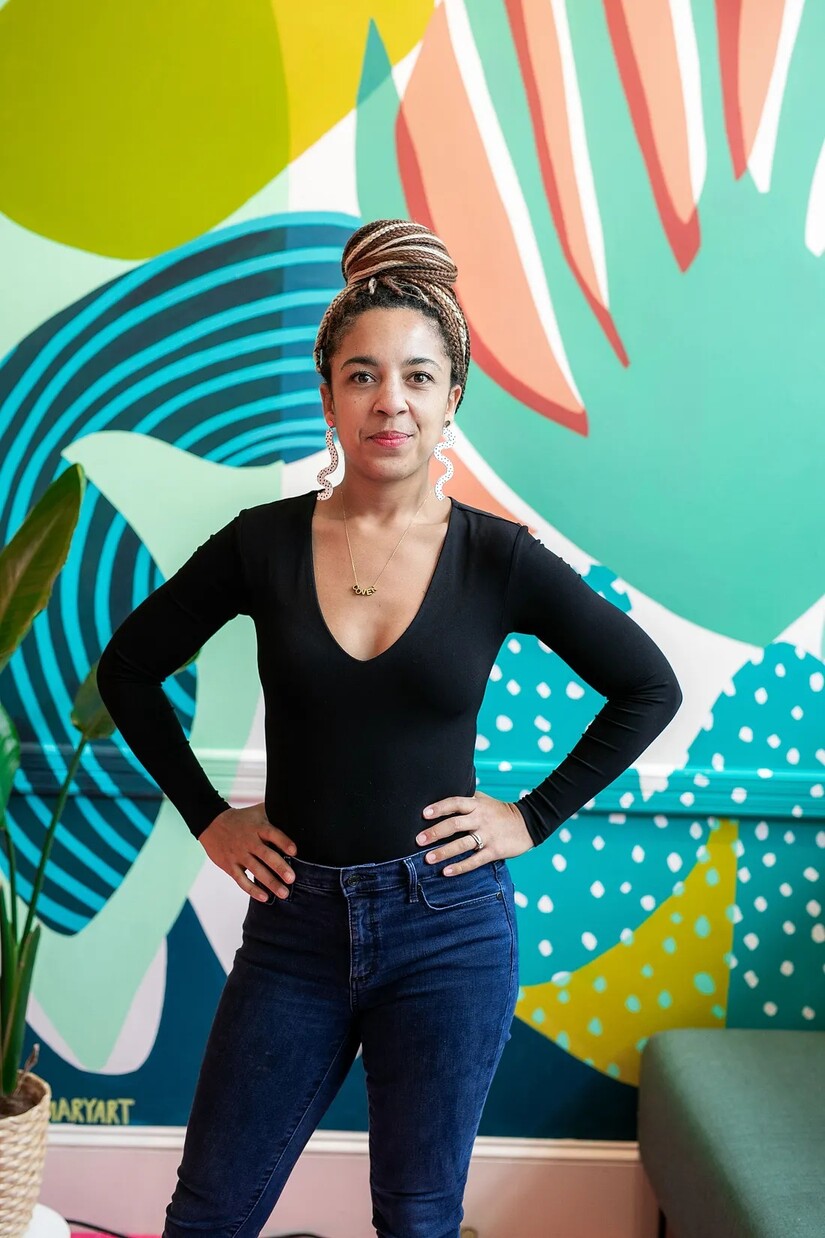
For Steinman, economic liberation is not abstract. It is a choice.
Money is a tool, she said, not a value. Capital exists in many forms: economic, social, relational. What The Coven does best is create proximity across differences, weaving safety nets that allow people to grow.
Inside those networks, people trade ideas, skills, opportunities. They find jobs. Start businesses. Charge more for their work. Learn something new. Build confidence.
Eighty percent of members report making a connection that led to more income, a new job, or a meaningful relationship. Those outcomes matter.
The Coven does not hand out grants every day, though once a year it awards the Radical Leadership Awards, putting real dollars into the hands of people doing quiet, transformative work.
More importantly, it refuses to let economics be a barrier to entry.
Through community-funded memberships, people enter on scholarship and leave with skills, networks, and stability. One former scholarship member is now a franchise owner, running her own Coven and paying the model forward.
This, Steinman said, is the vision made visible.
When George Floyd was murdered, there was no debate about what to do.
The phone rang. Community partners asked if The Coven could serve as a distribution hub. Diapers. Food. Toiletries. Supplies.
The answer was immediate and uncomplicated: yes.
With physical space unused due to the pandemic, a trusted digital platform, and deep local relationships, The Coven became a node of mutual aid. Information moved quickly. Resources moved faster.
They were not alone in this response, Steinman emphasized. Many businesses and organizations pivoted toward care. What mattered was that The Coven could respond because it was rooted.
That moment clarified something essential. Deep community response requires deep community presence.
You cannot parachute into grief.
In the aftermath, franchising became a moral strategy, not just a business one. Ownership builds power. Local ownership builds resilience. Communities must be able to respond to both crisis and joy using their own relationships.
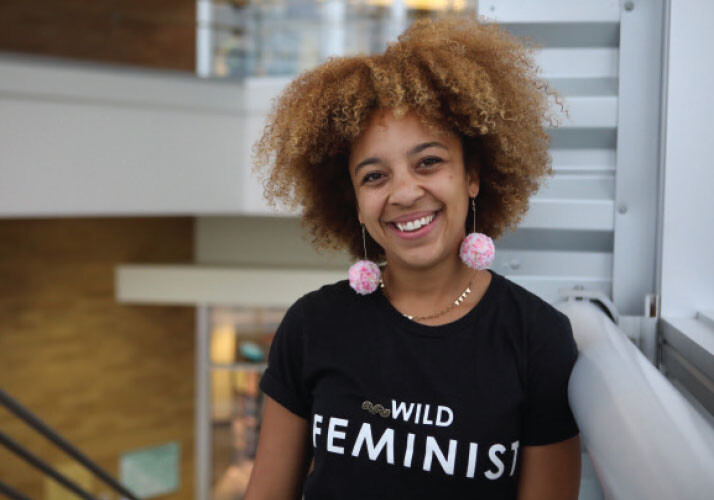
Steinman spoke carefully about the place.
The Coven’s Lake Street location is led by business owners already embedded in the corridor. Revitalization, she said, must be relational before it is economic.
Public relations, at its core, is about relationships, not optics. That philosophy guides every expansion. Before entering a new city, her team builds relationships with economic development leaders, small businesses, public agencies, and residents. They listen.
In Chapel Hill, North Carolina, that listening revealed a gap. High-growth industries flourished, but small businesses and solopreneurs were being left behind. The response was intentional programming designed to keep people rooted in their communities.
Six thousand square feet can hold a lot of possibility when trust is present.
Revitalization takes time. It requires consistency, humility, and attention to both challenges and strengths. Communities are more than deficits. They are assets.
When barriers fall, bodies change.
Steinman described watching shoulders relax when people realize they are cared for. Childcare does that. Prayer spaces do that. Knowing support exists, even if it is never used, does that.
Women have asked for childcare in the workplace forever, she said. This is not revolutionary. It is overdue.
As a hospitality-centered organization, The Coven anticipates needs before they are voiced. Ease is the goal. Belonging is the outcome.
National recognition brings visibility, she acknowledged. It helps the business. It brings attention to Minnesota.
It does not bring fulfillment.
Fulfillment comes from watching someone receive a fifteen-thousand-dollar check through the Radical Leadership Awards. It comes from recognizing people who rarely stand on stages.
Legacy is not headlines.
Legacy is people.
She hears stories from every location. Businesses started. Careers changed. Communities strengthened. This, she said, is the inheritance passed down from her grandmother.
Vulnerability, Steinman believes, is not optional.
To be fully human is to accept joy and loss as teachers. The death of her grandmother clarified that truth. Grief sharpened gratitude. Loss made success sweeter.
Avoiding pain, she said, costs too much. You miss the lessons. You miss the meaning.
Life happens. The work is to meet it honestly.
When asked what she hopes remains, Steinman did not name herself.
She hopes people feel free.
Free to choose. Free to build. Free to stay. Free to leave. Free to imagine.
Economic freedom is the freedom to decide. Many never get that privilege. Her hope is that because The Coven exists, more people will.
Someone sitting at a table, writing in a notebook, deciding to begin. That moment, she said, is everything.
Those small moments ripple outward, unseen, immeasurable, enduring.
When invited to name another leader, Steinman did not hesitate.
Akua Ellis, she said. A consultant whose insight makes people lean in. A leader across nonprofit, public, and private sectors. A voice that carries weight because it carries wisdom.
She promised an introduction.
And when asked if she would return, she smiled.
“Delighted,” she said.
This conversation did not end with goodbye. It ended with continuity.
Alex West Steinman does not build monuments. She builds rooms. She builds tables. She builds systems where choice becomes possible.
That is her power.
That is her legacy.
And that is why her story belongs in the history of Minnesota.



Light snow, with a high of 31 and low of 17 degrees. Don't forget your umbrella! Blowing snow during the morning, light snow in the afternoon, patchy moderate snow overnight.