61° and Patchy light rain
Image
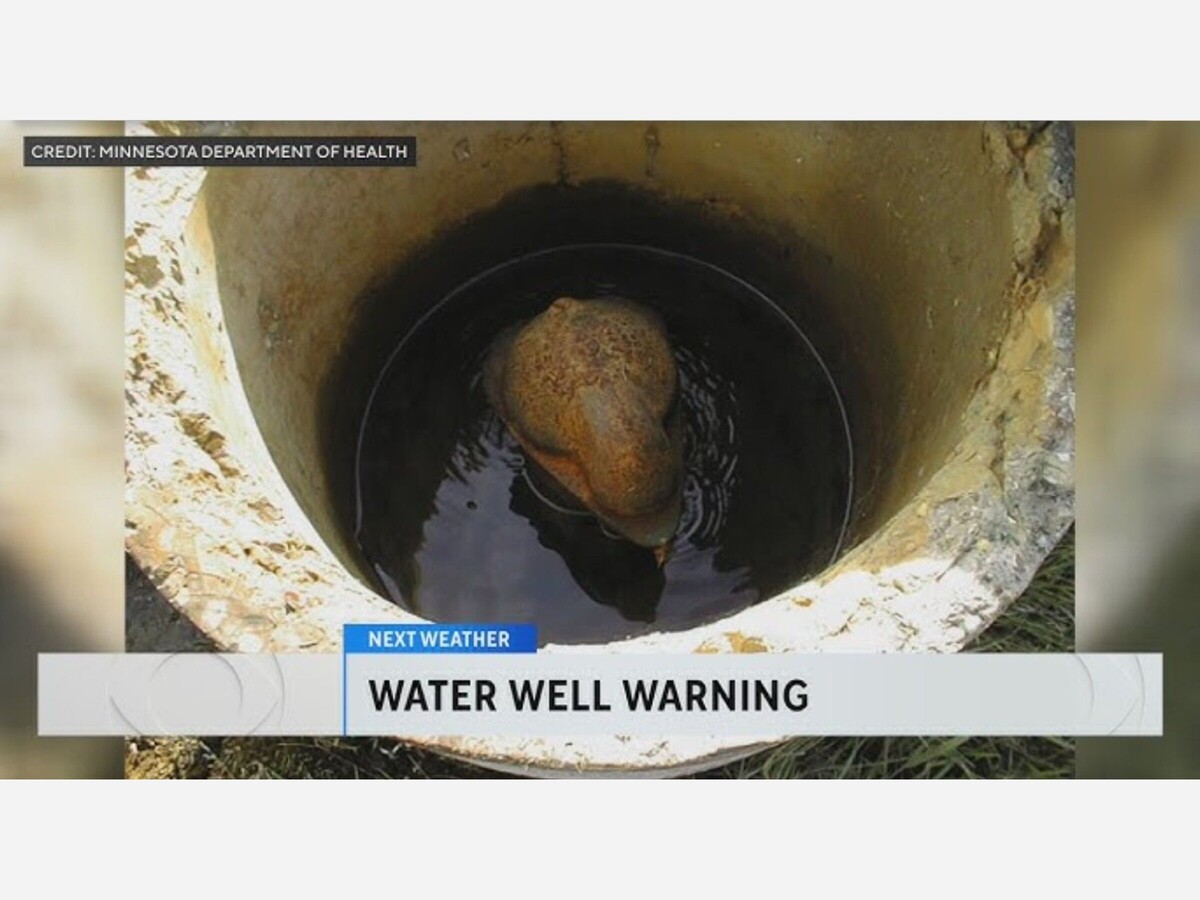



The Minnesota Department of Health (MDH) is urging residents who rely on private wells to regularly test their drinking water, warning that dangerous contaminants can be present even when water appears clean, clear, and safe.
“People often assume they can judge water quality by taste, smell, or appearance,” said MDH spokesperson Tannie Eshenaur. “But the only way to really know if your water is safe to drink is to send a sample to an accredited laboratory.”
Across Minnesota, roughly 1.1 to 1.2 million residents depend on private wells for drinking water. Unlike municipal systems that serve cities and towns, private wells are not regulated under the federal Safe Drinking Water Act, which requires routine monitoring and treatment of public water supplies. Instead, the responsibility for ensuring water safety rests entirely with homeowners.
For health officials, that distinction makes education and testing crucial.
Groundwater across Minnesota is generally considered high quality, but it can still carry contaminants introduced through natural geology, aging plumbing, agricultural runoff, or nearby septic systems. Many of these substances cannot be detected without laboratory testing.
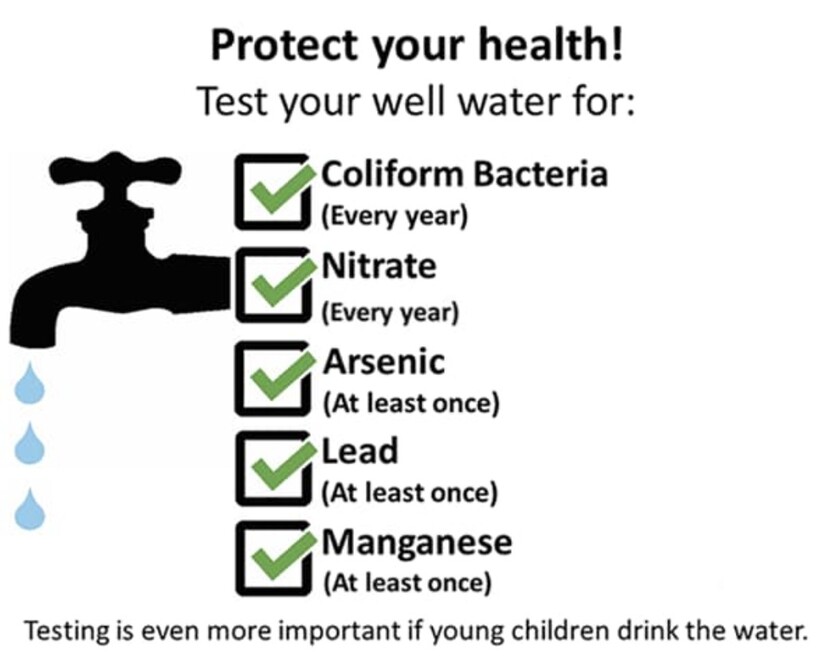
The Minnesota Department of Health identifies five contaminants that appear frequently in private wells across the state. Officials sometimes refer to them as the “Big Five” risks for well owners.
Coliform bacteria are commonly used as an indicator of contamination. Their presence suggests that surface water, soil, or waste may be entering the well system. While not all coliform bacteria cause illness, they signal that harmful pathogens such as E. coli could also be present.
Often linked to fertilizer runoff, livestock operations, or failing septic systems, nitrate contamination poses a particular threat to infants. High levels can lead to methemoglobinemia, commonly known as “blue baby syndrome,” which interferes with the blood’s ability to carry oxygen.
Arsenic occurs naturally in some Minnesota bedrock and soil. Long term exposure to elevated levels is associated with increased risks of cancer, cardiovascular disease, and skin disorders. MDH research has found that about 10 percent of newly constructed wells in Minnesota exceed the federal safety guideline of 10 micrograms per liter.
Lead rarely originates in the groundwater itself. Instead, it typically enters drinking water through corrosion in household plumbing, including old pipes, solder, or brass fixtures. Even small amounts can damage the brain and nervous system. Health experts emphasize that there is no safe level of lead exposure for children.
Manganese is a naturally occurring mineral that the body needs in very small amounts. However, elevated levels in drinking water have been linked to impacts on memory, attention, and learning ability, particularly in infants and young children.
One of the most difficult aspects of groundwater contamination is that it is usually invisible.
“You cannot see, smell, or taste most contaminants in drinking water,” MDH officials note. “Routine testing is the best way to identify a problem before it becomes a health risk.”
To help well owners manage that risk, the department recommends a basic testing schedule.
|
Contaminant |
Recommended Testing Frequency |
|
Coliform Bacteria |
Once every year |
|
Nitrate |
Once every year |
|
Arsenic |
At least once, then as recommended |
|
Lead |
At least once |
|
Manganese |
At least once |
Annual testing for bacteria and nitrate is particularly important for households with infants, pregnant residents, or individuals with compromised immune systems.
Health officials stress that proper testing requires certified laboratory analysis rather than do-it-yourself kits often sold in retail stores.
The recommended process includes several steps:
Find an accredited laboratory
The Minnesota Department of Health maintains a statewide directory and interactive map of laboratories certified to test drinking water.
Collect the sample properly
Homeowners receive a sterile sampling bottle along with instructions that often include running the faucet for several minutes before collecting the water sample.
Submit quickly
Some contaminants degrade rapidly. Bacteria samples, for example, typically must reach the laboratory within 24 to 48 hours to produce reliable results.
If testing reveals unsafe contaminant levels, homeowners often have several options. Solutions may include shock chlorination, a disinfection process used to remove bacterial contamination from wells, or the installation of certified point-of-use filtration systems designed to remove specific contaminants such as arsenic or lead.
In more severe cases, repairs to the well structure itself may be necessary to prevent surface water or pollutants from entering the groundwater supply.
Minnesota’s reliance on groundwater is both an environmental asset and a public health responsibility. With more than a million residents drawing drinking water from private wells, the safety of those systems depends not on regulation but on vigilance.
For the Minnesota Department of Health, the message to well owners remains simple but urgent: clear water is not always safe water.
The only way to know for certain is to test it.
MinneapoliMedia
Community. Culture. Civic Life.



Moderate rain, with a high of 65 and low of 57 degrees. Moderate rain at times in the morning, patchy rain nearby for the afternoon, overcast in the evening, patchy rain nearby overnight.