Image
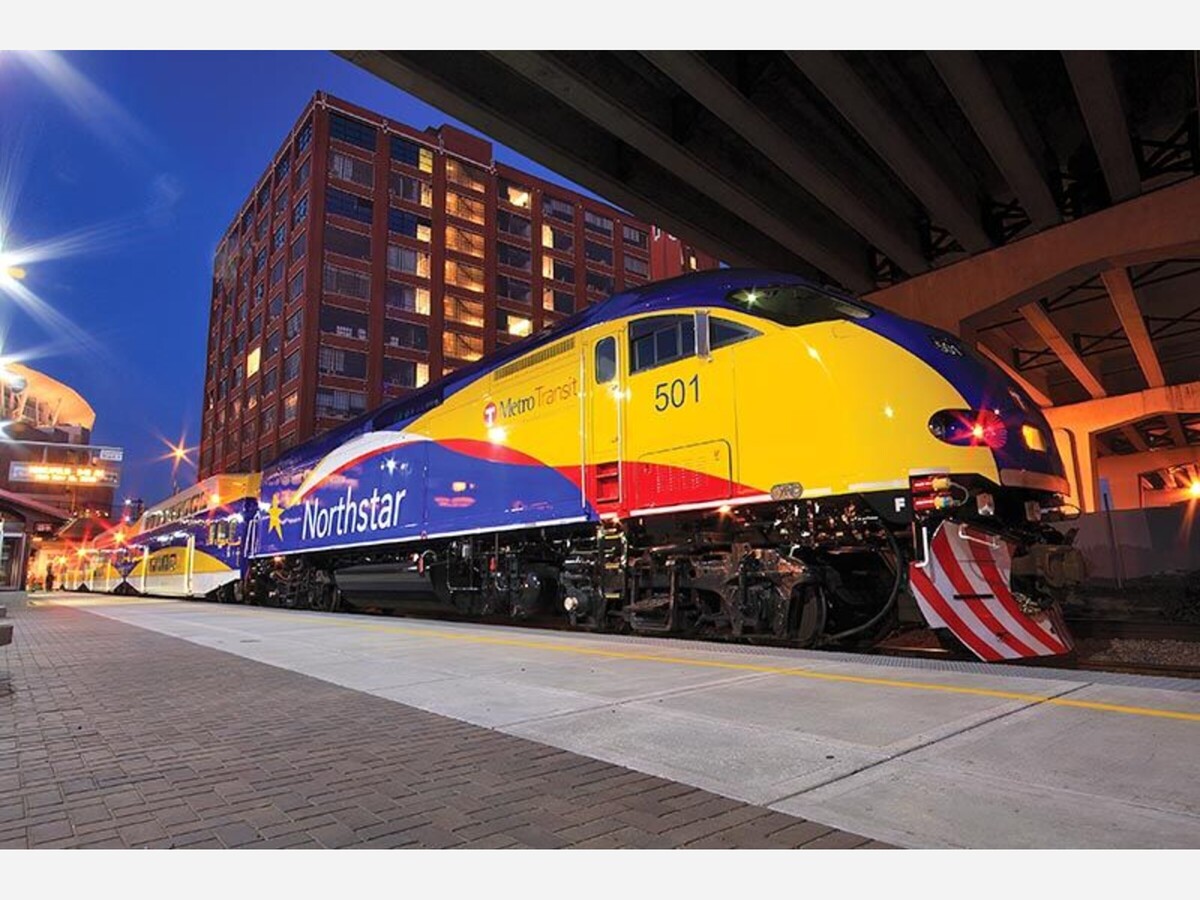



It begins, as so many civic retreats do, with an announcement stripped of emotion and heavy with bureaucratic calm. The Northstar Commuter Rail is ending. The trains will stop running in early January 2026. The region will move on.
Minnesotans have heard this language before. It is the language of inevitability. Of spreadsheets and ridership charts. Of leaders assuring the public that there is no alternative, that the numbers no longer justify the commitment, that flexibility is the new virtue.
But inevitability is often a disguise for something else entirely. In this case, it conceals a failure of political will, public stewardship, and long-term vision.
For more than a decade, Northstar carried tens of thousands of commuters, students, families, and visitors from Anoka, Hennepin, and Sherburne counties into Minneapolis. It connected working-class suburbs and growing exurban cities to the economic and cultural heart of the state. It offered reliability in a transportation landscape increasingly defined by congestion, unpredictability, and time stolen from daily life.
Now, with little fanfare and even less reflection, that promise is being withdrawn.
Northstar was never perfect. It was limited in scope and constrained by a freight rail agreement that made expansion difficult. But for the people who relied on it, the system delivered something rare and increasingly valuable: certainty.
No crawling traffic on Interstate 94. No weather-induced paralysis. No guessing whether a crash near Maple Grove would add another hour to an already long commute. Nurses used it to reach hospitals. Students relied on it to get to campuses. Service workers took it to shifts. Families rode it to ballgames and events. Visitors used it to access a city that prided itself on being connected.
For these riders, Northstar was not an experiment. It was infrastructure.
Then came the pandemic. Travel patterns changed. Ridership dropped sharply, as it did across the nation. Transit agencies elsewhere responded with creativity and urgency. They renegotiated contracts, expanded service windows, marketed new uses, and treated disruption as a moment to rethink rather than retreat.
Minnesota chose a different path. It waited. It constrained. And when ridership failed to rebound under unchanged conditions, it declared the system a failure.
Officials defending the shutdown lean heavily on statistics. Fewer than 450 weekday riders by mid-2025. An annual operating cost approaching $18.6 million. A per-ride subsidy exceeding $116.
These figures are real. But they are also incomplete.
Northstar did not fail because rail no longer works. It failed because it was never allowed to adapt to a post-pandemic world. The service remained locked into peak-hour schedules while commuters increasingly demanded midday, evening, weekend, and event options. A long-promised extension to St. Cloud, critical to the line’s original viability, was never funded. Marketing efforts were modest. Employer partnerships were underdeveloped. Innovation was absent.
This was not an unavoidable collapse. It was a managed decline.
What state and regional leaders describe as a pragmatic solution addresses only the narrowest version of the problem. The decision solves an immediate operating challenge, but it creates lasting economic, infrastructure, and credibility costs that Minnesota will live with for decades.
The shutdown tells cities, investors, and residents that long-term public commitments are conditional. That permanence depends not on generational planning, but on annual spreadsheets. Infrastructure built to last forty years has been treated as disposable after sixteen. And once that trust is broken, it is far harder to rebuild than any rail line.
Between $317 million and $320 million in public funds were invested to build Northstar. Federal grants. State appropriations. County contributions. Local commitments. The project was designed with a forty-year lifespan, not as a temporary pilot.
Stations were constructed. Parking ramps built. Land cleared. Zoning rewritten. Entire redevelopment strategies were anchored to the presence of permanent rail.
In Anoka alone, a $10 million parking ramp now faces functional obsolescence if pedestrian access is removed. Downtown revitalization plans across the corridor hang in uncertainty. Private investment that followed the signal of fixed rail is left exposed.
Then there is the quiet but consequential risk acknowledged by state officials themselves. Because Northstar is being terminated well before its intended lifecycle, Minnesota could face federal clawbacks approaching $85 million. The decision framed as fiscal discipline may yet carry a steep and unplanned price tag.
The message sent to the northwest corridor is unmistakable. Rail investment elsewhere in the Twin Cities continues. Billions are committed to light rail expansion in the urban core and southwest metro. Meanwhile, the only rail line serving the north metro is deemed expendable.
This is not efficiency. It is selective disinvestment.
Sherburne and Stearns counties lose connectivity. Cities that planned for permanence are told flexibility will suffice. Residents who structured their lives around reliable rail are offered buses subject to traffic and weather and delay.
The inequity is not theoretical. It is geographic, economic, and lived.
The shutdown did not occur in a vacuum. It was shaped by sustained legislative pressure, partisan framing, and a broader political shift away from long-term public investment.
Republican lawmakers labeled Northstar a failed experiment and pursued legislation to force its termination. Federal allies urged the elimination of funding. Democratic leaders, facing budget pressures and political headwinds, shifted toward damage control rather than defense. The Metropolitan Council reframed the decision as fiduciary duty.
At no point did a serious, well-resourced effort emerge to save, adapt, or expand the system. The question was never how to make Northstar work. It was how to end it cleanly.
Infrastructure is not just concrete and steel. It is a declaration of values.
Northstar represented a belief that Minnesota could connect its regions. That working families deserved reliable alternatives to congested highways. That long-term investments were worth defending even when circumstances changed.
Its closure represents something else entirely. A belief that difficulty justifies abandonment. That public assets are expendable. That vision yields to convenience.
The final Northstar train will glide into the station without incident. The tracks will remain. The stations will stand, at least for now. What will be missing is the resolve that built them.
Minnesotans should not accept this ending as inevitable. Because if essential public infrastructure can be dismantled at the first sustained challenge, then no promise is durable. No plan is secure. No region can trust that today’s commitment will survive tomorrow’s politics.
Northstar’s end is not merely a transportation decision. It is a test of whether this state still believes in building things that last.
On that test, Minnesota has chosen retreat over resolve.
And the cost of that choice will echo long after the last train stops running.



Sunny, with a high of 50 and low of 34 degrees. Sunny in the morning, partly cloudy for the afternoon, clear in the evening,