40° and Partly Cloudy
Image
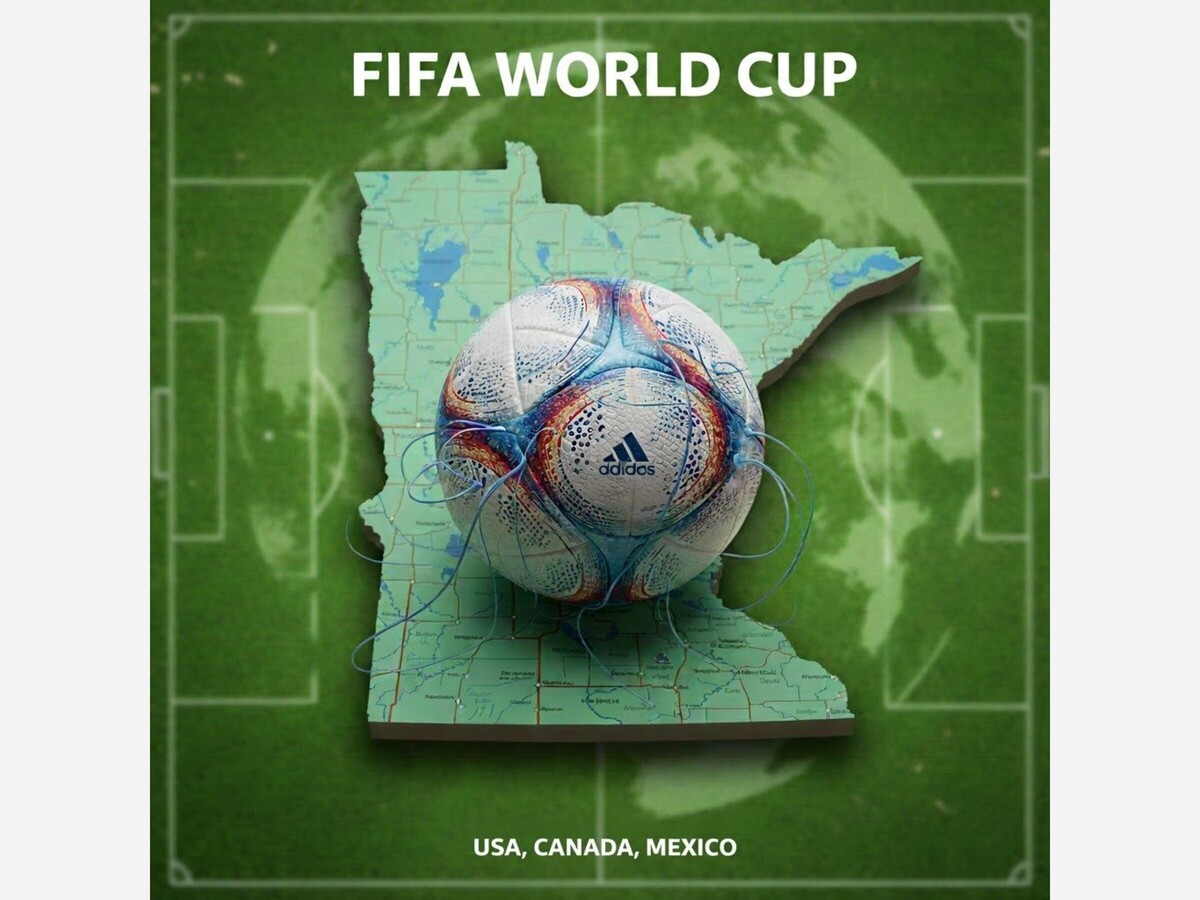



The 2026 World Cup will not arrive quietly in North America. It will arrive carrying decades of noise, memory, resentment, pride, and unfinished business. When the first whistle blows, it will echo differently in the United States and in Mexico, two host nations bound together not only by geography, but by one of international football’s most charged and enduring relationships.
This is not simply a shared hosting arrangement. It is a reckoning.
In Mexico, football is not introduced. It is inherited.
Children learn the rhythms of the game before they learn its rules. Streets, schoolyards, and Sunday afternoons are all classrooms. The national team is not followed from a distance. It is argued with, demanded from, defended, and occasionally forgiven, but never ignored.
Mexico’s World Cup history is inseparable from the global history of the tournament itself. The Estadio Azteca is not just a stadium. It is a cathedral where Pele and Maradona left fingerprints on the game’s soul. Hosting the World Cup in 1970 and 1986 placed Mexico at the emotional center of football history.
Hosting again in 2026 is different. This time, Mexico is not introducing itself to the world. It is being measured against its own mythology.
The burden is heavy. For decades, Mexico has been a reliable presence and a predictable exit. The Round of 16 has become a recurring wall, a place where talent meets hesitation and ambition stalls. Supporters know this pattern too well. They feel it before kickoff. They fear it when momentum turns.
Yet this team still carries immense cultural force. The green shirt still means something. The anthem still raises voices. When Mexico plays at home, neutrality does not exist.
The question facing Mexico in 2026 is not whether it belongs. That was settled long ago. The question is whether it can evolve without losing the emotional clarity that made it matter in the first place.
The United States tells a very different story.
American soccer has grown in bursts rather than generations. It has expanded through infrastructure, investment, and access. The stadiums are enormous. The broadcast reach is global. The player pool is deeper than ever before.
What the United States lacks is not talent. It is inheritance.
There is no singular moment that defines American football identity. No shared heartbreak passed down across decades. No universal memory that binds casual fans and devoted ones together. That absence has allowed reinvention, but it has also delayed belief.
The current American team is the most internationally experienced generation the country has ever produced. Players are developed in European academies. They play Champions League minutes. They are tactically fluent and physically fearless.
What they have not yet proven is that they can carry expectation when the crowd is not forgiving and the moment does not wait.
Hosting the World Cup offers the United States something it has never fully possessed. Narrative ownership. The chance to create football memories that are not borrowed, but lived.
This is not about marketing soccer to America. That work is done. This is about football asking America whether it is ready to feel deeply when things go wrong.
No two teams in this tournament will understand each other better or distrust each other more than the United States and Mexico.
Their rivalry has grown from imbalance to friction to genuine competition. Once predictable, now volatile. Matches are rarely calm. They are played with tension, whistles, and weight.
Every meeting carries more than points. It carries regional hierarchy. Cultural assertion. Proof of progress or evidence of decline.
Hosting together intensifies this dynamic. Each country will watch the other closely. A deeper run by one will not go unnoticed by the other. Neither will failure.
This rivalry does not require provocation. It sustains itself.
Both hosts will be judged on more than football.
Mexico will face scrutiny over security, economic strain, and the distribution of benefit. The United States will be judged on openness, accessibility, and whether a country built on borders can host a tournament built on movement.
Fans will cross lines drawn by policy. Players will exist inside systems larger than sport. The tournament will expose how welcoming each nation truly is when the world arrives not as guests, but as participants.
A World Cup always reveals the host. It does not disguise it.
Mexico must play with conviction. It must trust itself again. It must remember that hosting is not a shield, but an amplifier.
The United States must play with courage. It must accept that infrastructure cannot substitute for nerve. That belief is earned only when it is tested.
One country carries football like memory. The other carries it like ambition.
In 2026, neither will be allowed to hide behind what they used to be or what they hope to become.
The World Cup is coming home to North America.
But for the United States and Mexico, home is where the hardest truths live.
And football, at its best, never lets you look away.


Sunny, with a high of 58 and low of 32 degrees. Sunny for the morning, overcast during the afternoon, partly cloudy in the evening, clear overnight.