32° and Heavy freezing drizzle
Image




In mid December 2025, the Minneapolis City Council finalized a roughly $2 billion operating budget for 2026, bringing to a close one of the most contentious budget cycles in recent city history. What ultimately passed as a unanimous vote followed weeks of internal council friction and high stakes negotiations with Jacob Frey, centered on a fundamental question of governance: how to preserve emergency housing investments without triggering layoffs in other core city departments.
At the heart of the debate was whether Minneapolis would treat homelessness as a short term crisis to be managed incrementally or as an ongoing public health emergency requiring sustained structural funding.
The most visible point of conflict involved the Emergency Housing Voucher program, a housing first initiative championed by Robin Wonsley. The program is designed to move chronically unsheltered individuals and families directly into permanent housing while providing wraparound services, rather than cycling people through temporary shelter systems.
A progressive bloc on the Council pushed to restore $1.4 million in ongoing funding for the program after the mayor excluded it from his initial 2026 proposal. Supporters argued that Minneapolis, having formally declared homelessness a public health emergency in late 2023, had an obligation to prioritize permanent housing solutions over administrative or discretionary spending.
Mayor Frey countered that the Council’s proposed funding mechanism, which relied on reductions to the Mayor’s Office and the Minneapolis Police Department, would result in at least eight staff layoffs, including civilian police analysts. The mayor characterized the proposed cuts as punitive and warned they would undermine city operations without guaranteeing long term housing stability.
Instead, Frey initially sought to redirect limited housing dollars toward the Stable Homes Stable Schools program, which supports families with children who are at risk of losing housing, arguing it offered a broader preventive impact.
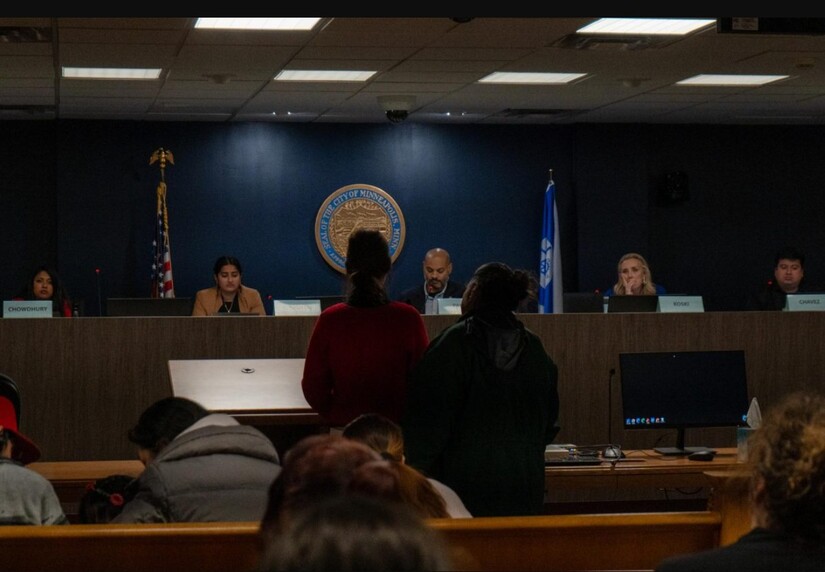
Tensions peaked on December 16, during the final budget markup and vote. As the deadline approached, a compromise was negotiated directly between the Frey administration and two senior council leaders, Budget Chair and Vice President Aisha Chughtai and Council Member Jeremiah Ellison.
The negotiations occurred largely behind closed doors, prompting criticism from within the Council itself. Wonsley publicly rebuked the process, arguing that the last minute deal undercut transparency and weakened the Council’s commitment to making emergency housing funding an ongoing obligation rather than a temporary fix.
The episode exposed fault lines even among council members broadly aligned on housing policy goals, particularly around how much compromise was acceptable to avoid a mayoral veto. A veto would have been only the second in Minneapolis history and risked delaying city operations into the new fiscal year.
The final agreement reshaped several major budget items while preserving overall spending levels and avoiding layoffs.
Under the adopted 2026 budget:
While housing advocates welcomed the preservation of voucher funding, many noted that the shift to a time limited pilot structure creates uncertainty for households assisted through the program once the three year window closes.
Beyond the immediate political drama, the budget debate underscored a deeper financial challenge facing Minneapolis. City officials have warned of a multimillion dollar fiscal cliff between 2027 and 2029, driven in part by the expiration of federal pandemic era housing funds and growing reliance on local property taxes to sustain social services.
The Frey administration emphasized the need for disciplined budgeting to prevent layoffs and preserve core city functions. Council members supporting expanded housing investments countered that the city’s budget is a moral document, one that should place the highest priority on residents experiencing homelessness, even if it requires difficult tradeoffs within City Hall.
Despite the public friction and internal disagreements, the final 2026 budget passed on an 11 to 0 vote, reflecting a unified, if strained, front to ensure uninterrupted city services in the new year.
The more consequential test now shifts from budget passage to implementation. How quickly housing vouchers are deployed, how outcomes are tracked, and whether the city commits to sustaining the program beyond its pilot phase will determine whether this year’s compromise marks a meaningful step toward reducing homelessness or merely delays the next confrontation.
For Minneapolis residents, the stakes remain tangible and urgent. The success or failure of the 2026 budget’s housing decisions will be measured not in spreadsheets or council votes, but in whether fewer people are sleeping outside and more families are able to remain stably housed as the city moves toward its next budget cycle.



Moderate snow, with a high of 36 and low of 30 degrees. Heavy freezing drizzle in the morning, moderate snow in the afternoon, overcast during the evening, patchy moderate snow overnight.