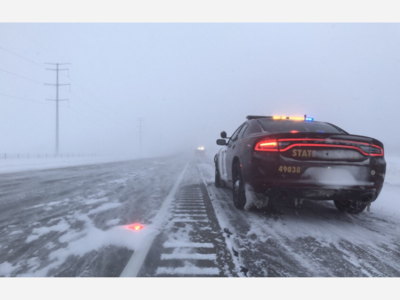
32° and Heavy freezing drizzle
Image




On January 1, 2026, Minnesota will do something quietly radical.
It will begin offering paid family and medical leave to most of its workers, allowing them to step away from their jobs to recover from illness, care for loved ones, welcome a child, or escape danger without surrendering their income. In a country that still treats paid leave as a perk rather than a guarantee, Minnesota is choosing to treat it as infrastructure.
This decision did not come easily, and it did not come quickly. It is the result of years of legislative persistence, administrative planning, actuarial modeling, and a sustained belief that government has a role to play when life interrupts work.
Paid Leave has not yet begun. No benefits have been paid. No claims processed. No systems stress tested at scale. And yet, its significance is already clear, because it addresses one of the most durable failures in modern American economic life: the idea that workers must absorb the full financial cost of being human.
For decades, paid leave in Minnesota depended almost entirely on employer generosity. Professionals in large firms often had coverage. Hourly workers, part time employees, seasonal laborers, and those in small businesses often did not. Federal law offered unpaid job protection for some, but unpaid leave is an abstraction for families living paycheck to paycheck. A right that cannot be exercised without harm is not a right in practice.
The result was predictable.
Workers delayed medical care.
Parents returned to work too soon after childbirth.
Caregivers exited the labor force entirely.
Illness and family crisis cascaded into housing instability and debt.
This was not a failure of work ethic or personal responsibility. It was a failure of public design.
Minnesota’s forthcoming Paid Family and Medical Leave program is an attempt to correct that design.
Beginning in 2026, most workers in the state will be eligible for paid leave for qualifying medical or family reasons.
Medical leave will cover recovery from serious health conditions, including pregnancy and childbirth. Family leave will cover caregiving, bonding with a new child, military related needs, and safety leave for survivors of domestic violence, sexual assault, or stalking. Workers will be able to access up to twelve weeks per category per year, with a combined cap of twenty weeks.
Benefits will replace a portion of wages based on prior earnings, with lower income workers receiving proportionally higher replacement rates. This progressive structure is intentional. Experience from other states has shown that flat replacement rates leave many low wage workers unable to afford taking leave even when technically eligible. Minnesota chose to design a system that is usable, not merely available.
The program will be administered by the Minnesota Department of Employment and Economic Development, integrating Paid Leave into the same institutional framework that manages unemployment insurance, wage reporting, and workforce data. This decision signals seriousness. Social insurance programs succeed or fail not on rhetoric, but on administrative competence.
The fiscal architecture reflects the same discipline. The program will be funded by a payroll premium set at 0.88 percent for 2026, shared between employers and employees. That rate was determined through actuarial analysis that accounted for projected utilization, wage distributions, and lessons from other states. The goal was not to minimize cost at all costs, nor to overpromise benefits, but to build a system that can endure.
That endurance is no accident. It is the product of sustained leadership.
Credit is due to many. Legislators who carried the policy across multiple sessions when earlier versions stalled. Committee members who wrestled with premium rates, private plan options, and small business impacts. Advocates who brought lived experience into hearing rooms and refused to let the human cost remain abstract. Agency staff who translated statute into systems.
But it is also appropriate to recognize the role of executive leadership in keeping this effort intact.
Tim Walz and his administration treated Paid Leave not as a symbolic gesture, but as long term civic infrastructure. The administration stayed engaged beyond passage, emphasizing implementation, solvency, and usability over political victory laps. It resisted the temptation to rush a complex program to claim credit, choosing instead to give agencies time to prepare and employers time to adapt.
That posture mattered. Programs of this scale collapse when they are built for applause rather than reality. Paid Leave survived because it was treated as something meant to last.
When the program launches in January 2026, Minnesota will not be testing whether Paid Leave is popular. That question has largely been settled. The real tests will be operational and ethical.
Can claims be processed accurately and on time.
Can customer service meet demand.
Can employers integrate the program without undue disruption.
Can access remain equitable across income levels, industries, and communities.
These are not reasons for hesitation. They are the tests of any serious policy.
If the program works as designed, its most important effects will not be dramatic. They will be ordinary.
A worker will stay home long enough to heal.
A parent will bond without panic.
A caregiver will remain attached to the workforce.
A survivor will seek safety without financial collapse.
An employer will retain a trained employee rather than replacing one.
Over time, these individual outcomes will accumulate into structural change. Labor force attachment will strengthen. Turnover will decline. Health outcomes will improve. Housing stability will increase. Public systems will face fewer crisis driven interventions.
This is what preventive policy looks like. It is quieter than emergency response. It is also more humane and more cost effective.
At its core, Paid Leave is not a benefit program. It is a statement about values. It asserts that work and care are not competing obligations. That illness should not trigger economic freefall. That caregiving is not a private inconvenience, but a public reality.
Beginning January 1, 2026, Minnesota will put those assertions into practice.
If the program succeeds, it will eventually fade into the background of daily life, becoming ordinary, expected, and unremarkable. Workers will plan around it. Employers will account for it. Families will rely on it without fear.
That invisibility will be its greatest achievement.
Because it will mean that, at last, one of life’s most predictable disruptions no longer carries an unnecessary price.
That is the work of good government when it is done with patience, discipline, and care



Moderate snow, with a high of 36 and low of 30 degrees. Heavy freezing drizzle in the morning, moderate snow in the afternoon, overcast during the evening, patchy moderate snow overnight.