36° and Moderate snow
Image




COON RAPIDS, MN — Residents across Coon Rapids and neighboring Anoka County communities reported a widespread and unusually strong odor of natural gas on December 30, 2025, prompting a coordinated, multi agency investigation involving local fire departments, county emergency management officials, and regional utility providers.

The reports triggered heightened public concern throughout the evening as emergency responders worked to determine the source of the odor and assess any potential risk to public safety.
In a public update issued at approximately 7:25 p.m., Anoka County Emergency Management confirmed that crews from CenterPoint Energy had not identified any active gas leaks after inspecting the initially reported areas.
Officials further clarified that reports of a chemical spill were unfounded, and no hazardous materials incident had occurred. As a precaution, CenterPoint Energy announced it was deploying additional specialized detection equipment to broaden the search area and rule out smaller or underground issues that may not be immediately visible.
There are no evacuation orders in place, and authorities emphasized that there is no immediate danger to residents. Emergency units remain on standby while monitoring continues.
The response has been led by the Coon Rapids Fire Department, which received numerous calls from residents reporting the odor. Fire officials are working in close coordination with Northern Natural Gas, which is examining regional high pressure transmission infrastructure that runs through the area, as well as neighboring fire departments assisting with field checks.
County emergency management officials are overseeing interagency communication and monitoring any broader impacts across Anoka County.
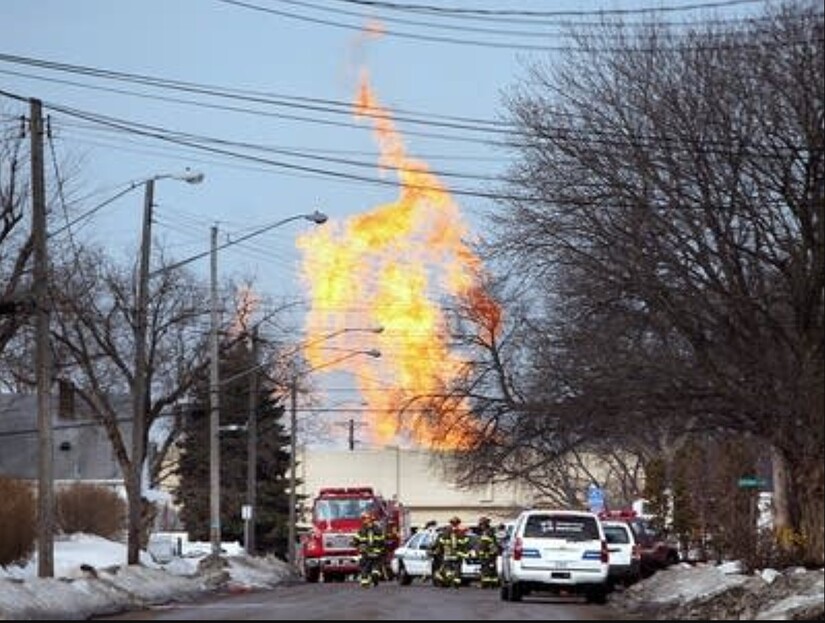
Natural gas is odorless and colorless in its natural state. Utility companies add mercaptan, a harmless sulfur based odorant, to make leaks detectable by smell. Because mercaptan is highly potent, even trace amounts can be noticeable over wide areas.
Experts note that weather conditions such as shifting winds or temperature inversions can trap odors close to the ground and allow them to travel long distances. In such cases, residents may smell gas even when no nearby leak exists. These events are sometimes referred to as “ghost odors,” where the source may be miles away or outside city boundaries.

City and county officials reiterated that no immediate action is required for most residents. However, they offered the following safety guidance:
Emergency officials stressed that public reports are critical to identifying potential issues and encouraged residents to continue reporting concerns.
Authorities said additional updates will be released if new information becomes available as monitoring and inspections continue.



Light snow, with a high of 37 and low of 30 degrees. Light snow in the morning, moderate snow during the afternoon, patchy moderate snow overnight.