36° and Clear
Image
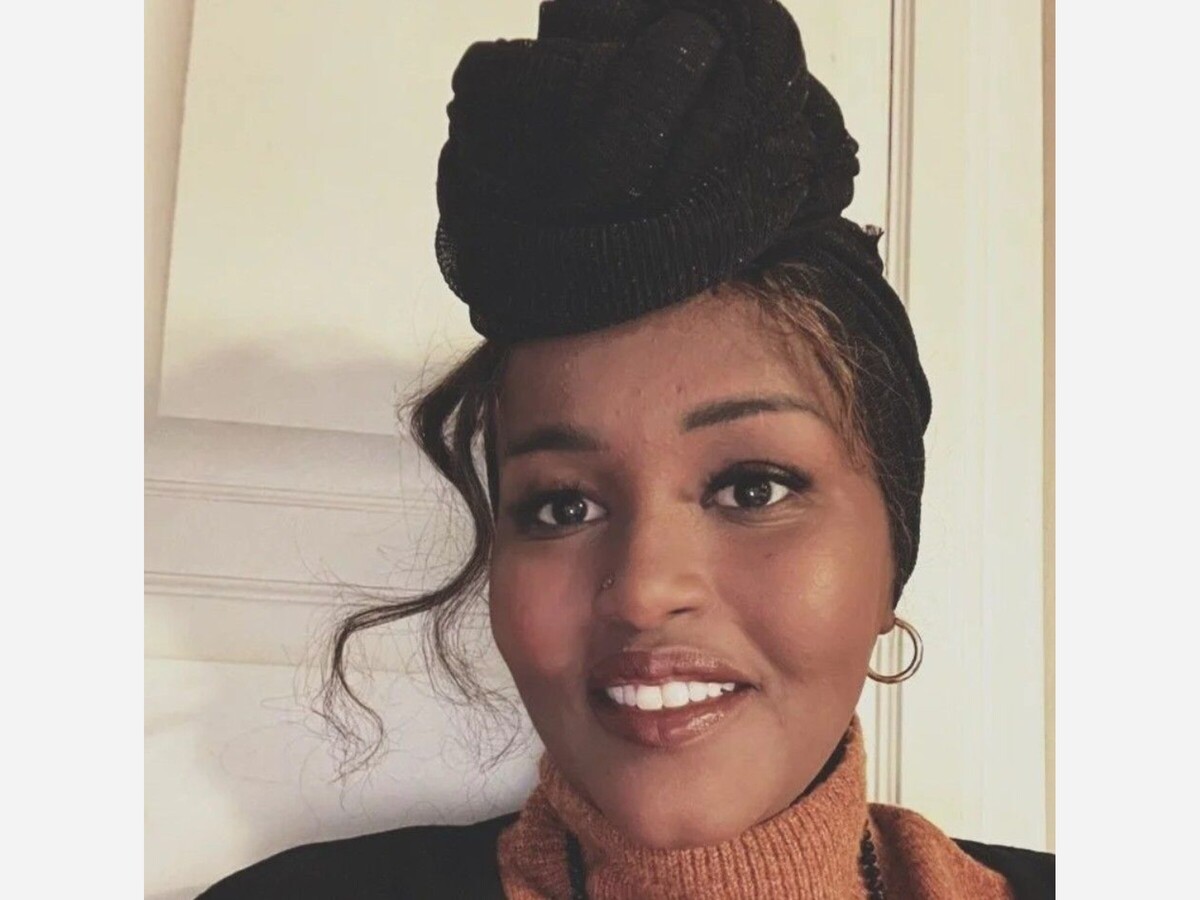



Late in the afternoon, long after the formal schedule of the school day had begun to wind down, Dr. Salma Hussein reflected on the kinds of moments that reveal the true nature of education.
These moments rarely involve test scores or lesson plans. More often, they arise from the emotional realities children carry with them into school.
Across classrooms in communities everywhere, educators encounter students who arrive with unmet needs. Some carry frustration. Others carry stress, uncertainty, or experiences that make it difficult for them to regulate their emotions. When those feelings surface, they can sometimes appear as anger, restlessness, or physical outbursts that young children do not yet have the words to explain.
In those moments, schools become more than places of instruction. They become places of care, patience, and protection. Educators step forward to calm situations, support staff, and help children find their way back to safety and understanding.
Reflecting on those experiences, Dr. Hussein spoke about the importance of recognizing the deeper emotions often behind a child’s behavior.
"I have seen moments when a child is really upset," she said quietly. "They show their frustration physically because they do not yet know how to express what they are feeling."
Moments like these remind educators that beneath anger or defiance there is often something more vulnerable.
A longing to be understood.
And sometimes, quite simply, a longing to be loved.
Moments like this are rarely captured in policy reports or educational research. Yet they represent the emotional terrain educators navigate every day.
"Watching children experience trauma and seeing how that trauma plays out in school is hard," Dr. Hussein said. "But we have our faith. We know that Allah does not give us more than we can handle. So we continue."
That sentence may be the clearest description of her leadership philosophy.
Faith. Patience. Responsibility.
And the belief that every child deserves to be seen with compassion.
Today, Dr. Salma Hussein serves as principal of Gideon Pond Elementary School in Burnsville, Minnesota. Her leadership is widely recognized as both historic and transformative. Yet when she speaks about education, she rarely begins with titles or recognition.
She begins with children.
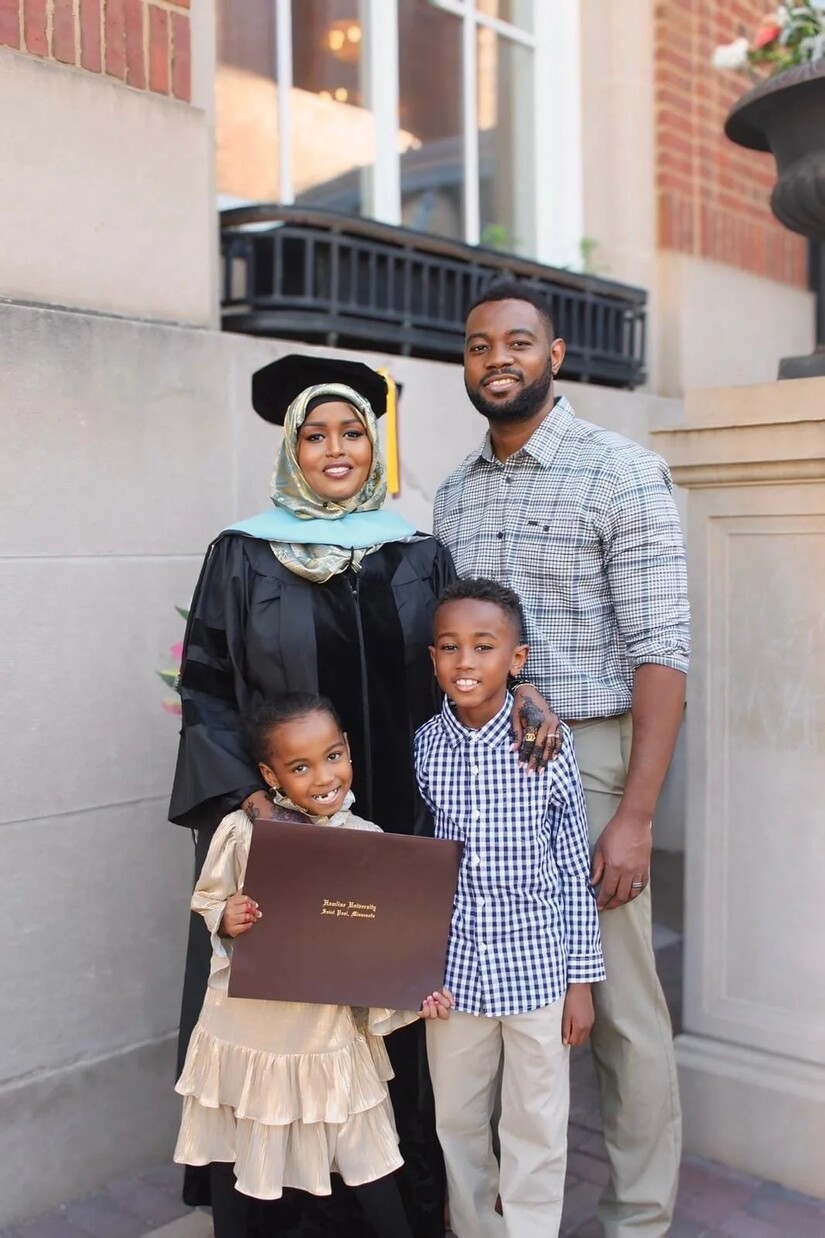
Dr. Hussein’s path to school leadership did not begin with a personal ambition to become a principal. It began with frustration.
Earlier in her career she worked as a school social worker in Minneapolis. In that role she saw firsthand how schools sometimes struggled to serve families whose lives were shaped by economic and logistical realities that institutions did not always fully understand.
Families who relied on public transportation often arrived at school with urgent paperwork from county offices. These documents were time sensitive. Benefits could be interrupted if they were not addressed quickly.
Yet sometimes those families were asked to return another day or make an appointment.
"I remember feeling frustrated," she said. "Families who looked like my own family were sometimes treated like an inconvenience."
She understood those families in a way that many systems did not.
"Only someone who has lived those experiences really understands the challenges."
That realization stayed with her. It planted a seed that would eventually shape the direction of her career.
She began to see that leadership within schools could change how systems respond to families.
"My desire to become a principal came from wanting to make education work better for diverse families," she explained.
Her parents had always emphasized the importance of education. They believed it was the gateway to opportunity. That belief became a guiding principle in her life.
Her family came to the United States in 1996. From that moment forward, education became a constant presence.
"From 1996 all the way to 2024, I have been in school learning," she said with a soft laugh.
For Dr. Hussein, the principalship became something larger than a professional milestone. It became an opportunity to transform schools into places that truly serve every family.
"It is an opportunity to take up space and say leadership is not only for some people," she said. "Leadership is for anybody who loves kids and has the qualifications."
Her vision is inclusive and expansive.
"My leadership is not just good for kids who look like me," she said. "My leadership is good for all kids."
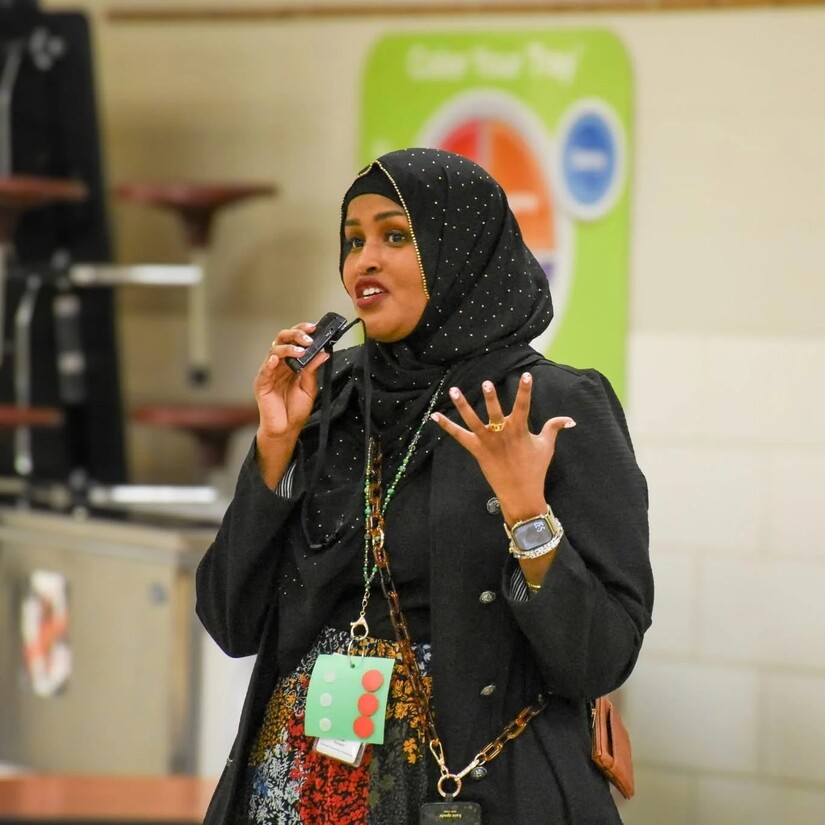
Today Dr. Hussein leads with confidence rooted in her identity and lived experiences. But that confidence was not always present.
Earlier in her career she believed she was showing up as a confident professional. In reality she was carrying a quiet sense of anxiety.
Looking back, she realized that the absence of representation in leadership had shaped her self perception.
"I realized later that I was showing up very anxious," she said. "I did not feel successful."
She eventually traced those feelings to the lack of visible role models who shared her background.
"The lack of representation made me believe success was not for me."
Healing that realization required intentional reflection.
She reminded herself of a simple truth. In many parts of the world people who looked like her served as teachers, principals, doctors, and leaders every day.
The difference was visibility.
"When people come to America they often have to start over," she said. "There are barriers that make it harder to step into leadership."
Rather than accept those barriers, she chose to challenge them.
"I wanted to be the change I needed as a child," she said.
Her goal was twofold.
She wanted children from immigrant backgrounds to see that leadership was possible.
She also wanted children from every background to understand that leadership is not defined by appearance or origin.
"Leadership is for all people."
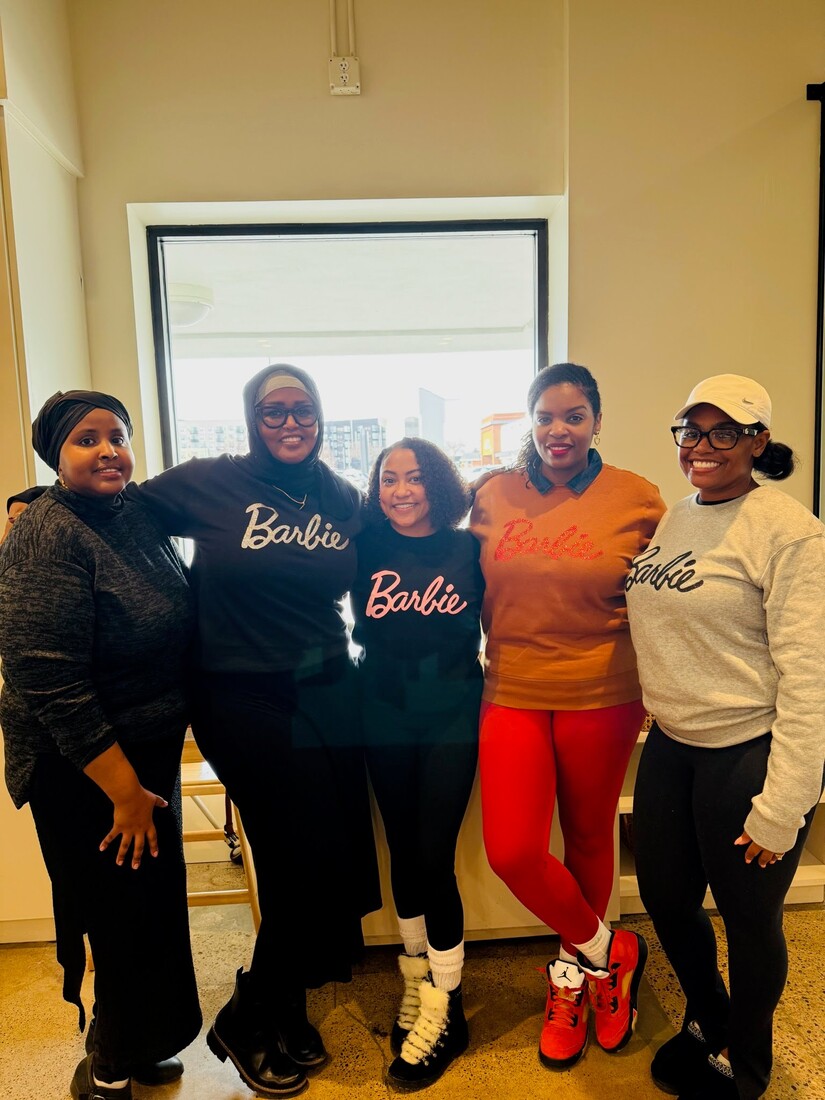
At Gideon Pond Elementary, representation often appears in the smallest moments.
Dr. Hussein sometimes greets Somali students with a cultural term of affection.
"Auntie."
Other students quickly became curious.
"They would ask what it means," she said. "I tell them it means aunt."
Soon children from other backgrounds began asking if she could be their aunt as well.
"I tell them yes."
Moments like this create a sense of belonging that extends far beyond language.
Dr. Hussein often reminds students that she is a multilingual principal who continues learning English even now.
The message is intentional.
Language is not a deficiency.
It is a strength.
"I encourage students to speak Somali and English," she said. "Do not choose English over your native language. Your native language is home."
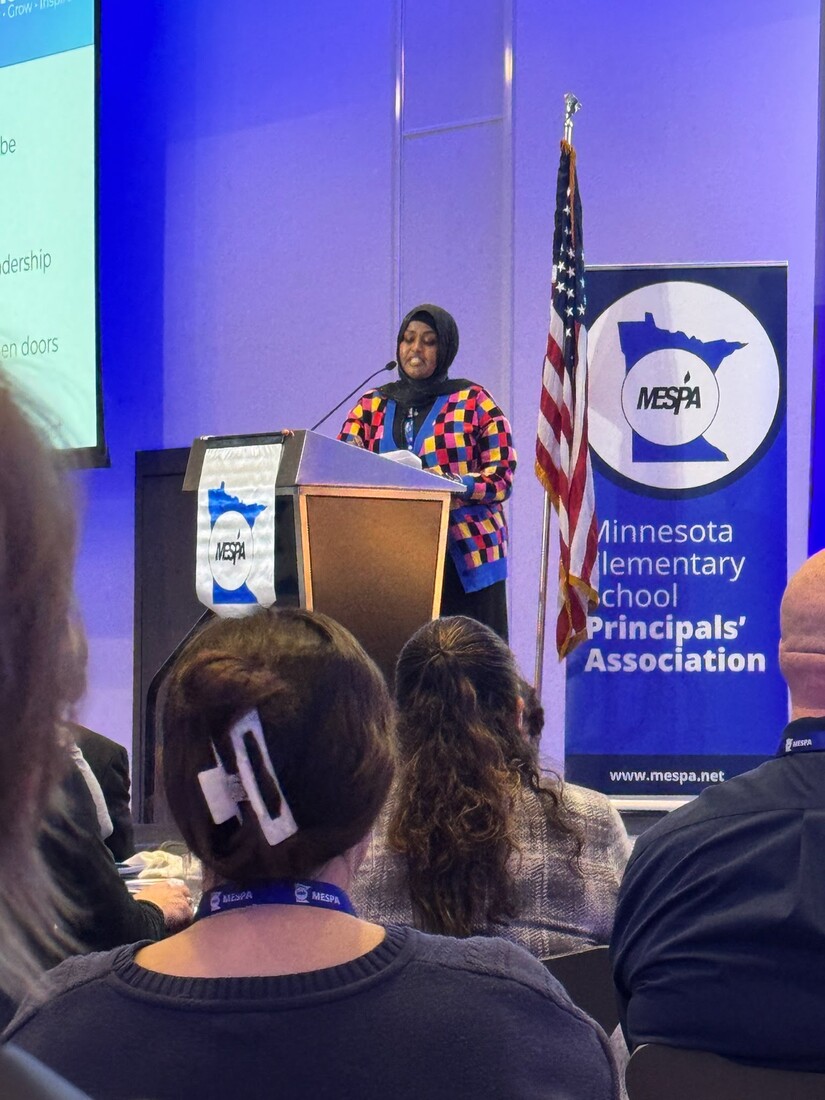
For Dr. Hussein, leadership is not primarily about authority. It is about service.
She learned this philosophy from watching her parents.
"They have always cared about community," she said. "Family for them is not just blood related. Family is community."
That understanding now shapes the culture of the school she leads.
"I tell the children that they are my bosses," she said with a smile. "Without them I am not a principal."
Her approach to leadership emphasizes high expectations paired with deep support.
Gideon Pond Elementary has been recognized multiple times as a school that has "Beat the Odds." Despite high poverty rates among its student population, academic achievement consistently exceeds expectations.
"Our teachers work very hard," she said. "We continue to have conversations about where students are and where they need to be."
The work is collaborative and intentional.
And it produces results.
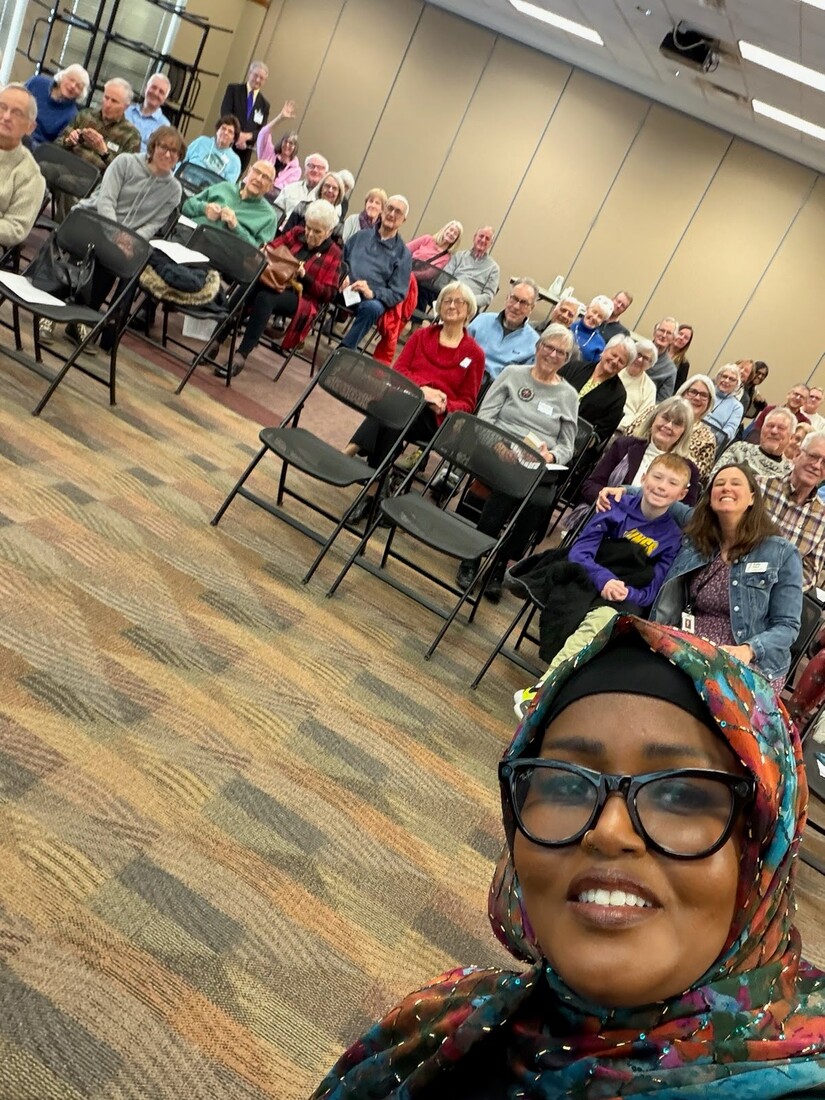
Dr. Hussein believes that schools must operate as true community institutions.
One example reveals how deeply she believes in that principle.
At Gideon Pond Elementary, parents are welcome to come into the building and have lunch with their children.
Some families do this every day.
"It is a small but meaningful opportunity," she explained. "Parents get to walk in, see their kids, and be present in our building."
For her, safety and openness are not opposing goals. They can coexist.
Parents also know they have the power to hold school leadership accountable.
Dr. Hussein openly shares the contact information of her assistant superintendent if parents feel concerns have not been addressed properly.
Some parents hesitate.
"They say they do not want to get me in trouble," she said with a laugh.
Her response is always the same.
"It is not trouble. It is feedback."
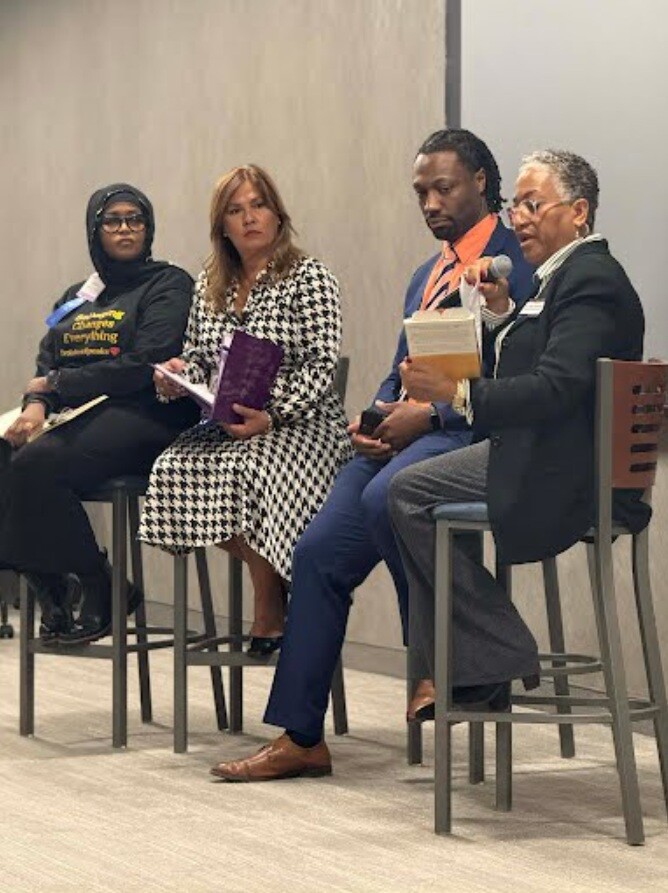
The concept of liberation often appears in social movements and political discourse. For Dr. Hussein, liberation has a practical meaning within schools.
"Liberation is freedom," she said. "It is confidence. It is critical thinking. It is using your voice."
Students must understand that their thoughts and experiences matter.
"I want our students to know they are important," she said. "That they are smart and that what they have to say matters."
Education should not suppress identity.
It should help students understand who they are.
"Liberation is learning," she said. "It is knowing yourself and showing up loving yourself."
Leadership can be isolating. Dr. Hussein sustains her work through a network of support.
She maintains a group chat with fellow educators called "Sisters in Leadership." The group includes African American and Somali women who share experiences, challenges, and encouragement.
Her husband provides another source of support.
"He is not in education," she said. "But he listens."
Her parents and siblings remain deeply invested in her well being.
This community sustains her sense of purpose.
"My purpose is to serve the community," she said. "My purpose is to protect and serve the children."
Dr. Hussein believes leadership includes the responsibility to remove barriers for others.
Early in her administrative career she met a woman from China who was struggling to find a placement for her principal internship hours.
Despite being new to the role herself, Dr. Hussein offered to host her.
Some colleagues questioned the decision.
"You are very new," they said. "How can you host someone?"
Her answer was simple.
"Leading is by doing. You lead. You do. You learn."
Since that day she has continued opening doors whenever possible.
"I want to be a gateway to success," she said.
Years from now, when students look back at their time at Gideon Pond Elementary, Dr. Hussein hopes they remember something simple.
"I hope they remember that I cared."
That she believed in them.
That she supported them.
And that she helped open doors to their future.
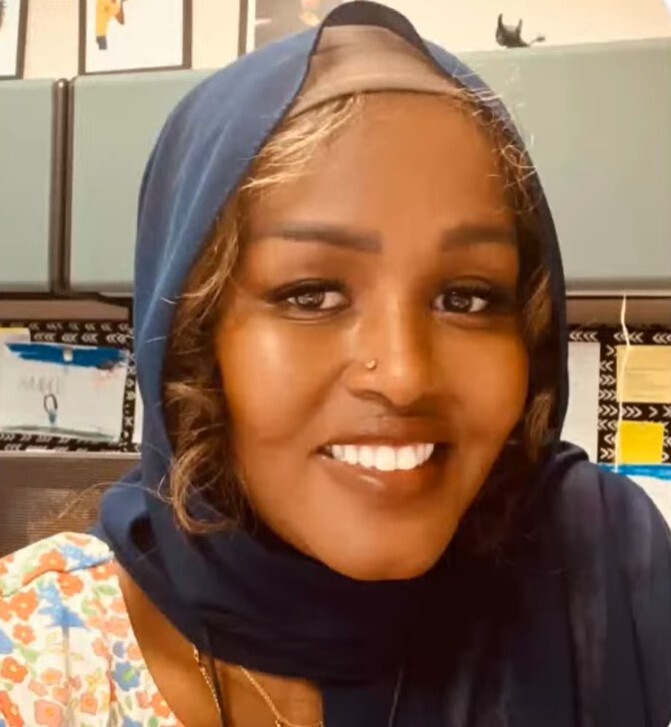
If she could speak directly to a young woman who wonders whether leadership is meant for her, Dr. Hussein would offer reassurance.
Leadership belongs to everyone willing to serve.
"As long as you are reflective and have a heart for service, you can be a leader," she said.
Imposter syndrome is real, especially for those who rarely see themselves represented in leadership.
But belonging begins within.
"If we know who we are and we stay true to our purpose, we will be good leaders."
As part of the MinneapoliMedia tradition for The Power of Her series, Dr. Hussein was asked to recognize women whose leadership inspires her.
She named two.
The first was Congresswoman Ilhan Omar, whose courage and willingness to speak truth she admires deeply.
"She is confident," Dr. Hussein said. "She uses courage to speak truth."
The second was Dr. Theresa Battle, the former superintendent who interviewed Dr. Hussein for her current position.
During that interview Dr. Battle asked a question that stayed with her.
Had she ever considered becoming a superintendent?
Dr. Hussein had applied for a principal role. Yet Dr. Battle saw something more.
That moment of recognition mattered.
"It was incredible that she saw something in me," Dr. Hussein said.
Her encouragement helped open a path that would eventually lead Dr. Hussein to make history as the first Somali Muslim principal in Minnesota.
As the conversation concluded, one truth stood above the rest.
For Dr. Salma Hussein, leadership is not about authority.
It is about responsibility.
It is about service.
It is about protecting children and creating spaces where every student understands their worth.
In classrooms and hallways at Gideon Pond Elementary, that philosophy unfolds every day.
Students learn mathematics, reading, science, and history.
But they also learn something deeper.
They learn that belonging is possible.
And that leadership, at its best, begins with care.
MinneapoliMedia
Community. Culture. Civic Life.



Patchy rain nearby, with a high of 64 and low of 34 degrees. Sunny in the morning, clear overnight.