Image




In Minnesota, democracy is treated less like a seasonal event and more like a continuous civic practice.
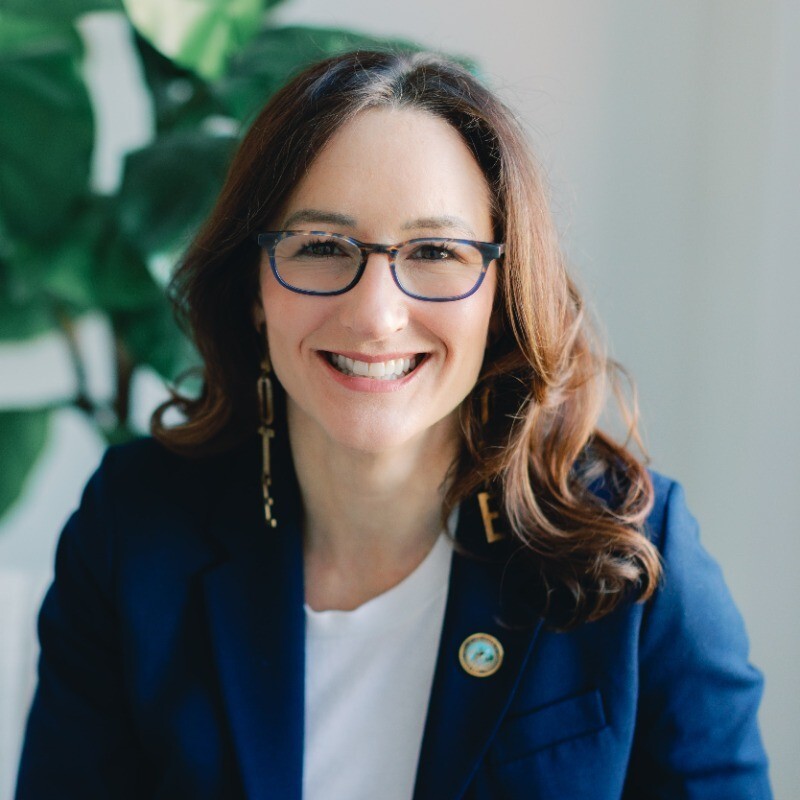
That reality became especially clear during a recent MyVote MyVoice webinar featuring Melanie Hazelip, Director of Voter Outreach for the Office of the Minnesota Secretary of State. Over the course of the extended public conversation, Hazelip offered a detailed look into how Minnesota approaches voter education, voter participation, election security, and public trust.
The discussion was framed around a straightforward but increasingly urgent question: how does a democracy remain functional when public trust, civic participation, and confidence in institutions are under strain across the world?
The webinar, titled “Voter 101: Understanding Elections in Minnesota & the U.S.,” brought together students, community members, and international participants seeking to better understand how elections operate in Minnesota and across the United States. While the event focused heavily on practical voter education, it also evolved into something larger. It became a discussion about democratic culture, civic responsibility, and the difficult work required to sustain participation in public life.
Throughout the conversation, Hazelip repeatedly returned to a single core principle.
“Democracy is not a spectator sport.”
The statement was not delivered as a slogan. It reflected the organizing philosophy behind much of Minnesota’s voter outreach framework and Hazelip’s broader approach to civic engagement.
The webinar also provided a rare public window into the daily mechanics of election outreach work that most voters never see. Hazelip discussed voter registration systems, election security safeguards, youth engagement efforts, absentee voting, multilingual voter materials, misinformation, election transparency, community partnerships, and the role of trusted local organizations in maintaining public participation.
At a time when elections across the United States are increasingly accompanied by distrust, misinformation, polarization, and accusations of fraud, the discussion offered a grounded and fact-based explanation of how Minnesota’s election infrastructure functions.
It also revealed how much of democratic participation ultimately depends on relationships between communities and institutions.
Hazelip explained during the webinar that her work in voter engagement began in 2016 when she co-founded a grassroots voting rights organization. Her work eventually evolved into her current role as Director of Voter Outreach with the Office of the Minnesota Secretary of State.
Today, she helps oversee statewide outreach efforts focused on increasing voter registration, expanding voter participation, and ensuring that election information is accessible to Minnesotans across different communities and backgrounds.
Her office operates as a nonpartisan entity.
That distinction mattered throughout the webinar.
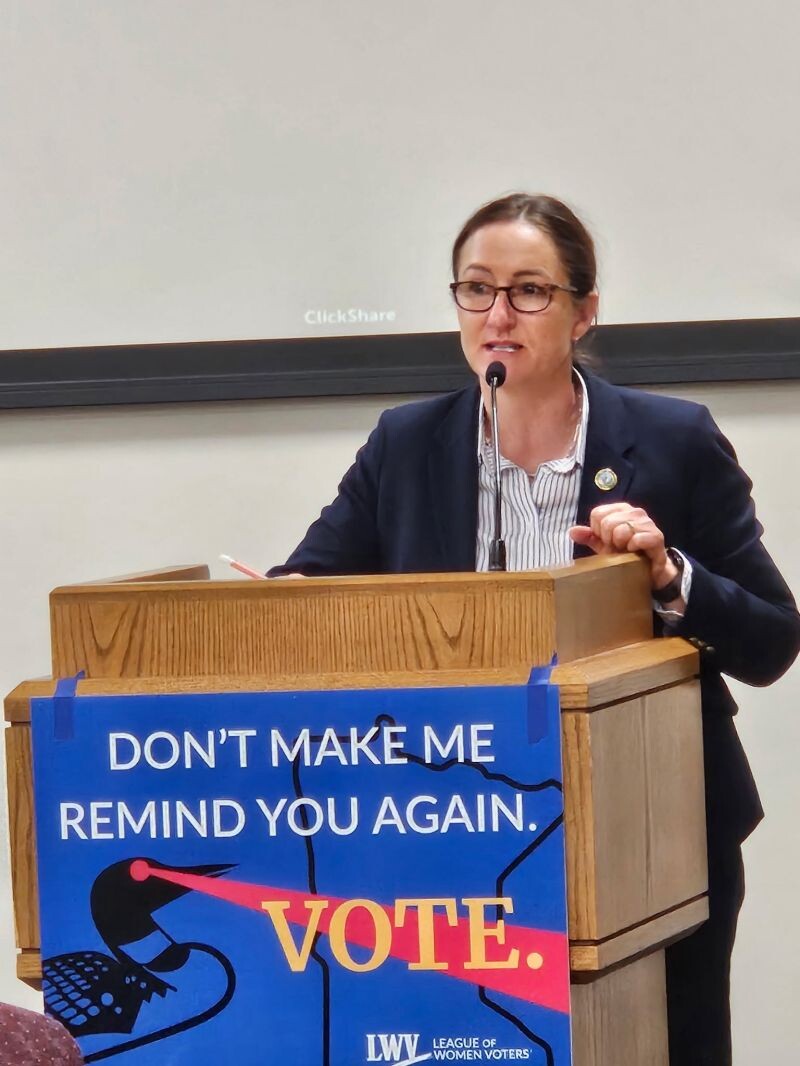
Hazelip repeatedly emphasized that the office does not advocate for political parties or candidates. Instead, its responsibility is to ensure that voters understand how elections work, how to register, how to cast ballots, and how to access accurate information.
“We work with any entity that wants to help get out nonpartisan information about how and why to vote,” Hazelip explained.
The philosophy aligns closely with Minnesota’s long-standing reputation as one of the highest voter turnout states in the country.
That reputation did not emerge accidentally.
Minnesota’s election participation rates are the result of decades of policy decisions, administrative systems, civic culture, and community engagement efforts designed to lower barriers to voting while maintaining public confidence in election integrity.
Hazelip’s role exists within that broader ecosystem.
Her work spans public education campaigns, partnerships with schools and libraries, voter workshops, outreach to immigrant communities, election information dissemination, and efforts aimed at first-time voters and historically underrepresented populations.
The work is logistical, educational, and relational all at once.
The webinar made clear that Minnesota’s election infrastructure depends not only on state systems but also on a broad network of community organizations, educators, election judges, libraries, local governments, and volunteers.
One of the central goals of the webinar was to simplify the structure of elections in the United States.
Hazelip acknowledged early in the conversation that election systems can be confusing even for experienced voters.
The United States does not operate elections through a single centralized national authority. Instead, elections are largely administered at the state and local levels.
That distinction is important.
In Minnesota, elections involve coordination across 87 counties, local municipalities, school districts, and election offices.
Hazelip explained that while federal elections often dominate media coverage, many of the elections with the most immediate impact on daily life occur at the local level.
Municipal races, county offices, school board elections, and local ballot questions often determine decisions involving schools, roads, policing, housing, public health, and community funding.
Yet turnout in local elections is often substantially lower than turnout during presidential elections.
That lower participation rate means individual votes can carry greater weight.
Hazelip described the current election cycle as including local races, school district races, county races, and special elections.
She encouraged participants to actively review their local ballots using the Minnesota Secretary of State’s online tools.
“Do you see an election in your jurisdiction?” she had asked publicly in a social media post promoting local election awareness.
The question reflects a broader challenge facing election officials nationally.
Many voters remain highly engaged during presidential election years while paying limited attention to local government elections that directly shape their communities.
The webinar attempted to close that information gap.
Hazelip carefully explained the difference between primary elections, general elections, midterm elections, and special elections.
Primary elections determine which candidates appear on the general election ballot.
General elections are held on the first Tuesday in November and include federal, state, and local races.
Midterm elections occur halfway through a president’s four-year term.
Special elections happen when unexpected vacancies occur due to resignations, deaths, or other circumstances requiring replacement representation.
Rather than framing elections as isolated events occurring on a single Tuesday, Hazelip emphasized that Minnesota now effectively operates within an “election season” due to expanded early voting.
Minnesota voters currently have 46 days of early voting available before statewide elections.
That approach reflects one of the state’s broader goals: reducing barriers to participation.
Throughout the webinar, Hazelip repeatedly returned to the issue of accessibility.
Much of Minnesota’s election policy infrastructure is built around the idea that eligible voters should encounter as few logistical barriers as possible.
Minnesota allows online voter registration.
The state permits same-day voter registration.
Residents can vote in person on Election Day, vote early in person, or vote absentee by mail.
The state also permits pre-registration for 16- and 17-year-olds.
That particular policy received significant attention during the discussion.
Minnesota passed the youth pre-registration law in 2023.
While individuals must still be 18 years old to actually cast ballots, younger teenagers can now register in advance.
Hazelip described the policy as an effort to help young people begin identifying themselves as voters before reaching adulthood.
Research consistently shows that individuals who begin voting at younger ages are more likely to remain lifelong voters.
Hazelip argued that language itself plays a role in shaping civic identity.
She pointed to the difference between asking a young person, “Do you vote?” versus asking, “Are you a voter?”
The distinction may appear subtle, but Hazelip argued it carries psychological significance.
The first frames voting as an occasional activity.
The second frames participation as part of a person’s identity and civic role.
That philosophy reflects a broader understanding of how democratic habits are formed.
Voting behavior is often influenced not only by policy access but also by family culture, social expectations, peer behavior, education, and community norms.
Hazelip’s office appears to approach voter outreach not simply as a technical process but as a long-term civic development effort.
The strategy includes outreach to high schools, colleges, libraries, and community organizations.
Minnesota’s emphasis on youth participation has produced measurable outcomes.
Hazelip referenced efforts that helped institutions such as St. Olaf College achieve exceptionally high student voter turnout rates.
The state’s outreach efforts also include translated voter materials.
Minnesota currently provides election information in multiple languages.
Hazelip explained that translated voter information has existed in Minnesota for generations, reflecting a long-standing recognition that language access matters in civic participation.
Historically, translations were conducted entirely through human translators and translation organizations.
Today, some AI-assisted translation tools may be used for widely spoken languages such as Spanish, Somali, and Hmong, but Hazelip emphasized that human review and quality assurance remain essential.
That quality control process matters because language differences, dialects, and cultural context can affect how election information is interpreted.
The goal is not simply literal translation.
The goal is comprehension and accessibility.
The webinar also addressed recent changes to Minnesota voting laws.
Hazelip explained that individuals on probation or parole regained voting rights in Minnesota following changes enacted in 2023.
Under previous rules, many individuals involved with the criminal justice system remained disenfranchised after incarceration.
The updated policy restored voting eligibility to individuals living and working in their communities while on probation or parole.
Hazelip framed the issue in practical civic terms.
If individuals are living in the community, working jobs, paying taxes, and participating in society, the state believes they should retain the right to vote.
The discussion also touched on voting rights for individuals under guardianship.
Hazelip clarified that individuals under guardianship generally maintain voting rights unless a judge specifically revokes that right.
These policies reflect broader national debates over voting access and enfranchisement.
Across the United States, voting rights policies vary dramatically from state to state.
Some states impose stricter identification rules, absentee ballot limitations, or felony disenfranchisement policies.
Minnesota has generally positioned itself toward the access-expansion side of the national spectrum while maintaining extensive administrative verification systems.
One of the most detailed portions of the webinar involved election security.
Hazelip devoted substantial time to explaining how Minnesota verifies voter eligibility and safeguards ballots.
The discussion directly addressed misinformation and public distrust surrounding elections.
Minnesota operates through a Statewide Voter Registration System.
According to Hazelip, voter registration data is cross-checked against multiple government databases, including the Minnesota Department of Health, the Social Security Administration, and vehicle service databases.
The verification process helps confirm that voters are alive, eligible, properly registered, and residing at the listed address.
The databases are updated regularly.
Hazelip emphasized that providing false information during voter registration constitutes a felony offense.
Voters are required to swear under oath that the information submitted is truthful.
The state’s systems are designed to detect inconsistencies and prevent duplicate or fraudulent registrations.
The discussion around fraud was notable for its tone.
Hazelip did not dismiss public concerns outright.
Instead, she attempted to explain the specific procedural safeguards that exist within Minnesota’s election infrastructure.
Her approach focused on transparency and process.
Absentee voting has become one of the most politically contested aspects of modern American elections.
Hazelip addressed the subject directly.
She described absentee voting as one of the most secure voting methods currently available despite the misinformation that often surrounds it.
Minnesota absentee ballots undergo multiple verification stages.
Election officials first inspect ballots for tampering.
Officials then verify identifying information, including signatures from both the voter and a witness.
Once accepted, the voter’s status is updated to prevent duplicate voting.
Hazelip also highlighted Minnesota’s ballot tracking system.
Voters can monitor the status of absentee ballots using online tools similar to package tracking systems.
The system allows voters to confirm whether their ballot was received and accepted.
That visibility serves both logistical and psychological functions.
It provides practical information while also increasing public confidence in the process.
Hazelip repeatedly emphasized that ballots are not counted immediately upon arrival.
Instead, absentee ballots remain secured until Election Day counting procedures begin.
The state’s election procedures involve bipartisan oversight.
Hazelip explained that ballot processing and election judge duties frequently involve representatives from both major political parties working together.
The bipartisan structure is intended to create mutual accountability and public trust.
Transparency emerged as one of the defining themes of the webinar.
Hazelip repeatedly stressed that many parts of Minnesota’s election process are open to public observation.
Before elections occur, counties conduct public accuracy tests on voting machines.
Members of the public can observe the testing process.
Election night procedures also occur under public observation protocols.
After voting concludes, election workers reconcile ballot counts, voter check-ins, and tabulator totals.
Hazelip explained that every ballot must ultimately be accounted for.
Following the election, one precinct from each Minnesota county is randomly selected for hand recount verification.
That recount process helps confirm that machine tabulations align with physical ballots.
Certification procedures involve judicial and election officials.
Hazelip encouraged attendees to personally participate in the election process by becoming election judges.
Minnesota permits even 16- and 17-year-olds to serve as trainee election judges.
The recommendation reflected Hazelip’s broader philosophy that democratic trust increases when citizens directly observe institutions functioning.
Rather than asking the public to blindly trust election systems, Minnesota’s model attempts to create multiple opportunities for direct observation and participation.
The webinar also addressed one of the most rapidly evolving challenges facing modern elections: misinformation and artificial intelligence.
Participants asked whether AI systems could potentially be used to manipulate elections or generate fraudulent identities.
Hazelip acknowledged that technological threats are becoming increasingly sophisticated.
She explained that Minnesota passed legislation restricting certain forms of election-related AI content within designated periods near elections.
The law attempts to address the growing problem of deceptive synthetic media, manipulated videos, and misleading election information.
Hazelip made clear that election officials remain vigilant regarding evolving threats.
The discussion reflected broader national concerns.
Election misinformation has become one of the defining political challenges of the digital era.
False information can spread rapidly through social media ecosystems, often outpacing official corrections.
The challenge is especially acute because distrust itself can undermine participation regardless of whether the underlying claims are accurate.
Hazelip repeatedly emphasized the importance of “trusted messengers” in countering misinformation.
That phrase became one of the most important conceptual frameworks discussed during the webinar.
Perhaps the most revealing section of the discussion occurred when Hazelip spoke candidly about the limits of government outreach.
Drawing from her social work background, she acknowledged that government officials may not always be the most effective messengers within every community.
“A white lady from government,” she said frankly, may not necessarily be welcomed into every community as a trusted authority figure.
The remark reflected unusual candor for a government official speaking publicly.
It also demonstrated a practical understanding of how trust actually functions.
Hazelip explained that Minnesota’s voter outreach efforts depend heavily on partnerships with local organizations and trusted community leaders.
Those partnerships include nonprofits, libraries, educational institutions, cultural organizations, service providers, and grassroots groups.
Organizations already helping residents with housing, food access, education, or community services often possess stronger relational trust than government agencies alone.
The state’s outreach model therefore relies on collaboration rather than top-down communication.
Hazelip stated directly that Minnesota would not maintain its voter turnout success without those community partnerships.
Her office’s outreach team is relatively small.
The broader ecosystem depends on hundreds of community partners helping distribute election information.
That insight may be one of the most important takeaways from the webinar.
Strong democratic participation does not emerge solely from laws or institutions.
It also depends on social trust, civic relationships, and local engagement networks.
Another major theme throughout the webinar involved the relationship between voting and political power.
Hazelip repeatedly argued that elected officials respond to communities that participate consistently.
Communities with high voter turnout tend to receive greater political attention.
Communities with low turnout often struggle to command sustained policy focus.
The discussion became especially pointed during conversations about voter apathy.
Moderator Ntomchukwu Akaolisa raised concerns about voter disengagement in Nigeria, where some citizens believe voting no longer matters.
Hazelip connected that concern to broader patterns seen globally.
She argued that choosing not to vote effectively communicates to elected officials that non-voters can be politically ignored.
In one of the webinar’s most direct observations, Hazelip noted that older white Americans often receive disproportionate political attention because they vote at consistently high rates.
Politicians respond to populations that reliably participate.
The statement was not framed ideologically.
It was framed as a practical political reality.
The implication was clear.
Participation influences resource allocation, policy prioritization, and political responsiveness.
Hazelip also challenged the idea that avoiding elections constitutes meaningful political protest.
She distinguished between economic boycotts, which can pressure institutions financially, and election boycotts, which often reduce political leverage.
For elected officials lacking accountability, non-participation may simply remove incentives to respond.
The webinar repeatedly returned to the relationship between voting, voice, and power.
Akaolisa reinforced that theme throughout the discussion.
“The vote gives you voice, and the voice gives you power,” he stated multiple times during the session.
The framing connected the discussion beyond Minnesota.
It transformed the webinar into a broader conversation about democratic participation itself.
Although the webinar focused on Minnesota elections, the audience included many international participants, including Nigerian students and community members.
That international context gave the discussion additional depth.
Questions repeatedly connected Minnesota’s election systems to broader global concerns involving election integrity, voter confidence, authoritarianism, and democratic accountability.
Akaolisa frequently referenced Nigeria’s own democratic challenges.
Discussions touched on voter intimidation, election trust, political divisions, and the importance of transparent systems.
Hazelip repeatedly emphasized that democracy requires active maintenance.
It does not sustain itself automatically.
“Democracy is not self-perpetuating,” she stated.
The observation reflected concerns increasingly shared by political scientists, election experts, and democratic institutions worldwide.
Democratic systems depend on ongoing public participation, institutional legitimacy, civic education, and accountability.
Without active engagement, those systems can weaken.
Hazelip noted the global rise of authoritarianism and attacks on democratic norms.
In that context, she argued that voting alone is no longer sufficient.
Citizens must also encourage participation within their own networks and communities.
The statement aligned closely with the broader theme of relational organizing that emerged throughout the webinar.
Democracy survives through collective participation, not isolated individual acts.
The webinar also highlighted how Minnesota uses technology to improve voter access and transparency.
The state’s online voter tools allow residents to:
• Register to vote online;
• View sample ballots;
• Track absentee ballots;
• Confirm polling locations; and
• Access election information.
Hazelip repeatedly encouraged participants to use the state’s official election website, mnvotes.gov.
The online systems are designed to simplify participation and reduce confusion.
Minnesota also operates a year-round voter call center and text line.
Importantly, the hotline connects voters to real staff members rather than automated systems.
Residents can call for assistance locating polling places, verifying registration status, tracking absentee ballots, or reporting issues.
Hazelip emphasized that the office responds rapidly to reports of problems occurring at polling places.
The hotline can also be used to report intimidation, confusion, or irregularities.
The office then contacts county election administrators to address the issue.
Hazelip described Secretary of State Steve Simon’s preferred election environment as “low drama and high turnout.”
She also said polling places should function as “oases of peace.”
The phrases reflected the state’s broader effort to maintain calm, orderly, and trusted election environments during periods of heightened national tension.
One of the lesser-known aspects of Minnesota’s election system involves the role of election judges.
Election judges are temporary workers or volunteers who help administer elections locally.
Their responsibilities include checking in voters, assisting with ballots, monitoring procedures, and helping maintain orderly polling places.
Hazelip strongly encouraged participants to consider serving as election judges.
The role provides citizens with firsthand exposure to election administration.
It also increases transparency because ordinary residents directly participate in the process.
Minnesota’s bipartisan election judge structure was repeatedly emphasized.
Hazelip explained that election processes involving ballots often require participation from judges representing both major political parties.
The system is designed to ensure accountability through shared oversight.
Rather than relying on trust in a single institution or group, the structure attempts to distribute responsibility across participants.
The public nature of election procedures further reinforces that model.
Citizens can observe testing procedures, ballot board activities, and portions of the certification process.
The overarching message was consistent.
Transparency is intended to strengthen legitimacy.
Minnesota frequently ranks among the highest voter turnout states in America.
The webinar offered important insight into why.
The answer appears to involve a combination of policy design, institutional access, community engagement, cultural norms, and public education.
Minnesota has invested heavily in lowering practical barriers to participation.
The state supports same-day registration, absentee voting, online voter tools, early voting, multilingual materials, and youth pre-registration.
At the same time, the state has maintained extensive verification systems and bipartisan procedural safeguards intended to preserve election confidence.
Equally important, however, is the state’s civic culture.
Hazelip repeatedly emphasized that government outreach alone cannot explain Minnesota’s turnout rates.
Community organizations, educators, libraries, activists, and local leaders all contribute to maintaining participation.
That collaborative ecosystem may be one of Minnesota’s most important democratic assets.
The webinar itself reflected that ecosystem in action.
A nonprofit civic initiative partnered with a state election official to educate community members, international students, and residents about elections.
The event was not partisan.
It was educational.
The focus remained on participation, transparency, and understanding.
As the discussion continued, one idea became increasingly clear.
Hazelip views democracy as something much larger than voting once every few years.
Her comments consistently framed democratic participation as an ongoing social responsibility.
Voting matters.
But so does educating others.
So does sharing accurate information.
So does encouraging participation within families, schools, and communities.
So does building public trust.
Hazelip repeatedly encouraged attendees to become “trusted messengers” within their own circles.
The phrase reflected a recognition that institutions alone cannot sustain democracy.
Communities themselves play a central role.
The webinar therefore functioned on two levels simultaneously.
On one level, it was a practical educational session explaining Minnesota election procedures.
On another level, it was an argument for active civic participation during a period of growing democratic anxiety worldwide.
That larger context gave the discussion unusual weight.
At a time when election misinformation dominates headlines and public trust in institutions continues to erode across many democracies, the webinar demonstrated the value of transparent public education.
Hazelip did not approach the discussion defensively.
She answered detailed questions about election security, AI threats, absentee ballots, translation systems, public observation, overseas voting, and ballot verification procedures.
Her responses emphasized process, transparency, and public participation.
That approach may explain why Minnesota continues to maintain comparatively strong voter participation and election confidence.
Public trust is rarely built through slogans.
It is usually built through visible systems, accessible information, consistent engagement, and opportunities for direct observation.
The webinar highlighted how those principles operate in practice.
It also underscored how much work is required to maintain them.
Election administration is often invisible to the general public until controversy emerges.
Yet behind every election exists an extensive infrastructure involving administrators, judges, volunteers, databases, verification systems, public communication efforts, translators, community organizations, and legal safeguards.
The webinar made that infrastructure visible.
Ultimately, the conversation extended beyond Minnesota.
The webinar repeatedly returned to broader questions facing democracies globally.
How do societies maintain trust?
How do institutions remain legitimate?
How do younger generations become engaged?
How do governments counter misinformation without undermining free expression?
How do communities avoid cynicism and disengagement?
How do democracies survive periods of polarization?
Hazelip did not claim Minnesota had solved every challenge.
But the discussion suggested that certain principles matter.
Accessibility matters.
Transparency matters.
Community trust matters.
Civic education matters.
Participation matters.
And perhaps most importantly, democracy requires people who are willing to actively practice it.
That may be the central lesson emerging from both Hazelip’s work and the broader Minnesota model.
Strong democratic systems are not sustained automatically through laws alone.
They depend on habits.
They depend on institutions.
They depend on accountability.
They depend on public participation.
And they depend on communities believing that their involvement still matters.
During the webinar’s closing moments, Akaolisa urged attendees not to surrender their democratic responsibilities through apathy or division.
Education, participation, and transparency, he argued, remain essential safeguards for any society seeking a functional electoral system.
Hazelip’s closing message closely aligned with that sentiment.
Democracy, she stressed once again, is not a spectator sport.
The statement captured both the purpose of the webinar and the broader challenge facing modern democratic societies.
Participation is not optional if democratic systems are expected to endure.
The work of sustaining democracy belongs not only to governments or election officials, but to citizens themselves.
That responsibility, the webinar repeatedly emphasized, begins long before Election Day.
MinneapoliMedia | Community. Culture. Civic Life.



Sunny, with a high of 85 and low of 60 degrees. Sunny in the morning, clear overnight.