48° and Sunny
Image




Across Coon Rapids, the low rumble of municipal snowplows echoed through neighborhoods as Public Works crews began the long process of restoring more than 400 lane miles of city streets after a powerful late-season winter storm swept across Minnesota on Sunday, March 15, 2026.
Forecast models had initially warned the Twin Cities could see double-digit snowfall totals approaching 18 inches, but the system ultimately delivered a slightly lighter storm across the metro. Even so, the accumulation proved substantial.
According to reports compiled by the National Weather Service, snowfall totals in Coon Rapids reached approximately 8.2 to 8.3 inches, making it one of the larger snowfalls of the 2025–2026 winter season for the northern metro.
While not record-breaking for the region overall, the storm delivered enough snow to trigger full municipal snow removal operations across the city.
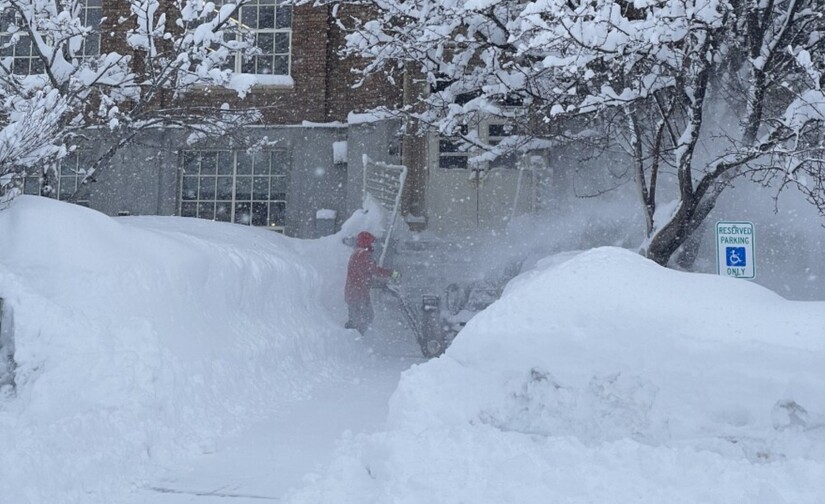
Meteorologists traced the storm to a classic “Colorado Low” system, a weather pattern that forms in the Rocky Mountain region and intensifies as it moves northeast into the Upper Midwest.
Such systems are well known in Minnesota for producing widespread snowfall, heavy precipitation, and strong winds. As the storm moved across the state on March 15, it created sharply varied snowfall totals.
In southern Minnesota, some communities were buried under extraordinary snowfall. The Mississippi River towns of Reads Landing and Kellogg recorded totals exceeding 20 to 25 inches, among the highest reported statewide.
Across the broader Twin Cities metropolitan area, totals varied significantly:
Snowfall rates intensified during the storm’s peak Sunday morning, reaching 1 to 2 inches per hour, according to meteorologists. The snow itself was described as heavy and moisture-laden, a type that places added strain on trees, vehicles, and municipal equipment.
Strong winds gusting between 40 and 55 miles per hour compounded the impact, creating blowing snow and periods of sharply reduced visibility across highways and residential streets.
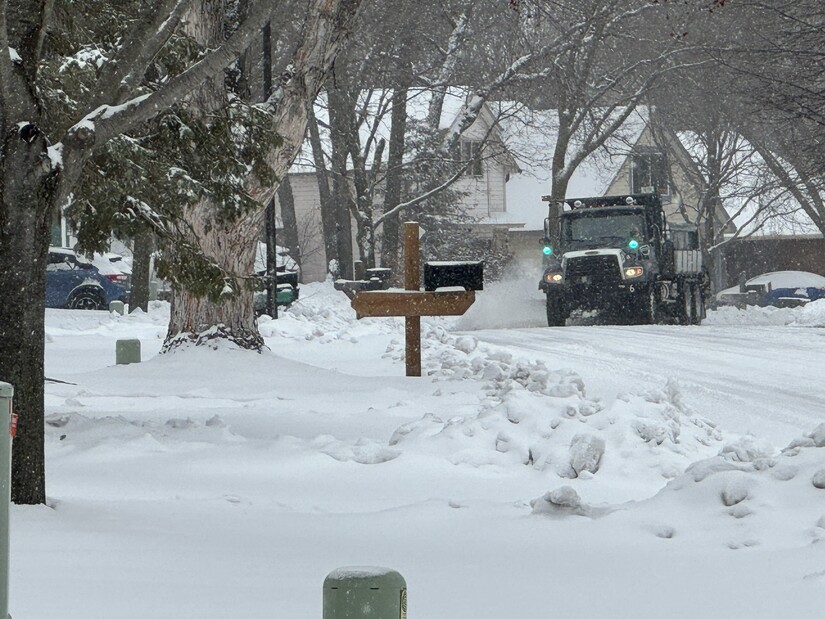
For Coon Rapids, the storm quickly crossed the threshold that triggers full snow response procedures.
Under city policy, snowplow operations escalate whenever accumulation reaches approximately three inches or more. With more than eight inches on the ground, Public Works crews moved rapidly into a coordinated clearing operation.
City crews began plowing Priority 1 routes around 6:00 a.m. Sunday, focusing first on major arterial roads and high-traffic corridors such as Egret Boulevard, Northdale Boulevard, and 121st Avenue. These routes are cleared first to ensure that emergency vehicles, buses, and essential services can move safely through the city.
Once the main roads were passable, crews continued working throughout the day to maintain traffic lanes as snowfall continued.
By Sunday afternoon, city officials announced that plow drivers would remain on duty until roughly 3:00 p.m., after which crews would pause before returning overnight to begin a full residential plow.
At approximately 4:30 a.m. Monday, Coon Rapids crews launched a Full Plow, clearing all residential streets and cul-de-sacs curb-to-curb across the city.
Such operations are among the most labor-intensive tasks faced by municipal public works departments during winter. Coon Rapids maintains roughly 374 cul-de-sacs, along with hundreds of miles of neighborhood streets that require careful maneuvering by large plow trucks.
The goal is simple but time-consuming: restore full road width so vehicles can pass safely and emergency responders can navigate neighborhoods without obstruction.
Once streets are cleared, crews typically transition to sidewalks, pedestrian corridors, and multi-use trails. For this storm, the city estimated that sidewalk clearing would be completed within 48 hours following Monday’s full plow.
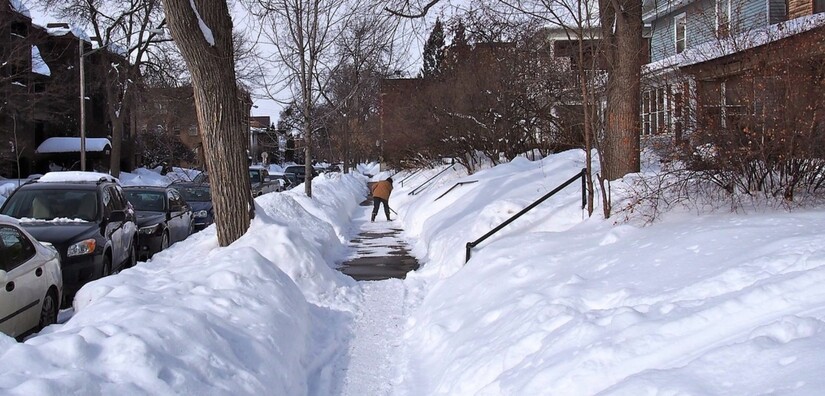
City officials are also asking residents to assist the cleanup effort.
Under Coon Rapids winter regulations, no street parking is allowed between 2:00 a.m. and 6:00 a.m. through April 1. In addition, when snowfall reaches three inches or more, parking is prohibited until streets have been cleared curb to curb.
Residents are also encouraged to clear snow around nearby fire hydrants, maintaining a three-foot radius of clearance to ensure firefighters can quickly access water in the event of an emergency.
Drivers are urged to exercise caution around plows, which are large, slow-moving vehicles with limited visibility.
“Give snowplows space,” the city reminded residents in its storm update. “Keep a safe distance and allow them room to operate.”
While municipal crews focused on clearing streets, the storm also disrupted travel across much of the state.
The Minnesota State Patrol reported more than 460 crashes statewide during the height of the storm, along with numerous spinouts and vehicles sliding off highways.
Heavy snow and strong winds made travel hazardous throughout the day, particularly during the morning hours when snowfall rates were highest.
By Sunday evening, conditions began improving as snowfall tapered off and road crews across the metro pushed forward with cleanup operations.
For many residents, the storm’s most visible aftermath will simply be clearer streets by the time the Monday commute begins.
Behind that routine outcome, however, lies the coordinated work of dozens of municipal employees working overnight shifts in freezing conditions.
Every winter storm in Minnesota becomes a test of logistics, endurance, and local infrastructure. From monitoring forecasts to dispatching crews and coordinating equipment, cities like Coon Rapids rely on carefully planned systems to keep neighborhoods functioning even during severe weather.
And while the March 15 storm did not become the historic blizzard some early forecasts suggested, the eight inches that did fall proved more than enough to keep plow drivers busy long after the snow stopped.
For the crews working before dawn Monday morning, the mission remained straightforward.
Clear the streets.
Open the neighborhoods.
And prepare the city for whatever the next Minnesota storm may bring.
MinneapoliMedia
Community. Culture. Civic Life.



Patchy rain nearby, with a high of 73 and low of 48 degrees. Don't forget your umbrella! Patchy rain nearby in the morning, clear overnight.