66° and Partly cloudy
Image



It exists in reinforced roof connections hidden behind drywall. In elevation requirements written deep inside municipal code books. In inspections conducted quietly on construction sites. In emergency planning meetings attended by local officials months before storm season arrives. And in the thousands of building standards that most residents never see, but rely upon every single day.
That largely invisible infrastructure is now at the center of the City of Coon Rapids’ participation in the 46th annual Building Safety Month campaign, an international public awareness initiative led by the International Code Council and local governments across the United States to promote modern building safety standards, resilient construction, and disaster preparedness.
The 2026 campaign carries the theme “Built to Last,” a phrase intended to underscore the long-term role that building codes, structural engineering, inspections, and municipal oversight play in protecting lives and reducing catastrophic losses during emergencies.
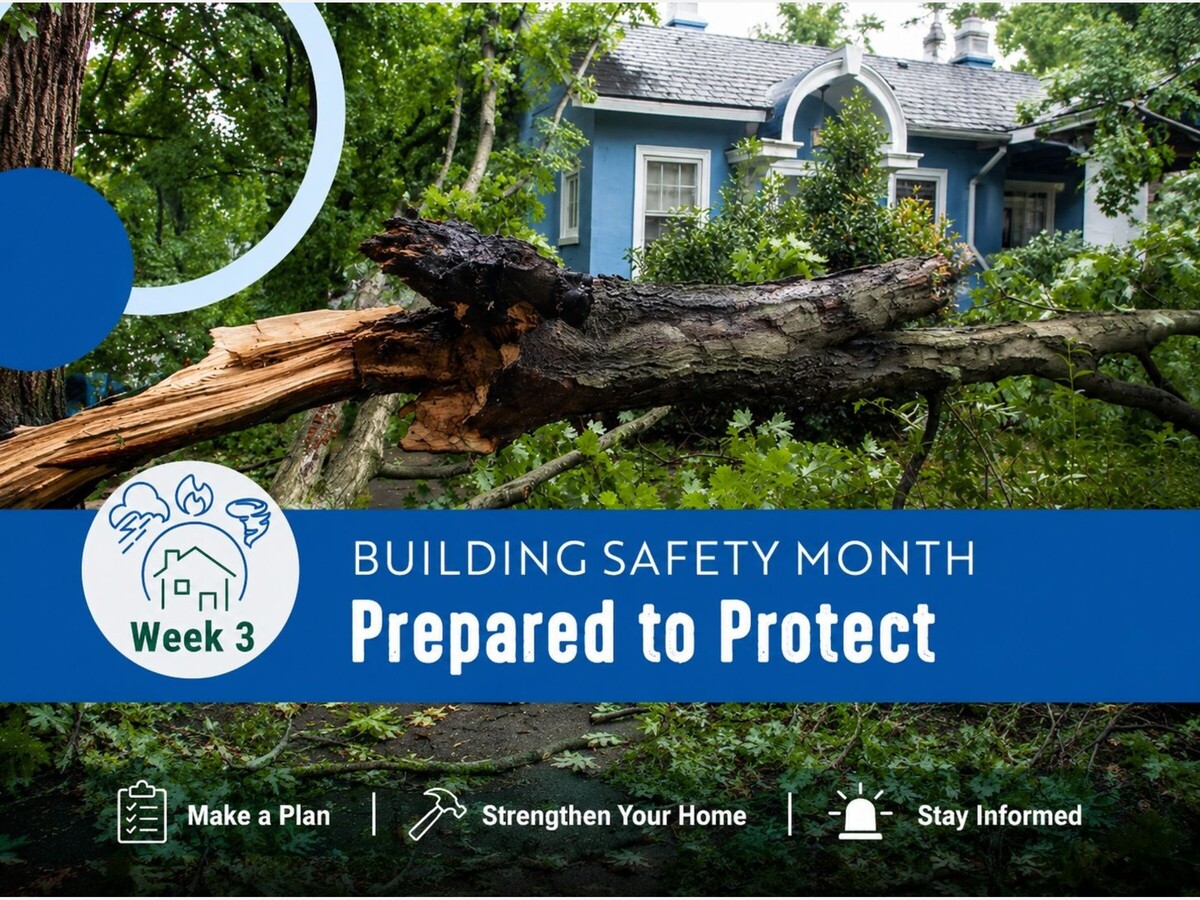
According to materials released by the City of Coon Rapids, this week’s focus centers on “Prepared to Protect,” a public safety initiative emphasizing how strong building codes, smart design, and coordinated community preparedness work together to reduce the impact of natural and man-made disasters.
City officials say the campaign is intended not only to educate residents about emergency preparedness, but also to remind communities that resilience begins long before a disaster occurs.
The month-long campaign is divided into four thematic segments:
Week 3, running from May 18 through May 24, focuses specifically on disaster resilience and community readiness.
Across Minnesota, where communities routinely face tornado threats, severe thunderstorms, flash flooding, extreme winter conditions, and increasing climate-related infrastructure stress, building resilience has become an expanding concern for local governments, engineers, emergency managers, and code officials alike.
The campaign arrives at a moment when conversations surrounding public infrastructure and emergency preparedness have become increasingly urgent nationwide. Federal agencies, insurers, engineers, and emergency planners have repeatedly warned that aging infrastructure, outdated building standards, rapid population growth, and increasingly volatile weather patterns are placing greater pressure on communities across the country.
In Coon Rapids, city materials emphasize that disaster preparedness is not solely the responsibility of emergency responders. Officials describe resilience as a shared responsibility between government institutions and residents themselves.
As part of the campaign, residents are encouraged to familiarize themselves with guidance provided through Federal Emergency Management Agency and Ready.gov, including identifying region-specific risks, establishing family emergency plans, developing evacuation strategies, and maintaining emergency supply kits stocked with food, water, medications, flashlights, batteries, and critical personal documents.
Preparedness guidance released through the campaign also encourages residents to understand how to safely shut off gas, water, and electricity during emergencies, a step emergency officials say can significantly reduce secondary damage after storms, fires, or structural failures.
But the campaign extends beyond household readiness.
At its core, Building Safety Month is also a broader argument for prevention itself.
The campaign repeatedly stresses that the built environment serves as a community’s first line of defense during disasters. Structural resilience, officials say, is often the difference between manageable damage and catastrophic loss of life.
Modern construction standards highlighted through the initiative include reinforced roofing systems designed to withstand high winds, impact-rated windows intended to reduce storm penetration, flood-resistant materials used in vulnerable areas, wildfire-resistant ventilation systems, and stronger foundation anchoring methods capable of improving structural stability during severe weather events.
The campaign additionally draws attention to retrofitting older homes and buildings, many of which were constructed under outdated standards before newer hazard-resistant codes were adopted.
For communities increasingly confronting stronger storms and aging infrastructure, mitigation has become a central concept. Emergency planners frequently describe mitigation as the practice of strengthening buildings and infrastructure before disaster strikes rather than relying solely on emergency response afterward.
National research has consistently shown that preventive investments in resilient construction and updated building standards can significantly reduce long-term disaster recovery costs.
The Federal Alliance for Safe Homes, commonly known as FLASH, has partnered with building safety advocates nationally to provide homeowners with tools to evaluate structural vulnerabilities and better understand local code protections.
Meanwhile, the International Code Council maintains code adoption maps that allow residents, contractors, and local officials to determine whether states and municipalities have implemented updated international building standards.
The campaign also highlights another often-overlooked reality: building codes themselves carry little meaning without enforcement.
Even the strongest safety standards rely heavily on trained inspectors, engineers, permitting officials, and code professionals tasked with verifying that projects comply with minimum safety requirements.
Those inspections, while frequently viewed by the public as bureaucratic steps in the construction process, are framed by safety officials as critical safeguards designed to prevent structural failures, fires, electrical hazards, and preventable disasters.
Building Safety Month, now observed for more than four decades, was established to elevate awareness about those systems and the professionals responsible for maintaining them.
For local governments like Coon Rapids, the campaign also serves as a reminder that public safety extends far beyond police cars, ambulances, and fire trucks.
It includes stormwater systems hidden beneath roads. Electrical standards buried behind walls. Inspection reports filed quietly inside city departments. Evacuation planning maps developed before emergencies occur. And thousands of technical requirements that shape how communities are physically built.
Much of that work remains invisible until something fails.
When roofs remain attached during violent storms, when structures withstand floodwaters, when fire-resistant systems slow the spread of flames, or when evacuation routes function during emergencies, the public rarely notices the codes and planning that helped make those outcomes possible.
But when those systems fail, the consequences become immediate and devastating.
The City of Coon Rapids says residents interested in learning more about Building Safety Month, resilient construction practices, emergency preparedness, and municipal code safety initiatives can access additional information through the city’s official website and through resources provided by the International Code Council.
For many officials involved in this year’s campaign, the broader message remains simple but consequential: communities are strongest when safety is built into them long before disaster arrives.
MinneapoliMedia | Community. Culture. Civic Life.



Sunny, with a high of 87 and low of 64 degrees. Sunny during the morning, patchy rain nearby overnight.