66° and Partly cloudy
Image
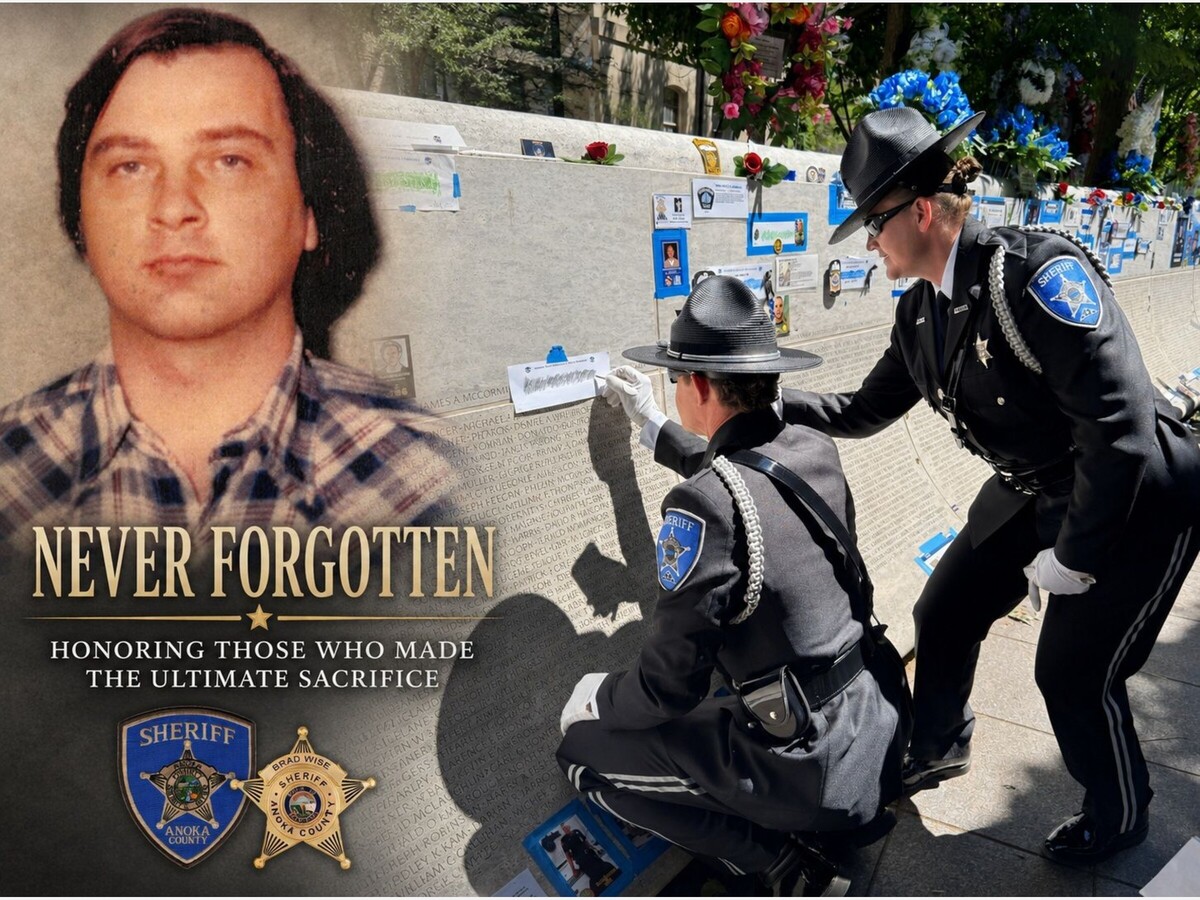



Now, almost 40 years later, Deputy Legler’s name has been permanently etched into the black stone of the National Law Enforcement Officers Memorial in Washington, D.C., formally recognizing a sacrifice that long predated the memorial acknowledgment now afforded to him.
The addition came during National Police Week ceremonies in May 2026, where officers, survivors, honor guards, and law enforcement agencies from across the United States gathered to honor fallen public safety personnel whose lives ended in service to their communities.
For Anoka County officials and Legler’s surviving family members, the moment carried the emotional weight of delayed recognition finally arriving.
Richard Erhardt Legler was 37 years old when he was killed.
A veteran of the United States Navy who served during the Vietnam War era, Legler returned home and continued his commitment to public service through law enforcement. By 1986, he had spent three years serving as a detention deputy with the Anoka County Sheriff’s Office, carrying badge number 115.
Colleagues remembered him as disciplined, dependable, and deeply committed to the responsibilities of the profession.
He was survived by his mother, father, sister, and brother.
The events that ended his life unfolded in the darkness before sunrise on Saturday, August 9, 1986.
At approximately 5:15 a.m., Legler was traveling eastbound on Highway 10 near Clear Lake, Minnesota, carpooling to work with another detention deputy. Both men were dressed in full law enforcement uniform as they made the routine drive toward their shift.
Then, without warning, an oncoming vehicle passed them.
From inside that passing car, an occupant fired a .30-30 caliber rifle directly into the deputies’ vehicle.
The round shattered glass and struck Legler in the shoulder.
What followed became one of the most haunting details preserved in subsequent law enforcement accounts of the shooting.
Despite sustaining what would prove to be a fatal wound, Deputy Legler reportedly remained conscious long enough to help slow the vehicle while the deputy seated beside him physically assisted in steering the car safely onto the shoulder of the highway.
As Legler’s condition deteriorated, the second deputy attempted desperately to administer first aid while trying to flag down passing motorists for help in the pre-dawn darkness.
Emergency responders and backup units arrived soon afterward.
Deputy Richard Legler did not survive.
The investigation that followed quickly revealed the randomness of the violence was, in reality, something far more targeted.
Roughly an hour after the shooting, authorities located a vehicle matching the suspect description. Inside, officers found a 20-year-old man dead from a self-inflicted gunshot wound.
Investigators recovered the .30-30 caliber rifle used in the attack, and ballistic testing later confirmed it was the weapon that killed Legler.
According to investigative findings later documented in law enforcement memorial records, the suspect harbored animosity toward police. He had reportedly been arrested for assault earlier that same week and had also been arrested the night before the ambush for his second Driving Under the Influence offense.
Authorities ultimately concluded that Legler and the other deputy were targeted specifically because they were visibly identifiable as law enforcement officers while traveling in uniform.
The killing sent shockwaves through Minnesota law enforcement circles during an era when detention deputies and corrections personnel often existed outside the public visibility afforded to patrol officers despite facing many of the same dangers associated with the profession.
For years afterward, however, the specific circumstances surrounding Legler’s death complicated whether it formally qualified under historical standards used by national memorial organizations responsible for determining line-of-duty inclusion.
Advocates for corrections officers and detention personnel have long argued that public safety professionals working inside detention systems often faced inconsistent recognition nationally despite significant occupational risks.
Over time, evolving standards and expanded reviews by memorial organizations have increasingly acknowledged the broader realities of law enforcement service and sacrifice.
Following additional review and memorial consideration processes, Deputy Legler was ultimately approved for inclusion on the National Law Enforcement Officers Memorial Wall.
This month, that approval became permanent history.
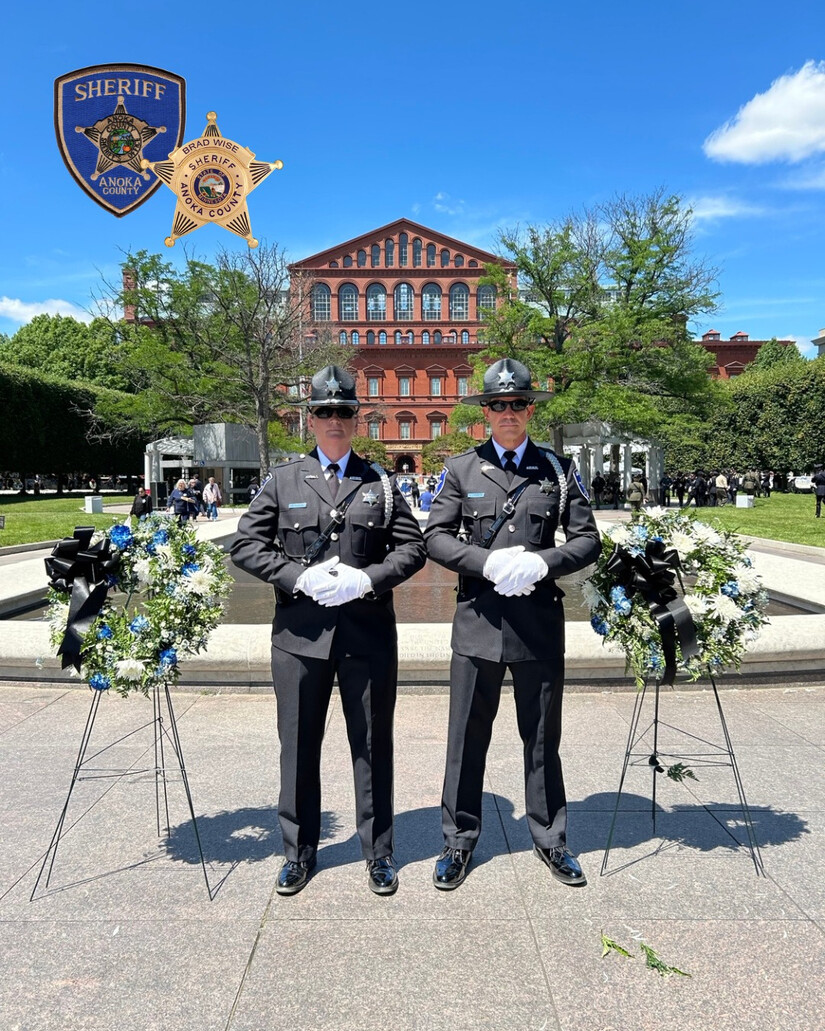
During the Washington ceremonies, Sgt. Lindberg and Sgt. Ninow traveled to the nation’s capital as members of the Anoka County Sheriff’s Office Honor Guard, standing alongside Legler’s surviving family members and fellow officers during the memorial observances.
His name was added alongside other officers newly recognized this year, including Jesse Branch of the Red Lake Tribal Police Department.
The annual observance is organized in part by the National Law Enforcement Officers Memorial Fund, which oversees one of the nation’s most significant memorial sites dedicated to fallen law enforcement personnel.
Located in Judiciary Square in Washington, D.C., the memorial now bears the names of more than 24,000 officers from federal, state, tribal, county, and local agencies across American history.
For surviving families, inclusion on the memorial carries a meaning that extends beyond ceremony.
It becomes permanent public acknowledgment that the loss endured privately for years is now formally recognized within the nation’s historical record of sacrifice.
In statements released publicly this week, the Anoka County Sheriff’s Office described the recognition as both emotional and overdue.
“We’re deeply honored that Detention Deputy Legler’s sacrifice is now permanently commemorated at the nation’s memorial for fallen officers,” the department stated. “His name on the wall ensures his dedication and courage will never be forgotten.”
Nearly 40 years after the rifle shot that ended his life along a Minnesota highway before dawn, Richard Legler’s name now stands permanently carved into stone in the nation’s capital.
Not simply as a historical entry.
But as a reminder that some sacrifices continue echoing long after the headlines disappear, carried forward by families, departments, communities, and fellow officers determined that the fallen will still be remembered when the decades pass and the country moves on.
MinneapoliMedia | Community. Culture. Civic Life.



Sunny, with a high of 87 and low of 64 degrees. Sunny during the morning, patchy rain nearby overnight.