66° and Partly cloudy
Image
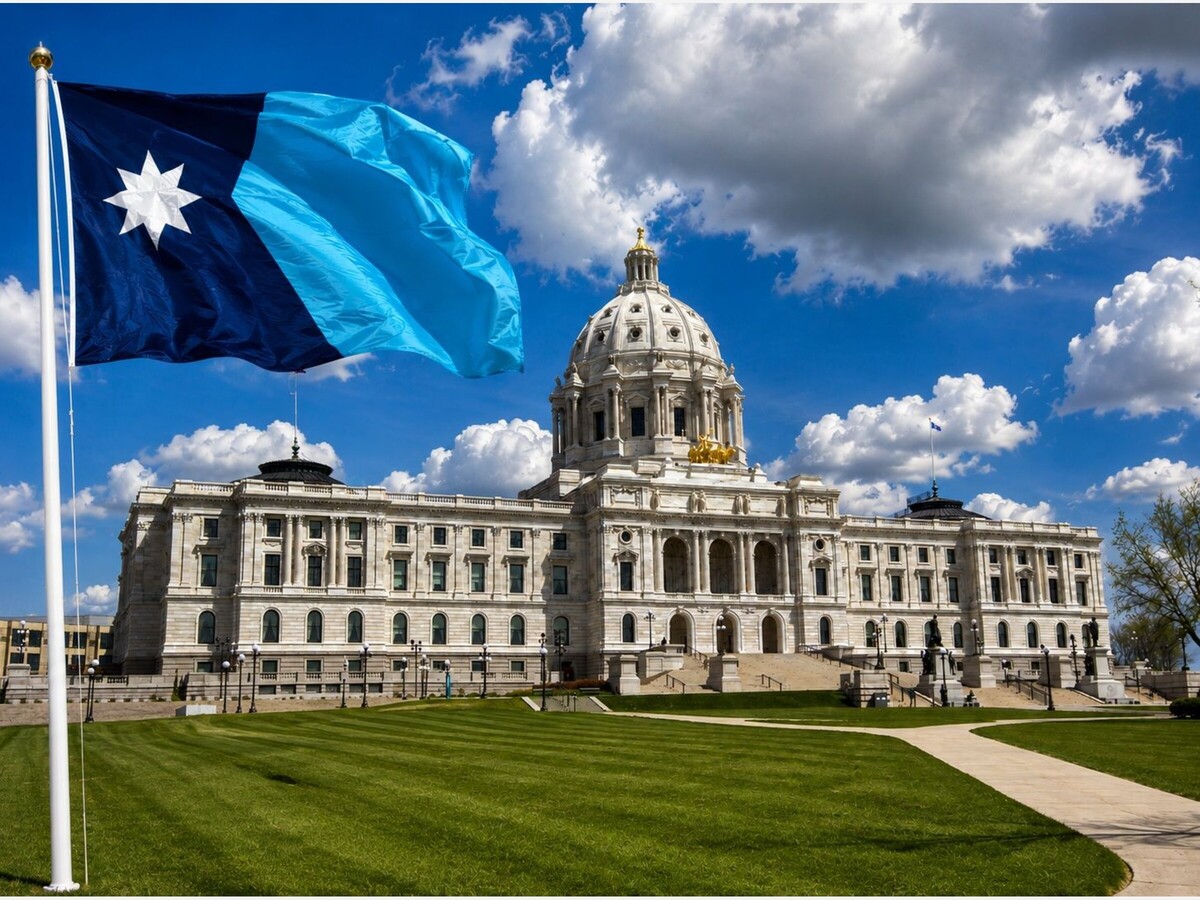



ST. PAUL, MN The collapse of Minnesota’s sweeping gun safety package at the end of the 2026 legislative session was not simply another partisan disagreement inside a divided Capitol. It was a revealing moment about power, political survival, procedural control, and the widening distance between public trauma and legislative action in modern American government.
When the Minnesota Legislature adjourned Sunday night without the House allowing a vote on the Senate-approved package, the state closed one of the most emotionally charged legislative battles in recent memory not with resolution, compromise, or public accountability, but with procedural paralysis. The impasse followed months of mounting pressure after the devastating 2025 mass shooting at Annunciation Catholic Church and School in Minneapolis, where 10-year-old Harper Moyski and 8-year-old Fletcher Merkel were killed in an attack that profoundly altered the state’s political and emotional landscape.
The Senate ultimately passed a broad package of firearm restrictions and safety proposals that included an assault-style weapons ban, restrictions on high-capacity magazines, expanded safe-storage requirements, and additional preventive measures. Yet despite emotional testimony from survivors, families, medical professionals, educators, and gun violence prevention advocates, the Minnesota House never permitted the legislation to reach the floor for a final vote.
At the center of the confrontation stood House Speaker Lisa Demuth, the Republican leader of an evenly divided 67-67 House chamber, who refused to advance the legislation, arguing that the Senate bill had not moved properly through the House committee process and lacked bipartisan support necessary for consideration.
The result was not simply legislative defeat. It was a deeper institutional rupture that exposed the growing tension between democratic procedure and democratic responsiveness in Minnesota politics.
The central question emerging from the session is no longer merely whether Minnesotans support stricter gun laws. Public polling over recent years has repeatedly shown strong support among Minnesota voters for several firearm restrictions, including expanded background checks, red flag laws, and limitations on military-style semiautomatic weapons. The more pressing question now concerns whether legislative leaders can indefinitely shield themselves from politically difficult votes by exercising procedural authority in ways that prevent public legislative accountability altogether.
That distinction matters enormously in democratic governance.
There is a profound difference between legislators debating a bill publicly and voting it down on the merits versus leadership ensuring the vote never occurs at all.
The latter is what unfolded at the Minnesota Capitol.
Throughout the final days of the legislative session, Democratic lawmakers attempted multiple procedural maneuvers to force floor consideration of the Senate package. House DFL Floor Leader Jamie Long introduced a motion to suspend House rules and bring the bill directly to the floor. The motion failed in a tied 67-67 vote strictly along party lines. Following the failed motion, Democratic lawmakers staged a prolonged overnight sit-in on the House floor, refusing to leave in protest of what they described as deliberate obstruction of public debate.
Republican leadership dismissed the action as political theater.
DFL lawmakers characterized it as a last attempt to force transparency and accountability on legislation they argued carried overwhelming public support after one of the deadliest school-related shootings in Minnesota history.
What emerged was not merely disagreement over firearms policy. The Legislature became the stage for a larger struggle over how democratic institutions function when public trauma collides with partisan control.
Supporters of Speaker Demuth argue that she upheld legislative order under extraordinary political pressure. They maintain that the House cannot simply abandon its committee structure whenever public outrage intensifies around a particular issue. House Republicans repeatedly emphasized that elements of the gun package had already failed to secure bipartisan support in committee and argued that bypassing standard procedure would undermine institutional integrity.
That argument deserves serious consideration.
Legislative rules exist for a reason. Democracies cannot function entirely through emotional momentum or public pressure campaigns. Procedural safeguards are designed precisely to slow policymaking, force scrutiny, and protect minority factions from sudden shifts driven by momentary political passions. In a chamber evenly divided between Republicans and Democrats, House leadership viewed the Senate package as lacking consensus and therefore unprepared for final consideration.
In purely institutional terms, that defense is coherent.
But the problem facing Minnesota Republicans is that the confrontation cannot be evaluated in purely institutional terms because the context surrounding the legislation was profoundly personal, emotionally charged, and politically symbolic.
That reality became impossible to separate from the debate surrounding Speaker Demuth herself.
Demuth’s own daughter, Shelisa Demuth, survived the 2003 shooting at Rocori High School in Cold Spring, Minnesota. During the 2026 gun debate, Shelisa publicly criticized her mother’s refusal to allow a House vote, urging her directly on social media to permit debate on the legislation.
The public disagreement transformed what was already a high-profile legislative battle into something far more emotionally complicated. The issue was no longer simply ideological disagreement between opposing political parties. It became a visible example of how deeply gun violence and its consequences now cut through American families, communities, and political institutions themselves.
The personal dimensions of the story intensified further after reporting revealed that Demuth herself had reportedly benefited from protections available under Minnesota’s 2023 red flag law, legislation she had opposed politically.
That revelation fundamentally altered public perception of the impasse.
Critics quickly framed the contradiction as emblematic of modern political insulation: elected officials benefiting personally from safety protections while denying broader public access to legislative consideration of related reforms.
Whether entirely fair or not, the symbolism proved politically devastating.
The Democratic argument effectively became this: if red flag protections were legitimate enough to help protect the Speaker personally, why should Minnesotans not at least deserve an open debate about broader public safety measures?
That question lingered heavily over the Capitol during the session’s final days.
Yet even that framing, while politically powerful, risks oversimplifying the deeper structural crisis the Legislature exposed.
Minnesota’s gun debate did not collapse solely because Republicans opposed firearm restrictions. Nor did it collapse solely because Democrats lacked sufficient votes.
It collapsed because modern legislative politics increasingly rewards avoidance over accountability.
The tied House chamber created a political environment where both parties recognized the electoral danger attached to the issue. Republicans feared backlash from conservative activists and gun rights groups if members supported restrictions on semiautomatic weapons. Democrats, meanwhile, understood the emotional urgency surrounding the Annunciation shooting and sought to capitalize on growing public pressure for action.
The result was a legislative standoff where procedural maneuvering became more important than deliberative governance.
Speaker Demuth’s decision to keep the bill from reaching the floor may ultimately protect her standing within Republican Party structures ahead of convention politics and future internal leadership battles. That calculation is not unique to Minnesota. Across the country, legislative leaders in both parties routinely use procedural authority to protect vulnerable caucus members from politically dangerous recorded votes.
But such strategies come with institutional consequences.
When leadership structures increasingly prevent legislatures from openly debating issues that dominate statewide public attention, democratic legitimacy begins to weaken.
Citizens may disagree intensely on firearms policy. Minnesota itself contains substantial cultural and geographic divides on gun ownership, constitutional rights, and public safety. Rural communities often view firearm restrictions through the lens of self-defense, hunting traditions, and skepticism toward metropolitan political priorities. Urban communities disproportionately affected by gun violence often view regulation as a necessary public safety intervention.
Those disagreements are real.
But representative government requires those disagreements to be aired publicly through legislative process.
The problem with the 2026 session was not merely that the gun package failed. Legislatures reject bills constantly. The deeper problem was that the public was denied the opportunity to see where elected representatives ultimately stood under full public scrutiny.
Recorded votes matter in democratic systems because they establish accountability.
They force lawmakers to publicly own their positions.
They allow constituents to evaluate representation honestly.
They provide political transparency.
They create legislative history.
They define institutional responsibility.
Avoiding votes prevents all of those democratic functions from occurring.
For many Minnesotans, particularly families directly affected by gun violence, the absence of a House vote appeared less like institutional discipline and more like political concealment.
That perception now threatens to reshape the political consequences surrounding the entire debate.
Minnesota enters the 2026 election cycle with significant public frustration surrounding legislative transparency already growing. Large portions of the electorate remain disconnected from the details of how major legislation moves, stalls, or dies inside the Capitol. The complexity of committee structures, procedural motions, conference negotiations, and leadership authority often obscures where accountability actually lies.
The gun safety impasse simplified that confusion into a far more understandable public narrative:
A major bill tied to a mass school shooting never received a House vote.
That clarity carries political weight.
Democrats are almost certain to weaponize the issue aggressively during the 2026 campaign season, particularly in suburban districts where gun violence prevention measures poll strongly. The Annunciation tragedy already reshaped the emotional terrain of Minnesota politics. Families grieving murdered children created a moral urgency around the debate that transcended ordinary legislative conflict.
Republicans, meanwhile, are likely to frame the confrontation as evidence of Democratic attempts to exploit tragedy in pursuit of sweeping firearm restrictions lacking broad statewide consensus.
Both narratives will resonate with different parts of the electorate because both contain elements of truth.
That complexity is precisely why the issue became so politically combustible.
The proposed Senate package itself represented one of the most ambitious firearm restriction efforts in Minnesota history. Beyond assault-style weapon bans and magazine restrictions, the legislation incorporated multiple regulatory layers aimed at prevention and liability. Gun rights advocates argued the measures would criminalize lawful ownership while doing little to stop determined criminals. Gun violence prevention advocates argued the legislation reflected basic public safety reforms increasingly common in states responding to mass casualty events.
Neither side approached the issue as a narrow policy disagreement.
For advocates supporting the legislation, the debate became morally inseparable from dead children, devastated families, emergency room trauma, and repeated cycles of national mass shootings.
For opponents, the debate became inseparable from constitutional rights, distrust of government overreach, cultural identity, and concerns that emotional policymaking would erode lawful firearm ownership.
That divide is not easily bridged through ordinary compromise politics.
Still, legislative systems exist precisely to manage such divisions openly rather than suppress them procedurally.
What made the 2026 Minnesota confrontation uniquely volatile was the sense among many citizens that institutional leadership was attempting to neutralize the issue through avoidance rather than resolution.
The public sit-in staged by House Democrats reflected that frustration.
Although Republicans dismissed the protest as performative political theater, the sit-in drew national attention because it symbolized a broader American frustration with legislative paralysis surrounding gun violence. Images of lawmakers sleeping on the House floor, speaking emotionally about murdered children and legislative inaction, resonated beyond Minnesota because they tapped into years of national exhaustion surrounding repeated mass shootings and stalled reforms.
Yet the sit-in also revealed the limitations of symbolic politics itself.
Ultimately, it changed nothing legislatively.
The bill still died.
The House still adjourned.
The procedural blockade remained intact.
That outcome underscores another growing feature of modern governance: public spectacle increasingly substitutes for legislative productivity because institutional deadlock has become normalized.
Both parties now operate inside systems where performative confrontation often produces greater political reward than negotiated resolution.
That dynamic was visible throughout the final weeks of the Minnesota session.
DFL lawmakers escalated moral pressure.
Republicans tightened procedural control.
Activists mobilized emotionally charged campaigns.
Families of victims publicly pleaded for action.
Gun rights organizations warned of constitutional infringement.
Media attention intensified.
National observers focused on the Capitol.
Yet the legislative machinery itself remained frozen.
The result was a government that appeared emotionally overwhelmed but operationally immobilized.
That perception carries long-term consequences for institutional trust.
One of the most damaging developments in contemporary American politics is the growing belief among citizens that legislative outcomes are determined less by public deliberation than by procedural gamesmanship behind closed doors. When voters believe major issues are strategically buried rather than openly debated, cynicism toward democratic institutions deepens.
Minnesota historically has maintained stronger civic participation and institutional trust than many states. But the gun safety collapse revealed vulnerabilities in that reputation.
The state’s Legislature now faces a credibility challenge extending beyond firearms policy itself.
Can legislative leaders claim democratic legitimacy while systematically preventing recorded votes on issues carrying enormous statewide attention?
Can procedural authority remain democratically healthy when used primarily as political insulation?
Can institutions preserve public trust when emotional national crises repeatedly collide with legislative stalemate?
Those questions now sit at the center of Minnesota’s political future.
The danger moving forward is that both parties learn the wrong lessons from the confrontation.
Republicans may conclude that procedural containment successfully avoided politically dangerous votes while preserving caucus unity.
Democrats may conclude that escalating emotional confrontation and public spectacle are the only available responses to institutional blockade.
Neither outcome strengthens democratic governance.
Healthy legislatures require both procedural integrity and public accountability. Rules matter. Committee structures matter. Deliberation matters. But public votes matter too, especially on issues carrying extraordinary moral and civic consequences.
The Minnesota House never fully reconciled those competing responsibilities during the 2026 session.
That failure now belongs not to one party alone, but to the institution itself.
Still, leadership carries special responsibility during moments of historic trauma.
That reality returns attention inevitably to Speaker Lisa Demuth.
Leadership is not tested during ordinary sessions dominated by routine appropriations bills or technical policy revisions. Leadership is tested when public grief, political pressure, and institutional responsibility collide simultaneously.
The Annunciation shooting altered Minnesota politically and emotionally in ways that cannot be measured solely through legislative metrics. Two children died in circumstances that shook communities across the state. Families demanded action. Students demanded action. Educators demanded action. Physicians demanded action. Religious leaders demanded action.
Whether the Senate package represented good policy remains a legitimate matter for debate.
But preventing the House from fully debating and voting on the issue created the appearance that political management had become more important than democratic confrontation.
That perception may ultimately define the 2026 session more than the substance of the legislation itself.
The Legislature adjourned without resolution.
The gun package died.
The divisions remain.
The grief remains.
The public anger remains.
And Minnesota now moves toward another election cycle carrying unresolved questions about what representative government is supposed to look like after collective trauma.
In the months ahead, both parties will attempt to frame the collapse to their advantage.
Republicans will defend constitutional restraint, procedural consistency, and resistance to emotionally driven policymaking.
Democrats will frame the impasse as cowardice, obstruction, and moral failure after the deaths of children.
Voters will ultimately decide which narrative carries greater legitimacy.
But regardless of electoral outcomes, the 2026 gun safety collapse revealed something larger and more troubling about modern governance itself.
Increasingly, political systems are no longer failing because disagreement exists.
They are failing because institutions have become structured to avoid difficult public accountability altogether.
That is the deeper lesson of Minnesota’s legislative impasse.
Not simply that the state remains divided on firearms.
But that its democratic institutions struggled to publicly confront that division honestly in the first place.



Sunny, with a high of 87 and low of 64 degrees. Sunny during the morning, patchy rain nearby overnight.