48° and Sunny
Image




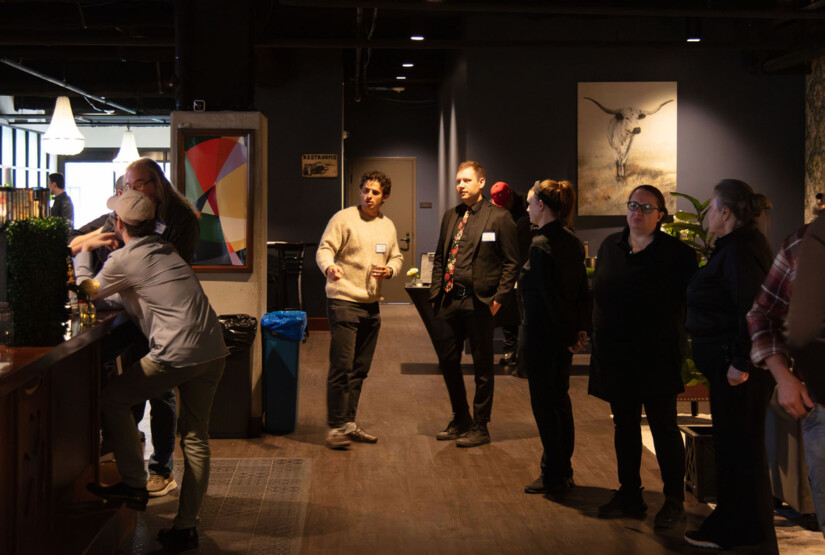
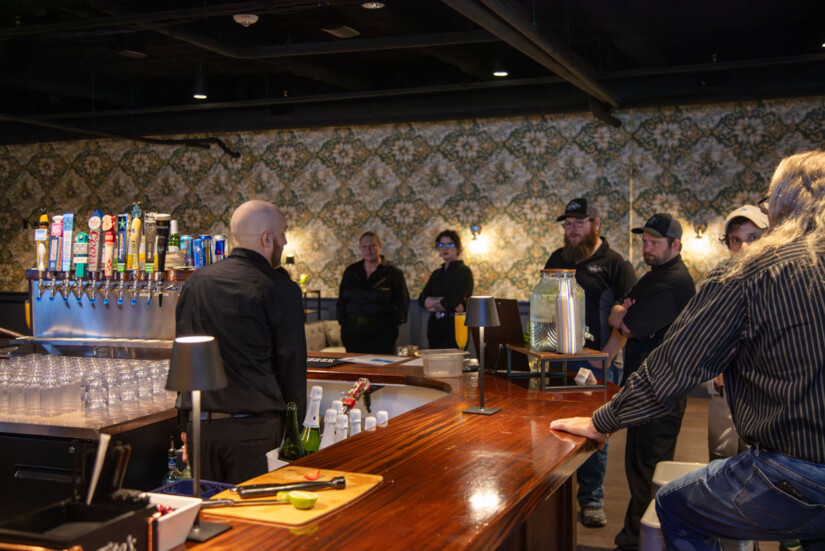
On the evening of March 24, 2026, inside Mosaic in Minneapolis, Firnela did not begin as an idea.
It appeared as evidence.
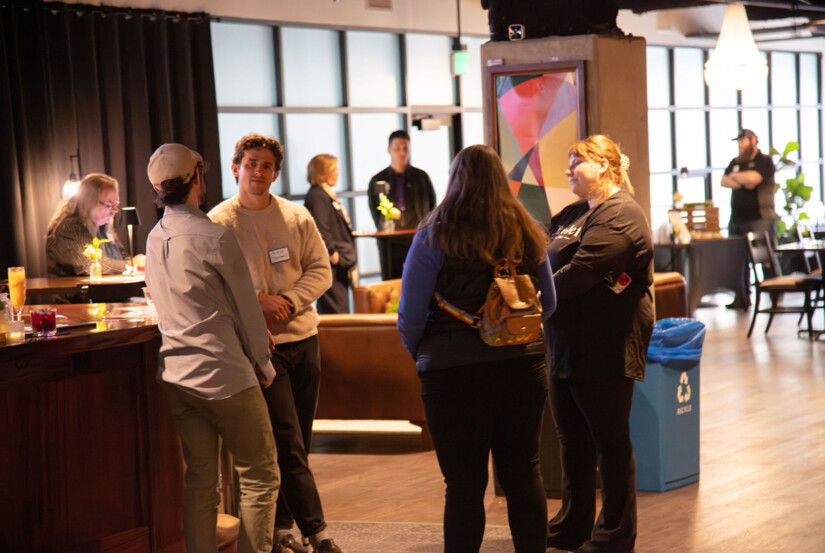
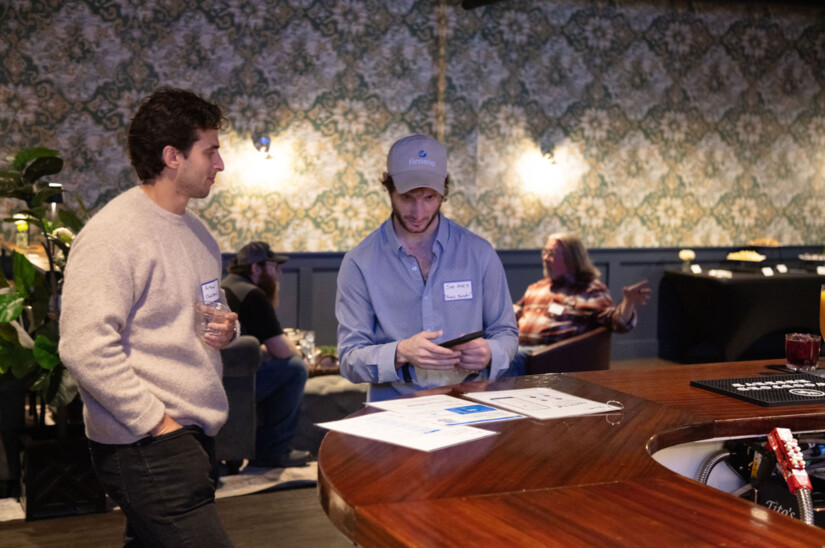
Bartenders moved with familiarity behind makeshift stations. Food was prepared, plated, and served in real time. Hospitality operators stood in small groups, watching closely, not as passive attendees, but as evaluators. Conversations were direct, practical, and at times quietly skeptical. The room held approximately 50 people, many of them seasoned in the industry, each with their own understanding of how staffing works and how often it fails.
This was not a launch built on presentation slides.
It was built on demonstration.
For Sam Mars, founder and chief executive officer of Firnela, the moment marked a transition that had taken years to reach.
“For me, the launch represented going from four years of building alone in silence to now having it tangible for the industry to see, use, and experience.”
The platform, which had already facilitated more than 300 shifts prior to the event, was no longer a concept in development. It was operating. It was being used. And for the first time, it was being placed directly in front of the people it was designed to serve.
Years earlier, Mars walked into a Minneapolis bar and encountered a scene that would eventually define his direction.
There was no bartender. No server. No indication that service was about to begin.
After waiting, another man entered, sat down, and explained that he worked there. It was his day off. If no one returned, he would step behind the bar himself, serve the drinks, and step away.
The explanation that followed revealed a deeper pattern. He was already filling shifts across multiple locations, moving from venue to venue based on need, often informally, often without structure.
For Mars, that moment was not unusual because it was rare.
It was unusual because it was common.
The industry was functioning, but not through systems that were designed to support it. It was being held together through improvisation.
Mars did not come from hospitality. That absence of background shaped how he approached the problem.
Instead of assuming he understood it, he spent months moving through restaurants, bars, and events, asking workers and operators the same question: what would you need to know to walk into a new environment and perform immediately?
The answers were consistent.
Menu knowledge. Layout familiarity. Service expectations. Location of essential tools and ingredients.
What varied from place to place was presentation. What remained consistent was structure.
That realization reframed the problem. If the work itself followed patterns, then the preparation for that work could also be structured.
Firnela did not emerge as a finished product. It was built through iteration, and in many cases, through failure.
Mars built the platform multiple times, discarding earlier versions when they failed to reflect the realities of the industry.
One version could not account for the complexity of larger venues. Another failed to establish trust because it lacked a credible vetting system for workers.
“I built this app three times and failed twice,” Mars said.
“Each time, I realized something fundamental was missing.”
That process extended over four years. It involved self-teaching, redesigning, and repeatedly confronting the gap between an idea and a usable system.
The result is the current version of Firnela, a platform where hospitality businesses can post shifts, review applicants, and select workers, while workers gain access to flexible opportunities across multiple venues.
At launch, the company reported 100 vetted workers on the platform, with more than 50 shifts already scheduled for April and increased demand projected for May.
At its core, Firnela is a staffing platform. But its structure reflects a different approach from traditional staffing agencies or automated gig systems.
Businesses retain control over hiring decisions. They can review worker profiles, evaluate experience, and choose who enters their operation.
Workers are vetted through an internal process before being approved for shifts.
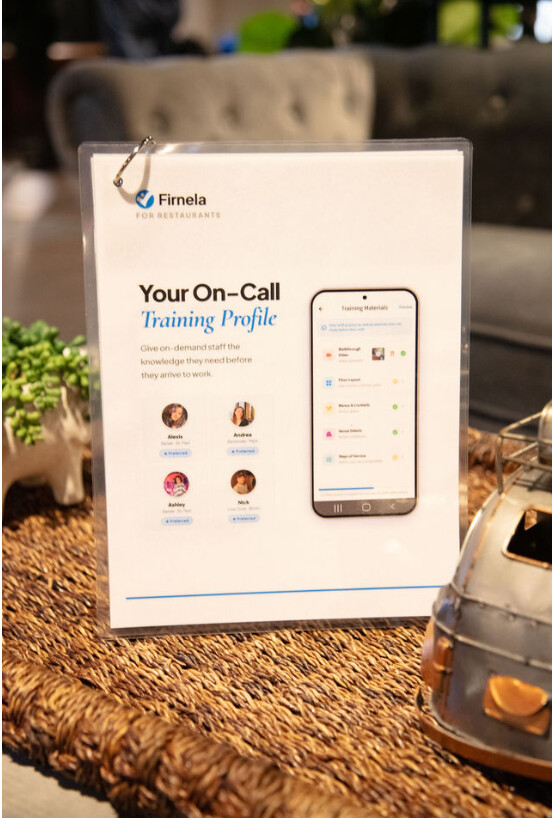
And critically, the platform introduces a preparation layer that allows workers to understand the operational details of a venue before arriving.
This includes access to menus, service expectations, and layout information.
The goal is not to eliminate the learning curve entirely, but to reduce the friction that often comes with entering a new environment under time pressure.
Ashley Lewis, a bartender who has used Firnela for approximately eight months, described the shift from informal staffing methods to a structured platform.
“Before this, it was mostly word of mouth,” she said. “The experience has been really positive. The teams are professional, and the guests have been receptive.”
Lewis pointed to the platform’s accessibility and communication as key differences.
“It’s very easy, very friendly… and that level of competence on both front of house and back of house is hard to find.”
Her experience reflects a broader dynamic within hospitality, where workers often rely on networks and informal referrals to find shifts. Firnela attempts to formalize that process without removing flexibility.
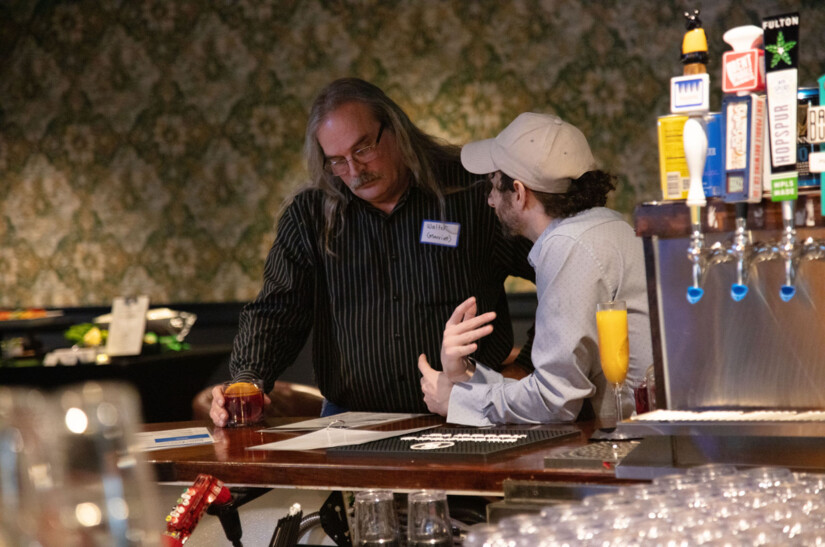
Austin, Firnela’s director of user relations, operates at the intersection of staffing quality and operational consistency.
With nearly two decades in hospitality, he described his role as both evaluative and relational.
“I’m the first step in making sure we have the right staff,” he said. “It’s about understanding the realities of hospitality and making sure that’s reflected in who we bring in.”
His emphasis on relationships distinguishes Firnela’s approach from more automated systems.
“These are real people we’re working with. We’re not just placing someone randomly.”
For Austin, the platform’s value lies not only in its functionality, but in its ability to maintain the human element that defines hospitality.
No platform reaches launch without early support.
For Firnela, two individuals played critical roles.
Amber Riley, chief executive officer of Chef Jeff Catering, became an early advocate, providing resources, logistical support, and eventually joining the company’s advisory board.
Frank Panzer, managing partner of Unique Dining Catering, was the first business to commit to the platform after Mars faced dozens of rejections.
Mars described arriving at Panzer’s office to find the building locked, only to gain access through a delivery driver and secure a meeting that would become pivotal.
Without those early decisions, Mars said, Firnela would not exist.
These moments illustrate the reality behind early-stage ventures, where progress often depends on individual decisions rather than broad acceptance.
Mars does not describe the process of building Firnela in idealized terms.
“There are so many chances where you can give up,” he said.
Asked whether he would undertake the process again, he responded with a mix of humor and bluntness.
“No way… but I’m glad it turned out well.”
That perspective reflects the reality of building a company from scratch, where uncertainty is constant and progress is often incremental.
At the same time, Mars maintains a clear vision for what Firnela is intended to become.
“We’re creating a hospitality talent economy.”
In that model, workers are not tied to a single employer. They move across venues, build relationships, and contribute to both service quality and customer experience in ways that extend beyond a single shift.
The concept of a “talent economy” suggests a broader shift in hospitality.
Traditionally, workers have competed for shifts within a fixed structure defined by employers.
Firnela introduces a different possibility, where workers gain mobility and businesses must adapt to a more flexible labor environment.
That shift is not theoretical. It is already visible in how workers move between venues, how businesses seek coverage, and how staffing decisions are made.
Firnela attempts to organize that reality into a system that is both scalable and usable.
Firnela’s development in Minnesota is not incidental.
The state’s hospitality ecosystem provides both opportunity and constraint. Relationships matter. Trust develops over time. Adoption is not immediate.
Mars sees that as a form of validation.
“If it works here, it’s real,” he said.
The company’s early traction in catering and events reflects a strategic entry point, where consistent demand allows the platform to establish stability before expanding further.
The launch event did not mark completion.
It marked an entry.
Firnela now moves into a phase where its performance will be measured not by its concept, but by its adoption.
Businesses will decide whether it meets their needs. Workers will decide whether it provides value. The system will be tested under real conditions.
The questions that remain are practical.
Can it maintain quality at scale?
Can it balance flexibility with reliability?
Can it become part of daily operations rather than an alternative?
Those answers will emerge over time.
On March 24, Firnela moved from development into visibility.
A platform built over four years entered the market, supported by early adopters, shaped by iteration, and grounded in the realities of hospitality work.
Whether it reshapes staffing in Minnesota remains to be seen.
What is clear is that it has begun.
MinneapoliMedia | Community. Culture. Civic Life.


Patchy rain nearby, with a high of 73 and low of 48 degrees. Don't forget your umbrella! Patchy rain nearby in the morning, clear overnight.