53° and Patchy rain nearby
Image
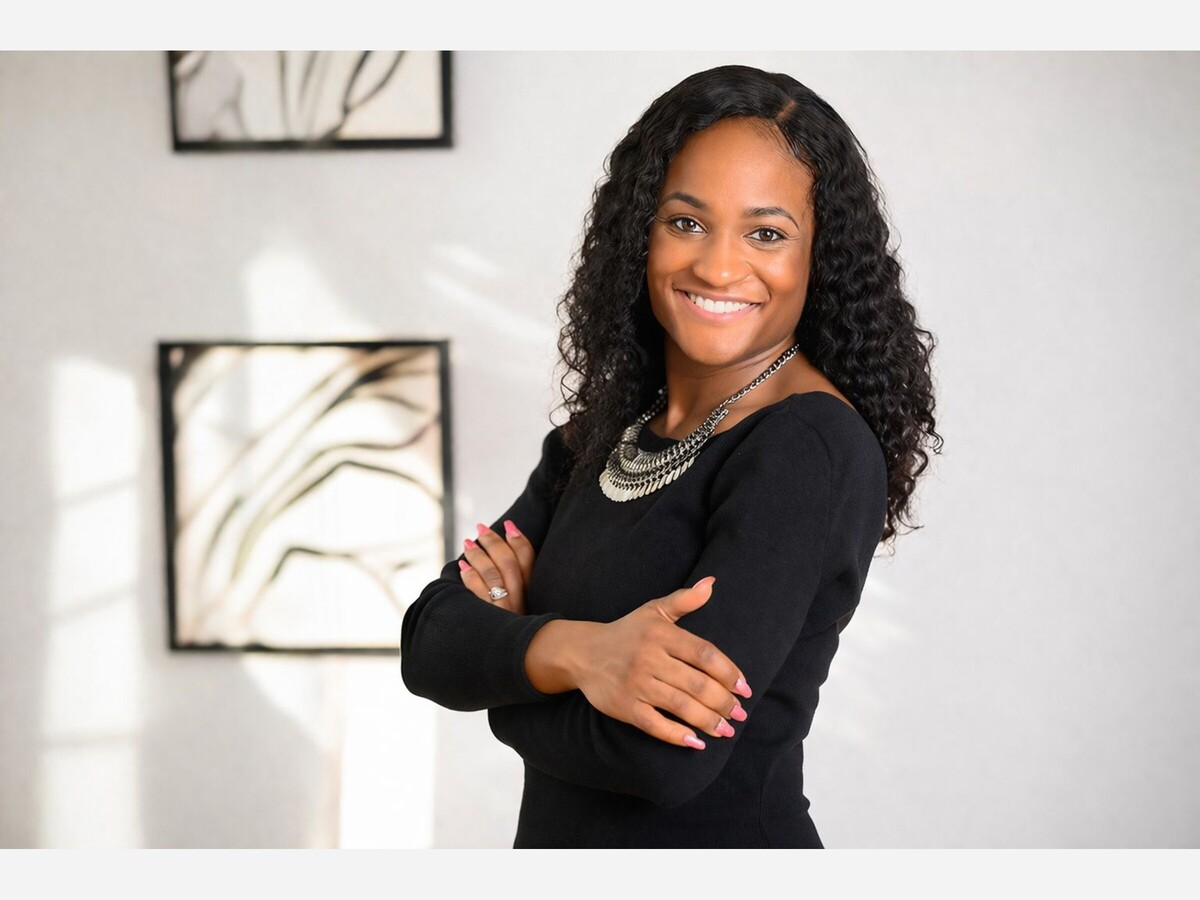



The conversation does not begin with urgency. It begins with presence.
“Hello, how are you?”
On the other end, Ebony Eromobor answers with a calm steadiness that would come to define the rhythm of everything that follows.
“Very well. Thank you very much.”
There is something unforced about her tone. No performance. No pretense. Just clarity.
I thank her for making the time. I acknowledge what is already evident. She is busy. The work she carries is not light work. Still, she shows up fully.
“This is such an honor to have you here.”
She responds with a humility that does not diminish her stature but instead reveals the grounding beneath it.
“Oh yeah, no problem. I know it’s a little bit of time, so no problem.”
But it is not a small thing. And as the conversation unfolds, that becomes unmistakably clear.
I introduced the work.
The Power of Her. A spotlight on women building legacy, leadership, and liberation in Minnesota.
She pauses, curious, attentive. She wants to understand the cadence of it. The rhythm. The intention.
“Is that for like the month… or your next issue?”
It is not a one-time feature. It is a living archive.
A record of women whose work is shaping communities in real time, often without the level of documentation that such work deserves.
And as I begin to frame her story back to her, there is a quiet recognition. Not of status, but of responsibility.
“You have chosen to build a practice rooted in care, cultural responsiveness, and healing… at a time when many communities are navigating trauma, loss, and systemic barriers to wellness.”
She listens.
And then, gently, we begin.
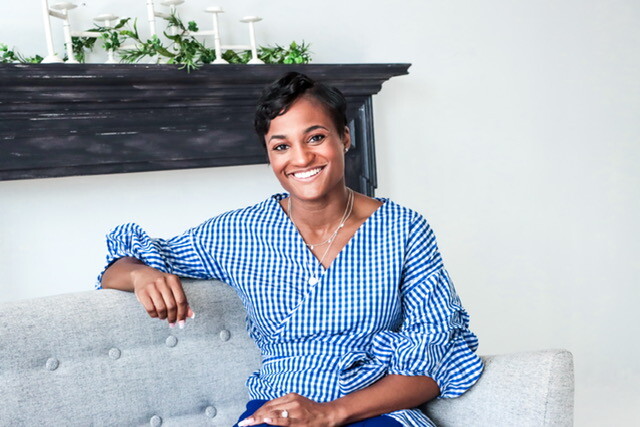
Ebony’s story does not begin in a classroom or a clinic. It begins in observation.
“I grew up in Saint Paul, Minnesota, in the Rondo community area,” she tells me. “And I feel like every time I share the story about how I got here, I always say that earlier on, I knew I wanted to do work around this. But I didn’t necessarily know the exact track yet.”
What she did know, even as a child, was that something did not add up.
“I was always a curious kid,” she says. “And I was always curious about why there were differences between my community, which was the inner city, and more financially affluent communities.”
She is careful in how she describes those differences. She does not reduce them to income alone.
“When I say differences, I mean their lifestyles, their quality of life.”
She illustrates the point through lived memory, not abstraction.
“I feel like in the inner city, you’re at birthday parties, people are joyful in those moments, but there’s often indicators that that joy is very temporary,” she says. “Versus I remember going to one of my peer’s birthday parties who came from a more affluent background. She lived in a mini mansion in that Summit area, and everyone seemed… happiness seemed like genuine happiness.”
She pauses, reflecting not just on the memory but on what it revealed.
“And I’m like, there’s something to this.”
That realization did not lead to immediate answers. It led to sustained inquiry. It shaped how she observed people, environments, and systems long before she had the language to name those dynamics formally.
By the time she reached high school, that inquiry began to take shape within a formal framework.
“In high school, in health class, we learned about mental health and psychology,” she says. “And that’s when I was like, I want to work in mental health. I want to be a psychologist or a psychiatrist.”
What is notable here is not just the decision, but the clarity with which it emerged.
“And from there, I just knew.”
Her academic journey took her to Howard University, where she pursued biology and psychology with a pre-medical focus. At that stage, her path toward psychiatry appeared linear.
But the work has a way of revealing itself in practice, not just in theory.
After completing her undergraduate studies, she earned a fellowship through the National Institute on Drug Abuse and was placed at the University of Nevada, Las Vegas, working under a psychiatrist.
It was there that a critical distinction became clear.
“I realized I didn’t want to do psychiatry,” she says. “It’s more the med management piece of it, which I feel is needed. But I wanted to do the therapy piece.”
That shift was not a retreat from the field. It was a movement toward the kind of engagement she believed mattered most.
She wanted proximity. Conversation. Depth. The ability to sit with individuals not only in diagnosis, but in process.
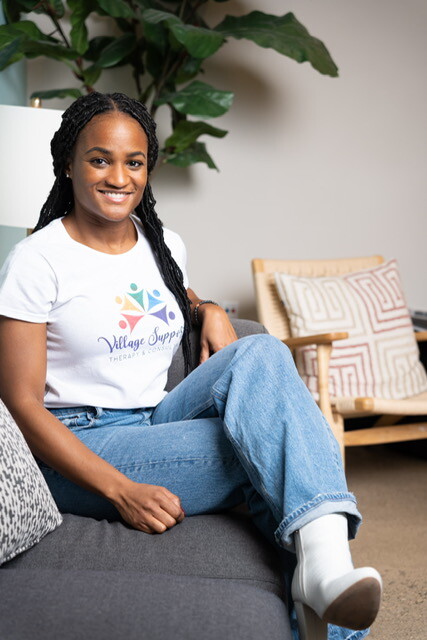
Her decision to pursue social work emerged from both personal experience and professional discernment.
“For me, I would say my own personal experience,” she says. “Growing up, when interacting with supports, people would often just look at me individually and say, this is the problem.”
She contrasts that with what she believes should have happened.
“Versus, you’re going through this at home, you’re going through this in your community, and let’s factor that in.”
That distinction is not academic. It is foundational.
As she explored different pathways within mental health, social work offered something that other disciplines, in her view, often overlooked.
“When I saw social work, it was like, we’re focused on person and environment, and there’s a social justice lens,” she says. “I was like, yes.”
She expands on that critique.
“There are doctrines that focus on pathologizing the person and don’t factor in their environment, their life experiences,” she says. “And when you exclude that, there’s a lot that you miss.”
Social work, as she practices it, does not begin with the assumption that the individual is the problem.
“It’s not just, what is wrong with this person,” she explains. “It’s also, how is the system making them sick.”
That question would later become central to how she structured her own practice.

By the time Ebony founded Village Support Therapy and Consulting in 2020, she had spent more than a decade working across nonprofit organizations and government systems. She had gained experience, but she had also encountered limitations.
“The work was very restrictive,” she says. “You had to do what they told you to do. You couldn’t really think outside of the box.”
That rigidity stood in contrast to the complexity of the people she was serving.
“We’re working with human beings,” she says. “Everything cannot just be regimented.”
She had also explored contracting, but found that approach equally limiting in a different way.
“There wasn’t really any mission attached to it,” she says. “It was just providing services.”
That absence of purpose became a turning point.
“I didn’t want to just start a practice,” she says. “I wanted a mission-driven practice.”
Village Support was built on that foundation.
She launched it in 2020, the same week that George Floyd was murdered in Minneapolis.
“It was in response to the need, but also in response to the collective trauma we were experiencing,” she says.
People were searching for care. They were not finding spaces that felt aligned, safe, or culturally grounded.
“This is a place where you can come and get culturally specific care,” she says. “Not just culturally responsive. Culturally specific.”
Her team reflects that intention.
“We all identify as Black across the diaspora,” she says. “Black American, West African, Somali, Kenyan.”
Representation, in her practice, is not symbolic. It is structural.
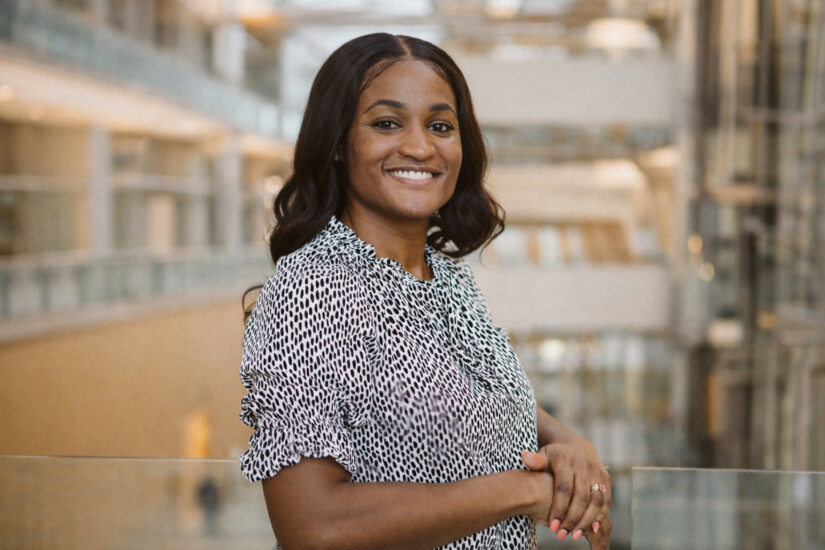
The decision to build something new came with cost.
“I took a grassroots route,” she says. “I didn’t have a lot of money going in.”
At the same time, she made a decision that many practices avoid.
“We accept all medical plans, including medical assistance,” she says.
That commitment aligns with her mission. It also introduces complexity.
“Insurance questioning why people are getting as much care as they are getting,” she says.
She also had to learn the mechanics of business without a direct model.
“This was my first business,” she says. “I didn’t have people in my network who had done this.”
So she learned through experience.
“There were things that cost me money,” she says. “But it was part of the process.”
Leadership brought a different kind of challenge.
“When you’re the leader, who do you go to for support?” she asks.
Her response was to build that support intentionally.
“I got an executive coach,” she says. “And I connected with other women founders.”
Those relationships became essential.
“Being able to talk through leadership, how to navigate things,” she says. “But also just having people who understand.”
Her work is grounded in a broader understanding of history and impact.
“When I think about Black and Brown folks in this country, and what we’ve experienced, that impact is still there,” she says.
For her, culturally responsive care is not optional.
“When we have more of it, more people will access care,” she says.
And that access has ripple effects.
“When individuals heal, that impacts families, neighborhoods, communities,” she says. “And that leads to real liberation.”
Her mentorship work reflects a belief in continuity.
“If you are able to get yourself up, you should reach back,” she says.
She rejects gatekeeping.
“You don’t need to be the only one.”
Her program helps demystify the path to licensure.
“People don’t always know what they need to do,” she says.
Her goal is to change that.
Sustainability required change.
“I was seeing clients six days a week,” she says.
That was not sustainable.
Now, she works fewer days, delegates more, and protects her time.
“When I shut down my laptop, that’s it,” she says.
She prioritizes family, connection, and rest.
“And I love a good spa day,” she adds.
Impact, for her, is both personal and measurable.
She speaks about clients, about transformation, about moments of breakthrough.
She speaks about interns who pass licensure after struggling.
And she speaks about growth.
“When I look at our analytics from 2020 to now, the impact has been astronomical,” she says.
Her vision remains grounded.
“I want Village Support to continue to be a resource,” she says.
She wants to expand services into the community.
She wants fewer barriers to care.
She wants access and quality to coexist.
She names:
Chanda Smith Baker and Jhaelynn Elam
Women whose work, like hers, is shaping community in meaningful ways.
“Would you come back?” I ask.
“Yeah, sure,” she says.
It is a simple answer, but it reflects something deeper.
Ebony Eromobor is not finished. She is building.
And through that work, she is not only providing care.
She is expanding what care looks like, who it reaches, and what becomes possible when it is done with intention, clarity, and commitment.
MinneapoliMedia | Community. Culture. Civic Life.

Ebony is a wonderful woman and amazing therapist. I am so honored to know her, and I see big things in her future for her and her beautiful family. Her company is unique and it is so much needed and a blessing to the community, and all the clients that it serves. She has built an amazing team to help her serve this community. I want to make sure I give a shout out to the other therapists that work with her. Thank you for caring Ebony and associates. keep up the great work. 🙂


Patchy rain nearby, with a high of 69 and low of 52 degrees. Overcast for the morning, partly cloudy during the afternoon, clear in the evening, patchy rain nearby overnight.