53° and Patchy rain nearby
Image
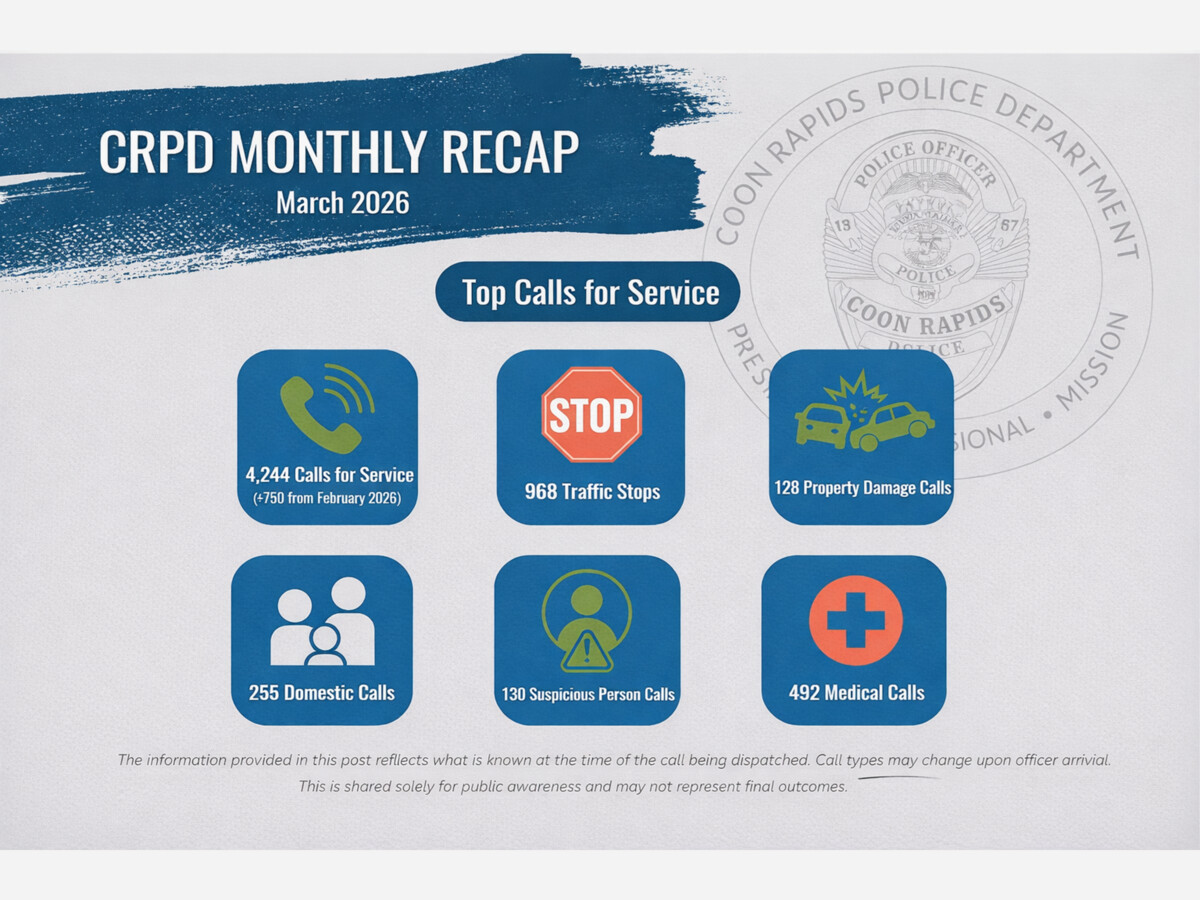



The total represents a decrease of 750 calls compared to February, suggesting a modest shift in demand for police services as the city transitions into spring. While the figures provide a high-level view of activity, officials emphasize that each call reflects a real-time response to community needs, ranging from emergencies to routine enforcement.
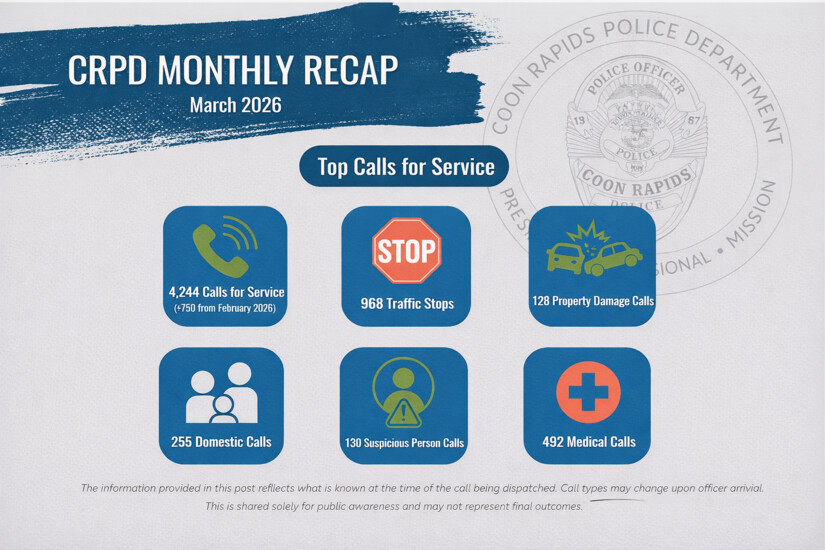
Among the most frequent categories recorded in March:
Police officials note that these figures are based on information available at the time calls are dispatched, and classifications may evolve as officers assess situations on scene.
Public safety experts generally view calls for service as a key indicator of both community activity and trust in emergency response systems. Higher reporting rates can signal strong engagement between residents and law enforcement, particularly in categories such as suspicious activity or domestic concerns.
Traffic stops, which make up a significant portion of the March total, are typically tied to enforcement of moving violations, impaired driving prevention, and broader efforts to reduce crashes and injuries. Meanwhile, the volume of medical calls underscores the role police officers often play as first responders alongside fire and EMS personnel.
Domestic-related calls remain one of the more complex categories, often requiring de-escalation, safety planning, and coordination with social services. Law enforcement agencies across Minnesota and nationally have increasingly emphasized training and partnerships to address these situations more effectively.
The reported decline from February to March aligns with typical seasonal fluctuations. Winter months can bring increased calls related to weather conditions, vehicle incidents, and other environmental factors. As conditions stabilize, departments sometimes see shifts in the types and frequency of calls rather than a uniform drop in overall activity.
Coon Rapids, one of Anoka County’s largest cities, relies on a combination of patrol response, community policing, and inter-agency coordination to manage public safety demands. Monthly recaps such as this are intended to provide transparency and help residents better understand how police resources are utilized.
In its public message accompanying the data, the department emphasized that statistics alone do not capture the full scope of the work.
“Behind each statistic lies a real individual, a real call, and an officer ready to help,” the department stated, thanking residents for their continued support.
As the city moves further into spring, public safety trends may continue to evolve, particularly with increased outdoor activity, travel, and community events. Police departments typically adjust staffing and patrol patterns in response to these seasonal changes.
For residents, officials continue to stress the importance of reporting concerns, practicing safe driving, and staying engaged with community safety initiatives.
MinneapoliMedia | Community. Culture. Civic Life.



Patchy rain nearby, with a high of 69 and low of 52 degrees. Overcast for the morning, partly cloudy during the afternoon, clear in the evening, patchy rain nearby overnight.