47° and Light drizzle
Image
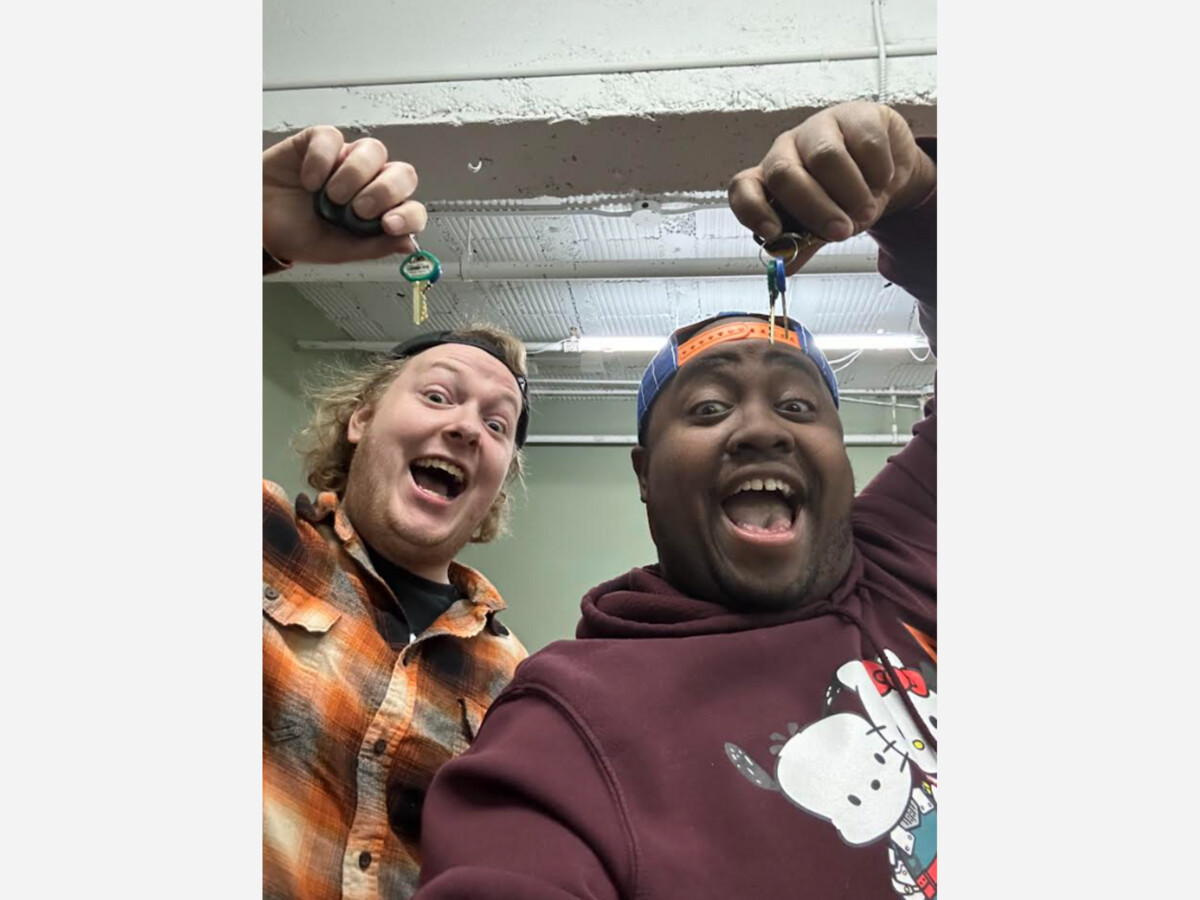



In Minnesota, music is often spoken about through legacy.
Prince. Jimmy Jam and Terry Lewis. Atmosphere. Lizzo. The long, shape-shifting tradition of a state that has repeatedly given the country artists, producers, sounds, and scenes that mattered.
But legacies do not sustain themselves. They require rooms. They require equipment. They require trust. They require people willing to build something durable enough for others to enter.
That is where FairPlay Entertainment comes in.
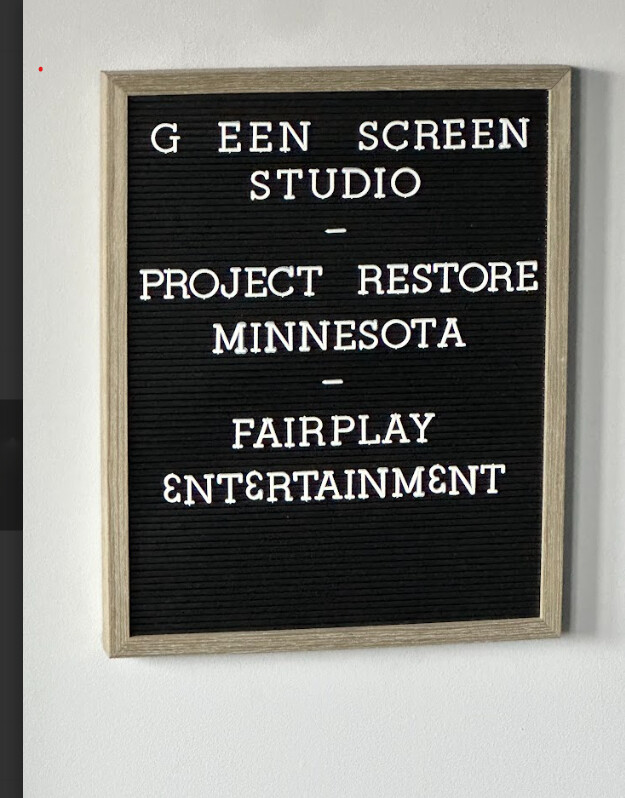
Founded by Matt Allen, better known to many as Nur-D, and Ryan Hayes, known professionally as DJ Hayes, FairPlay Entertainment is not simply a recording studio in St. Paul. It is a deliberately constructed intervention in the economics and culture of music-making. It is a place built to lower barriers that have long kept too many artists, especially emerging artists, producers, and creators from underrepresented communities, outside the door.
For Allen and Hayes, FairPlay did not begin as a real estate play or a branding exercise. It began as a response to what they had lived through, what they had observed in Minnesota’s music scene, and what they knew was missing.
“We wanted there to be more access to some of the things that we now have as artists, to people earlier on in their career,” Allen said. “Studio spaces, advice, photo shoots, production help, that kind of stuff. It was really hard for me as a new artist to get all that stuff.”
That memory never left him. Neither did the larger question it raised. If entry into music required money, access, insider relationships, and the ability to absorb repeated costs just to get started, then who exactly was being heard and who was being left out?
That question became even more urgent in 2020.
At a moment when the public reckoning around power, safety, exclusion, and accountability was colliding with a broader social rupture, Allen and Hayes found themselves spending long days in protest spaces and long nights in the studio. They were watching Minnesota change in real time. They were also watching many artists realize that some of the pathways they had once looked to for growth were not as safe or as inclusive as they had assumed.
“We were kind of looking around and going, this is not really what we want our music scene to look like,” Allen said. “Maybe we saw somebody take a gig with somebody, and we were like, I maybe wouldn’t have done that because that person’s not so great. But then you have the conversation of, well, it’s not like we can offer a better option, and that’s still the road out here.”
That recognition mattered. It moved FairPlay beyond the idea of simply making art. It pushed them toward infrastructure.
Most people think artists build songs. Allen and Hayes wanted to build conditions.
At first, FairPlay existed as a collective, a tight-knit group organized around shared values and a shared commitment to making good music with good people. But as that phase evolved, the larger mission came into focus. The point was not merely to create a smaller circle. The point was to open the door wider.
“We had talked about how do we make this something that more people can have access to,” Hayes said. “How do we leave the door open to anybody who wants to experience that?”
The studio became the answer.
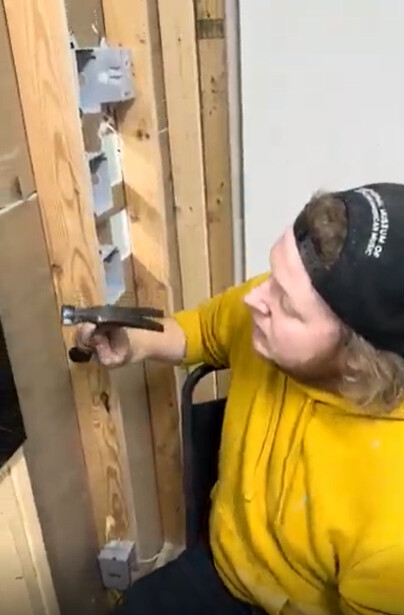
FairPlay was not born from excess capital or institutional backing. It was built by hand, quite literally.
When their original construction plan fell through, Hayes called his father. Over the course of a week, they built the studio themselves. They cut walls open, installed windows, ran electrical, and assembled the space piece by piece. What might have been handed off to contractors instead became part of the studio’s identity.
“We said, no, let’s put our physical blood, sweat, and tears into the mortar of this place,” Allen said. “It’s definitely a different appreciation when you walk in here every day and go, I built this literally.”
But the physical labor was only part of the investment. The financial risk was just as real.
Allen has used income generated through his own work as an artist to help sustain the studio. He spoke about that choice plainly, not as sacrifice for its own sake, but as an expression of what he believes money is for.
“I said, I have this money. I have an excess of financial capital. I could keep it. I could buy a nice car, buy a nicer place. Or could I put my literal money where my mouth is, and I invest in the music community that has done so much for me?”
His answer was clear.
“That’s why we can keep the cost so low. That’s why we do things this way. I would rather have a music scene that is full of people who are able to tell their stories and feel safe and protected and respected doing that than driving a new Bentley.”
Hayes put it more simply.
“I’d rather have more music than have more cars,” he said.
That philosophy sits at the center of FairPlay’s model.
Studio time starts around $20 an hour for self-recording sessions and around $40 an hour with an engineer. In a field where rates can climb dramatically higher, those numbers are not incidental. They are a statement about who the space is for and what kind of music economy its founders are trying to build.
Affordability, for them, was never a side consideration. It was the backbone.
“If money or cost becomes the measuring stick, then the art that’s made is only reflective of those who can afford it,” Allen said. “I don’t want to live in a world where the best artist, the most talented artist of your time, goes unheard because they were broke.”
That conviction is not abstract. It comes from experience.
Before FairPlay, Allen remembers trying to make records with extremely limited resources. Hayes remembers how quickly studio costs could climb, especially once engineering time was added. Both men understood what it meant for money to shape possibility before talent ever had the chance to.
So they built a different arrangement.
Artists can access professional space at a lower rate. Producers can work in a studio environment without surrendering most of their earnings to a larger commercial structure. The model is built to make it easier for both sides of the creative process to survive.
“We made a space where it’s both affordable for the artist and profitable for the producer at the same time,” Hayes said.
That distinction matters more than it may appear at first glance. FairPlay is not just lowering a fee. It is rethinking the terms of participation.
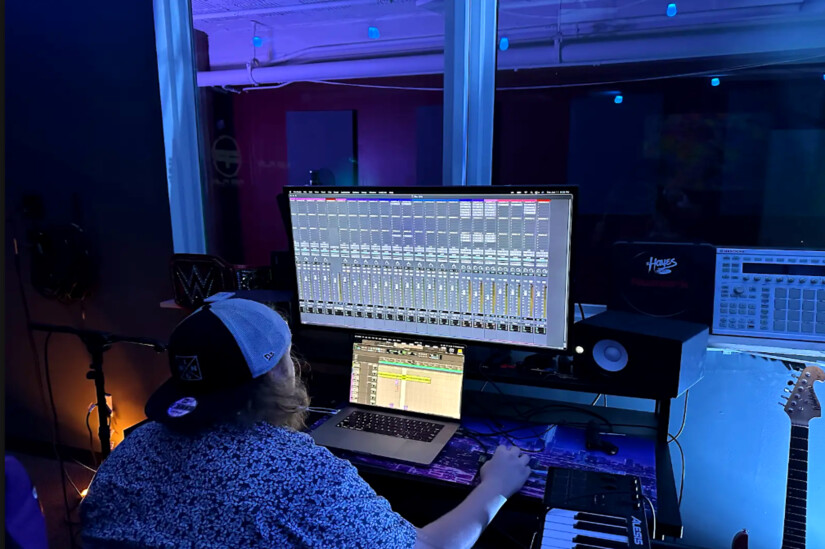
Listening to Allen and Hayes describe FairPlay, one word keeps resurfacing even when they are not explicitly saying it: space.
Not just acoustic space. Social space. Emotional space. Professional space. Safe space. Third space.
For Hayes, one of the revelations that shaped FairPlay came from seeing firsthand how much of music production had become trapped inside private homes. So much of Allen’s earlier catalog had been recorded in Hayes’s living room. That arrangement worked, until it did not.
At some point, Hayes began to understand that producers needed separation too. The work itself required a place outside the house, outside domestic life, outside the constant overlap between rest and labor.
“There is a disconnect from work and home,” Allen said, reflecting on Hayes’s reality as a producer. “Producers are just as much a part of this as anything else. They need a place to work, and they need a place to work that is not their house.”
That insight widened the meaning of the studio. FairPlay was no longer just a room where songs got made. It was becoming what movement builders often call a third space. Not the stage. Not home. Something else. A place where people can gather, create, ask questions, experiment, fail safely, and return.
For Allen, that concept also carried a moral dimension. FairPlay was meant to be a place that did not feel predatory, exclusionary, or performative. A place where a young artist could walk in and not feel like they had entered what he called “a wolf’s den.”
It was also designed to be responsive rather than hierarchical.
The two men described artists reaching out not just to book time, but to ask for counsel. Should they take this offer? Is this a good opportunity? What does this contract mean? How do they move from hobbyist to professional? FairPlay, in their telling, is not merely providing a service. It is offering a relationship.
“We just have an open door,” Allen said. “You can come in and talk to us. Hey, I got this show offer. Do you think this is good? What business advice could you give me?”
That openness is not separate from the studio. It is part of the product.
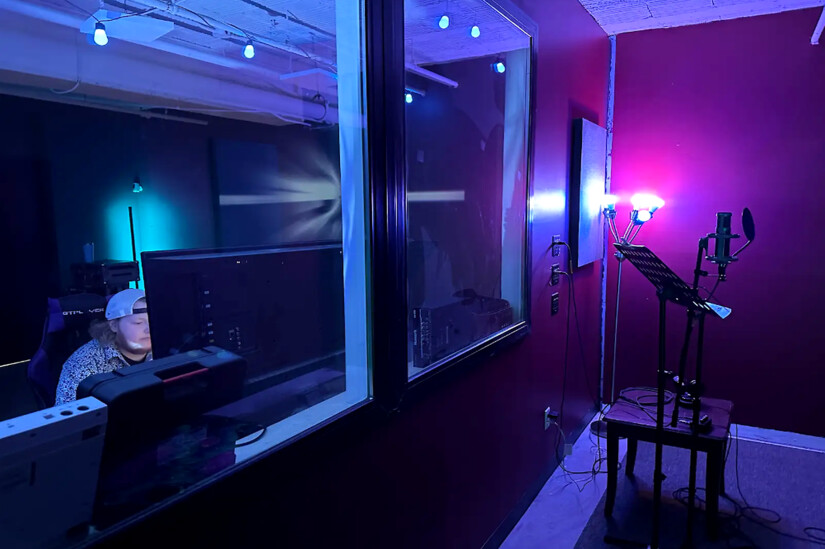
One of the clearest measures of FairPlay’s value is not found in a mission statement, but in the stories that enter the room once the price of entry drops.
“What happens to a music scene when access is twenty dollars instead of two hundred dollars?” Allen asked during the conversation. “You get younger voices.”
He is right to focus there. Price is not neutral. It decides who experiments, who hesitates, who postpones, and who gives up. Lowering cost changes not just volume, but authorship.
At FairPlay, that shift has already produced moments that both founders described with visible feeling.
Hayes spoke about a woman who came into the studio and recorded her first song entirely in Hmong. He did not speak the language, and told her so. She arrived prepared, with written lyrics and translations, and the session became more than an engineering task. It became a moment of exchange, learning, and affirmation.
“I actually learned a lot more about Hmong culture by making the song,” Hayes said. “At the same time, I’m making somebody’s first song ever, and they enjoyed that experience, and it made them want to do it again.”
Allen described another moment that stayed with him for a different reason. A young person who had been frequenting the studio brought in a laminated sign explaining he was raising money for a college computer and asked if he could hang it in the space.
What moved Allen was not only the need. It was the trust.
“The fact that he even asked,” Allen said. “After getting to be in this place, getting to see what we do, they felt comfortable enough to ask for that. It’s still hanging up. They already got the computer.”
The story did not end there. The young person also shared his music, and Allen was struck by how strong it was. The moment became proof that FairPlay was serving people beyond their immediate friend group, beyond established networks, beyond people already credentialed or visible.
“This is a youth in the community who is now better off because of the fact that we were here,” he said.
That may be the clearest argument for FairPlay’s existence.
The studio is making room for stories that might otherwise remain unheard or delayed. It is allowing artists to try things for the first time. It is allowing producers to work with dignity. It is making the act of creation feel available to people who have long been told, directly or indirectly, that such spaces were not built for them.
Allen pointed to young African American artists, Hmong artists, artists processing grief and protest, creators experimenting with entirely new forms, and people whose life experiences rarely get the benefit of professional recording conditions. Hayes mentioned a client who uses the studio with accessibility support in place. They both emphasized that FairPlay is not limited to music. The space has also been used for video, commercial, and other creative work.
What links these uses is not genre. It is permission.
If FairPlay’s artistic purpose is clear, its economic reality is equally plain.
Mission-driven spaces do not survive on good intentions alone. They require rent, equipment, upkeep, time, and visibility. They require people to know they exist. And they require a model that can hold together even when the founders are stretched.
Allen and Hayes have felt that pressure directly.
When the studio’s future looked uncertain, they turned to the community. What came back, they said, was not a flood of large checks from wealthy patrons. It was something else, and in some ways more revealing: small gifts. Five dollars. Ten dollars. Fifteen dollars. Enough people stepping in to keep the doors from closing.
“The amount of support we received was very reassuring in what we were doing,” Allen said.
Still, both men were careful not to romanticize precarity. Sustainability, they explained, has to come from multiple channels: studio bookings, the music review show they host regularly, artist support, community engagement, and Allen’s own music funneling resources back into the project.
Ultimately, though, the studio depends on artists and producers deciding it is worth returning to.
“The harder they work, the more they work, the more this place succeeds,” Allen said.
That is one reason their answer to the question of support was so notable. They did not frame the future of FairPlay primarily as a charity question. They framed it as a participation question.
Book a session. Tell a friend. Share the work. Come make something. Even if someone has never recorded before, both men said they would rather have that person involved than standing at a distance admiring the idea of the studio.
“I’d rather you be involved,” Allen said. “I’d rather you make a song. I’d rather you come in and make a song, even if you’ve never done it before.”
That may be the most revealing line of the interview.
FairPlay is not seeking admiration from outside the glass. It is asking people to enter the room.
Toward the end of the conversation, I asked where they see FairPlay in Minnesota’s deep musical lineage.
Allen allowed himself a dream.
One day, he said, he wants FairPlay to be the kind of place people stop at when telling the story of Minnesota music. A place associated with great records, major creative breakthroughs, and the next generation of artists who reshaped what the state sounds like.
Hayes, characteristically, answered from a different angle. Recognition mattered less to him than reputation. He wants FairPlay to be known as the place where someone who thought music was financially out of reach was able to try.
That difference in emphasis between the two men is part of what makes the partnership persuasive. Allen often speaks with the expansive energy of someone imagining scale, lineage, and the larger culture. Hayes often grounds the vision in mechanics, process, craft, and practical structure. Together, they form a philosophy that is both aspirational and usable.
Asked what would change in Minnesota’s creative economy if FairPlay thrives over the next ten years, Allen did not hesitate to name the central issue: the paywall.
Too often, he argued, the artists most visible in a local scene are not simply the most talented, but the ones who can afford the pathways to visibility or who are chosen by the people already controlling stages, promoters, and cultural validation. When money filters access, it also filters narrative.
FairPlay is trying to interrupt that.
“If fair play is able to continue on the way we are,” Allen said, “you will see and hear more from diverse people groups in different locations around Minnesota. You will hear stories that resonate with a different group of people.”
He was even more direct moments later.
“I would like to hope that the sort of white-centric middle-class story is not always the forefront,” he said.
That line matters because it names what many cultural institutions prefer to leave implied. Access is not only about who gets in the door. It is also about which stories become normalized, funded, circulated, and remembered.
FairPlay’s wager is that when cost goes down, representation broadens. When people are treated with respect, better art gets made. When producers are supported, artists benefit too. When young people are allowed to experiment without being punished financially for trying, the scene itself expands.
That wager is not guaranteed. But it is serious.
And in Minnesota, seriousness matters.
As the conversation closed, I asked Allen and Hayes to name other builders in Minnesota whose work deserves greater visibility.
Their answers were telling.
They named Legacy Building in South Minneapolis, a Black-owned entertainment space they described as a major inspiration for what FairPlay is trying to become. They also named Miguel of Lito’s Burritos on Lake Street, whom Allen met in protest spaces before watching him build his own brick-and-mortar business into what he called a true third space where people can gather and feel safe.
In both cases, the choices reinforced something that had already become clear over the course of the interview. When Allen and Hayes talk about building, they do not mean status. They mean environments. Places where people can enter, work, rest, eat, rehearse, create, and belong.
That understanding places FairPlay squarely within the purpose of Builders of Minnesota.
What Allen and Hayes are constructing is not merely a studio and not merely a brand. It is a modest but meaningful piece of civic and cultural infrastructure. It is a room built by hand and sustained by belief, where access is priced low enough to matter and where the next artist, producer, or creator might begin not because they finally became wealthy enough, but because someone decided that wealth should not be the deciding factor in whether their voice deserves a chance.
In Minnesota, that is not a side story. It is one of the central stories of our time.
Because the future of a music culture is not determined only by the stars it celebrates. It is also determined by the doors it holds open.
And in St. Paul, in a studio built with labor, conviction, and community trust, Matt Allen and Ryan Hayes are holding one of those doors open right now.
MinneapoliMedia | Community. Culture. Civic

Overcast, with a high of 50 and low of 43 degrees. Overcast during the morning, light rain in the afternoon, overcast in the evening,