Image



The New Town Square: How Suburban Arts Are Reclaiming the Public Stage
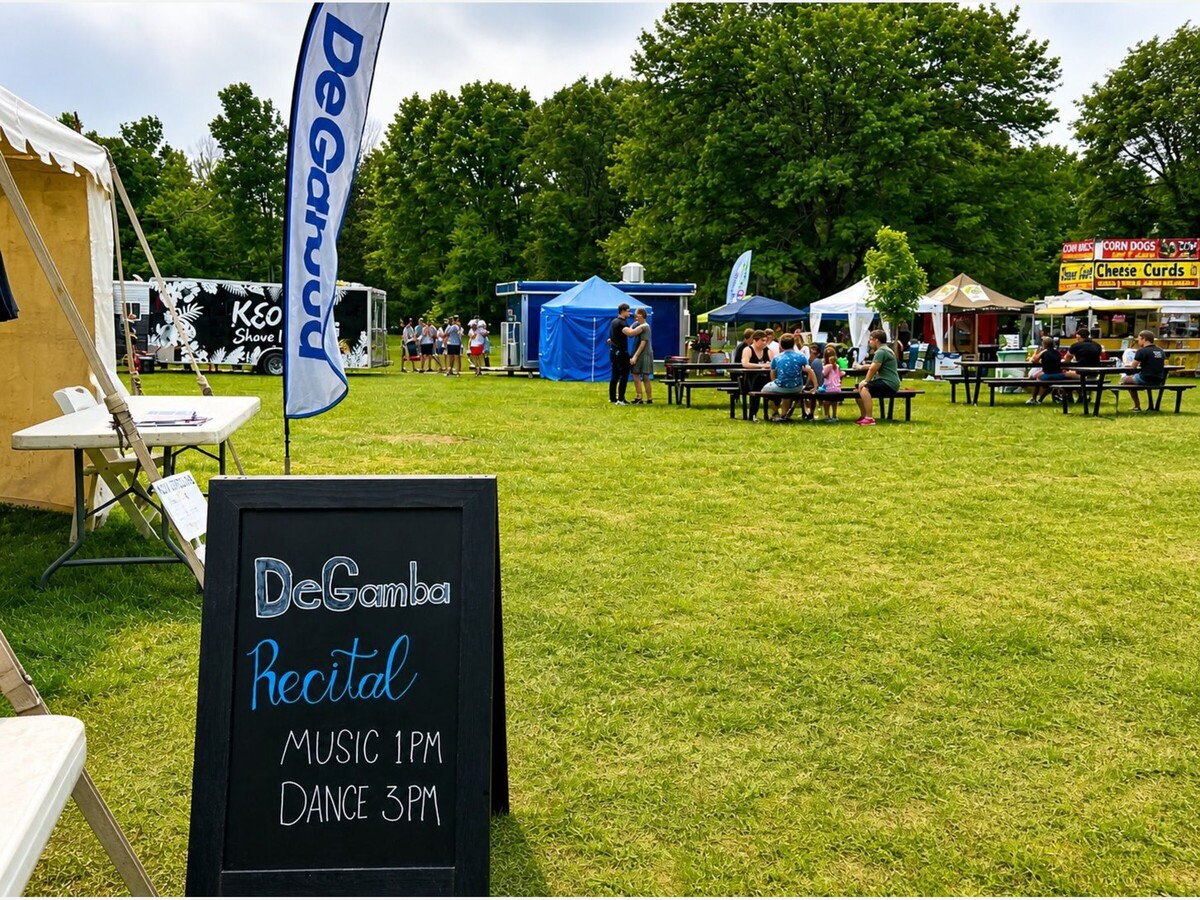
On May 31, the pastoral quiet of St. Francis will be punctuated by a specific kind of tension. Under the sweeping canvas of a festival tent in Community Park, more than 50 young musicians and dancers will participate in a ritual as old as the arts themselves: the transition from the private sanctuary of the classroom to the unforgiving clarity of the public stage.
While the event is billed as the DeGamba School of Music and Art Summer Recital, its presence within the city’s annual Pioneer Days festival suggests a much larger narrative. It is a story of how a suburban community, often viewed as a mere satellite to the urban core, is meticulously constructing its own cultural engine, one child, one note, and one disciplined movement at a time.
At the center of this movement is a model that transcends the standard "after school activity" trope. DeGamba operates under a "Teaching Artist" framework, a rigorous instructional philosophy that rejects the idea of the hobbyist. In this setting, the instructors are not merely conduits for a curriculum; they are active practitioners, working musicians, and competitive dancers who bring the grit of the professional world into the suburban studio.
The distinction is profound. In a traditional lesson based environment, a student might learn to play a C major scale as a sterile academic exercise. Under a teaching artist, that same student learns how that scale functions as the foundation of a performance: how to maintain the integrity of the note while an audience shifts in their seats and the humid Minnesota air threatens the tuning of a string.
This multi discipline approach, encompassing everything from the percussive strike of a drum kit to the silent, charcoal smudged focus of the visual arts, creates a laboratory of creative thought. By housing these disparate forms of expression under one roof, the institution addresses the logistical friction of suburban life, specifically the endless coordination of schedules and transit, allowing families to prioritize depth over distance.
For decades, the "Geographies of Art" in Minnesota were clearly defined and perhaps unfairly tilted. To find high level conservatories or specialized training, the path almost invariably led toward the urban core of Minneapolis or Saint Paul. This created a silent barrier to entry: a tax on time and travel that many suburban families found difficult to pay.
The emergence of a localized, high standard institution like DeGamba in St. Francis is a silent rebellion against that centralization. It represents a "Democratization of Excellence," proving that the quality of artistic instruction is not dependent on a zip code. When the city’s youth can access piano, guitar, voice, and ballet within their own municipal borders, the suburb ceases to be a cultural desert and begins to function as a self-sustaining ecosystem.
This shift is critical for the archival record. It signals a maturation of the north metro region. St. Francis is no longer just a bedroom community where people sleep; it is becoming a place where they create, where they refine their talents, and where they build a collective memory.
The decision to fold this recital into the Pioneer Days festival, an event managed by the St. Francis Area Chamber of Commerce, is a masterstroke of civic integration. A traditional studio recital is an insulated affair, attended by proud parents and forgiving relatives. It is a safe space.
Pioneer Days is not safe. It is a public square.
At 1 p.m. on Sunday, May 31, when a 10 year old violinist steps onto that stage, the audience is a microcosm of the city: neighbors, local business owners, curious visitors, and perhaps the occasional skeptic. This is where the "Teaching Artist" model is truly tested. The student must manage the external variables of a festival, including the smell of kettle corn, the distant hum of traffic, and the unpredictable focus of a passing crowd.
This is where art becomes a form of civic service. By providing the soundtrack and the spectacle for a city wide celebration, these students are contributing to the social capital of St. Francis. They are providing visible proof of the community's investment in its youth.
The May 31 recital will eventually end. The sheet music will be folded, the ballet shoes will be packed away, and the festival tent will be struck. However, the impact of the event remains etched into the municipal record.
What we are witnessing in St. Francis is the quiet construction of a layered cultural infrastructure. It is a system where private investment in instruction meets public platforms for performance. It is a recurring cycle that builds not just musicians and dancers, but disciplined, confident citizens who understand the value of long term effort and public accountability.
For the archival record of MINNEAPOLIMEDIA, the DeGamba Summer Recital stands as a testament to a community in motion. It serves as a reminder that while the arts may begin in the quiet solitude of a practice room, they find their true purpose when they are shared with the neighbors, under the open sky, in the heart of the town they call home.
MinneapoliMedia | Community. Culture. Civic Life.



Overcast, with a high of 73 and low of 53 degrees. Sunny in the morning, light rain shower in the afternoon, light drizzle in the evening, overcast overnight.