70° and Heavy rain at times
Image




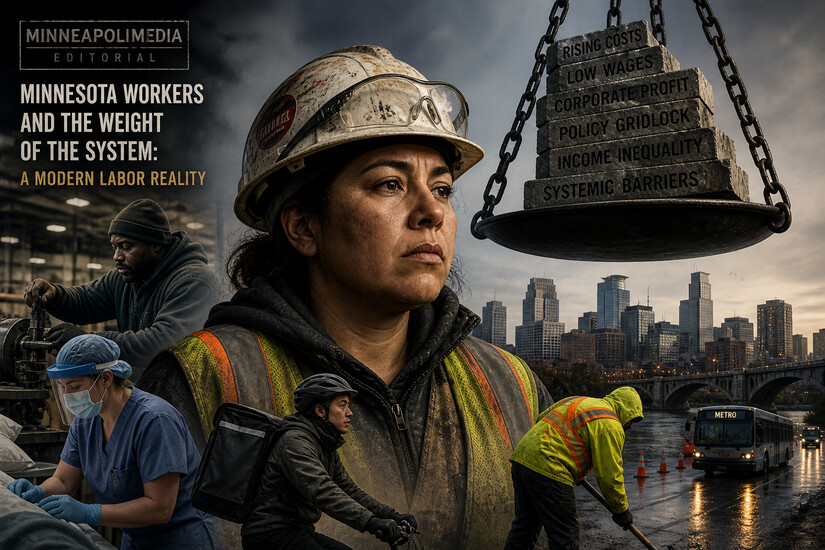
On May 1, a date recognized globally as International Workers’ Day, the language of labor rights resurfaces with renewed urgency. In Minnesota, as in many parts of the United States, the day arrives not as a symbolic observance alone, but as a point of reflection grounded in present conditions. The question is not whether workers are being recognized. The question is whether they are being protected, valued, and sustained within the systems that depend on their labor.
Across industries in Minnesota, from healthcare and logistics to retail, education, construction, and public service, workers are navigating a convergence of pressures that have intensified over the past five years. These pressures are not theoretical. They are measurable, documented, and increasingly visible in workforce data, labor disputes, legislative debates, and public testimony.
The cost of living has risen at a pace that has outstripped wage growth for many households. Housing costs in the Twin Cities metro area and surrounding regions have continued to climb, placing sustained strain on working families. According to regional housing reports, affordability gaps have widened, particularly for renters and first-time homebuyers. At the same time, healthcare costs, childcare expenses, and transportation costs have increased, creating a layered financial burden that is not offset by proportional increases in income for large segments of the workforce.
In this environment, workers are being asked to maintain productivity, adapt to evolving workplace expectations, and absorb rising costs, often without corresponding structural support. The result is a widening disconnect between labor input and economic security.
This is not a singular Minnesota phenomenon. It reflects national and global patterns. However, the local context matters. Minnesota has historically positioned itself as a state with strong labor protections, a robust public sector, and a reputation for civic engagement. That reputation now faces scrutiny from workers who are questioning whether policy, enforcement, and employer practices are keeping pace with the realities they face.
Minnesota’s labor market indicators, at a glance, present a picture of relative strength. Unemployment rates have remained low compared to national averages. Workforce participation has been stable. Job openings across sectors continue to signal demand for labor.
However, aggregate data does not capture lived experience.
A low unemployment rate does not necessarily translate to job quality. It does not account for wage sufficiency, workplace conditions, scheduling stability, or access to benefits. Workers holding multiple jobs, working extended hours, or navigating unpredictable schedules are part of the same labor market that is often described as “strong.”
In healthcare, staffing shortages have placed sustained pressure on nurses, support staff, and technicians. Reports from hospital systems and professional associations have documented burnout, increased patient loads, and concerns about safety and retention. In long-term care facilities, staffing challenges have been linked to both compensation and working conditions, affecting both workers and the populations they serve.
In logistics and warehousing, the acceleration of e-commerce has intensified production expectations. Workers have reported high output demands, limited flexibility, and concerns related to workplace safety. National scrutiny of warehouse conditions has echoed in Minnesota facilities, where workers have called for clearer standards and stronger enforcement mechanisms.
In retail and food service, wage increases in some segments have not fully offset the instability created by variable scheduling, limited benefits, and rising living costs. Workers in these sectors often face the dual challenge of income volatility and limited upward mobility.
In education, teachers and support staff have raised concerns about workload, compensation, and classroom conditions. District-level negotiations across the state have reflected broader tensions around funding, staffing, and the expectations placed on educators.
Public sector workers, including city and county employees, have similarly raised concerns about compensation structures, workload distribution, and long-term sustainability of staffing models.
These are not isolated complaints. They represent patterns that cut across sectors, pointing to systemic issues rather than individual workplace disputes.
Minnesota lawmakers have taken steps in recent years to address worker protections. Legislative actions have included paid family and medical leave initiatives, adjustments to minimum wage structures, and workplace safety measures.
These actions are significant. They reflect an acknowledgment at the policy level that workers require stronger protections and support systems. However, the effectiveness of legislation depends on implementation, enforcement, and scope.
Paid leave policies, for example, provide critical support for workers facing medical or family-related needs. Yet, questions remain about access, administrative complexity, and the impact on small businesses navigating compliance requirements.
Minimum wage increases have provided measurable income gains for many workers. At the same time, the rate of increase has not fully matched the pace of inflation and cost-of-living growth in certain regions, particularly in housing.
Workplace safety regulations exist, but enforcement capacity is often constrained by staffing, resources, and reporting mechanisms. Workers may be aware of protections in theory but face barriers in reporting violations or seeking recourse.
Legislation can establish a framework. It cannot, on its own, guarantee conditions on the ground.
This gap between policy and practice is where worker frustration often takes root. When protections are announced but not consistently experienced, trust in institutions begins to erode.
Employers across Minnesota are operating within their own set of constraints. Rising operational costs, supply chain disruptions, and competitive pressures have shaped business decisions. Many employers have increased wages, expanded benefits, or introduced retention incentives in response to labor shortages.
At the same time, cost containment strategies have led to staffing reductions, increased productivity expectations, and reliance on part-time or contract labor in certain sectors. These strategies can stabilize business operations in the short term but may contribute to long-term workforce instability.
The relationship between employer and worker is not static. It is shaped by market conditions, regulatory frameworks, and organizational priorities. However, when the balance shifts too far toward cost efficiency at the expense of worker stability, the consequences become visible in turnover rates, burnout, and reduced workforce engagement.
Some Minnesota employers have taken proactive steps to address these challenges, investing in workforce development, training programs, and improved working conditions. Others have faced criticism, legal challenges, or public scrutiny over labor practices.
The variation across employers highlights a broader reality. Worker experience is not uniform. It depends heavily on where one works, under what conditions, and with what level of institutional support.
Unions and worker advocacy organizations continue to play a central role in Minnesota’s labor landscape. Collective bargaining agreements have secured wage increases, benefits, and workplace protections for unionized workers across multiple sectors.
Recent years have seen renewed organizing efforts, both within traditional union structures and through emerging worker-led movements. These efforts reflect a broader national trend in which workers are seeking greater influence over workplace conditions.
At the same time, union density varies significantly by sector. Many workers remain outside of formal collective bargaining structures, limiting their access to negotiated protections.
Organizing efforts are not without challenges. They require sustained coordination, legal navigation, and, often, resistance from employers. Outcomes are not guaranteed, and the process itself can be lengthy.
However, the persistence of organizing activity signals a clear message. Workers are not passive participants in the labor system. They are actively seeking mechanisms to shape it.
The framing of labor issues in public discourse influences how they are understood and addressed. Political narratives often present competing interpretations of the same conditions.
Some emphasize economic growth, job creation, and business competitiveness. Others focus on inequality, worker protections, and systemic imbalances.
These narratives are not mutually exclusive, but they can lead to divergent policy priorities.
In Minnesota, political leadership has engaged with labor issues through both legislative action and public messaging. However, the alignment between rhetoric and worker experience remains a point of scrutiny.
Workers evaluating their conditions are not responding to messaging alone. They are responding to what they experience in their workplaces, their paychecks, and their daily lives.
Taken together, the conditions facing Minnesota workers point to a system under strain. The strain is not the result of a single policy decision, employer action, or economic factor. It is the result of multiple pressures interacting over time.
Rising costs, evolving labor demands, policy gaps, and structural inequalities have converged to create an environment in which many workers feel that the balance has shifted away from them.
This does not mean that progress has not been made. It does not mean that Minnesota lacks strengths in its labor framework. It does mean that existing systems are being tested in ways that require careful evaluation and, in some cases, recalibration.
The pressures facing Minnesota workers are most clearly understood when examined through measurable economic indicators. While public discourse often frames labor concerns in broad terms, the underlying conditions are grounded in specific cost structures, wage trajectories, and household financial realities that have shifted significantly in recent years.
At the center of this shift is the relationship between wages and the cost of living. In Minnesota, median wages have increased over time, supported in part by statutory minimum wage adjustments and labor market demand. However, wage growth has not kept pace uniformly with the rise in essential living costs. This divergence is not speculative. It is reflected in data from housing authorities, state economic reports, and federal labor statistics.
Housing remains the most significant pressure point. In the Twin Cities metropolitan area, median home prices and rental rates have risen steadily, driven by a combination of limited housing supply, population growth, and construction costs. For renters, the percentage of income allocated to housing has increased, particularly among lower- and middle-income households. For prospective homeowners, rising interest rates and elevated home prices have created barriers to entry that did not exist at the same scale a decade ago.
The result is a measurable affordability gap. Workers who would have previously been able to secure stable housing within their income range are now facing constrained options, longer commutes, or financial trade-offs that affect other areas of household stability.
Healthcare costs represent a second major driver of financial strain. Even for workers with employer-sponsored insurance, out-of-pocket expenses, deductibles, and premium contributions have increased. For those without employer coverage, the burden is more acute. Access to care, while more structured than in pre-ACA environments, still presents financial challenges that can lead to deferred treatment or long-term debt.
Childcare costs further compound these pressures. Minnesota ranks among states with higher childcare expenses relative to median income. For working families, particularly those with young children, childcare costs can rival housing expenses, effectively functioning as a second rent or mortgage payment. This dynamic influences workforce participation decisions, particularly for caregivers weighing the cost of employment against the cost of care.
Transportation costs, including fuel, vehicle maintenance, and public transit expenses, have also increased. For workers commuting from more affordable housing areas into employment centers, these costs represent a necessary but growing share of household expenditure.
When these factors are considered together, the economic environment facing workers becomes clearer. It is not defined by a single point of pressure but by the cumulative effect of multiple rising costs interacting with wage structures that have not fully adjusted to absorb them.
Minnesota’s wage structure reflects both strengths and limitations. The state’s minimum wage laws have established a baseline that exceeds the federal minimum, providing a higher floor for workers in lower-wage sectors. However, minimum wage levels, even when adjusted periodically, do not fully account for regional cost variations or the broader cost environment.
Beyond minimum wage, income stability is shaped by scheduling practices, hours worked, and employment classification. Workers in sectors such as retail, hospitality, and gig-based services often face variability in hours that translates into income volatility. Even when hourly wages increase, inconsistent scheduling can limit the practical impact of those gains.
Full-time employment remains a stabilizing factor, but access to full-time positions varies by industry. In some sectors, employers have shifted toward part-time or flexible staffing models to manage costs and demand fluctuations. While these models provide operational flexibility, they can reduce income predictability for workers.
Overtime availability, when present, can supplement income. However, reliance on overtime as a primary means of achieving financial stability raises questions about sustainability and worker well-being. Extended hours, particularly in physically or emotionally demanding roles, contribute to fatigue and burnout, affecting both individual workers and overall workforce retention.
Income inequality, while not as pronounced in Minnesota as in some other states, remains a factor. Wage growth at higher income levels has outpaced growth at lower levels, contributing to a widening gap that affects overall economic balance.
The broad economic trends outlined above manifest differently across industries, shaping distinct worker experiences.
In healthcare, compensation levels vary widely by role. Physicians and specialized practitioners operate within a different wage framework than nurses, aides, and support staff. For many frontline healthcare workers, wage increases have not fully offset the demands of the role, particularly in environments characterized by staffing shortages and high patient volumes. Retention challenges in nursing and long-term care have been linked to both compensation and working conditions.
In construction and skilled trades, demand for labor has remained strong, driven by infrastructure projects and housing development needs. Wages in these sectors are generally higher than in service industries, but they are accompanied by physical demands, safety considerations, and cyclical employment patterns tied to project timelines and seasonal factors.
In logistics and warehousing, compensation has increased in response to labor demand. However, productivity expectations, performance metrics, and workplace conditions continue to shape worker experience. The pace of work, combined with monitoring systems and output requirements, has been a focal point in worker feedback and regulatory attention.
In education, salary structures are often determined through negotiated contracts, with variations by district. While Minnesota educators generally earn higher wages than national averages, concerns about workload, class sizes, and support resources persist. The balance between compensation and working conditions remains a central issue in contract negotiations.
In retail and food service, wage gains have been more visible in recent years, particularly in entry-level roles. However, these gains are often offset by scheduling variability, limited benefits, and high turnover rates. Workers in these sectors frequently navigate a combination of part-time employment and supplemental income sources.
Public sector employment offers relative stability in compensation and benefits, but it is not immune to pressure. Budget constraints, staffing levels, and service demands influence workload and long-term sustainability. Pension structures and healthcare benefits remain points of negotiation and policy consideration.
The effectiveness of labor policy depends not only on legislative intent but on implementation and enforcement capacity. In Minnesota, agencies responsible for labor standards and workplace safety operate within defined resource limits. These limits affect inspection frequency, response times, and the ability to proactively identify violations.
Workers encountering wage theft, unsafe conditions, or labor standard violations must navigate reporting systems that can be complex and time-consuming. While protections exist, access to those protections is influenced by awareness, documentation, and the willingness to engage in formal processes that may carry perceived risk.
Enforcement actions, when taken, can result in penalties, corrective measures, and back pay for affected workers. However, the scale of enforcement relative to the size of the workforce means that not all violations are identified or addressed in a timely manner.
This dynamic contributes to a perception gap. Policies may exist on paper, but their presence does not guarantee consistent application across all workplaces. For workers, the distinction between formal protection and practical experience becomes a critical factor in how labor conditions are evaluated.
Housing is not separate from labor conditions. It is directly connected to workforce stability, mobility, and economic participation.
Workers facing housing instability are more likely to experience disruptions in employment, increased absenteeism, and reduced capacity to engage in long-term career planning. Conversely, stable and affordable housing supports workforce retention, productivity, and community continuity.
In Minnesota, efforts to address housing affordability have included zoning reforms, housing development incentives, and funding for affordable housing initiatives. These efforts reflect an understanding of the issue’s scope, but the pace of change has not fully matched the rate of cost increases.
For workers, the practical outcome is a need to make trade-offs. These may include relocating farther from employment centers, sharing housing to reduce costs, or delaying homeownership. Each of these decisions carries implications for quality of life and long-term financial stability.
Healthcare access influences not only individual well-being but workforce participation and productivity. Workers managing chronic conditions, recovering from illness, or caring for family members rely on accessible and affordable healthcare systems to maintain employment.
In Minnesota, healthcare coverage rates are relatively high compared to national averages. However, coverage does not eliminate cost barriers. High deductibles, co-pays, and out-of-network expenses can create financial strain even for insured workers.
Employer-sponsored health plans vary widely in quality and cost-sharing structures. Workers in lower-wage positions are less likely to have access to comprehensive coverage, increasing reliance on public programs or marketplace plans.
The intersection of healthcare and labor is particularly evident in sectors with physically demanding roles. Injury rates, recovery times, and long-term health impacts influence workforce retention and career longevity.
Childcare availability and cost play a decisive role in workforce participation, particularly for families with young children. In Minnesota, the supply of licensed childcare providers has not fully kept pace with demand, contributing to limited availability and higher costs.
For many families, the decision to remain in the workforce is directly tied to childcare affordability. When costs approach or exceed a significant portion of household income, the financial incentive to work diminishes, particularly for secondary earners.
Policy efforts to expand childcare access and reduce costs have been introduced at the state level. These include subsidies, provider support programs, and regulatory adjustments. However, the scale of the challenge means that gaps remain.
The impact extends beyond individual families. Workforce participation rates, particularly among caregivers, are influenced by childcare conditions. This, in turn, affects labor supply and economic activity across sectors.
The conditions described in this section are interconnected. Housing, healthcare, childcare, wages, and workplace conditions do not operate independently. They form a system in which pressure in one area amplifies pressure in others.
For Minnesota workers, the cumulative effect is a labor environment that requires constant adjustment. Financial planning becomes more complex. Employment decisions are influenced by factors beyond wages alone. Stability, once assumed in certain roles or sectors, is increasingly contingent on multiple variables.
Understanding this system is essential to evaluating policy, employer practices, and long-term workforce trends. It provides a foundation for assessing not only where conditions stand but where they are likely to move in the absence of structural adjustments.
The structural pressures outlined in earlier sections are not abstract. They are reflected in worker testimony, regulatory actions, labor disputes, and documented patterns that illustrate how policy, economics, and workplace practices intersect in real conditions across Minnesota.
Understanding these conditions requires moving beyond aggregate indicators and examining how workers encounter the system in practice. This includes how they report violations, how those reports are processed, and what outcomes follow.
Worker testimony, whether presented through formal complaints, union filings, public hearings, or investigative reporting, provides a critical lens into labor conditions. While individual accounts vary, recurring themes have emerged across sectors in Minnesota.
Among the most consistent concerns is wage theft, a term used to describe the failure to pay workers the full wages they are legally owed. This can include unpaid overtime, misclassification of employees as independent contractors, off-the-clock work, or improper deductions. State enforcement agencies have investigated and, in some cases, recovered back wages for affected workers. However, the presence of enforcement actions also indicates that violations are occurring at a scale that requires ongoing attention.
Another recurring concern is workplace safety. In sectors such as construction, manufacturing, warehousing, and healthcare, workers have reported conditions that raise safety questions, including insufficient staffing, inadequate protective equipment, and pressure to meet production targets under time constraints. Federal and state workplace safety agencies conduct inspections and issue citations, but enforcement capacity limits the frequency and scope of these interventions.
Scheduling practices also feature prominently in worker accounts. Unpredictable schedules, last-minute shift changes, and insufficient hours can create instability even when hourly wages are competitive. For workers balancing multiple jobs or family responsibilities, scheduling variability directly affects income reliability and quality of life.
In healthcare and long-term care settings, staffing levels have been a central issue. Workers have reported patient-to-staff ratios that increase workload and, in some cases, raise concerns about patient care quality. Retention challenges in these sectors are tied not only to wages but to working conditions that affect both physical and mental health.
These patterns are not isolated incidents. They reflect systemic issues that cut across industries, indicating that worker concerns are not confined to specific employers but are influenced by broader structural factors.
Workers experiencing violations or unsafe conditions have formal channels available for reporting. These include state labor departments, federal agencies, and, in unionized environments, internal grievance procedures.
However, the existence of reporting mechanisms does not guarantee their use. Workers face several barriers when considering whether to report a concern.
One barrier is awareness. Not all workers are fully informed about their rights or the processes available to enforce them. This is particularly relevant for workers in lower-wage sectors, immigrant workers, and those in non-unionized environments.
Another barrier is documentation. Filing a complaint often requires detailed records of hours worked, pay received, or conditions experienced. Workers who lack access to documentation or who are paid in non-standard ways may find it difficult to substantiate claims.
A third barrier is perceived risk. Workers may fear retaliation, reduced hours, or termination if they report violations. While anti-retaliation protections exist in law, the practical enforcement of those protections can be complex and time-consuming.
The reporting process itself can also be lengthy. Investigations require time to gather evidence, conduct interviews, and reach determinations. For workers facing immediate financial or safety concerns, delayed resolution can reduce the practical impact of enforcement actions.
These barriers contribute to underreporting. The cases that reach enforcement agencies represent a portion of the total number of violations that may be occurring.
Minnesota’s labor enforcement framework operates through a combination of state agencies and federal oversight. These entities are responsible for investigating complaints, conducting inspections, and ensuring compliance with labor laws.
Enforcement outcomes can include back pay for workers, fines for employers, and requirements to correct violations. In cases of repeated or severe violations, penalties may increase, and legal action may be pursued.
However, enforcement capacity is shaped by available resources. Staffing levels, funding, and administrative processes influence how many cases can be handled and how quickly they can be resolved.
Proactive inspections, which can identify violations before complaints are filed, are limited by these same resource constraints. As a result, enforcement often operates reactively, responding to reported issues rather than systematically identifying them across the labor market.
This reactive model has implications for overall compliance. Employers who adhere to labor standards may operate under different conditions than those who do not, creating uneven competition and inconsistent worker experiences.
The structure of modern employment relationships influences how labor conditions are shaped and enforced. In Minnesota, as in other states, the use of subcontracting, franchising, and third-party labor arrangements has expanded in certain sectors.
These structures can create layers of responsibility that complicate accountability. A worker may be employed by a subcontractor but perform work for a larger company. Determining which entity is responsible for wages, benefits, and working conditions can become complex in these arrangements.
In franchised businesses, individual franchise owners operate under broader corporate systems. While corporate entities set brand standards and operational guidelines, employment practices may vary at the franchise level.
Gig and contract-based work models introduce additional complexity. Workers classified as independent contractors may not have access to the same protections as employees, including minimum wage guarantees, overtime pay, and certain benefits. Classification disputes have been the subject of ongoing legal and policy debates at both state and national levels.
These structural arrangements are not inherently problematic. They can provide flexibility and support business operations. However, they also require clear regulatory frameworks to ensure that worker protections are not diminished through complexity.
Employer decisions regarding wages, staffing, and working conditions are influenced by broader business models and financial considerations. Profit margins, shareholder expectations, and competitive pressures shape how resources are allocated.
In some sectors, cost management strategies have included reducing labor costs through automation, outsourcing, or adjustments to staffing levels. While these strategies can improve efficiency, they may also affect job availability, workload distribution, and income stability.
In other cases, employers have invested in workforce development, training, and retention programs, recognizing that stable and skilled labor contributes to long-term performance. These investments vary widely across industries and individual organizations.
The balance between cost management and workforce investment is a defining factor in labor conditions. When cost reduction is prioritized without corresponding attention to worker stability, the effects are reflected in turnover rates, recruitment challenges, and overall workforce satisfaction.
Minnesota’s labor laws establish baseline protections for workers, including minimum wage standards, overtime requirements, and workplace safety regulations. These laws are supported by federal statutes that provide additional frameworks.
However, legal frameworks are inherently limited in scope. They define minimum standards, not optimal conditions. Employers can meet legal requirements while still operating in ways that workers experience as challenging or unsustainable.
Policy debates in Minnesota have addressed potential expansions of worker protections, including scheduling regulations, wage transparency, and expanded benefits. These proposals reflect recognition of evolving labor conditions, but they also encounter considerations related to economic impact, administrative feasibility, and political alignment.
The pace of policy change is influenced by legislative processes, stakeholder engagement, and broader economic conditions. As a result, there is often a lag between emerging labor issues and the implementation of new regulatory responses.
The cumulative effect of the conditions described in this editorial is visible in workforce retention patterns. Employers across Minnesota have reported challenges in maintaining stable staffing levels, particularly in sectors with demanding conditions or lower wage structures.
Turnover carries both direct and indirect costs. Employers incur expenses related to recruitment, training, and onboarding. Workers experience disruption in income and benefits. Service quality and operational continuity can be affected.
Retention is influenced by a combination of factors, including wages, benefits, working conditions, and opportunities for advancement. Addressing one factor without addressing others may produce limited results.
For workers, decisions to remain in or leave a position are shaped by both immediate conditions and long-term considerations. Stability, predictability, and the ability to meet financial obligations play central roles in these decisions.
Labor conditions have broader implications for Minnesota’s economic trajectory. A stable and supported workforce contributes to productivity, consumer spending, and community stability. Conversely, workforce instability can affect economic performance at multiple levels.
Reduced workforce participation, whether due to childcare constraints, health issues, or dissatisfaction with working conditions, affects labor supply. High turnover rates can reduce efficiency and increase operational costs for businesses. Financial strain on households can limit consumer spending, affecting local economies.
These dynamics underscore the interconnected nature of labor conditions and economic outcomes. Addressing worker challenges is not solely a matter of individual well-being. It is also a matter of economic sustainability.
The conditions facing Minnesota workers, as outlined across this editorial, are not static. They represent an evolving set of pressures that, if left unaddressed or partially addressed, carry long-term implications for the state’s workforce, its economic stability, and its broader civic fabric.
The central question is not whether Minnesota’s labor system is functioning. It is whether it is functioning at a level that is sustainable for workers, employers, and the state’s long-term economic health.
The accumulation of economic and workplace pressures creates identifiable structural risks.
One of the most immediate risks is workforce attrition. When workers exit sectors in significant numbers due to compensation, conditions, or stability concerns, replacement becomes more difficult and more costly. This has already been observed in healthcare, long-term care, education, and service industries, where staffing shortages have persisted despite ongoing recruitment efforts.
A second risk is reduced workforce participation. When the cost of working, particularly in relation to childcare, transportation, and healthcare, approaches or exceeds the financial benefit of employment, participation decisions shift. This is not theoretical. Labor force participation rates among certain demographic groups have fluctuated in ways that reflect these economic calculations.
A third risk is skill displacement and mismatch. As industries evolve and adopt new technologies, workers require access to training and reskilling opportunities. Without consistent investment in workforce development, gaps can emerge between available jobs and the skills workers possess, limiting both employment opportunities and economic growth.
A fourth risk is geographic imbalance. Rising housing costs in employment centers can push workers into surrounding areas, increasing commute times and transportation costs. Over time, this can affect regional labor availability, business operations, and infrastructure demands.
These risks are interconnected. Workforce attrition affects service delivery. Reduced participation affects labor supply. Skill mismatches affect productivity. Geographic shifts affect both workers and employers.
Minnesota’s policy framework has addressed several of the issues outlined in this editorial. Paid leave programs, wage standards, and workplace safety regulations represent substantive efforts to support workers.
However, the effectiveness of these policies is determined by how they operate in practice.
Implementation requires administrative capacity, clear communication, and consistent enforcement. Workers must be able to access protections without undue complexity. Employers must be able to comply without ambiguity. Regulators must have the resources to monitor and enforce standards effectively.
Gaps between policy and practice are not unique to Minnesota, but they are critical to address. When policies exist without consistent application, their impact is reduced, and confidence in the system can decline.
The balance between policy and practice also involves timing. Economic conditions can shift more rapidly than legislative processes. As a result, policy responses may lag behind emerging challenges, requiring periodic reassessment and adjustment.
Employers play a central role in shaping labor conditions. Their decisions regarding wages, staffing, scheduling, and workplace environment directly affect worker experience.
At the same time, employers operate within economic constraints. Cost structures, market competition, and regulatory requirements influence business decisions.
The challenge lies in balancing operational sustainability with workforce stability.
Employers that invest in wages, benefits, and working conditions often see improvements in retention and productivity. These investments can reduce turnover costs and support long-term organizational performance. However, they also require upfront financial commitment.
Employers that prioritize short-term cost reductions may achieve immediate financial efficiencies but face longer-term challenges related to recruitment, retention, and workforce engagement.
This dynamic is not uniform across industries. It varies based on sector, scale, and market conditions. However, the underlying principle remains consistent. Workforce stability is both a cost and an investment.
Workers are not passive participants in this system. Their decisions, actions, and collective efforts influence labor conditions and policy outcomes.
Recent years have seen increased organizing activity in Minnesota and across the country. Workers have pursued unionization, collective bargaining, and other forms of coordinated advocacy to address workplace concerns.
These efforts reflect a recognition that individual action may be insufficient to address systemic issues. Collective action provides a mechanism for negotiating wages, benefits, and conditions at a broader scale.
At the same time, not all workers have access to or participate in organized labor structures. Expanding access to representation and ensuring that worker voices are incorporated into policy discussions remains an ongoing consideration.
Worker agency also includes individual decision-making. Choices regarding employment, career transitions, and participation in training programs shape labor market dynamics over time.
Enforcement is a defining factor in the effectiveness of labor systems. Without consistent enforcement, even well-designed policies can fail to produce intended outcomes.
Strengthening enforcement capacity involves both resources and processes. Agencies must have sufficient staffing to conduct inspections, investigate complaints, and pursue corrective actions. Processes must be accessible to workers and efficient in resolving cases.
Transparency in enforcement outcomes also contributes to system integrity. Public reporting of violations, penalties, and corrective measures provides accountability and informs both workers and employers.
Ensuring that enforcement mechanisms are responsive and effective is central to maintaining confidence in labor protections.
The long-term economic health of Minnesota is closely tied to the stability of its workforce. Workers who are able to meet basic needs, access healthcare, secure housing, and maintain predictable income contribute to a more resilient economy.
Conversely, when large segments of the workforce experience instability, the effects extend beyond individual households. Consumer spending patterns shift. Service delivery becomes less consistent. Economic growth can be constrained.
Addressing labor conditions is therefore not limited to social policy considerations. It is directly connected to economic performance and long-term planning.
Addressing the conditions outlined in this editorial requires coordinated efforts across multiple areas.
Policy refinement is one pathway. This includes evaluating existing programs, identifying gaps, and adjusting frameworks to reflect current conditions. Areas of focus may include wage standards, childcare support, housing initiatives, and workforce development programs.
Enforcement strengthening is another. Increasing the capacity of regulatory agencies, improving reporting systems, and ensuring timely resolution of cases can enhance the effectiveness of existing protections.
Employer engagement is also critical. Encouraging and supporting best practices in wages, scheduling, and workplace conditions can contribute to improved worker outcomes and organizational performance.
Workforce development initiatives can address skill gaps and support career mobility. Training programs, educational partnerships, and reskilling efforts can help align worker capabilities with evolving industry needs.
Data transparency and analysis provide a foundation for informed decision-making. Ongoing monitoring of labor conditions, cost structures, and workforce trends supports targeted interventions.
These pathways are not mutually exclusive. They operate most effectively when coordinated and aligned with broader economic and social goals.
The conditions facing Minnesota workers reflect a system under measurable pressure. Economic indicators, worker testimony, enforcement patterns, and industry dynamics converge to present a consistent picture.
Workers are navigating rising costs, evolving workplace expectations, and structural limitations that affect stability and long-term security. Policy efforts have addressed aspects of these challenges, but gaps remain between intent and experience.
Employers are balancing operational demands with workforce needs, with varying outcomes across sectors. Enforcement mechanisms provide a framework for accountability but operate within resource constraints.
The result is a labor environment that requires ongoing attention, evaluation, and adjustment.
May 1 serves as a global point of reflection on labor conditions, but the realities it represents are not confined to a single day. In Minnesota, those realities are present in measurable economic trends, documented worker experiences, and ongoing policy discussions.
The state’s labor system retains strengths, including a history of worker protections and civic engagement. At the same time, current conditions indicate areas where those strengths are being tested.
Addressing these challenges requires sustained, coordinated effort. It requires alignment between policy, enforcement, employer practices, and worker needs. It requires a clear understanding of the interconnected nature of economic and labor conditions.
Most importantly, it requires a commitment to ensuring that the systems built around work continue to support the people who sustain them.
MinneapoliMedia | Community. Culture. Civic Life.



Patchy rain nearby, with a high of 92 and low of 69 degrees. Sunny for the morning, clear overnight.