Image



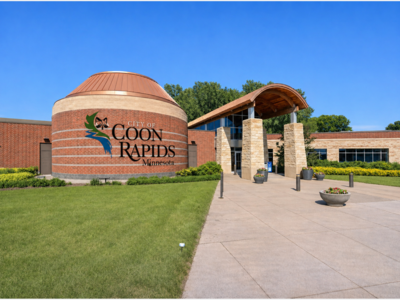
COON RAPIDS, MN
On the surface, the City of Coon Rapids’ 2026 infrastructure agenda reads like a familiar municipal checklist: road reconstruction, seasonal maintenance, a highway interchange, and routine water system work.
Look closer, and a more consequential story begins to emerge.
What is unfolding in Coon Rapids is not isolated. It reflects a broader reality facing suburban communities across Minnesota, where aging infrastructure, rising costs, and continued growth are converging at the same time, forcing cities into increasingly complex decisions about maintenance, expansion, and funding.
The projects themselves are local. The pressures behind them are not.
The City Council has approved reconstruction of approximately four miles of residential streets this year, targeting roads that are between 37 and 59 years old .
That detail is more than a project specification. It is a timeline.
Much of Coon Rapids’ infrastructure, like that of many Minnesota suburbs, was built during periods of rapid postwar expansion. Those systems were designed for longevity, but not permanence. Now, decades later, they are reaching the end of their lifecycle, often all at once.
The result is not a single repair project, but a rolling wave of reconstruction needs that cities must manage year after year.
Preventative maintenance, including crack sealing, resurfacing, and pavement preservation, has become essential in delaying more costly rebuilds. But even with those efforts, full reconstruction is unavoidable in many areas .
This is the quiet reality of suburban infrastructure. It does not fail all at once. It ages into obligation.
At the same time older systems are being replaced, new investments are moving forward.
The planned $37 million interchange at Highway 610 and East River Road will complete a long-anticipated connection, adding access in both directions and improving regional traffic flow. Construction is expected to begin later this year, with completion targeted for 2027 .
Projects like this are often framed as growth infrastructure. They expand access, reduce congestion, and position cities for continued economic activity.
But they also highlight a fundamental tension.
Cities like Coon Rapids are not simply maintaining what exists. They are doing both at once: repairing aging systems while building new ones.
Each new project becomes part of the next generation of infrastructure that will one day require the same level of maintenance and reinvestment.
Not all infrastructure work is visible.
Beginning this spring, crews will flush more than 1,500 fire hydrants across the city, primarily in areas south of Highway 10, removing sediment from water lines and ensuring system performance .
Street sweeping will follow, clearing debris and protecting stormwater systems.
These operations rarely draw attention, yet they are foundational to public health, safety, and daily life. Without them, larger system failures become more likely and more costly.
In many ways, this is the core of infrastructure management. The most important work is often the least visible.
The near completion of a new pedestrian bridge over Coon Rapids Boulevard adds another layer to the city’s infrastructure strategy.
Set to open in June, the bridge will provide a safer crossing and improve access to the Coon Creek Regional Trail system, connecting neighborhoods to a broader network of recreational and transportation routes .
This type of investment reflects a shift that is taking place across many communities. Infrastructure is no longer defined solely by vehicle traffic. Cities are increasingly designing for multiple forms of mobility, including walking and biking.
In that shift, safety becomes both a design goal and a measure of success.
Behind every project is a financial reality.
Coon Rapids is currently seeking state approval to bring a local sales tax proposal to voters, which would help fund major capital improvements, including public safety facilities and community infrastructure .
While that proposal is tied to specific projects, it sits within a broader statewide conversation.
As infrastructure systems age, the cost of maintaining and replacing them continues to rise. Traditional funding sources, including property taxes and state aid, are often insufficient to meet long-term needs.
Local option taxes, bonding, and phased project financing are becoming more common tools. Each comes with trade-offs that residents ultimately must weigh.
The question is not whether infrastructure requires investment. That is already clear.
The question is how cities and residents choose to share that responsibility.
What is happening in Coon Rapids is not unique. It is representative.
Across Minnesota, suburban communities are entering a period where infrastructure decisions are no longer incremental. They are structural.
Roads built decades ago are reaching the end of their useful life. Growth continues to demand new connections and capacity. Costs are rising, and funding mechanisms are evolving in response.
The result is a new phase of municipal governance, one defined less by expansion alone and more by the balance between maintenance, modernization, and sustainability.
In Coon Rapids, that balance is already taking shape.
What remains is how it will be sustained in the years ahead.
MinneapoliMedia | Community. Culture. Civic Life.


Sunny, with a high of 85 and low of 46 degrees. Sunny during the morning, clear overnight.