Image
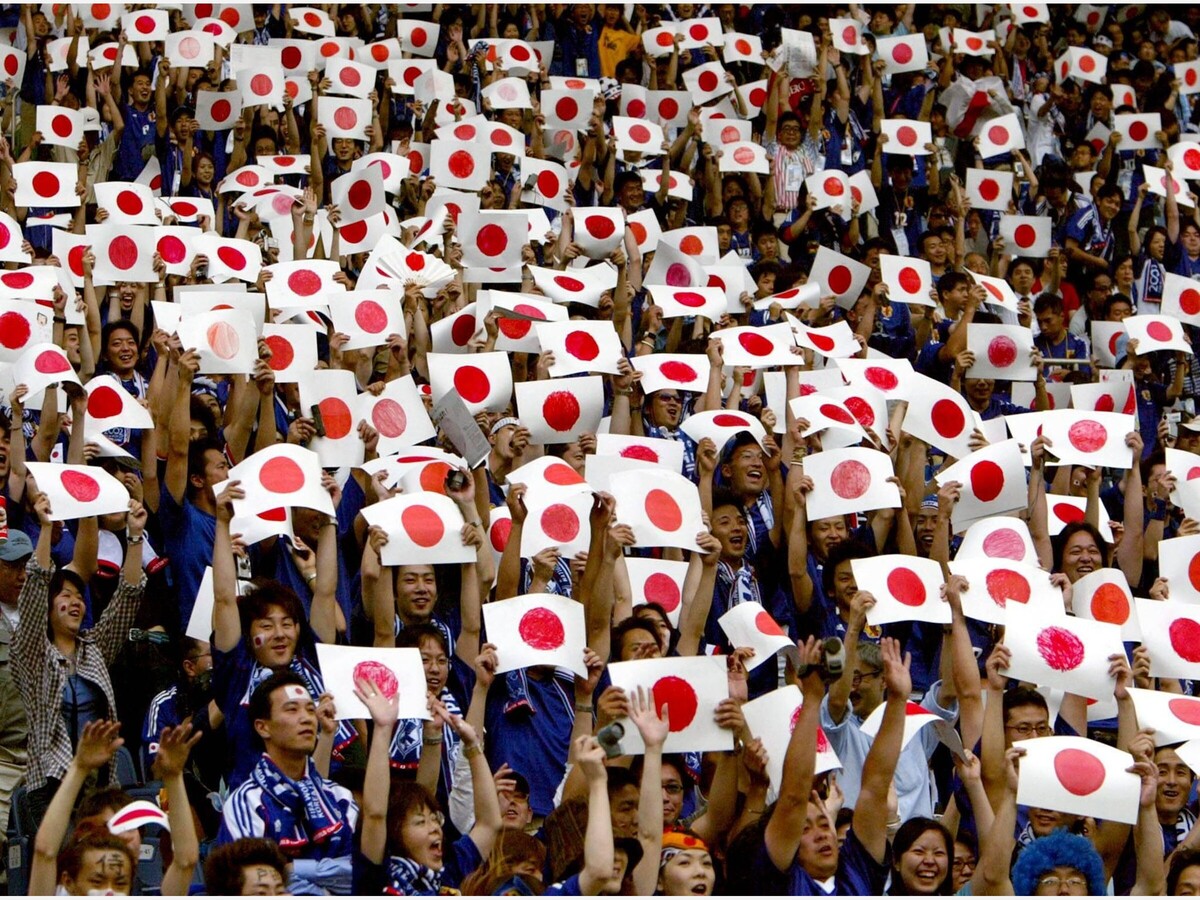



As the global game continues to reorganize itself ahead of the 2026 FIFA World Cup, few national teams represent structural transformation more clearly than Japan.
Japan does not enter modern tournaments as an outsider hoping to disrupt the established order. It enters as a system that has spent more than three decades deliberately constructing its relevance. This distinction matters. There are nations that arrive at the World Cup through cycles of talent. There are others that arrive through infrastructure, planning, and sustained institutional alignment. Japan belongs firmly in the latter category. Its presence is not episodic; it is the result of long-term design.
As a result, the central question surrounding Japan ahead of 2026 is no longer whether it belongs at the tournament. That has been settled through consistent qualification and competitive performances. The question is whether Japan is approaching the threshold where it can begin to reshape expectations, not just meet them.
Japan’s emergence as a credible football nation is not accidental. It is anchored in a deliberate national strategy that began in the early 1990s. The launch of the J-League in 1993 marked a turning point. Prior to that, football in Japan existed primarily at the amateur and corporate level. The introduction of a fully professional domestic league created the structural foundation necessary for long-term development.
This was not simply a commercial decision. It was strategic. The Japan Football Association aligned the professional league with broader objectives:
This alignment between federation and league is critical. In many countries, club and national team priorities diverge. In Japan, they were designed to complement each other.
The most literal manifestation of this design is unfolding right now in the first half of 2026. While other nations spend the pre-World Cup months in a state of frantic friendlies and squad anxiety, Japan has launched the J1 100 Year Vision League.
This one-off transitional tournament is a structural bridge. By splitting the top flight into regional conferences from February to June, the J-League is facilitating a historic shift from a calendar-year schedule to a European-style autumn-spring system.
This is not merely a scheduling tweak; it is a strategic realignment. By synchronizing its domestic rhythm with the Premier League, Bundesliga, and the AFC Champions League Elite, Japan is removing the final friction points for its players. This ensures that transfer windows align for market fluidity and, crucially, that players no longer enter international tournaments at the end of an exhausting 10-month domestic cycle. The Vision League proves that for Japan, the domestic game is a precision tool designed to sharpen the national team’s edge.
Japan’s first appearance at a FIFA World Cup came in 1998. Since then, it has qualified for every World Cup. This consistency is one of the most important indicators of Japan’s transformation. Qualification, particularly in the Asian Football Confederation, requires navigating diverse conditions: varied playing styles, different climates, intense travel demands, and high-pressure away environments. Japan has managed this repeatedly. This is not the behavior of a developing football nation; it is the behavior of a stable one.
Japan’s football identity is built on technical precision and tactical discipline. At its core, the approach emphasizes ball control under pressure, structured positional play, rapid transitional movement, and collective defensive responsibility.
These attributes are not incidental; they are the product of systematic coaching at youth levels. Japanese players are trained to operate within defined tactical frameworks while maintaining technical fluency. Over time, this identity has evolved. Japan has incorporated higher pressing intensity, faster attacking transitions, and greater physical conditioning. The result is a team that is no longer limited to reactive play. Japan can now engage opponents on multiple terms.
A critical component of Japan’s rise is its integration into the global football ecosystem. Japanese players now compete across Europe’s top leagues, including the Bundesliga, Premier League, La Liga, and Serie A.
This exposure has accelerated development by increasing tactical awareness and improving physical conditioning. When these players return to the national team, they bring with them refined skills and expanded tactical understanding. Importantly, they do so within a system that remains consistent. This prevents fragmentation and ensures that international experience strengthens rather than disrupts team identity.
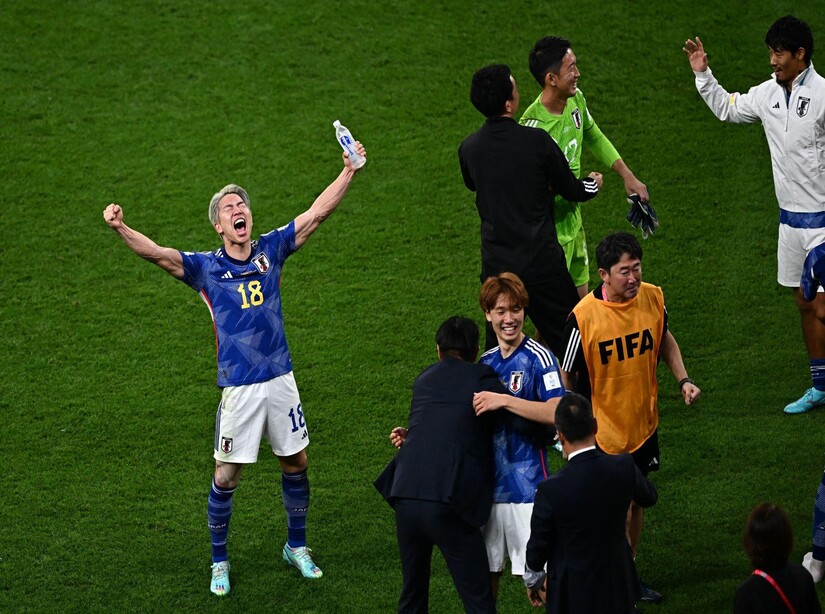
Japan’s performance at the 2022 FIFA World Cup in Qatar represents a critical moment in its evolution. Japan defeated both Germany and Spain in the group stage. These victories were not accidental. They demonstrated tactical preparation, emotional control, and the ability to execute under pressure.
Japan topped its group and advanced to the knockout stage. Although it exited in the Round of 16, the tournament altered perceptions. Japan was no longer viewed as a disciplined but limited team. It was recognized as a tactically sophisticated opponent capable of defeating elite nations.
Japan’s victories in Qatar were structured outcomes. Against Germany, Japan began in a controlled defensive posture, limiting high-quality chances. The second half marked a tactical shift; Japan increased pressing intensity and introduced attacking substitutions that changed the tempo. The winning goals emerged from exploiting transitional opportunities rather than attempting prolonged positional dominance.
Against Spain, Japan allowed the opposition to control the ball in non-threatening areas while maintaining structural integrity. The turning point again came through transition, capitalizing on moments where Spain’s defensive structure was temporarily exposed. These matches illustrate Japan’s tactical maturity: they identify structural vulnerabilities and build match plans around exploiting them.
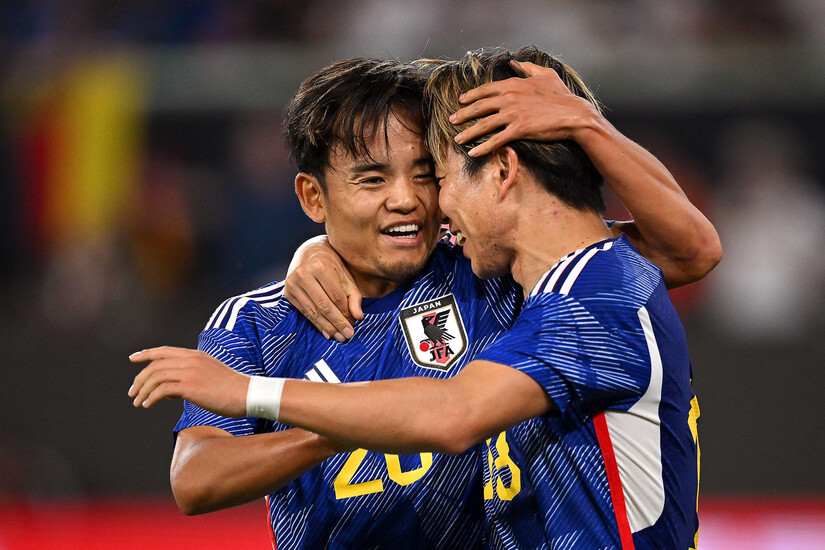
For many years, Japan’s primary limitation was not technical; it was psychological. The team often approached matches against top European or South American opponents with caution. The 2022 victories disrupted that pattern. Japan demonstrated that it could absorb pressure, exploit weaknesses in elite teams, and maintain composure. Once a team proves it can win against top opposition, its approach changes. Confidence at the highest level is cumulative.
Japan’s current position can be understood through comparison:
In each case, Japan does not attempt to replicate the strengths of larger nations. It maximizes its own.
Japan’s strengths are clear, but limitations remain: a physical disadvantage against larger teams, difficulty breaking down deep defensive blocks, and limited experience in late knockout-stage scenarios. Addressing these limitations is central to Japan’s 2026 prospects. Improvement in attacking against compact structures is essential for advancing deeper into the tournament, where opponents often adopt conservative strategies.
The expanded World Cup format introduces more teams and more matches. For Japan, this presents an opportunity. Its adaptability allows it to handle varied opposition, and its discipline supports consistency. However, the extended format increases the importance of depth. Japan must manage squad rotation effectively to maintain performance levels, utilizing its structured approach to preserve tactical cohesion.
Japan enters the 2026 World Cup as a nation that has completed the first phase of its football evolution. It has moved from participant to competitor. The next phase is more difficult. Transitioning from competitor to contender requires not only technical strength, but the ability to sustain performance across the most demanding stages of the tournament.
Japan has built the foundation. The question is whether that foundation is now strong enough to support a breakthrough. Japan’s journey is defined by discipline. It does not need to reinvent itself; it needs to extend its existing model into the final, most elite stages of competition. The outcome will determine whether Japan remains a respected competitor or becomes a defining force in global football.
MinneapoliMedia | Community. Culture. Civic Life.



Overcast, with a high of 58 and low of 48 degrees. Overcast during the morning, patchy rain nearby during the afternoon and evening, light drizzle overnight.