Image
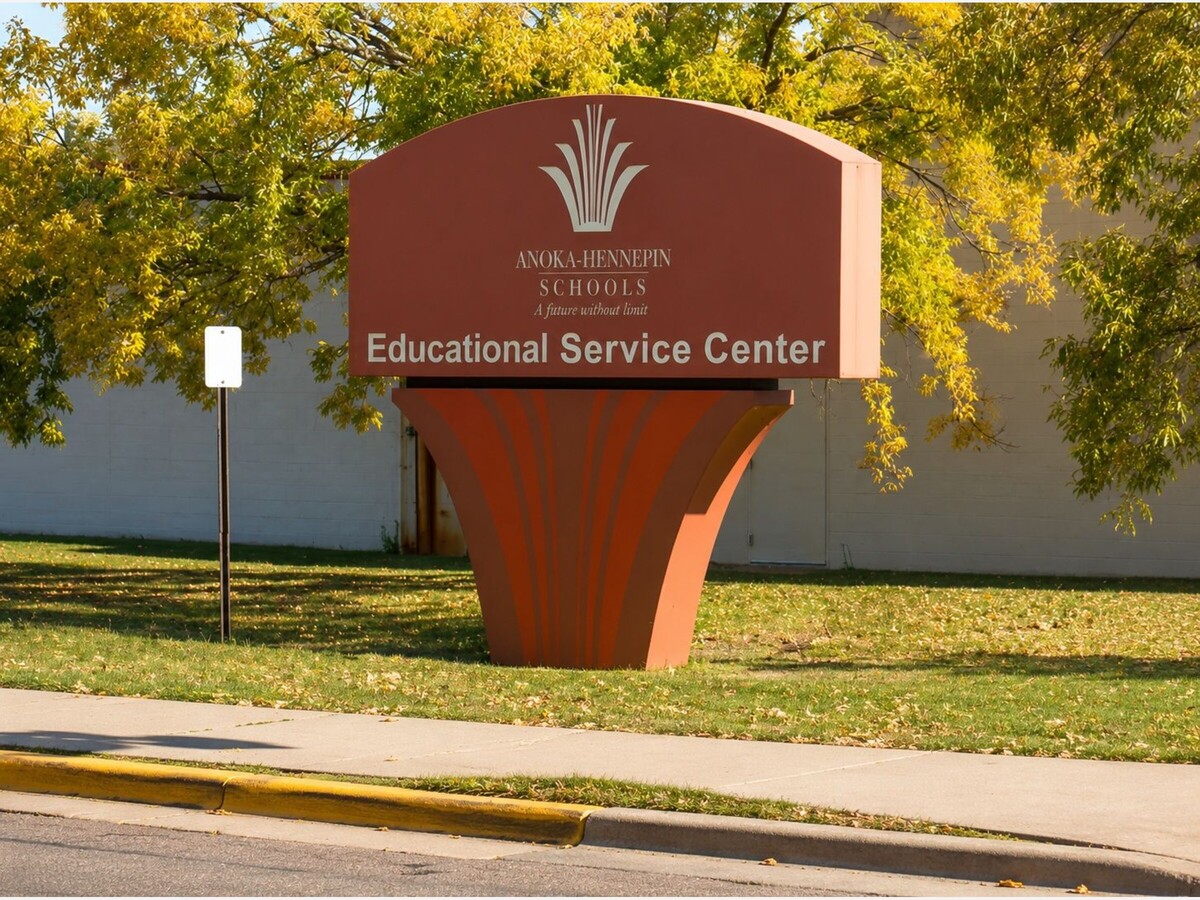



During its May 11 meeting, the Anoka-Hennepin School District School Board revisited three issues that have increasingly become intertwined across districts throughout Minnesota and the nation: reductions in educational funding, the preservation of student mental health and anti-bullying protections, and ongoing efforts to modernize curriculum standards to reflect increasingly diverse student populations.
At the center of the district’s financial discussions is an $8.1 million budget reduction strategy approved for the 2026–2027 academic year, a restructuring plan shaped largely by the expiration of federal pandemic-era relief funding, inflationary operating costs, and the mounting pressure of unfunded state mandates.
District financial documents and board presentations show that the loss of federal Elementary and Secondary School Emergency Relief, or ESSER, funding created one of the most significant structural gaps facing the district. Like school systems across the country, Anoka-Hennepin relied heavily on temporary federal pandemic funding to stabilize operations, expand student support services, address learning loss, and maintain staffing levels during the COVID-19 recovery years.
Now, with those funds exhausted, districts are confronting what education analysts nationally have described as the “ESSER cliff,” a financial recalibration that is forcing administrators to decide which programs can be sustained through local revenue and state aid, and which cannot.
Chief Financial Officer Michelle Vargas presented revised financial projections to board members outlining the district’s structural shortfall and the measures required to close it. District officials identified persistent inflation, rising operational costs, transportation expenses, employee benefit increases, and newly enacted state requirements, including paid family leave obligations, as additional factors intensifying fiscal pressure.
To avoid larger classroom sizes and preserve direct instructional staffing where possible, the district moved forward with workforce reductions affecting approximately 75 positions districtwide.
The most contested reductions involve student support services.
According to district budget materials and public testimony presented during recent meetings, the district plans to reduce approximately 26 school social worker positions, representing roughly 14 full-time equivalent roles, along with six secondary school counselor positions.
The reductions triggered emotional testimony from parents, educators, and school support staff who warned the cuts could weaken early intervention systems that many students increasingly rely upon for mental health support, behavioral intervention, family stabilization, and crisis prevention.
Families connected to schools including Oxbow Creek Elementary voiced concerns that remaining staff would face unmanageable caseloads, forcing social workers and counselors to prioritize acute emergencies over preventative support strategies designed to identify struggling students before situations escalate.
For many speakers, the staffing reductions became inseparable from another major topic dominating board discussion: the district’s revised anti-bullying framework and its ability to effectively protect vulnerable students.
Under the district’s existing Policy 514.0, officially known as the Bullying Prohibition Policy, protections extend across a wide range of legally protected classifications, including race, color, creed, religion, national origin, sex and gender, gender identity and expression, disability, and sexual orientation. The policy applies to conduct occurring on school grounds, during school activities, in district transportation settings, and in certain off-campus situations that substantially disrupt the educational environment.
District officials emphasized that proposed revisions are intended to strengthen accountability measures, reporting procedures, documentation standards, and intervention consistency across schools.
But board discussion repeatedly returned to a practical question that has increasingly surfaced in districts nationwide: how effective can anti-bullying enforcement remain when the very personnel most directly responsible for intervention are being reduced?
Counselors, social workers, behavioral specialists, and student support personnel often serve as the first line of response in bullying investigations, student mediation, trauma intervention, and safety planning. As staffing levels tighten, board members and administrators discussed alternative monitoring systems and reporting structures intended to ensure anonymous student reporting systems, mandatory staff intervention requirements, and investigative protocols remain functional despite stretched resources.
The conversation carries particular weight within Anoka-Hennepin because of the district’s history.
Over the past decade, the district has faced repeated national scrutiny related to school climate controversies involving bullying, harassment, and the treatment of LGBTQ students. Those earlier controversies reshaped district policy discussions and continue to influence contemporary debates over inclusion, student protection, and educational equity.
District materials currently state that Anoka-Hennepin Schools are committed to maintaining “an inclusive, positive school climate where every student feels safe, supported and ready to learn.” The district also maintains formal reporting systems for bullying, harassment, discrimination, and violence concerns involving both students and staff.
The board’s curriculum discussions reflected another dimension of that broader institutional reassessment.
District leaders reviewed updates to the curriculum adoption process as part of ongoing efforts to incorporate broader and more representative perspectives into classroom instruction, particularly within social studies and humanities programming.
The work is being guided through revised curriculum review structures intended to create more standardized evaluation criteria for instructional materials. According to board work session discussions, members pressed administrators to establish clearer evidence-based rubrics and academic benchmarks to ensure future curriculum selections both meet state standards and accurately reflect the backgrounds and experiences represented throughout the district’s student population.
The discussions are also closely connected to the district’s Achievement and Integration initiative, commonly referred to as the ANI plan.
The multi-million-dollar state-supported initiative is designed to expand equitable educational access through magnet and specialty programming, targeted literacy interventions, integrated learning opportunities, and academic support systems intended to reduce achievement disparities among student populations.
Board members reviewing the initiative emphasized the importance of measurable outcomes, repeatedly requesting clearer academic performance data and accountability benchmarks tied to district investments.
The discussions unfolding inside Anoka-Hennepin mirror larger statewide and national debates surrounding public education’s evolving role in an era shaped simultaneously by demographic change, political polarization, rising student mental health needs, and financial instability.
School districts are increasingly being asked to function not only as centers of academic instruction, but also as providers of mental health intervention, social stabilization, crisis response, cultural inclusion, and civic development, all while operating within tightening financial constraints and heightened public scrutiny.
In Anoka-Hennepin, those competing pressures collided visibly throughout the May 11 meeting.
What emerged was not merely a discussion about policy revisions or budget spreadsheets, but a broader debate over institutional priorities: what services schools can realistically preserve, what protections students should expect, and how public education systems adapt when financial realities begin colliding with expanding social responsibilities.
The Anoka-Hennepin School Board is expected to continue reviewing elements of the revised anti-bullying framework, budget implementation strategies, and curriculum adoption processes in upcoming sessions as district administrators prepare for the 2026–2027 school year.
Public meetings and archived proceedings remain available through the district’s official broadcasting platforms, including the district’s public board meeting recordings and administrative work sessions.
MinneapoliMedia | Community. Culture. Civic Life.


Sunny, with a high of 86 and low of 49 degrees. Sunny in the morning, clear overnight.