70° and Clear
Image
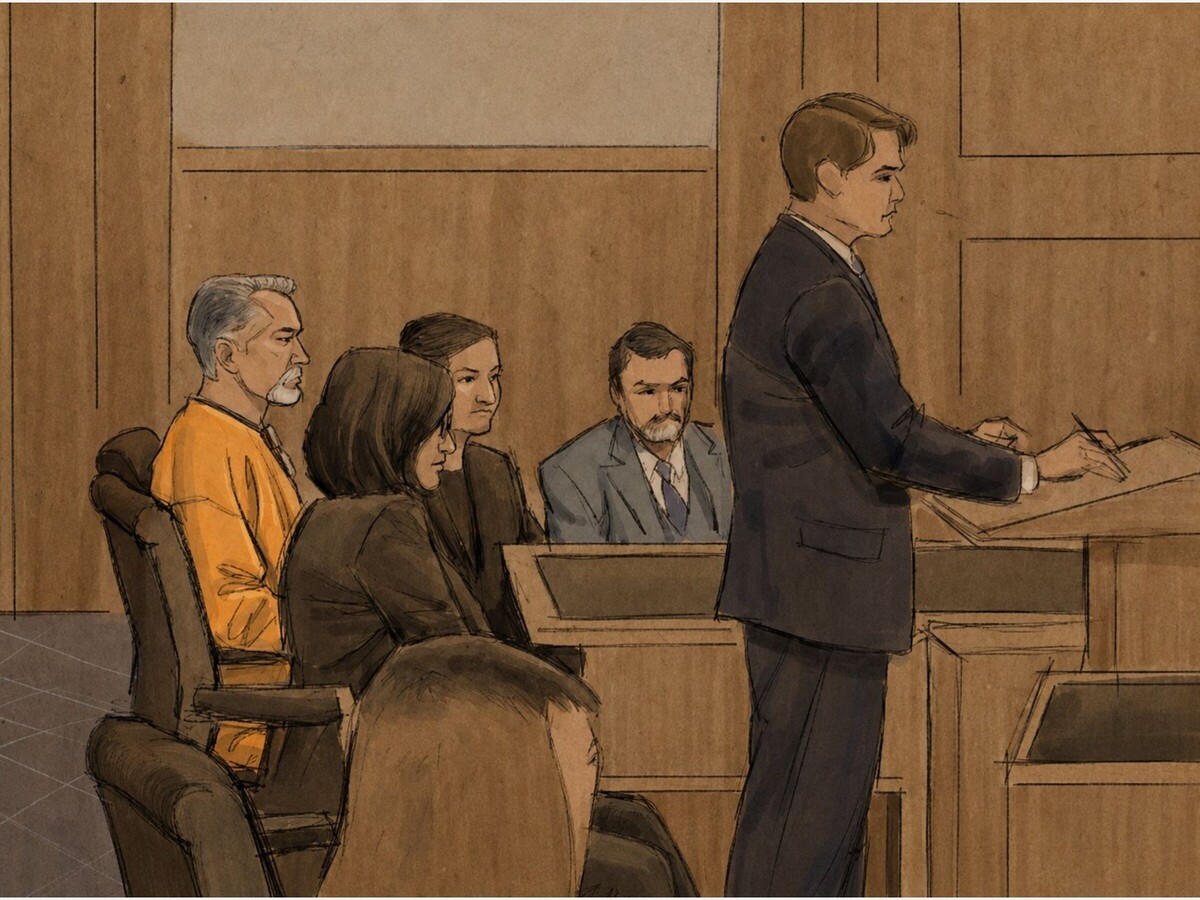



MINNEAPOLIS (June 12, 2026) Vance Luther Boelter, the man accused of carrying out the targeted shootings that killed former Minnesota House Speaker Emerita Melissa Hortman and her husband, Mark Hortman, and seriously wounded State Senator John Hoffman and his wife, Yvette Hoffman, has agreed to plead guilty in federal court under a deal that removes the possibility of a federal death sentence.
The plea agreement marks a major turning point in a case that stunned Minnesota, triggered the largest manhunt in state history, and intensified concerns about political violence against elected officials across the United States. Federal prosecutors announced that in exchange for Boelter's guilty plea, the U.S. Department of Justice will no longer pursue capital punishment.
Boelter, 58, had previously pleaded not guilty to multiple federal charges stemming from the June 14, 2025 attacks. On Wednesday, he formally changed his plea in federal court, admitting responsibility for crimes connected to the shootings.
Federal prosecutors said the agreement will ensure that Boelter spends the remainder of his life in prison while sparing the victims' families years of additional litigation associated with a death penalty prosecution.
According to federal investigators, the attacks unfolded during the early morning hours of June 14, 2025.
Authorities say Boelter first traveled to the Champlin home of Senator John Hoffman and his wife, Yvette, where both were shot multiple times but survived. Investigators later determined that the attack was part of a broader plan targeting Minnesota elected officials and public figures.
Less than two hours later, prosecutors say Boelter arrived at the Brooklyn Park home of Melissa Hortman and her husband, Mark. Hortman, one of the most influential political figures in modern Minnesota history and a former Speaker of the Minnesota House of Representatives, and her husband were both fatally shot.
Governor Tim Walz subsequently described the shootings as an act of targeted political violence. Federal charging documents alleged that Boelter intended to "kill, injure, harass, and intimidate" Minnesota lawmakers.
Court records describe an elaborate effort to conceal his identity.
Federal prosecutors alleged that Boelter disguised himself as a law enforcement officer, wearing a realistic silicone mask and a police-style uniform while driving an SUV equipped with emergency-style lighting and a counterfeit police license plate. Investigators say the disguise allowed him to approach the victims' homes while appearing to be a legitimate police officer.
Authorities later recovered notebooks, lists, and other materials that investigators said identified dozens of potential targets, including elected officials, abortion-rights advocates, and other public figures. One federal filing indicated that more than 45 individuals appeared on a target list recovered during the investigation, while other court documents referenced an even larger list.
The attacks launched an unprecedented law enforcement response involving local, state, and federal agencies.
Boelter was captured following what authorities described as the largest manhunt in Minnesota history.
The decision by federal prosecutors not to seek the death penalty drew significant public attention.
Minnesota abolished capital punishment in 1911, but federal prosecutors can pursue death sentences for certain federal crimes regardless of state law. Had the Justice Department sought and obtained a death sentence, the case would have become the first federal death penalty prosecution arising from a Minnesota crime in modern history.
According to federal officials, legal questions surrounding the underlying federal charges complicated the path toward a death sentence. Prosecutors indicated that securing a capital conviction would likely have required additional litigation over whether certain offenses qualified as predicate crimes of violence under federal death penalty statutes.
U.S. Attorney Daniel Rosen said the plea agreement ensures permanent incarceration while providing certainty for victims and their families.
Under the agreement, Boelter faces two consecutive life sentences plus an additional 40 years in federal prison.
The federal plea does not end Boelter's legal troubles.
Separate criminal charges remain pending in Minnesota state court, where prosecutors have charged him in connection with the deaths of Melissa and Mark Hortman and the attempted murders of Senator Hoffman and his wife. State prosecutors have continued pursuing those cases even as the federal proceedings advanced.
The interaction between the federal sentence and the pending state prosecution remains to be resolved by the courts.
Legal experts note that federal and state governments can pursue separate prosecutions arising from the same criminal conduct because they are considered separate sovereign jurisdictions.
Nearly one year after the attacks, the shootings continue to cast a long shadow over Minnesota politics.
The murders of Melissa and Mark Hortman shocked the state political community, while Senator Hoffman and his wife continue to recover from injuries sustained during the attack. The case prompted renewed conversations about the security of elected officials, escalating political rhetoric, and the growing threat of politically motivated violence in the United States.
For many Minnesotans, the plea agreement provides a measure of closure in a case that fundamentally altered the state's political landscape.
Yet even as the federal proceedings move toward sentencing, questions surrounding motive, political extremism, and the broader climate of threats facing public officials remain part of the enduring legacy of one of the darkest chapters in recent Minnesota history.
Boelter's federal sentencing date has not yet been announced. State court proceedings are expected to continue separately.
MinneapoliMedia | Community. Culture. Civic Life.



Sunny, with a high of 97 and low of 66 degrees. Sunny for the morning, clear for the afternoon and evening,