70° and Clear
Image



June 11, 2026
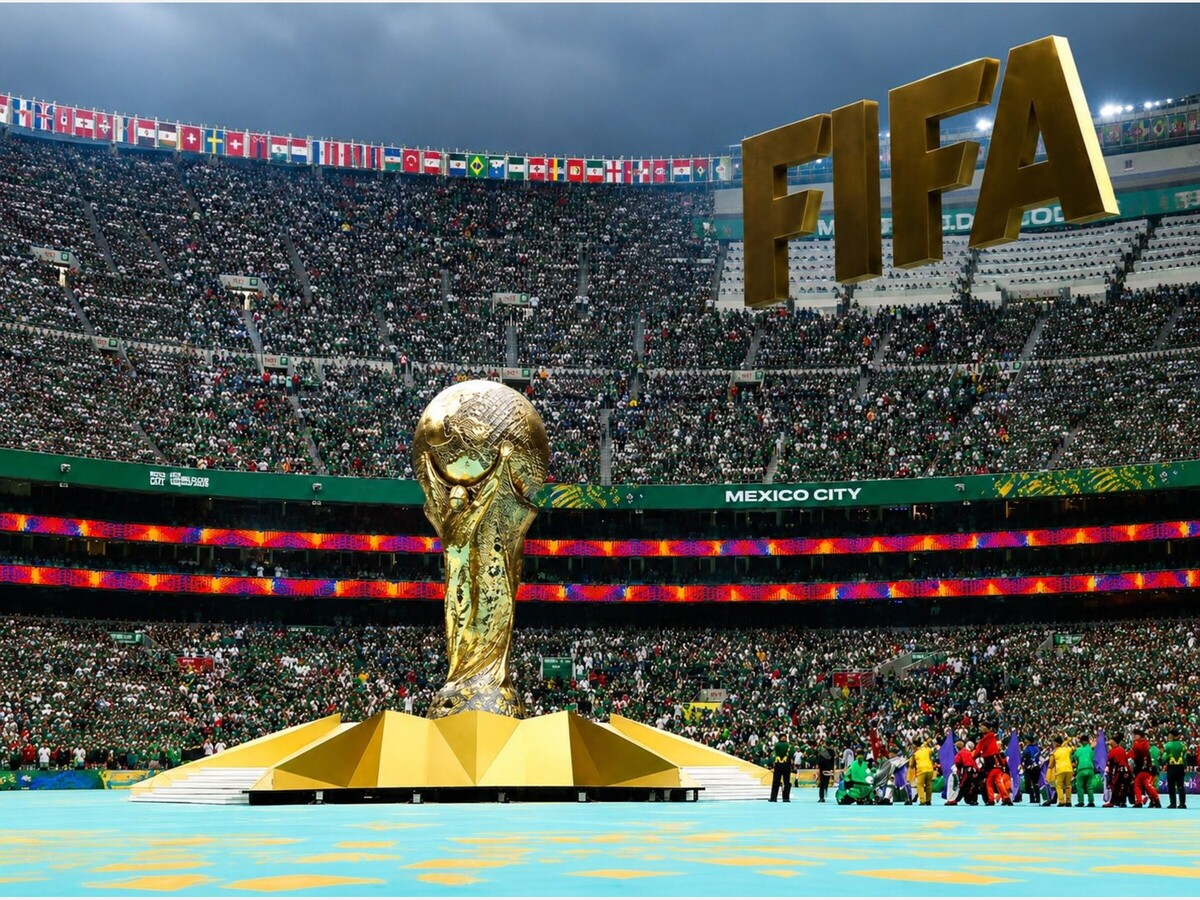
The waiting is over. After years of planning, qualification campaigns stretching across six continents, billions of dollars in infrastructure investments, and months of anticipation, the 2026 FIFA World Cup finally began Thursday in Mexico City. The opening day of the largest World Cup in history delivered many of the elements that have defined the tournament across nearly a century of competition. There was celebration and controversy, history and tension. There was a packed stadium, emotional supporters, dramatic goals, disciplinary chaos, and a comeback victory that immediately reshaped the complexion of an entire group.
When the day concluded, Mexico and South Korea emerged atop Group A with three points each, while South Africa and the Czech Republic found themselves immediately facing difficult paths forward. The first day of World Cup 2026 did not decide anything, but it revealed plenty. Most importantly, it reminded the football world why no tournament captures global attention quite like the World Cup.
|
Team |
Played |
Won |
Drawn |
Lost |
GF |
GA |
GD |
Points |
|
Mexico |
1 |
1 |
0 |
0 |
2 |
0 |
+2 |
3 |
|
South Korea |
1 |
1 |
0 |
0 |
2 |
1 |
+1 |
3 |
|
Czech Republic |
1 |
0 |
0 |
1 |
1 |
2 |
-1 |
0 |
|
South Africa |
1 |
0 |
0 |
1 |
0 |
2 |
-2 |
0 |
For Mexico, opening night carried an enormous burden. The host nation was not simply playing the first match of the tournament, it was carrying the expectations of an entire country while attempting to launch the largest World Cup ever staged. More than 80,000 supporters filled Estadio Azteca, creating an atmosphere that was equal parts celebration, anxiety, and national pride. For much of the opening half, the pressure was visible. Mexico controlled possession and territory but struggled to create separation against a disciplined South African side determined to spoil the party.
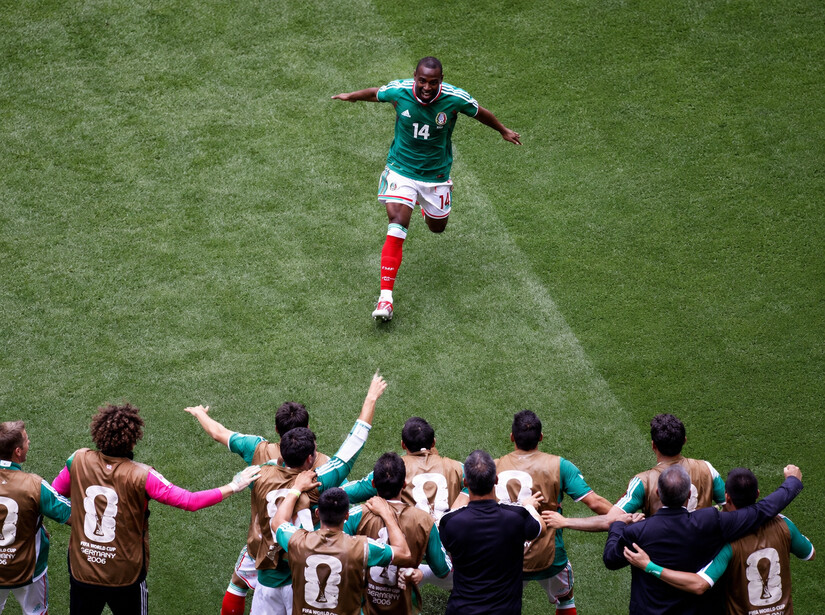
Then history arrived. In the ninth minute, Julián Quiñones etched his name permanently into World Cup history by scoring the first goal of the 2026 tournament. Intercepting a loose clearance, he cut inside the penalty area and drove a low finish past the goalkeeper. The finish instantly transformed the mood inside Azteca and delivered the breakthrough Mexico desperately needed. The goal carried significance beyond the scoreboard. Every World Cup produces a first goal scorer. Most are forgotten outside their home countries, while others become permanent pieces of tournament history. Quiñones now joins a select group of players whose names will forever be linked to the beginning of a World Cup, especially inside a historic venue that on Thursday became the first stadium in football history to host matches across three separate World Cup editions.
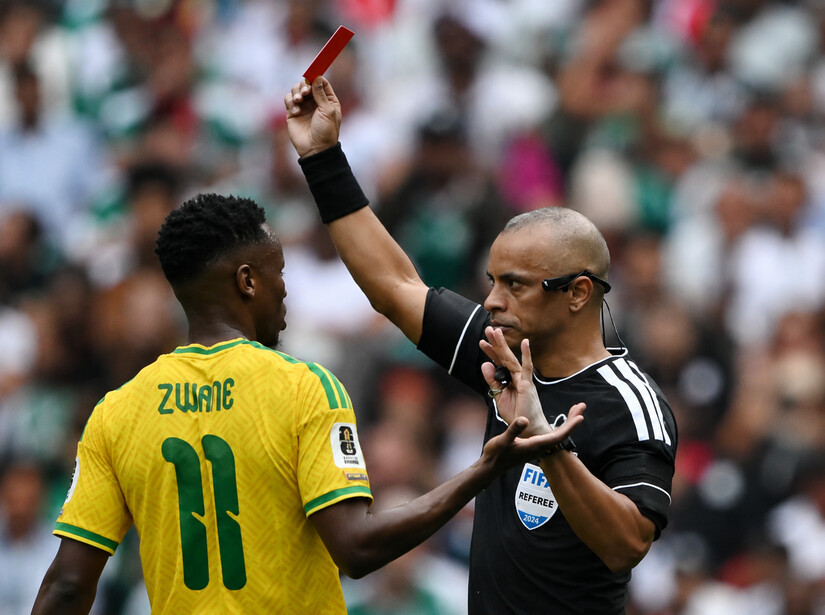
Mexico's advantage remained narrow for much of the match, however, and South Africa continued searching for opportunities to equalize. Under Aguirre, El Tri broke a historic tournament curse, securing an opening match victory after failing to win their previous seven opening fixtures on the world stage. Yet, what began as a football match increasingly became a test of discipline and emotional control as refereeing interventions multiplied. The game ultimately evolved into one of the most physical and chaotic opening matches in recent tournament memory. Three red cards were issued. South Africa's defensive structure collapsed completely under disciplinary strain, resulting in dismissals for Sphephelo Sithole, who denied a clear goal scoring opportunity, and substitute Themba Zwane, who was sent off for violent conduct.
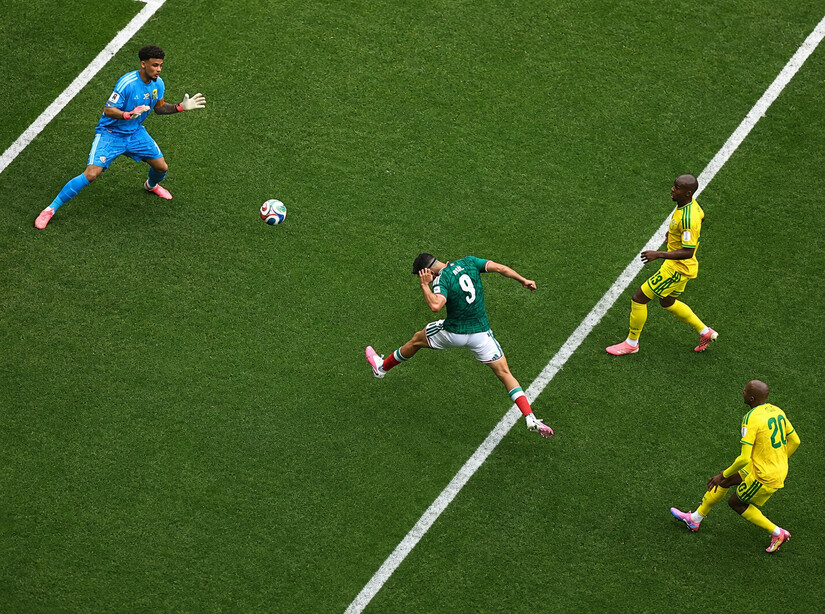
Mexico did not escape the referee's notebook unscathed and suffered its own critical self inflicted wound. Central defender César Montes received a straight red card for a reckless, late challenge, dismissing him from the field and ruling him out of the remaining group stage fixtures. Veteran striker Raúl Jiménez ultimately provided the moment that settled nerves across the stadium, converting a clinical header from a set piece to double Mexico's lead and effectively secure the 2-0 victory that sent supporters into celebration throughout Mexico City and beyond.
For Mexican football, the result was important for several reasons. First, it delivered three points. Second, it avoided the disaster scenario that every host nation fears: failing to win the opening match. Third, it immediately placed Mexico in a strong position within Group A. Most importantly, it allowed the tournament itself to begin with a positive national story rather than an early crisis.
Opening matches often carry disproportionate significance, shaping narratives, influencing confidence, and altering expectations. Mexico now enters its second group stage match carrying momentum rather than pressure. That distinction matters, though the loss of Montes exposes an immediate defensive vacancy before an aggressive South Korean attack.
Football was not the only story unfolding in Mexico City. Outside the stadium, authorities maintained a substantial security presence throughout the day. Large scale operations involving federal, state, and municipal agencies were deployed as organizers sought to balance celebration with public safety, monitoring the perimeter and balancing tournament security protocols with public safety directives. The environment reflected a broader reality facing modern mega events. World Cups no longer exist in isolation from political and social dynamics.
Demonstrations occurred in parts of the city as localized groups of activists, teachers, students, and advocacy groups representing the families of missing persons continued campaigns tied to domestic issues unrelated to football. These protest actions briefly led to confrontations with riot police along major transit arteries. For organizers, the challenge was ensuring that the tournament remained secure while respecting public expression. The opening day proceeded without major disruption to the competition itself, but the presence of demonstrations served as a reminder that the World Cup unfolds within real cities facing real issues. Football may temporarily command global attention, it does not suspend reality.
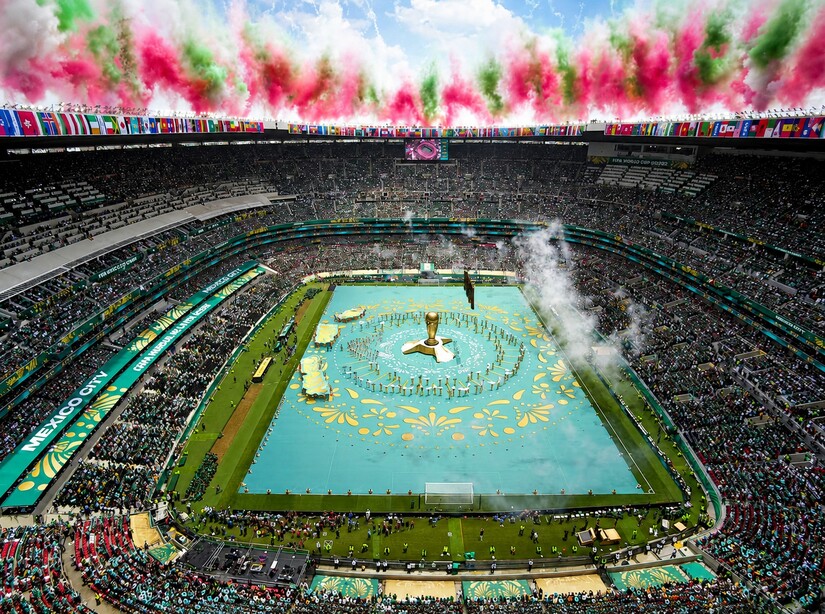
Before the football began, the World Cup formally introduced itself to the world. The opening ceremony at Estadio Azteca reflected FIFA's effort to combine football, culture, and entertainment on a continental scale. Performances from international pop artist Shakira, Afrobeats musician Burna Boy, and renowned Italian classical tenor Andrea Bocelli highlighted a program designed to showcase both global appeal and regional identity.
The event celebrated Mexico's role as host while acknowledging the broader North American nature of the tournament. The symbolism was significant. This World Cup is unlike any previous edition, spanning three nations, sixteen host cities, multiple time zones, and an unprecedented 48 team field. The opening ceremony reflected that ambition. Whether viewed inside the stadium bowl or through television broadcasts around the world, the message was clear: this is not simply another World Cup, it is an attempt to redefine the scale of the event itself.
If Mexico's victory represented control, South Korea's victory represented character. The second match of opening day produced the tournament's first comeback victory as South Korea defeated the Czech Republic 2-1 in Guadalajara. The fixture contrasted sharply with the emotional intensity seen in Mexico City, developing instead as a technical chess match that highlighted the strategic value of squad depth under the tournament's compact summer schedule.
For long stretches, the Czech Republic appeared positioned to claim all three points. The Europeans entered halftime with the advantage and looked organized defensively, eventually claiming a temporary tactical breakthrough in the 58th minute when defender Ladislav Krejci converted an aerial delivery following a characteristically long, direct throw in, a set piece mechanism that had anchored the Czech side's European qualification campaign. South Korea appeared frustrated, and the breakthrough never arrived in the opening period.
Yet World Cups often reward persistence. South Korea emerged from halftime with greater urgency and greater belief. The tactical adjustments made by the coaching staff began producing results, shifting central transition structures to accelerate the tempo. The insertion of Hwang Hee-chan stretched the Czech low block horizontally, pulling their interior defenders out of their preferred central channels and breaking down the rigid defensive lines that had limited South Korean access during the initial 45 minutes.
Substitutions altered the rhythm of the match and the pressure increased. In a decision that caused visible surprise across the technical area, team captain Son Heung-min was substituted in the 69th minute. This early withdrawal served a clear long term purpose, protecting the forward's physical durability for the advanced stages of the tournament while placing full responsibility on the incoming tactical units. The strategic gamble succeeded rapidly. The equalizer transformed the contest, and the confidence that had belonged to the Czech Republic shifted rapidly toward South Korea.
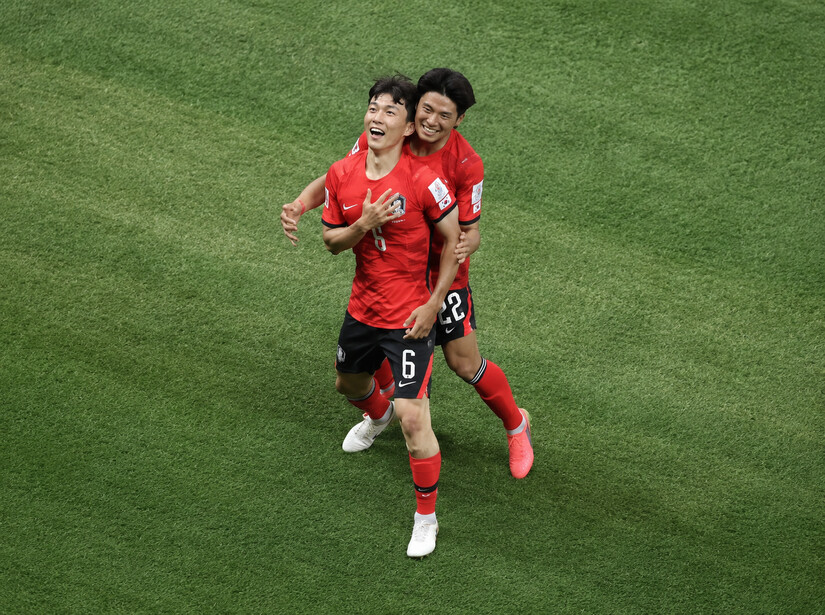
Among the standout performers was Hwang In-beom, whose influence on the match extended well beyond statistics. Leveling the score in the 66th minute, he drifted into the penalty area to meet an intelligent cutback from the right flank, beating goalkeeper Matěj Kovář. His movement, creativity, and decision making repeatedly opened spaces that the Czech defense struggled to contain. What followed was one of the most impressive stretches of football on opening day. Rather than settling for a draw, South Korea sustained its offensive press, pinning the Czech defensive line deep inside their own final third.
The reward came in the 79th minute when the winning goal arrived, constructed through rapid combination passing across the edge of the box. Oh Hyeon-gyu exploited a momentary separation between the Czech center backs, timing his run to collect a first time pass and driving a clinical finish into the corner to secure all three points for the Taegeuk Warriors. South Korea's coaching staff will undoubtedly celebrate the result, but the manner of the victory may be even more encouraging. World Cups are rarely won through perfect performances, they are won through responses to adversity. South Korea encountered adversity on opening day and responded effectively. That trait often becomes valuable as tournaments progress.
After one day of competition, Group A already possesses clear storylines, instantly solidifying the competitive hierarchy and dividing the quadrant into distinct developmental tracks. Mexico and South Korea sit atop the standings with three points apiece, while South Africa and the Czech Republic remain scoreless and face narrow qualification margins.
The next round of fixtures suddenly carries enormous importance. This is one of the realities of modern tournament football: momentum develops quickly, and pressure develops even faster. One result rarely decides a tournament, but two results often do. The upcoming group schedule presents an immediate tactical showdown on June 18, when Mexico meets South Korea at the Guadalajara Stadium in Zapopan. This match will likely dictate absolute leadership of the group.
South Korea's proven capacity for second half adjustments will test a Mexican defense missing the suspended Montes, while Mexico must demonstrate greater emotional discipline to counter the structured transitions favored by the South Koreans. For the losing side of that encounter, the final matchday of the group stage on June 19 will transform into a high risk scenario prone to premature exit, turning subsequent matches into scenarios that increasingly resemble must win situations.
Several critical conclusions emerged from the first day of competition:
Attention now shifts to Day Two as the tournament narrative broadens significantly and the remaining co hosts initiate their respective opening campaigns. Canada enters the spotlight as the co hosts prepare to face Bosnia and Herzegovina in Toronto. The Canadian Men's National Team will open its Group B schedule at BMO Field against a rigid Bosnian selection. Driven by extensive domestic infrastructure investments and a desire to validate its international ascent, Canada faces intense pressure to replicate Mexico's opening night success and claim maximum points before entering the difficult geographic transitions of the group stage.
Concurrently, the United States Men's National Team will launch its tournament campaign in Los Angeles, hosting Paraguay at SoFi Stadium in Inglewood, with domestic television coverage starting at 6:00 PM Eastern on FOX. The fixture stands as a critical evaluation point for the American squad under home field conditions, forcing them to break down a resilient South American low block that excels at absorbing pressure and executing swift counter attacks. For both North American hosts, expectations are substantial. For Canada, the challenge is continuing its rise as a competitive international program. For the United States, the objective is proving that home field advantage can translate into meaningful tournament success. Both matches will help shape the early narrative of the competition, and that narrative is only beginning.
Every World Cup starts with possibility. No team has yet been eliminated, every dream remains alive, and every supporter believes something special may happen. The opening day of World Cup 2026 preserved that sense of possibility while adding the first layer of reality.
Mexico celebrated, South Korea rallied, and South Africa and the Czech Republic absorbed difficult defeats. The standings began to form, the storylines began to emerge, and the largest World Cup in history is officially underway. If the opening day is any indication, the next month promises drama, unpredictability, and moments that will be remembered long after the final trophy is lifted.
MinneapoliMedia | Community. Culture. Civic Life.


Sunny, with a high of 97 and low of 66 degrees. Sunny for the morning, clear for the afternoon and evening,