70° and Clear
Image



By Tom Akaolisa | Founder & Publisher, MinneapoliMedia
Still, the question remained. When the moment arrived, would the United States be ready?
On a warm June evening in Los Angeles, with the eyes of the soccer world fixed firmly upon them, the clock inside Los Angeles Stadium read exactly six minutes and fourteen seconds when the modern history of American soccer fractured cleanly into a before and an after. The answer arrived with unmistakable clarity.
Yes.
To understand the sheer weight of what transpired last night in Southern California, one must first understand the suffocating nature of expectation. For four years, the 2026 FIFA World Cup had loomed over the American sporting consciousness like an approaching thunderstorm, a home tournament billed not merely as a competition, but as a mandatory cultural reckoning. When the host nation stepped onto the immaculate, manicured turf under a low, heavy blanket of grey California clouds, the atmosphere inside the arena was not one of simple festive celebration. It was thick with a nervous, collective breath held by 70,492 souls. They were terrified of the grand anti-climax that has so often defined the grandest moments of the United States men’s national team.
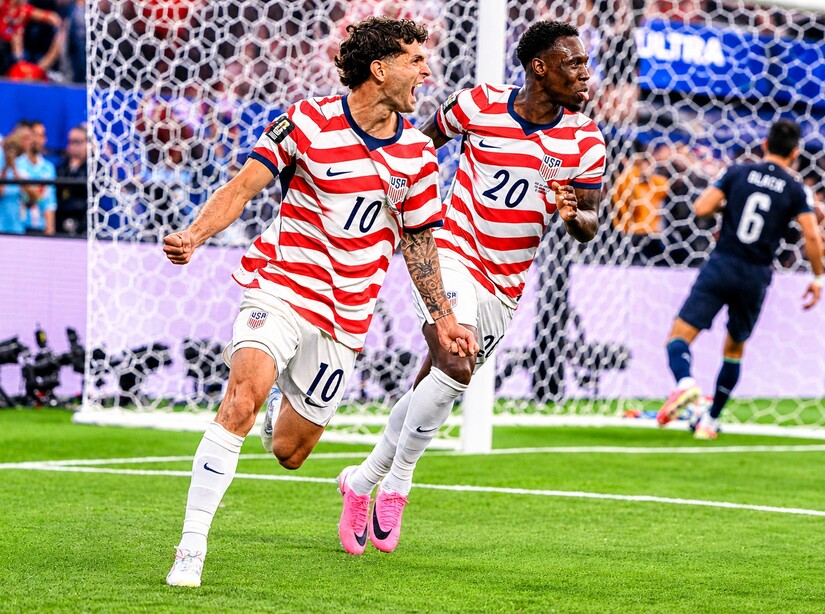
Then came the flash. Antonee Robinson, patrolling his left flank with the ruthless industry that has become his signature, zipped a crisp, vertical ball down the line. Christian Pulisic, carrying the hopes of a generation on his slight shoulders, met it in full stride. With two deft touches, the captain split a pair of converging Paraguayan defenders, driving deep into the eighteen yard box before cutting a sharp, spiteful ball back toward the penalty spot. Weston McKennie was there, charging like an unbridled locomotive. His lunging connection forced a desperate, panicked block from Paraguay’s Damián Bobadilla. The ball deflected, spun violently away from the stranded goalkeeper Orlando Gill, and rippled the back of the net.
The stadium did not merely cheer; it erupted with a primal, tectonic roar that seemed to shake the very foundations of Inglewood. It was registered as an own goal in the official FIFA ledger, but in the mythology of the program, it was the moment the ghost of American soccer's perpetual insecurity was laid to rest. It was the third fastest opening match goal by a host nation in the entire history of the World Cup, trailing only France in 1938 and Germany in 2006. More than history, however, it gave Mauricio Pochettino’s men what they had so desperately lacked in the tortured buildup to this cycle: an identity rooted in immediate, unapologetic dominance.
The United States Men's National Team opened its 2026 FIFA World Cup campaign with a commanding 4-1 victory, delivering not only three points but something more significant: belief. This was not merely a win. This was a declaration. For ninety minutes, the Americans played with a confidence, composure, and conviction that transformed the atmosphere inside the stadium from hopeful anticipation into something approaching genuine expectation. The hosts did not appear burdened by the occasion. They appeared energized by it. They looked like a team that understood exactly where it was, exactly what it represented, and exactly what it intended to accomplish.
The World Cup has a unique ability to reveal truths about teams. Over the course of four years, coaches can craft systems, federations can build programs, and analysts can construct theories. Yet when the opening whistle blows on the world's largest sporting stage, only performance remains. The United States passed its first examination emphatically.
For months, critics wondered how Pochettino would handle the crucible of an American pressure cooker. The brilliant Argentine, revered for his tactical sophistication at Paris Saint-Germain and Tottenham Hotspur, had inherited a golden generation that felt increasingly like a collection of disparate, glittering parts rather than a cohesive unit. His response last night was a tactical masterclass in structured fluidity, deploying a bold 4-2-3-1 formation that weaponized the team's athleticism while demanding a level of spatial discipline never before seen from the Stars and Stripes.
From the opening minutes, there was an urgency to the American approach. Possession was purposeful rather than cautious. Defensive pressure arrived quickly. Transitions were direct and confident. The team looked less concerned with avoiding mistakes than with imposing itself upon the match. That mentality became contagious. Each successful tackle generated louder cheers. Each forward run increased belief. Each attack carried the sense that another opportunity was coming.
With Tyler Adams anchoring the midfield like a Roman centurion, breaking up play and snapping into challenges with an infectious intensity, the attacking quartet was liberated. Yet, soccer is a game of fine margins and cruel turns. Following the early breakthrough, Paraguay, standard bearers of South American grit, responded with a wave of tactical fouls and suffocating physicality. The match threatened to devolve into an ugly, fragmented midfield war.
In the 28th minute, it appeared the Americans had broken the resistance when McKennie slipped a delicate, weighted pass through a forest of legs to Folarin Balogun, who finished with the cool composure of a seasoned assassin. The crowd rose, only for the assistant referee's flag to slice through the air. An agonizing VAR review confirmed Pulisic had been centimeters offside during the buildup. In previous eras, such a psychological blow would have triggered an American retreat, a subconscious settling into a defensive shell. There was a time when American teams entered the World Cup hoping to survive. This team entered intending to dictate. That distinction may ultimately define the 2026 tournament.
Instead of retreating, this team, forged in Pochettino’s fires, simply reset and pressed harder. The response took exactly three minutes.
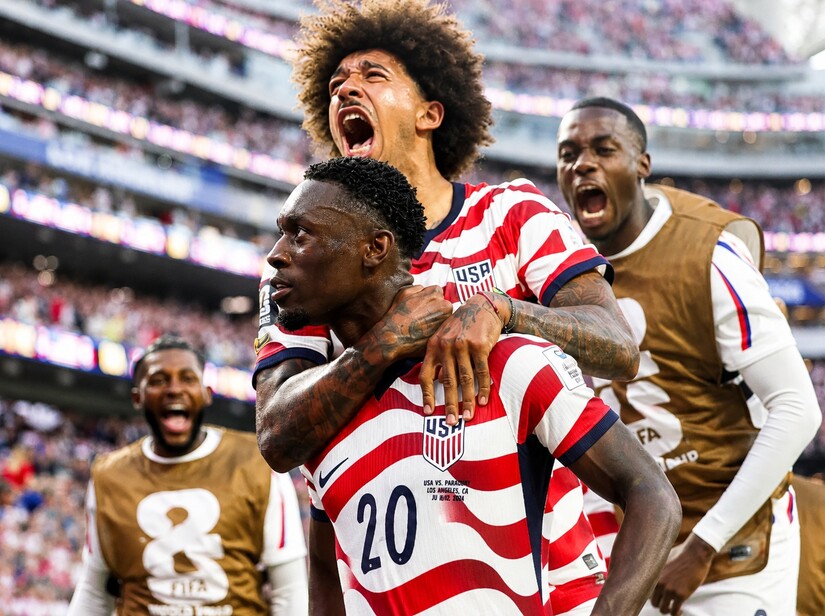
In the 31st minute, Robinson again triggered the transition with a tidy pass to Pulisic. The captain, operating with an ethereal vision, drew the entire Paraguayan back line toward him before sliding a perfect, rolling cross into the path of Balogun. The Monaco striker timed his run to perfection, met the ball ten yards out, and with a single, sweeping motion of his left foot, slotted a low, venomous strike into the bottom right corner.
If his first goal was a triumph of team choreography, Balogun’s second strike, arriving five deep into first half stoppage time, was an act of pure, unadulterated individual genius. Gathering a long, raking aerial ball from Malik Tillman, Balogun found himself isolated against two defenders on the edge of the box. He rode a brutal, sliding tackle from behind, kept his footing through sheer force of will, and cut sharply back into the center of the pitch. With the defenders still recovering their bearings, he unleashed a gorgeous, curling left-footed strike that bypassed Gill and nested snugly into the absolute upper left corner of the framework.
A 3-0 halftime lead. Balogun had just become the first American male since 1930 to score a multi-goal brace in a single World Cup match. As he stood before the cascading wall of fans, arms outstretched, he looked less like a young striker and more like a conqueror surveying a newly claimed empire. By halftime, the stadium had become more than a venue. It had become a celebration.
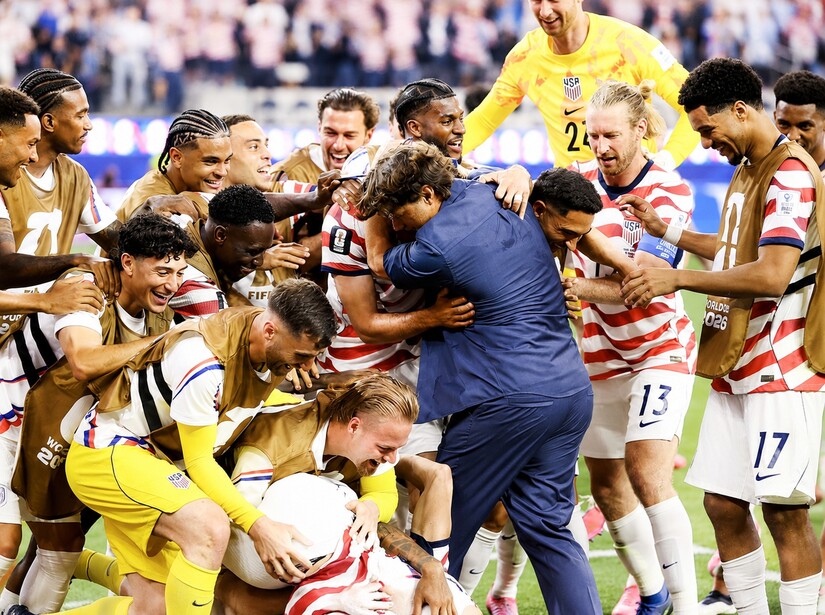
The heroes of the evening will occupy the headlines, as they should. Goals remain soccer's most valuable currency, and those who score them inevitably become the faces attached to memorable victories. Yet the story of this performance extended beyond individual brilliance. It was a collective triumph.
The second half, as true epics demand, brought its own share of tribulation. Christian Pulisic, who had spent the first forty five minutes operating at a world class level, did not emerge from the tunnel for the second half. A cautious medical staff held him back due to a tightening left calf, a substitution that sent an immediate wave of anxiety through the stadium. Without their talismanic captain, the American attack lost a degree of its razor sharp precision, and Paraguay sensed an opening.
The South Americans began to dictate the tempo, testing the resolve of a rebuilt American defense. Chris Richards, returning to the lineup after a grueling four week injury layoff, stood tall alongside the veteran statesman Tim Ream. Behind them stood Matt Freese, the Philadelphia Union Homegrown goalkeeper making his debut on the world's grandest stage. Freese, who became the first homegrown product in his club's history to feature in a World Cup, exuded a calm, quiet confidence that belied the magnitude of the evening.
Yet, even the most resolute defenses can succumb to the relentless mathematics of pressure. In the 73rd minute, following a beautifully executed Paraguayan free kick, the substitute Maurício found a pocket of space behind the American back line, catching them flat footed and firing a clinical strike past Freese to make it 3-1.
For ten minutes, the specter of a catastrophic collapse hung over the Los Angeles Stadium. The crowd grew quiet, the flags stopped waving, and the old anxieties returned to whisper in the ears of the faithful. Every loose ball felt monumental; every tackle carried the weight of destiny.
Yet, the defenders remained organized and disciplined. The midfield fought to regain tempo and territory. Most importantly, the players trusted one another. That trust was visible in every movement. A midfielder pressed forward knowing cover would arrive behind him. A fullback attacked space confident that teammates would rotate defensively. World Cups are often decided not by talent alone but by cohesion. On opening night, the United States looked cohesive.
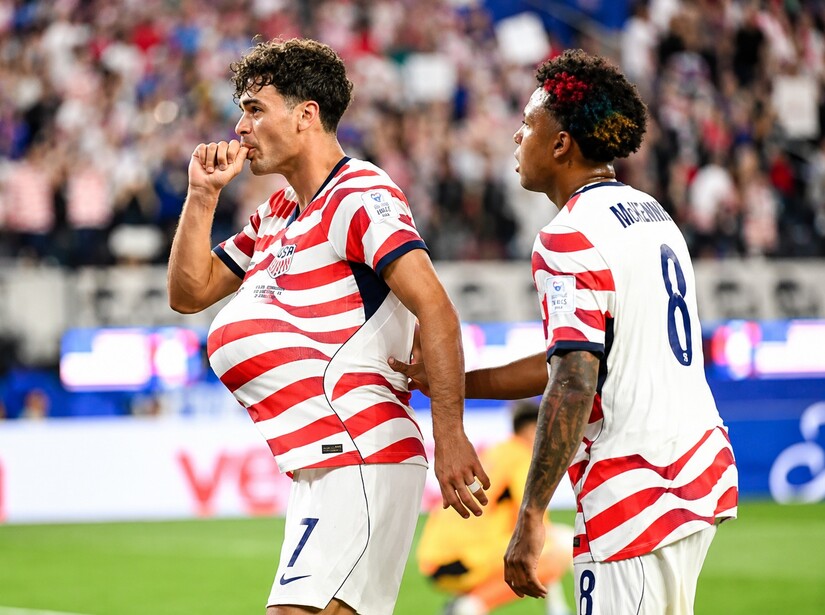
It was in this moment of mounting tension that Pochettino made the defining substitution of the match, subbing on Giovanni Reyna in the 81st minute. Reyna's journey with the national team has been a public Shakespearean drama, filled with immense promise, bitter family feuds, injuries, and periods of agonizing exile. He stepped onto the field not as a savior, but as a man looking to rewrite his own narrative.
As the clock ticked deep into the eighth minute of stoppage time, with Paraguay committing everyone forward in a desperate bid to rescue a second goal, the Americans launched a devastating counter attack. Reyna gathered the ball on the edge of the penalty area. He had options to pass, options to run down the clock in the corner, options to play it safe. He chose magic instead.
With a defender closing fast, Reyna struck the ball with the outside of his right foot. It was a strike of breathtaking arrogance and sublime technical execution. The ball left his boot, sliced through the cool, damp night air, and spun exquisitely away from the keeper’s reaching fingertips, clipping the inside of the left post before nesting into the net.
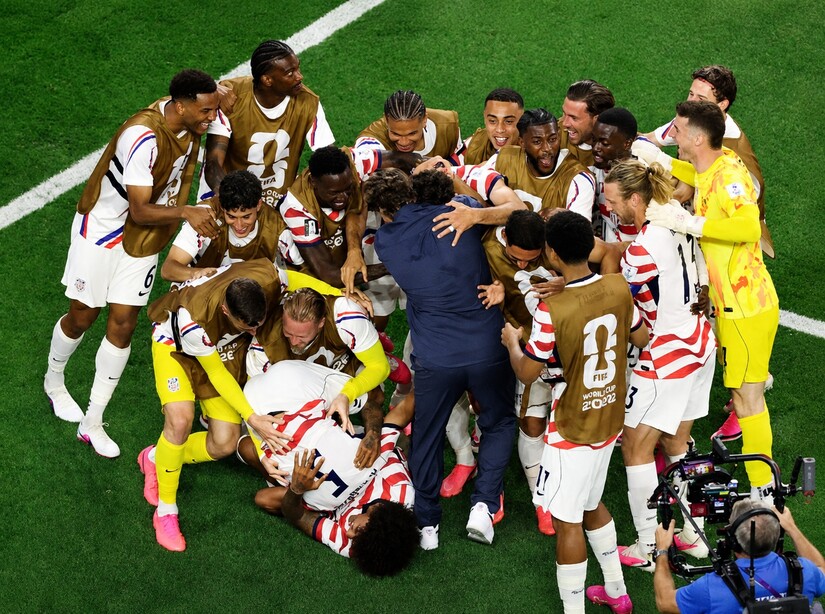
The stadium shook for the final time. A 4-1 victory. The largest, most dominant opening match win in the history of US Men's Soccer at the World Cup.
When the final whistle blew moments later, the players did not fall to the ground in exhaustion. They embraced in a circle at midfield, their faces illuminated by the bright stadium lights and the realization that they had just delivered a statement of intent to the rest of the footballing world. They outshot their opponents sixteen to nine, completely suffocated a proud South American side, and proved they could survive and thrive even when their captain was watching from the sidelines.
The result inevitably sparked memories of other significant moments in American soccer history. The upset of England in 1950. The dramatic run to the quarterfinals in 2002. The famous Landon Donovan goal against Algeria in 2010. The resilient performances that turned the United States into one of international soccer's most respected competitors. Each generation has contributed a chapter.
What made this night different was the setting. This World Cup is taking place on American soil. For decades, American soccer supporters watched the world's greatest tournament unfold elsewhere. Germany. South Africa. Brazil. Russia. Qatar. This time, the tournament belongs partly to them.
Children wearing American jerseys filled the stands. Families who may never have attended a soccer match a generation ago arrived hours before kickoff. The energy surrounding the event reflected a sport that has become deeply woven into the nation's cultural fabric. The crowd did not feel like a novelty. It felt like a soccer nation.
That evolution may ultimately prove as important as any result. The growth of the game in the United States has often been measured through participation numbers, television ratings, and stadium attendance. Those statistics matter, but they rarely capture emotion. What unfolded in Los Angeles was emotional. Every successful American attack produced a visible surge of anticipation. Every defensive stop generated applause. Every goal unleashed a roar that rolled through the stadium like a wave. For one evening, at least, the distance between American soccer's aspirations and its reality seemed smaller than ever.
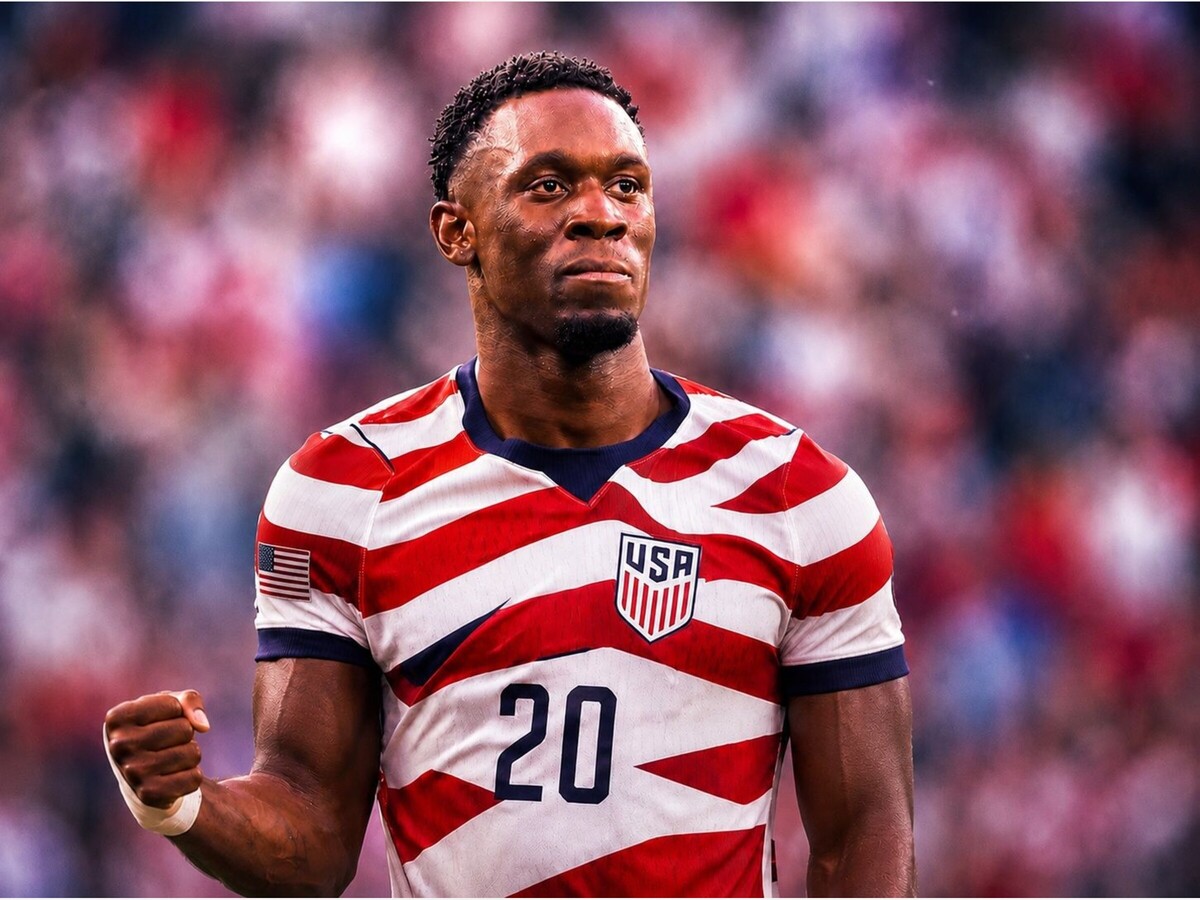
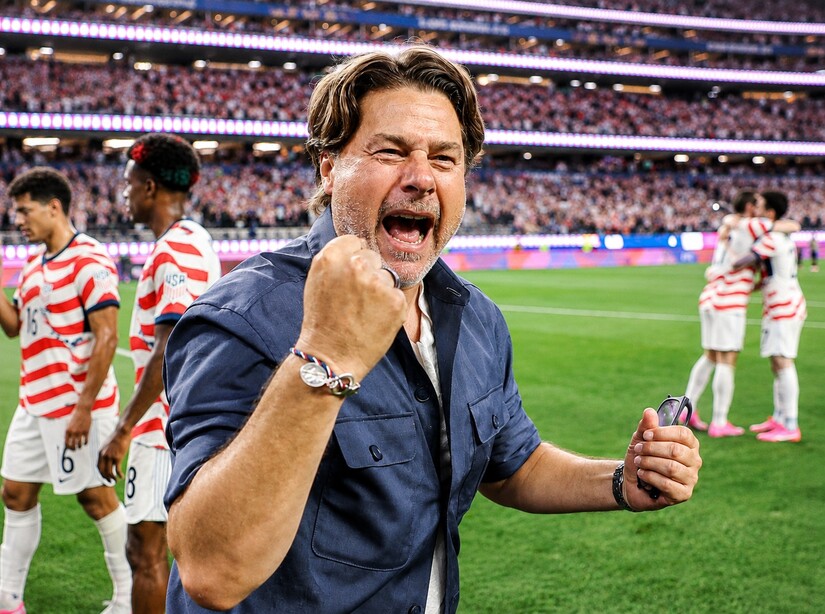
There is a file you can reference named "image_d1dd3c.jpg". Refer to this file by its name verbatim. In the striking portrait captured in image_d1dd3c.jpg, the raw intensity of this newly forged American identity is perfectly crystallized. The focus, the grit, and the unyielding determination etched on the face of the American vanguard reflect a team that no longer plays to participate, but plays to conquer.
That does not mean difficult challenges have disappeared. World Cups are marathons disguised as sprints. The opening match matters enormously, but it is only the beginning. Group stages must still be navigated. Stronger opponents await. Injuries, suspensions, and tactical adjustments inevitably influence tournaments. Momentum can disappear as quickly as it arrives.
The Americans understand that. Veteran teams rarely celebrate opening victories as though trophies have already been won. The players spoke afterward with the measured confidence that accompanies mature ambition. There was satisfaction, certainly. There was pride. There was appreciation for the supporters who transformed the venue into a sea of red, white, and blue. There was also perspective. One victory secures nothing. One performance guarantees nothing. The World Cup remains unforgiving.
Yet even acknowledging those realities cannot diminish what occurred. The United States needed a positive opening. It received a memorable one. The United States needed leadership. It received it. The United States needed heroes. It found them throughout the lineup. Most of all, the United States needed proof that it belonged among the tournament's serious competitors. It received that as well.
Sports often produce moments that feel larger than the scoreline itself. This was one of them. Because beneath the goals, the celebrations, and the standings, something else unfolded. A generation of American players accepted ownership of the sport's future in this country. They did not play cautiously. They did not play fearfully. They did not appear intimidated by the expectations attached to a home World Cup. Instead, they embraced the responsibility.
That may ultimately become the lasting image from this opening night. Not a particular goal. Not a particular save. Not a particular celebration. But the sight of an American team carrying itself with the quiet confidence of a nation that no longer views itself as an outsider in the global game.
The tournament is young, and a daunting June 19 clash against Australia in Seattle awaits. There will be steeper hills to climb, more brutal battles to fight, and tactical puzzles far more complex than the one presented by Paraguay. No single match can answer the ultimate question completely. Tournaments are too unpredictable. History is too demanding.
But on this June evening in Los Angeles, before a roaring home crowd and an international audience numbering in the millions, the United States provided the strongest evidence yet that the conversation itself may be changing. The Americans did not merely win their first match of the 2026 FIFA World Cup. They announced their arrival. And for one unforgettable night, the dream that has animated generations of players, coaches, supporters, and believers felt closer than ever before. Under the sprawling Southern California sky, the USMNT ceased to be a team of tomorrow. Last night, they became the team of today.
MinneapoliMedia | Community. Culture. Civic Life.



Sunny, with a high of 97 and low of 66 degrees. Sunny for the morning, clear for the afternoon and evening,