72° and Sunny
Image
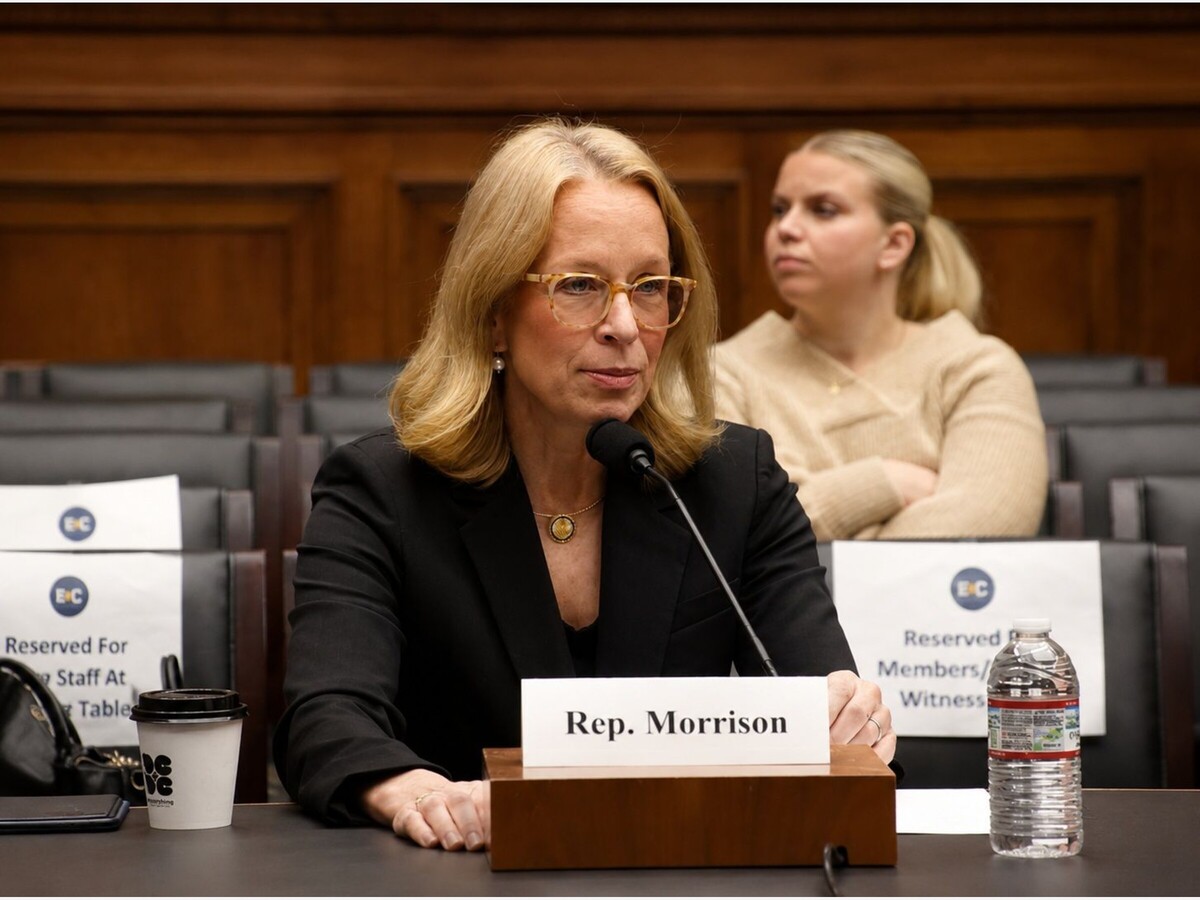



The effort reflects a growing bipartisan consensus in Washington that overdose prevention and addiction recovery cannot be separated. Before treatment can begin, before counseling can work, and before sobriety becomes possible, an overdose victim must first survive.
"You're never going to get through that addiction if you don't survive an overdose," Morrison said while discussing the legislation. "We have to make sure people don't die by overdose so they can find their way through sobriety and go on to live the lives they want to live."
Morrison, a Democrat representing Minnesota's Third Congressional District, introduced the legislation this week as Congress continues to confront the consequences of a national opioid epidemic increasingly driven by fentanyl and other highly potent synthetic opioids. Public health officials warn that the potency and prevalence of illicit fentanyl have transformed overdose prevention into one of the nation's most urgent healthcare challenges.
According to the U.S. Centers for Disease Control and Prevention, opioid overdoses remain a leading cause of accidental death in the United States, with synthetic opioids responsible for the overwhelming majority of fatal overdose cases in recent years. Public health experts have repeatedly identified naloxone as one of the most effective tools available to prevent overdose deaths when administered quickly.
Naloxone, commonly sold under the brand name Narcan, works by rapidly reversing respiratory depression caused by opioids. The medication can restore breathing within minutes and has become a cornerstone of emergency overdose response efforts across the country.
As a practicing physician for more than two decades before entering Congress, Morrison has framed the issue not as an ideological debate but as a medical reality.
The legislative package she is advancing focuses on two areas where supporters believe expanded access could save lives: schools and the Department of Veterans Affairs healthcare system.
At the center of the effort is the bipartisan, bicameral School Access to Naloxone Act, introduced in the House alongside Republican Representative Dave Joyce of Ohio. Companion legislation has been introduced in the Senate by Democrat Jeff Merkley of Oregon and Republican Rick Scott of Florida.
The proposal seeks to address what lawmakers describe as a gap in existing federal funding structures.
While current federal programs permit certain opioid-response funding, supporters argue that schools often face uncertainty when attempting to use those resources specifically for naloxone acquisition and preparedness. The legislation would amend the Public Health Service Act and establish a dedicated grant program allowing elementary and secondary schools to purchase, store, maintain, and administer emergency supplies of naloxone.
The legislation would also require participating schools to designate trained personnel capable of recognizing overdose symptoms and administering the medication during an emergency.
School nurses, health staff, and other designated employees would receive training in overdose recognition, emergency response protocols, and naloxone administration. In addition, states participating in the program would be required to provide adequate civil liability protections for school personnel who administer naloxone in good faith during an emergency.
Supporters compare the measure to the widespread placement of automated external defibrillators, or AEDs, in schools and public buildings.
The medication is intended to be available not because administrators expect an emergency, but because the consequences of not having it can be catastrophic when one occurs.
The federal proposal closely mirrors policies already implemented in Minnesota.
During her service in the Minnesota Legislature, Morrison helped champion legislation that made Minnesota one of the states requiring public schools to maintain naloxone supplies on campus. More recently, Minnesota expanded access further by allowing students in grades nine through twelve to carry and administer naloxone under certain circumstances with school approval.
"As a doctor, I know having the right equipment and training on site can be the difference between life or death," Morrison said in announcing the legislation. "Our children's health and safety is not a partisan issue."
At the same time, Morrison is pursuing a parallel effort aimed at expanding access to naloxone within the veteran community.
As Minnesota's only member serving on the House Committee on Veterans' Affairs, Morrison has supported legislation designed to integrate broader naloxone distribution throughout the Department of Veterans Affairs healthcare system.
The proposal, known as the Veteran Opioid Emergency Treatment Act, would direct the VA to provide opioid antagonists such as naloxone to veterans without prescription barriers or copayments. Supporters argue that veterans frequently face elevated risks associated with chronic pain, service-related injuries, mental health challenges, and opioid exposure through pain-management treatments.
The legislation seeks to place overdose-reversal kits directly into the hands of veterans who may be at heightened risk, as well as family members and caregivers who could be called upon to respond during an emergency.
Advocates say reducing barriers to access is particularly important because overdose situations often unfold within minutes, leaving little time for emergency responders to arrive.
Healthcare organizations, addiction specialists, veterans groups, and public health advocates have increasingly emphasized the importance of widespread naloxone availability as part of a broader harm-reduction strategy. While naloxone does not treat addiction itself, supporters argue that preventing a fatal overdose creates the opportunity for treatment, recovery, and long-term sobriety.
The growing bipartisan coalition behind Morrison's proposals reflects how attitudes toward naloxone have evolved nationally. Once debated in some political circles, the medication is now broadly supported by physicians, hospitals, law enforcement agencies, schools, veterans organizations, and public health professionals.
Whether the measures advance through Congress remains uncertain. But supporters argue the rationale is straightforward.
For a student experiencing an overdose in a school hallway, access to naloxone could mean the difference between life and death.
For a veteran struggling with opioid dependence or managing chronic pain, immediate access to an overdose-reversal medication could provide a critical second chance.
For Morrison, the objective is even simpler.
Recovery is impossible without survival.
And survival often begins with having the right medication available when every second matters.
Sources: Office of U.S. Representative Kelly Morrison; School Access to Naloxone Act legislative text; U.S. House Committee on Veterans' Affairs; Centers for Disease Control and Prevention; Congressional statements from Representatives Kelly Morrison and Dave Joyce and Senators Jeff Merkley and Rick Scott.
MinneapoliMedia | Community. Culture. Civic Life.



Overcast, with a high of 71 and low of 57 degrees. Partly Cloudy for the morning, patchy rain nearby during the afternoon, overcast in the evening, clear overnight.