70° and Clear
Image




The third day of the 2026 FIFA World Cup belonged to the teams that refused to accept their assigned roles. Brazil arrived in New Jersey carrying the massive expectation that follows five stars and a new era under Carlo Ancelotti. Morocco met them not as a sentimental underdog, but as a fully formed World Cup force, organized, fearless and unwilling to treat Brazil’s history as an argument for surrender. Scotland returned to the World Cup after 28 years and turned its long absence into three priceless points. Australia absorbed wave after wave of Turkish possession in Vancouver, then punished Türkiye with two ruthless counterattacking blows. Qatar, outplayed for long stretches by Switzerland, still found a way to walk away with a point.
By the end of Saturday’s action, four matches had produced four important lessons. Brazil remains dangerous but unfinished. Morocco remains real. Scotland is no longer merely happy to be back. Australia may already be the tournament’s first major disruptor. Switzerland learned the cost of missed chances. Qatar learned the value of survival. The largest World Cup in history is still young, but Day 3 showed how quickly group stage narratives can harden. In this expanded format, one point can become a platform. Three points can change a nation’s mood. A draw against a favorite can alter how the rest of the group sees you. A missed opportunity can make the next match feel far more urgent than expected. That was the shape of Saturday: four matches, four different kinds of pressure, and a tournament beginning to reveal its sharper edges.
|
Match |
Score |
Venue |
Attendance |
Status |
|
Switzerland vs Qatar |
1 – 1 |
San Francisco Bay Area Stadium |
— |
FT |
|
Match |
Score |
Venue |
Attendance |
Status |
|
Brazil vs Morocco |
1 – 1 |
New York New Jersey Stadium |
80,663 |
FT |
|
Scotland vs Haiti |
1 – 0 |
Boston Stadium |
— |
FT |
|
Match |
Score |
Venue |
Attendance |
Status |
|
Australia vs Türkiye |
2 – 0 |
BC Place Vancouver |
— |
FT |
|
Team |
Played |
Won |
Drawn |
Lost |
GF |
GA |
GD |
Points |
|
Canada |
1 |
0 |
1 |
0 |
1 |
1 |
0 |
1 |
|
Bosnia and Herzegovina |
1 |
0 |
1 |
0 |
1 |
1 |
0 |
1 |
|
Switzerland |
1 |
0 |
1 |
0 |
1 |
1 |
0 |
1 |
|
Qatar |
1 |
0 |
1 |
0 |
1 |
1 |
0 |
1 |
|
Team |
Played |
Won |
Drawn |
Lost |
GF |
GA |
GD |
Points |
|
Scotland |
1 |
1 |
0 |
0 |
1 |
0 |
+1 |
3 |
|
Brazil |
1 |
0 |
1 |
0 |
1 |
1 |
0 |
1 |
|
Morocco |
1 |
0 |
1 |
0 |
1 |
1 |
0 |
1 |
|
Haiti |
1 |
0 |
0 |
1 |
0 |
1 |
-1 |
0 |
|
Team |
Played |
Won |
Drawn |
Lost |
GF |
GA |
GD |
Points |
|
United States |
1 |
1 |
0 |
0 |
4 |
1 |
+3 |
3 |
|
Australia |
1 |
1 |
0 |
0 |
2 |
0 |
+2 |
3 |
|
Türkiye |
1 |
0 |
0 |
1 |
0 |
2 |
-2 |
0 |
|
Paraguay |
1 |
0 |
0 |
1 |
1 |
4 |
-3 |
0 |
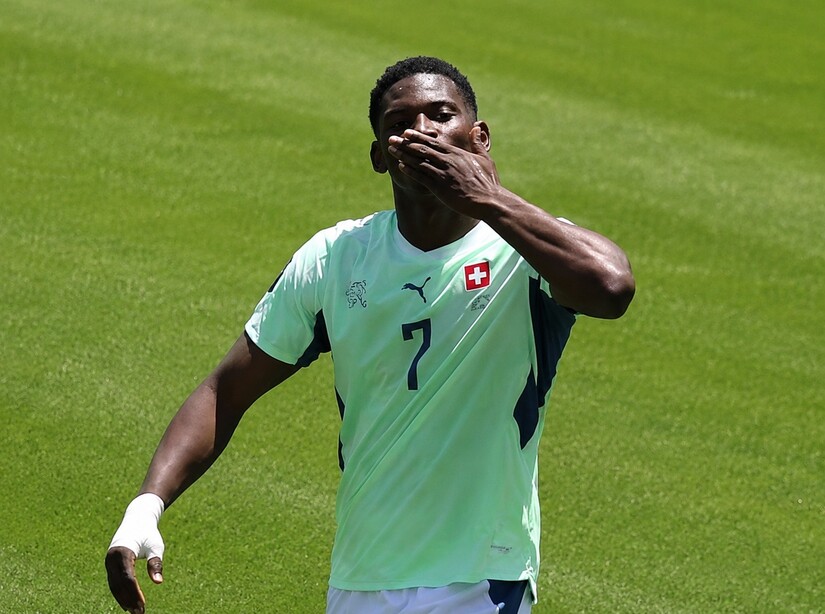
The day began with Switzerland doing almost everything required to win, except the one thing that mattered most. Against Qatar at San Francisco Bay Area Stadium, the Swiss controlled large stretches of the match, created chance after chance, and appeared positioned to take command of Group B. Breel Embolo gave Switzerland the lead from the penalty spot in the 16th minute after Qatari goalkeeper Mahmud Abunada fouled Remo Freuler in the area following a VAR review. For much of the match, the Europeans looked like the more mature, organized and dangerous side.
The tactical numbers reflected that structural control. Murat Yakin’s side generated a heavy volume of shots, repeatedly forced Qatar backward, and spent long stretches operating in threatening central areas. Yet tournament football is not always kind to teams that control matches without closing them. Instructed to maintain structural discipline, Switzerland failed to secure the insurance goal.
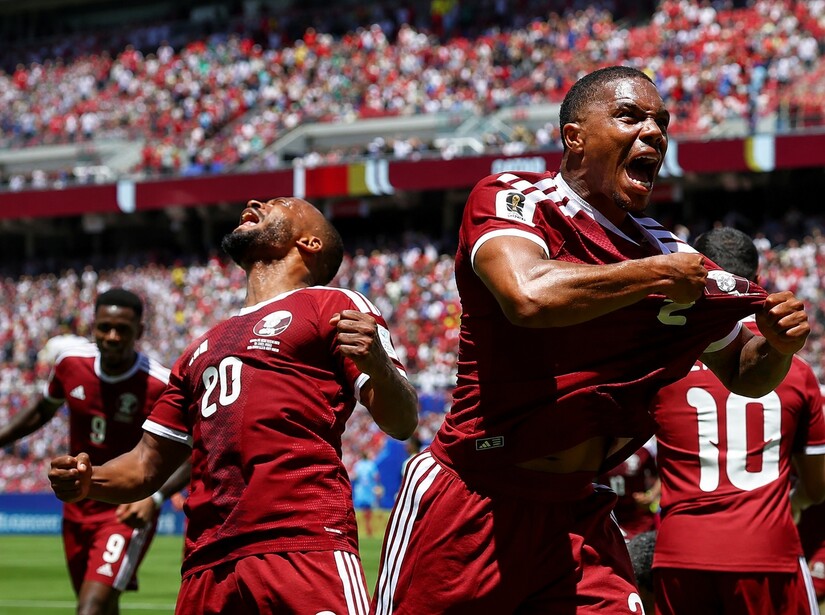
Qatar stayed alive. Deep into second half stoppage time, captain Boualem Khoukhi rose to meet a desperate cross from left back Homam Ahmed. The 93rd minute header took a decisive deflection off Swiss substitute defender Miro Muheim and found the net, producing a dramatic equalizer that stunned the Swiss bench and gave Qatar its first World Cup point on foreign soil.
For Qatar, the result carried meaning far beyond the table. Four years earlier, as host in 2022, Qatar lost all three of its group stage matches and exited without a point. Saturday did not erase that history, but it offered a different kind of World Cup memory. This time, Qatar did not collapse under late pressure. This time, it endured.
For Switzerland, the draw will feel like a severe missed opportunity. A team with ambitions of reaching the knockout stage cannot easily dismiss a match in which it held the lead, dominated the chance count, and still failed to secure all three points. In a group that also includes Canada and Bosnia and Herzegovina, every dropped point matters. Group B now sits in unusual balance. Canada and Bosnia drew on Friday. Switzerland and Qatar drew Saturday. After one match each, all four teams have one point. No one is buried, and no one has control. That creates a wide open opportunity, but it also creates intense structural pressure. For Switzerland, the lesson is blunt: dominance without finishing is vulnerability. For Qatar, the lesson is equally clear: survival can be its own achievement.
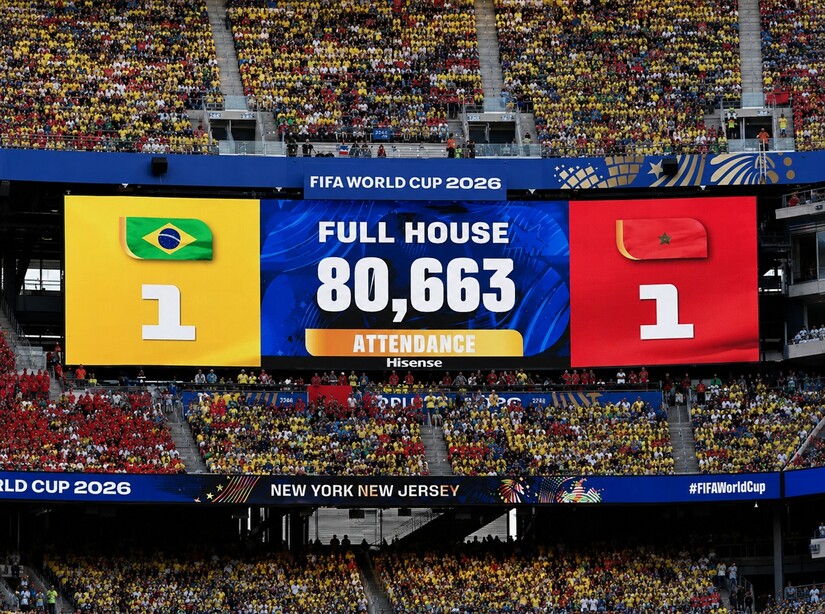
The most anticipated match of Day 3 came at New York New Jersey Stadium in East Rutherford, where Brazil and Morocco opened Group C in front of a massive crowd of 80,663 and a global audience expecting one of the first true tests of the tournament. It delivered on every technical metric.
Brazil entered the match with the historical weight that always accompanies the Seleção. The five-time world champions are trying to win their first World Cup since 2002, and the appointment of Carlo Ancelotti has given the campaign an added layer of tactical scrutiny. Brazil is not only trying to win, it is trying to determine whether pragmatism, structural discipline, and elite individual talent can finally end two decades of frustration. Morocco arrived with a different kind of authority. Their historic semifinal run in 2022 established them on the world stage, but the question entering 2026 was whether that achievement had become foundation or memory. Against Brazil, Walid Regragui’s Morocco answered with absolute tactical confidence.
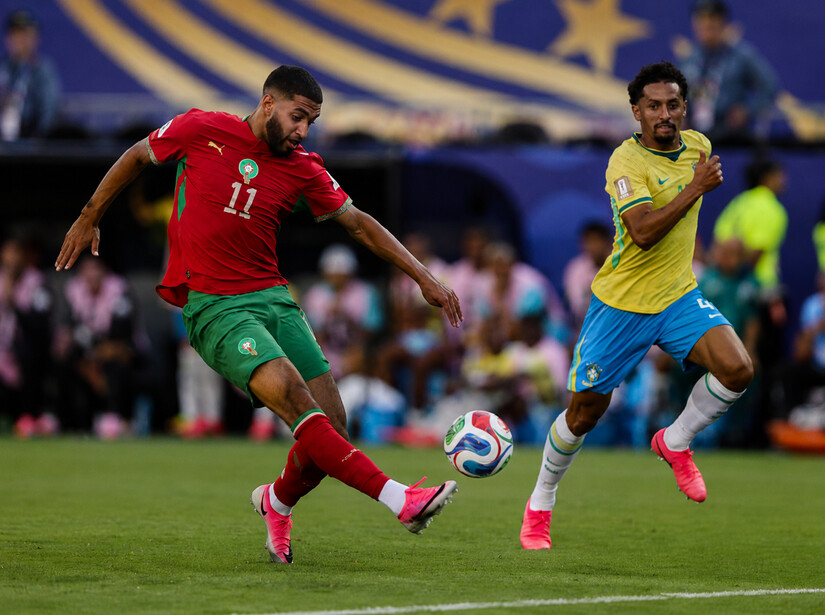
The Atlas Lions struck first in the 21st minute. Ismael Saibari finished a swift Moroccan counterattack after being set up by Brahim Díaz, lifting the ball over Brazilian goalkeeper Alisson Becker and shocking the five-time champions. It was not a fortunate goal, but rather a clear expression of Morocco’s structural blueprint: defend with a low block, press in the mid block, transition with speed, and attack Brazil’s backline imbalance when possession turned over.
Brazil looked completely unsettled for much of the opening phase. Morocco’s central midfield pressed and disrupted, causing Casemiro and Bruno Guimarães to turn over possession. Brazil struggled to establish any fluid attacking rhythm. Ancelotti later acknowledged that his team had been nervous and imbalanced in the first half, and the tactical performance supported that assessment.
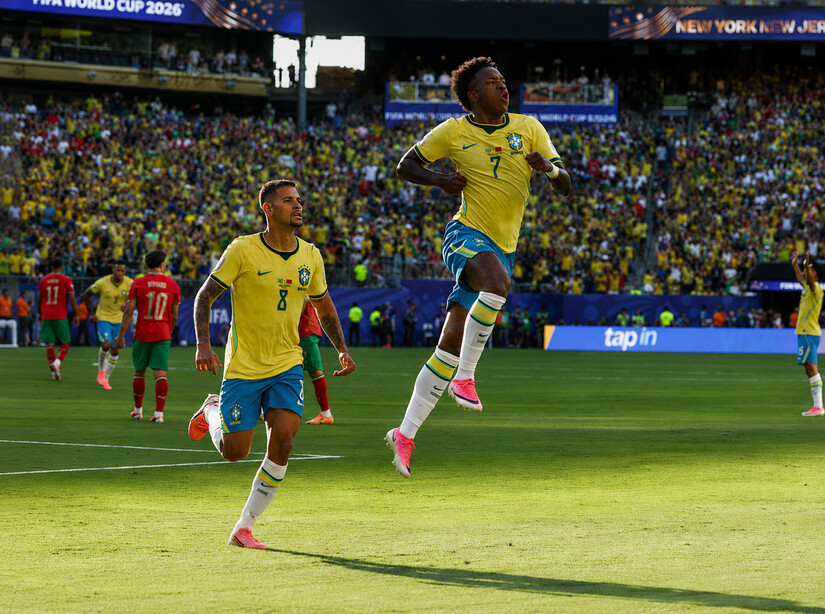
Then Vinícius Júnior intervened. In the 32nd minute, the Brazilian winger received the ball on the left side of the penalty area, cut inside, and curled a sharp finish beyond Yassine Bounou into the far corner. It was a goal of pure individual quality, the kind Brazil can still produce even when the collective offensive structure is not fully functioning.
The equalizer changed the immediate momentum but did not fully settle Brazil. The second half became tense and balanced. Brazil improved after Ancelotti introduced Fabinho and Danilo at the interval to stabilize the defensive shape, but Morocco remained compact, composed, and dangerous on the counter. Bounou made important interior interventions, and Morocco’s center backs resisted sustained aerial pressure. Brazil searched for a winner without consistently creating the type of clear chances that suggest command.
The 1-1 draw leaves both sides with a point, but the emotional meaning differs. For Morocco, the result confirms that 2022 was not a one tournament miracle. This is a side capable of standing against elite opposition and looking like it belongs. Against Brazil, Morocco showed discipline, tactical maturity, and unshakeable belief. For Brazil, the draw is not a disaster, but it is a clear warning. The talent is obvious, and Vinícius Júnior remains capable of deciding matches with a single action. But the tactical balance Ancelotti is trying to build remains a work in progress. Brazil’s next match against Haiti now becomes an opportunity not only to collect points but to restore structural fluency. The tournament will not wait for Brazil to find its identity.
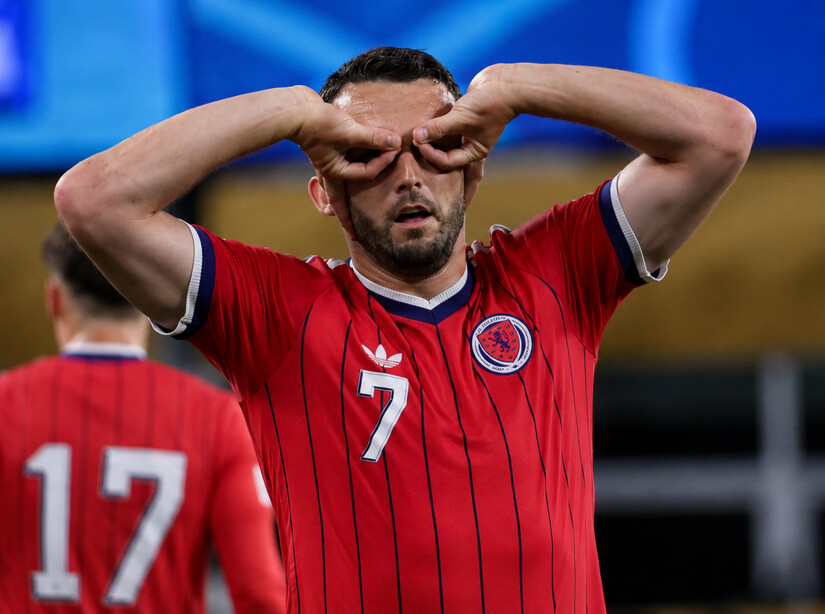
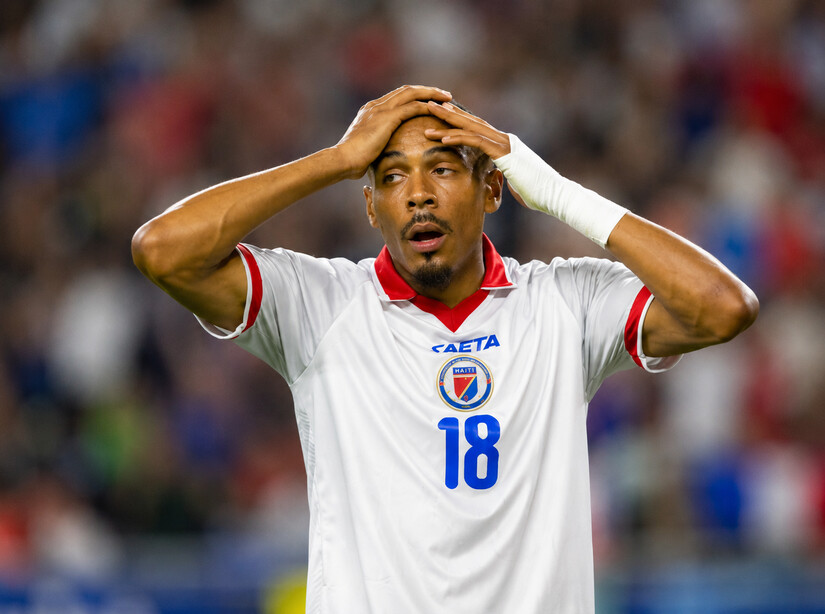
If Brazil and Morocco produced the day’s heavyweight draw, Scotland produced the day’s most emotional victory. At Boston Stadium in Foxborough, Scotland defeated Haiti 1-0 in its first World Cup match since 1998, ending a 28-year absence from the tournament and securing its first World Cup win since defeating Sweden at Italia '90.
The decisive goal came in the 28th minute. John McGinn pounced after Haiti goalkeeper Johny Placide saved a close range effort from Ché Adams, and the ball eventually fell for the Scotland midfielder to finish through traffic. The shot took two deflections before looping into the net, making the Aston Villa midfielder Scotland’s oldest scorer at a World Cup finals. It was not a beautiful goal, but technical beauty was not the point. For Scotland, it was a release.
The Tartan Army had traveled across the Atlantic in huge numbers, filling Boston’s streets and stadium sections with songs, flags, and the kind of emotional investment that only long absence can sharpen. Scotland supporters did not arrive expecting tactical perfection, they arrived needing a tournament moment. McGinn gave them one.
The match itself was not always smooth. Steve Clarke’s side started with energy, threatening early through Ben Doak, but struggled at times to turn possession into absolute control. Haiti defended with exceptional organization and carried a severe threat on the counterattack, particularly late in the match. Frantzdy Pierrot had a major chance in the closing minutes but could not direct his header on target, while Wilson Isidor came within inches of converting a dangerous cross from Ruben Providence.
That miss preserved Scotland’s narrow advantage and allowed them to escape with the result they needed. This was not a statement performance in the technical sense. Scotland did not overwhelm Haiti, they did not produce a tactical clinic, and they did not look like a team ready to stroll through Group C. But World Cup openers are often about function more than style. Scotland needed three points before facing Morocco and Brazil. They got them, and that is what matters.
The victory also changes the structure of Group C. After Brazil and Morocco split points, Scotland ends Day 3 on top of the group. That is a sentence Scottish fans waited nearly three decades to hear. Haiti, meanwhile, leaves the match with frustration and some encouragement. The performance was competitive and the late chances were real, but in a group containing Brazil and Morocco, moral victories have limited value. Haiti now faces a demanding road. For Scotland, the equation is different. The drought is over, the first win has come, and now comes the more difficult question: can Scotland turn a memorable return into a path toward the knockout stage?
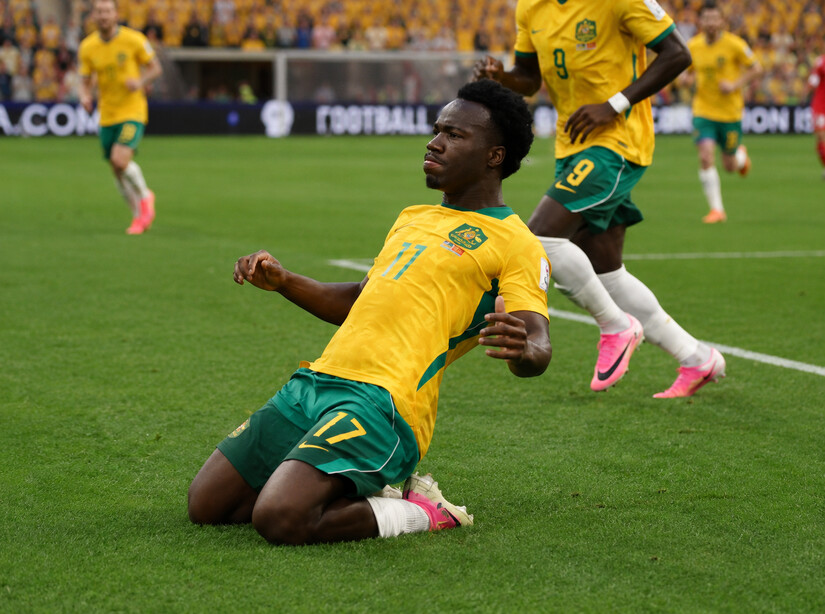
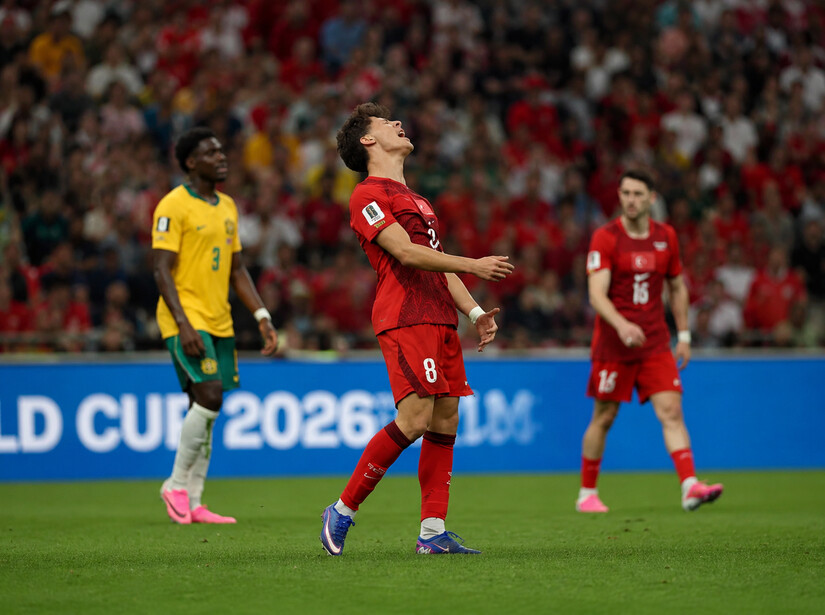
The final match of the day delivered the cleanest upset of the opening round. Australia defeated Türkiye 2-0 in Vancouver, spoiling Türkiye’s return to the World Cup after a 24-year absence and immediately altering the balance of Group D. The result was built on defensive discipline, exceptional goalkeeping, and ruthless counterattacking execution.
Australia coach Tony Popovic had pulled off a massive shock in his starting line-up, dropping experienced captain and goalkeeper Mathew Ryan in favor of Patrick Beach, who was winning only his third cap. Vice captain Jackson Irvine was also rested in favor of 21-year-old midfielder Paul Okon-Engstler in a starting XI that featured 10 World Cup debutants. Both of those selections proved to be inspired.
Türkiye dominated possession and produced a high volume of attempts, but Australia controlled the areas that mattered most. The Socceroos defended deep in a 5-4-1 formation, protected central spaces, and trusted their ability to break quickly when opportunities appeared.
Nestory Irankunda supplied the first blow in the 26th minute. Okon-Engstler lofted an excellent long ball over Türkiye's backline, splitting the defense. The young Australian attacker burst forward on a rapid counterattack, took an excellent first touch, and finished low past Uğurcan Çakır to become Australia's youngest ever FIFA World Cup goal scorer. The goal gave Australia the tactical advantage and allowed Popovic’s side to commit fully to its preferred defensive match script. Türkiye had the ball, but Australia had the plan.
The Turkish attack became increasingly frustrated as the match wore on. Crosses came into the area and shots arrived from distance. Arda Güler and Hakan Çalhanoğlu tried to influence the game between the lines, but Australia’s defensive shape held firm. Goalkeeper Patrick Beach delivered one of the most important individual performances of the tournament so far, making eight saves and giving Australia the confidence to withstand long stretches of pressure. His work allowed the Socceroos to remain compact, composed, and patient.
In the 74th minute, Connor Metcalfe settled the match. Running at a stretched Turkish defense, he smashed a low left footed strike from 20 yards out into the net to make it 2-0 and confirm the upset. The numbers told one story: Türkiye had most of the ball and far more shots. The scoreboard told another: Australia defended better, finished better, and understood the match better.
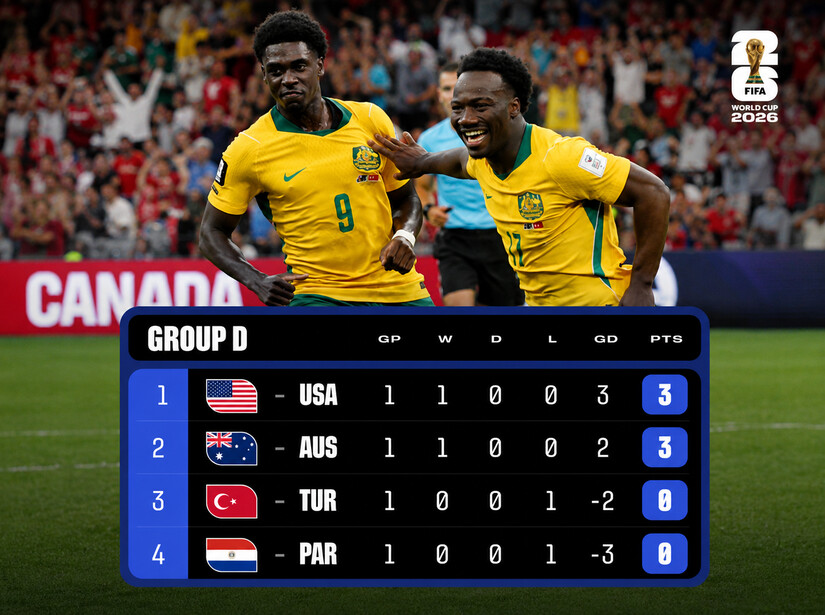
For Türkiye, the defeat is a severe opening blow. A team returning to the World Cup stage with expectation and talent now faces immense pressure immediately. Possession without penetration became their defining tactical failure. For Australia, the win is enormous. The Socceroos now sit behind the United States in Group D only on goal difference after the Americans’ 4-1 win over Paraguay. Australia’s next match against the United States suddenly becomes one of the most important early fixtures in the group. What looked like a difficult path for Australia now looks far more open.
Several critical conclusions emerged from Saturday’s action:
The next wave of matches will bring more major contenders into the tournament. Germany, the Netherlands, Japan, Sweden, Tunisia, Côte d’Ivoire, Ecuador, and Curaçao are among the teams preparing to begin their campaigns. Group stage pressure will continue to build as more nations enter the field and early standings begin to matter.
For Brazil, the next match against Haiti becomes a chance to stabilize their defensive lines. For Morocco, the coming meeting with Scotland offers an opportunity to turn a strong draw into a commanding position in Group C. For Scotland, the challenge is proving that Saturday was not simply a return party, while for Australia, the United States now awaits in a high stakes battle for Group D supremacy.
MinneapoliMedia | Community. Culture. Civic Life.



Sunny, with a high of 97 and low of 66 degrees. Sunny in the morning, clear for the afternoon and evening,