75° and Clear
Image
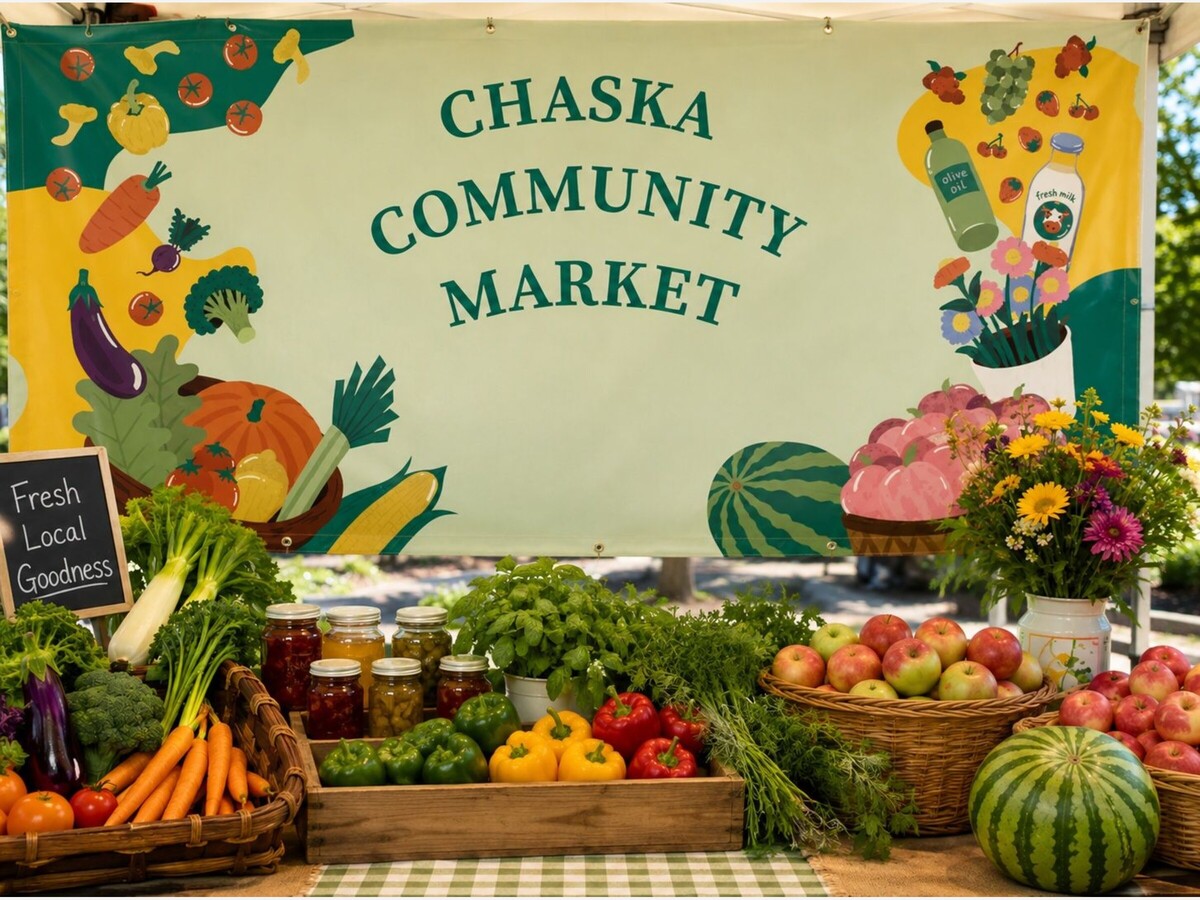



The Chaska Free Pop-Up Market, a seasonal food distribution program operating through the Free Summer Food Market initiative, is providing residents with access to a variety of grocery items every Monday through August 17 at Chaska Middle School West.
Organizers say the market is designed to reduce barriers to food access while helping families, seniors, individuals, and households facing financial pressures obtain healthy food in a welcoming environment.
Located at 140 Engler Boulevard in Chaska, the weekly market operates from 4:00 p.m. to 5:30 p.m. and offers visitors an opportunity to select from a range of available food items, including fresh produce, grains, dairy products, meat, and other grocery staples. Available items vary from week to week based on inventory and donations.
One of the defining features of the program is its accessibility. Unlike some assistance programs that require documentation, proof of income, or advance registration, organizers emphasize that everyone is welcome.
"No personal information or pre-registration is required," promotional materials for the program state.
That approach reflects a growing movement among food security organizations nationwide to reduce administrative barriers that can discourage individuals and families from seeking assistance when they need it most.
Summer can be an especially challenging period for families with children.
During the academic year, many students rely on school breakfast and lunch programs for a significant portion of their daily nutritional needs. When schools close for the summer, those meals are no longer available, creating additional financial pressure for households already managing rising costs for housing, transportation, healthcare, and groceries.
According to the U.S. Department of Agriculture, food insecurity remains a significant challenge across the country. Millions of households experience uncertainty about where their next meal will come from or whether they will have enough resources to consistently purchase nutritious food.
Community food markets and pop-up distribution programs have increasingly become part of local efforts to bridge those gaps.
In Minnesota, food shelves and community-based food distribution networks have reported continued demand as families navigate inflation and elevated grocery prices that have affected household budgets over the past several years.
Programs such as the Chaska Free Pop-Up Market seek to supplement existing food shelf services by bringing food directly into neighborhoods and community gathering spaces where residents can access resources in a less formal setting.
The summer market is supported by a broad coalition of local organizations, nonprofits, businesses, healthcare partners, and community groups.
Sponsors listed for the initiative include Schell's, the 112 Foundation, Janet Sasson Bountiful Basket Food Shelf, Blue Cross and Blue Shield of Minnesota, Chanhassen Legion, Nicolet Bank, Medica, and additional community partners.
Other participating organizations include Better Society, Carver County Public Health, Eastern Carver County Schools, and M.C.A.S.A., according to program materials.
The collaborative nature of the effort highlights how addressing food insecurity increasingly requires partnerships that extend beyond traditional food assistance organizations.
Healthcare providers, local governments, educational institutions, businesses, and nonprofit organizations have all become important participants in efforts to improve access to nutritious food and address the broader social determinants of health.
Public health experts have long noted that access to healthy food is closely connected to health outcomes, educational achievement, workforce participation, and overall community well-being.
Across Minnesota, communities have developed innovative approaches to improving food access in recent years.
Mobile food shelves, neighborhood markets, school-based food distributions, community gardens, and pop-up grocery initiatives have emerged as strategies to reach residents who may face transportation challenges or other obstacles when attempting to access traditional food assistance programs.
These efforts have become particularly important in suburban communities where food insecurity can sometimes remain less visible despite affecting significant numbers of residents.
Organizations involved in food access initiatives often stress that hunger and food insecurity can affect households from a wide range of backgrounds, including working families, seniors living on fixed incomes, individuals experiencing temporary financial hardship, and families navigating unexpected emergencies.
By eliminating registration requirements and welcoming all residents, the Chaska market seeks to create an environment where individuals can access food without stigma or complicated eligibility processes.
The Chaska Free Pop-Up Market will continue operating every Monday through August 17 at Chaska Middle School West.
Organizers encourage residents to arrive during operating hours to take advantage of available food selections, noting that inventory can vary each week.
For families preparing for the summer months, the program offers a consistent weekly opportunity to supplement household grocery needs while connecting with community resources dedicated to food security and public health.
Additional information about the program and other food assistance resources available throughout Carver County can be found through Find Food Carver County.
As communities across Minnesota continue to confront the realities of food insecurity, initiatives like the Chaska Free Pop-Up Market demonstrate how local partnerships can help ensure that residents have reliable access to nutritious food while strengthening community support networks during the summer season and beyond.
The Chaska Free Pop-Up Market is held Mondays from 4:00 p.m. to 5:30 p.m. at Chaska Middle School West, 140 Engler Blvd., Chaska, through August 17. No registration is required, and all community members are welcome.
MinneapoliMedia | Community. Culture. Civic Life.


Overcast, with a high of 84 and low of 64 degrees. Sunny in the morning, overcast in the afternoon, partly cloudy overnight.