70° and Clear
Image
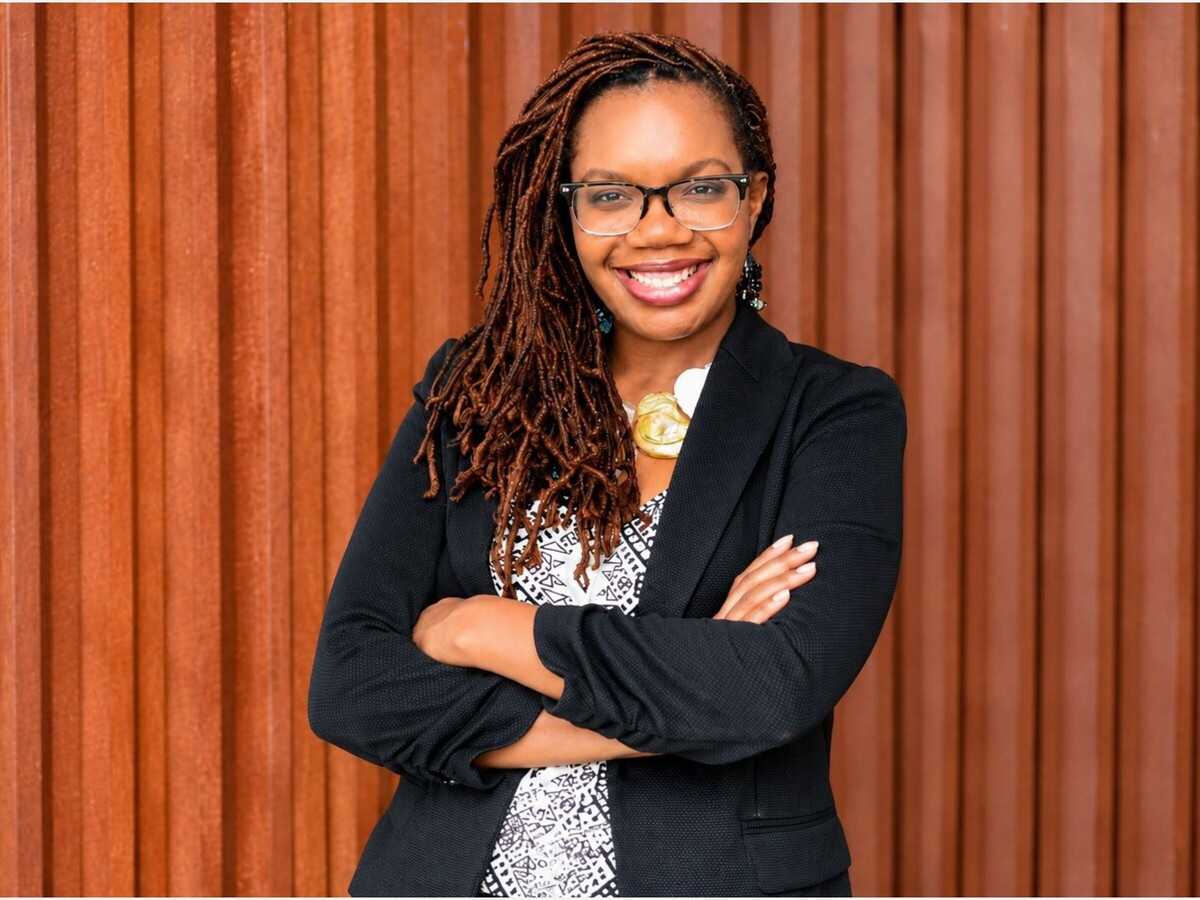



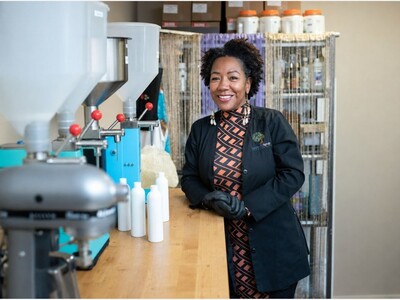
Before Dara Beevas became chief executive officer of the African American Leadership Forum, before she became a publisher, before she helped authors turn private conviction into public record, she was a little girl sitting inside the living archive of a Black family.
The room was filled with women.
Her grandmother had five daughters. Her aunties lived close enough that one could throw a rock from one house to another. The family gathered for Friday dinners, for fish fry nights, for the kind of regular communion that becomes memory before anyone thinks to call it history. The women talked. They laughed. They remembered. One story would begin before another one ended. A voice would rise, then another would enter. A character would be summoned back into the room. A neighborhood the family had moved away from still lived through the people who refused to let it disappear.
The Living Archive
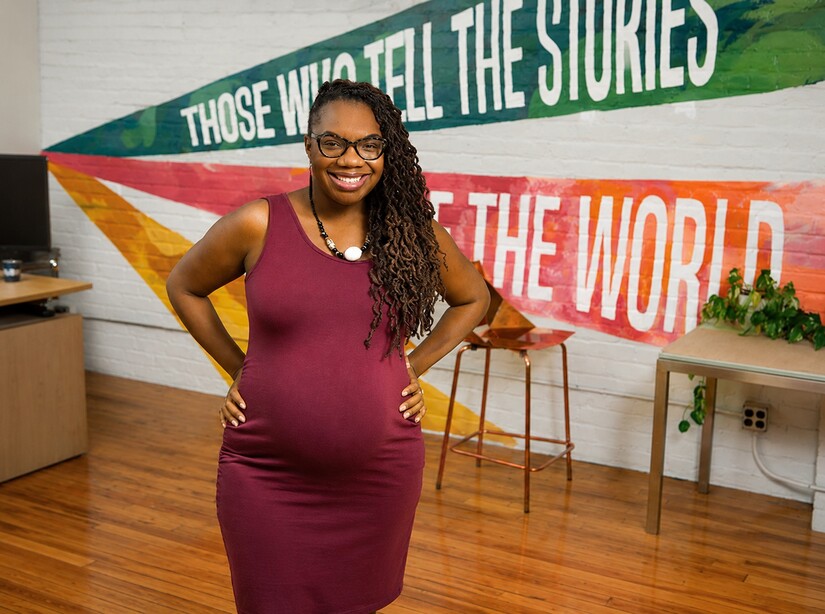
Beevas remembers those rooms not as casual family gatherings, but as the early foundation of her life’s work.
“I grew up as a girl who loves stories,” she said. “I was fortunate enough to be born into a family of powerful women, a very matriarchal family.”
In that family, storytelling was not entertainment alone. It was recordkeeping. It was a performance. It was an inheritance. It was the way one generation handed another not only names and dates, but rhythm, memory, warning, humor, survival and pride. Beevas remembers how Black people told stories with their whole bodies, with their hands, their voices, their impersonations, their laughter, their pauses and their full physical presence.
“The most well-trained thespian has nothing on a Black family telling a story,” she said.
It was in that world that Beevas first came to understand that narrative does not simply describe life. It shapes it. It decides who is seen, who is believed, who is valued, who is remembered and who is allowed to define the meaning of their own experience.
That early lesson now sits at the center of her leadership.
The Calling and the Title
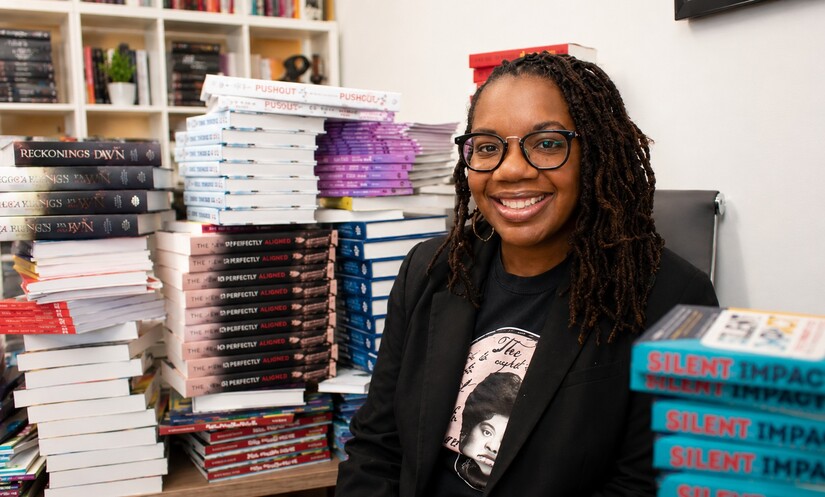
In February 2026, the African American Leadership Forum announced Beevas as its chief executive officer, placing her at the helm of one of Minnesota’s most significant Black-led civic institutions. The appointment followed her service as the Forum’s chief narrative officer, a role that already positioned her at the intersection of storytelling, policy, cultural memory and community power.
For Beevas, the title has changed. The calling has not.
“I’m doing what I was doing before the title,” she said. “Titles are just titles. My calling is what it is regardless of the title.”
That calling, as she describes it, is rooted in liberation. It began in the world of books and words, moved through publishing, expanded through entrepreneurship and now continues through institutional leadership at the Forum. Across each chapter, the work has remained consistent: to help people and communities claim their own voice, tell the truth of their lives and use narrative as a tool for freedom.
When Beevas was a child, books were a kind of treasure. Her mother brought them home and Beevas received them as if they were gifts of enormous value. She read early and intensely. She devoured books, returned to them and recognized in language a place where she felt at home. Her father, she said, had been the kind of boy who read encyclopedias. Her mother read to her. The family’s respect for words became part of her formation.
“I was programmed to be a child of books and words and stories,” Beevas said.
Even before she knew how her life would unfold, she knew to pay attention to English programs when thinking about college. She did not yet fully believe college was possible, but she already understood that if she got there, words would be part of the reason. Once she arrived, another Black woman helped name what Beevas had carried all along.
Reverend Andrea Cornett Scott saw something in her. Beevas remembers her as a powerful Black woman who recognized that she needed to be “with and of words.”
“It was like being seen for the first time,” Beevas said.
That moment helped open a path. In college, Beevas started a publishing venture, an early expression of the work that would later become central to her life. She would go on to co-found Wise Ink Creative Publishing, a Minneapolis-based hybrid publishing company known for supporting independent authors, mission-driven writers and voices often left out of traditional publishing channels. Through Wise Ink, Beevas helped authors not only produce books, but understand the deeper responsibility of having something to say.
At Wise Ink, she learned the discipline of turning an idea into a finished object. She learned the risk of entrepreneurship. She learned the relationship between vision and execution. She learned that freedom comes with responsibility and that ownership is not symbolic. It is practical, demanding and transformational.
When asked what entrepreneurship taught her that she now carries into her work at the African American Leadership Forum, Beevas answered without hesitation.
“Liberation and abundance,” she said.
Working for herself taught her that what she could imagine, she could build. It taught her that what she dreamed could become real if she was willing to do the work. At Wise Ink, she said, she set goals and watched them materialize. She wanted to build a successful company. She did. She wanted to help produce major books. She did. She wanted to create a space where people could walk in and feel protected enough to create. She did that too.
“I know firsthand what it feels like to say it, to dream it, to say it and then see it,” Beevas said.
That experience now shapes her leadership at the Forum. She brings to the institution the confidence of a Black woman who has already built something from the ground up, who knows that ideas do not have to remain ideas and that community vision can become infrastructure.
Moving Beyond the Deficit
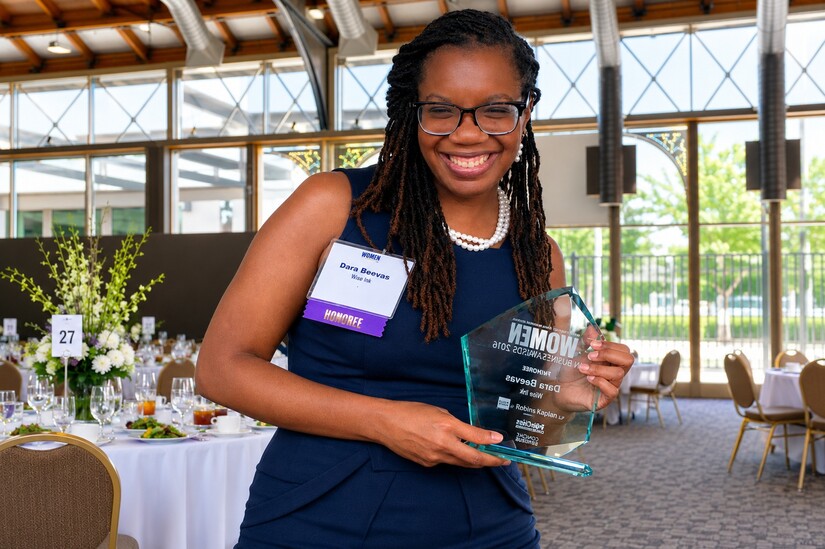
The Forum describes itself as a Black-led think and do tank. Beevas embraces that framing because it refuses to separate thought from action, anchoring architectural strategy directly into local initiatives focused on Black economic mobility, community health, and generational wealth building. For her, narrative is not public relations. It is not messaging placed on top of work after the real decisions are made. It is part of the work itself.
“Narrative is truly how we connect to one another,” she said.
That belief challenges the common habit of treating storytelling as soft, secondary or decorative. Beevas sees narrative as structural. It is how people understand problems, how they imagine solutions and how institutions come to see the communities they claim to serve.
Systems, she said, are often described as though they are distant, rigid and beyond human control. But systems are made of people. A system may look like a licensing office, a hiring process, a school district, a funding table or a policy meeting. Behind each one are human beings whose minds can be moved, challenged and expanded. If systems are made of people, then narrative becomes one way of reaching them.
Because systems are driven by human perspective, Beevas is careful not to confuse truth-telling with deficit framing. She believes communities must tell the truth about what is wrong, but they cannot live permanently inside the wound. The work is not only to name harm. It is also to describe what should exist instead.
“We don’t get to stay in the deficit narrative,” she said. “We can touch on what’s wrong and we can highlight what’s wrong. But the way to change and activate people is to create what we want the change to look like.”
That distinction is central to her philosophy. A narrative that only describes failure can become another form of confinement. A narrative that tells the truth and then points toward possibility can become a vehicle for movement.
Beevas connects this work to a long Black tradition. She spoke about slave narratives, abolitionist writing and the courage of ancestors who paused long enough to document what was happening to them before returning to the work of freedom. For her, those records were not passive documents. They were tools of liberation. They created shared understanding. They gave language to the violence of slavery. They allowed others to see, believe and act.
She also named the importance of Black women’s narratives, including the work of Harriet Jacobs, whose writing insisted on the authority of her own account. The act of saying “these are my words” mattered. It still matters.
That historical awareness informs how Beevas sees Minnesota.
The Architecture of Twin Cities Voice
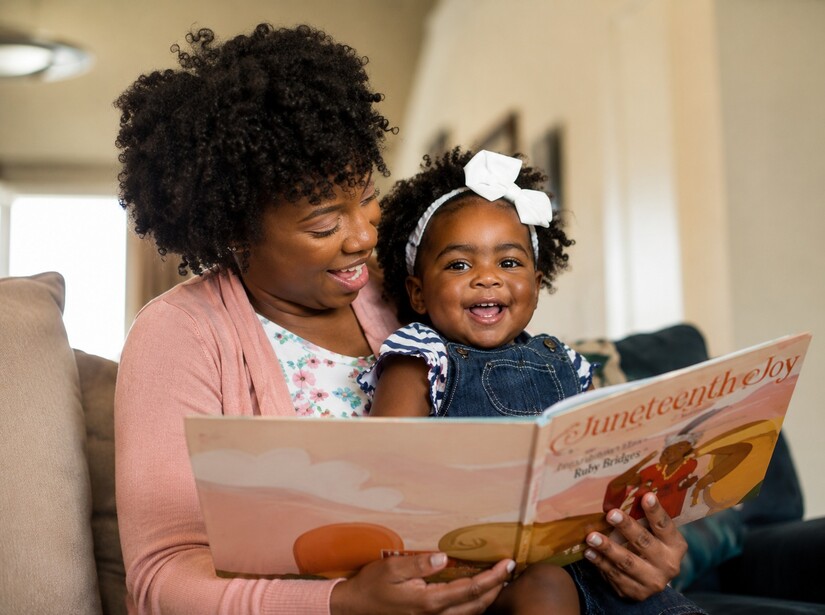
The state, and particularly the Twin Cities, has occupied a national place in conversations about race, justice and institutional accountability. Beevas spoke about Minnesota as a community watched by others, a place where local narratives have carried national and even global significance. She pointed to the killing of George Floyd and the role community voice played in shaping how the world understood what happened.
“Our neighbor and community member George Floyd’s narrative was integral,” she said.
For Beevas, Minnesota’s Black communities understand the power of voice because they have seen voices move public attention. They have seen local testimony reverberate far beyond state lines. They have seen the story become evidence, pressure and demand.
Still, she does not romanticize the difficulty of that work. Truth-telling invites resistance. Beevas recalled writing opinion pieces after the deaths of George Floyd and Daunte Wright and receiving immediate, sharply critical messages in her inbox from people who rejected her framing. Some insisted racism was not a real problem in Minnesota. Others described those deaths as isolated incidents or suggested the victims should have behaved differently.
Beevas does not treat pushback as proof of failure. In some cases, she said, it signals that the narrative is doing its job.
“If people are pushing back, that actually is a good thing,” she said.
That view is consistent with the Forum’s posture as a place of thought and action. Beevas believes serious narrative work does not always produce immediate agreement. Sometimes it produces discourse, and that discourse is necessary. Communities need room to argue respectfully, to debate thoughtfully, to disagree without abandoning the shared search for a path forward.
“The best narratives are ones in which we learn. We cry. We argue respectfully. We debate thoughtfully,” she said.
She sees beauty in the fact that Blackness is not a monolith. She referenced historic tensions and differences among Black leaders and movements, including Martin Luther King Jr. and Malcolm X, W.E.B. Du Bois and Booker T. Washington, and the Black Panthers. To Beevas, those differences are not evidence of weakness. They are part of a wider tradition of people struggling, arguing and imagining freedom from different angles.
“What makes Blackness beautiful is that we are not a monolith,” she said.
That belief shapes her approach to data and impact. Beevas does not dismiss traditional metrics, but she does not believe they are sufficient. Charts, graphs and statistics tell part of a story. They do not tell the whole story. A Black-centered understanding of data must also include elders, children, workers, scholars, entrepreneurs, caregivers and community wisdom. It must ask questions differently.
A conventional health survey might ask when a person last went to the doctor. Beevas wants to ask what it means to be well and who people go to for care. For Black communities, she said, care can include doctors, but it can also include movement, dance, roller skating, spiritual practice, gathering, joy and cultural connection. If institutions do not understand those realities, they will measure the wrong things and miss the truth.
“Our metrics are created from a Black-centered lens,” she said.
That is one reason Black-led organizations matter. They are not merely delivering services to Black communities. At their best, they are asking different questions, honoring different forms of knowledge and refusing to reduce community life to categories imposed from outside.
For Beevas, the ability to do that work requires an internal compass. When narrative is connected to power, politics and funding, it can be tempting to soften truth for comfort or access. Beevas said her grounding comes from her ancestors, from faith and from the freedom she has already experienced as a builder.
“My ancestors,” she said when asked what keeps her grounded. “They are dope.”
She speaks the way she speaks, she said, no matter the room. She is not bound to a funder or institution in a way that would force her to abandon truth. Her calling remains her calling whether she is at Wise Ink, at the Forum or anywhere else.
“I know what it’s like to be free already,” she said.
That freedom is not abstract for Beevas. It is a discipline. It is the ability to move in alignment with her ancestors and the divine. It is the refusal to shrink inside systems that do not support Black thriving. It is the commitment to treat people with dignity regardless of whether they are wealthy, powerful or without material means.
When asked what liberation means in the context of her work, Beevas answered plainly.
“It means being able to walk in alignment with my ancestors and the divine, unbothered, on behalf of Black thriving,” she said.
That sentence carries much of her leadership philosophy. Liberation, for Beevas, is not a slogan. It is a way of choosing where to put energy. She is not interested in investing herself in work that does not move Black thriving forward. She sees abundance as real and liberation as accessible.
“That’s my job,” she said. “And it’s a privilege.”
Throughout the conversation, Beevas returned often to the Black women who saw her before she fully saw herself. Her mother recognized her love of books before either of them had the language to define what that love might become. When Beevas once told her mother that a teacher said she was good enough for Advanced Placement English but too lazy, her mother did not accept the judgment. Beevas recalls her mother saying she would call back. The next day, Beevas was in the AP English class.
There were others. Reverend Andrea Cornett Scott saw her gift in college. An upperclassman named Erica helped her build an early magazine project. Again and again, Black women told her to apply, to try, to go forward, to ask for what she needed.
“So many people saw me before I saw me,” Beevas said.
Because she was carried that way, Beevas tries to carry others that way. Her advice to young women, especially young Black women who have something to say but are unsure how to claim their voice, is rooted in the vulnerability of her own experience.
“Put your crown on,” she said.
She knows it is not easy. To say “I am an artist,” “I am a doctor,” “I am a writer,” or “I am a leader” requires courage in a world that often works to instill doubt in Black women. Her advice is not to go alone. Find another woman whose voice is already being heard and walk beside her until confidence grows. Then write down what you see. Speak what you know. Sing what you know. Cook it, if that is the form expression takes.
“Speak it. Write it. Sing it. However you can express it, just express it,” she said.
That counsel carries the same logic as her broader work. Voice is not only spoken. It is embodied. It can appear in books, policy, movement, cooking, healing, community plans, testimony, laughter and care. What matters is that people do not surrender the right to express what they know.
Ensuring a Record
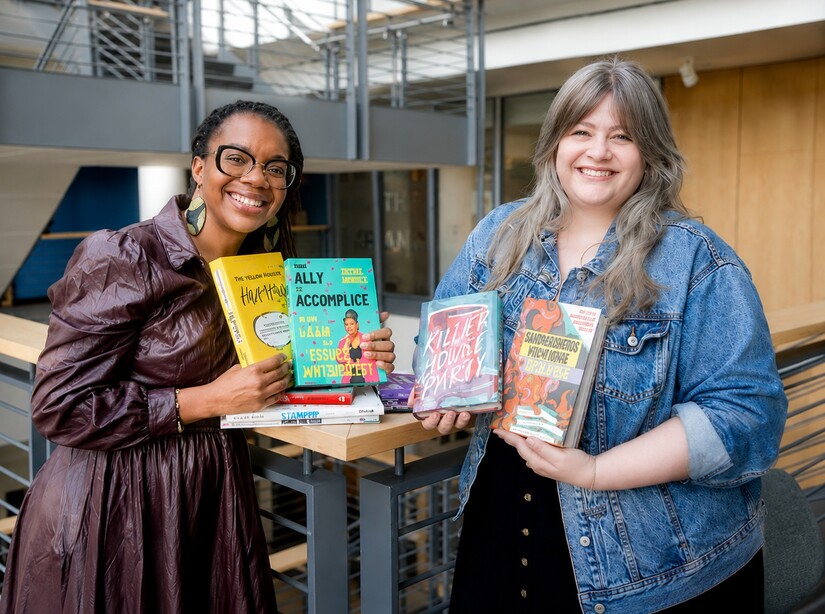
Near the end of the conversation, Beevas turned to Ida B. Wells to explain how she thinks about legacy. Wells documented lynching at a time when the violence against Black people was not being properly recorded by those with institutional power. She preserved stories that might otherwise have been denied, minimized or erased. Beevas reflected on Wells’ effort to look back to earlier generations and ask what had been written by the people who came before her. When records were missing, the absence itself became a warning.
Beevas said Wells wrote her autobiography not because she had abundant time or because the task was easy, but because she did not want future generations to ask what her generation had done and find no record.
Beevas thinks of her own work in that frame.
“I hope that future generations look back and they’re able to see what we did because I helped the story be told,” she said.
That is the heart of her leadership. The work is not only about changing the present. It is about making sure the present cannot be erased. It is about ensuring that future generations will not have to search for evidence of what Black Minnesotans thought, built, resisted, protected, imagined and made possible.
As part of The Power of Her tradition, Beevas was asked to name women in Minnesota whose leadership deserves broader visibility. She immediately named Titilayo Bediako, founder and executive director of WE WIN Institute, describing her as a keeper of children who has created safe space for young people to succeed, prosper and move through community with confidence. Beevas praised Bediako for bringing major Black authors and national voices to Minnesota children, framing that work not simply as doing good, but as bringing the community the best.
She also named DejaJoelle, a healing artist whose work centers Black liberation, movement and embodied healing, and Dr. Joi Lewis, whose work on radical self-care and healing has created pathways for community restoration. Beevas described them as leaders who give from abundance and understand healing as part of revolution.
The nominations were not incidental. They reflected the same values Beevas carried throughout the conversation: children, healing, authorship, abundance, cultural memory and Black thriving.
In a civic culture often preoccupied with titles, Beevas returns again and again to calling. Her new role as CEO of the African American Leadership Forum is significant. It places her in a position of public leadership at a moment when the organization is focused on Black economic liberation, civic power, policy shaped by community wisdom and measurable progress rooted in data and lived experience. But Beevas does not speak as someone newly arrived to purpose. She speaks as someone whose purpose has been present for a long time, shaped first in family rooms, books, Black women’s encouragement and the courage of ancestors who understood that freedom work required a record.
Her journey from a child surrounded by stories to a publisher of stories to a leader shaping institutional narrative is not a departure from one chapter to another. It is a continuation.
The girl who listened to aunties tell stories became the woman who helps communities protect their own.
The reader in the corner became the publisher who helped others see their words in print.
The founder who learned to dream, speak and build became the CEO who now leads a Black-led institution committed to action.
For Beevas, narrative is stewardship. It is not extraction. It is not performance for outside approval. It is the careful, disciplined work of carrying what must not be lost and shaping what must still be made possible.
That is why her story belongs in The Power of Her.
Because power does not always announce itself loudly. Sometimes it gathers at a table. Sometimes it appears in a book. Sometimes it takes the form of a mother calling the school and changing the course of a child’s future. Sometimes it is a woman in college saying, “I see you.” Sometimes it is an organization deciding that Black communities must not only be studied, measured or described, but heard, trusted and followed.
And sometimes it is Dara Beevas, standing in the long line of women who have carried words as tools of survival and liberation, helping make sure that when future generations ask what was done in this time, there will be a record.
There will be a story.
And it will not have been told by someone else.
MinneapoliMedia | Community. Culture. Civic Life.



Sunny, with a high of 97 and low of 66 degrees. Sunny in the morning, clear for the afternoon and evening,