70° and Clear
Image
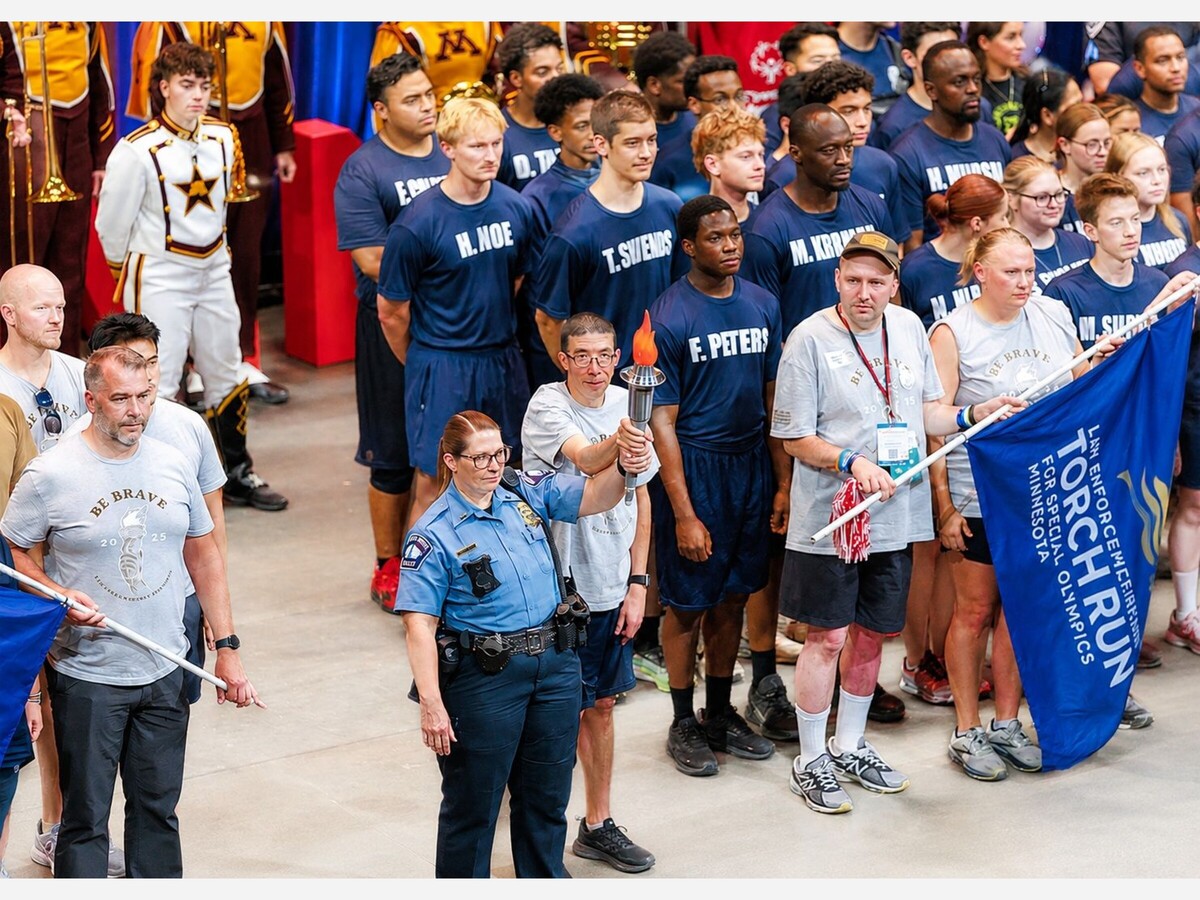



For seven days, Minnesota will welcome approximately 3,000 athletes and 1,500 coaches representing all 50 states and delegations from across the nation. More than 10,000 volunteers are expected to help operate the Games, while organizers project attendance approaching 75,000 spectators throughout the week.
The event has been years in the making.
In 2022, Minnesota won the competitive national bid to host the 2026 Games, securing what organizers have described as the largest sporting and humanitarian event in state history. Since then, local governments, universities, businesses, nonprofits, law enforcement agencies, hospitality providers, and thousands of individual Minnesotans have spent years preparing for the arrival of athletes who embody the Special Olympics movement's mission of inclusion, opportunity, and achievement.
Now, the wait is nearly over.
Across the University of Minnesota campus, banners have begun appearing. Volunteers are completing final training sessions. Hotels are filling. Competition venues are being prepared. Transportation systems are being coordinated. And families from every corner of the country are making travel plans to Minnesota.
The result will be a week unlike anything the Twin Cities have hosted before.
The 2026 Special Olympics USA Games will feature competition in 16 Olympic-style individual and team sports, including athletics, basketball, bocce, bowling, golf, gymnastics, powerlifting, soccer, softball, swimming, tennis, volleyball, pickleball, and several other disciplines.
Events will take place throughout the metro area, with major activities centered at the University of Minnesota and the National Sports Center in Blaine.
The Games officially begin Saturday evening at Huntington Bank Stadium, where thousands of athletes will participate in the traditional Parade of Athletes before a crowd expected to fill much of the stadium.
For many participants, it will be the culmination of years of training and qualification.
For families, it will be the realization of a dream.
For Minnesota, it will be an opportunity to introduce itself to a national audience.
Organizers expect the Opening Ceremony to draw nearly 20,000 attendees, creating one of the largest public gatherings in the state this year. The ceremony will include the arrival of the Law Enforcement Torch Run, one of the most recognizable traditions in Special Olympics competition, culminating in the lighting of the Games cauldron.
National entertainment figures are also scheduled to participate in the festivities, while ESPN platforms are expected to provide extensive coverage of both the Opening Ceremony and athletic competitions throughout the week.
The national broadcast exposure represents a rare opportunity for Minnesota to showcase its communities, venues, and hospitality to audiences across the country.
Yet for all the attention surrounding the scale of the event, the true story of the Games remains deeply personal.
For Paul Gangl of Lakeville, the countdown to the Games has been measured not in months but in years.
His son Brandon is one of the athletes preparing to compete this week.
Diagnosed with Dandy-Walker syndrome, a congenital neurological condition that affects balance, coordination, and speech, Brandon has spent years overcoming obstacles that many people never see.
Those challenges have not diminished his competitive spirit.
As a bocce athlete, Brandon has found both athletic opportunity and a community that understands the value of perseverance.
"It kind of culminates with the week that we've been looking forward to all year," Paul Gangl said. "So, we're both very excited to be a part of it."
For the Gangls, the Special Olympics experience extends far beyond competition.
"It's something that's really unique and the athletes kind of look out for each other," Paul said.
That spirit of mutual encouragement has become one of the defining characteristics of Special Olympics competitions around the world.
Athletes compete intensely, but they also celebrate one another's successes. Rivals become friends. Victories are shared. Disappointments are met with support rather than isolation.
The Gangl family experienced that culture firsthand during the 2022 Special Olympics USA Games in Orlando.
What they remember most is not necessarily the competition itself.
It is the people.
The packed venues.
The families.
The volunteers.
The sense that every athlete belonged.
"I guess it was somewhere in the neighborhood of 20,000 representatives, between family, friends, athletes and coaches," Gangl recalled. "It's definitely going to have a nice impact on the economy."
This year, those same experiences will unfold in Minnesota.
Many athletes will travel with multiple family members. Others will arrive with support staff, caregivers, coaches, and friends. Entire communities often rally behind individual competitors.
The cumulative effect creates a massive influx of visitors that extends well beyond the athletes themselves.
The Games arrive at a critical moment for downtown Minneapolis and the broader hospitality industry.
Organizers estimate the event could generate approximately $70 million in economic activity throughout the region through hotel stays, restaurant visits, transportation spending, retail purchases, entertainment expenditures, and tourism-related activity.
For hotels, the impact is already visible.
LeAnne Calvert, General Manager of the Days Hotel in Minneapolis, says her property is completely booked for the duration of the Games.
"I think it's going to be crazy, but maybe in the most joyous and delightful way," Calvert said. "We welcome the chaos, to be part of something so special and interesting."
The 130-room hotel expects visitors from across the country.
"We sort of get a little bit of everything, whether it be downtown, or right on the light rail," she said.
The influx of visitors comes after a difficult period for many businesses in Minneapolis.
Downtown hotels, restaurants, retailers, and service providers spent much of the winter navigating reduced tourism activity and weaker-than-expected visitor numbers.
According to Minneapolis Downtown Council President and CEO Adam Duininck, some downtown hotels experienced occupancy declines approaching 50 percent during January and February.
While occupancy rates have improved in recent months, many businesses continue to work toward full recovery.
"We're going to have more people staying in our downtown hotels, more people having lunches and dinners going out," Duininck said. "Hopefully that continues to grow because the first part of the year was a real struggle for a lot of businesses downtown."
Today, several downtown properties have returned to occupancy rates approaching 70 percent, a sign that tourism and convention activity are gradually returning.
The Special Olympics USA Games are expected to accelerate that momentum.
Unlike a traditional sporting event concentrated in a single venue, the Games generate economic activity throughout an entire region.
Athletes stay in hotels.
Families eat in local restaurants.
Visitors ride transit systems.
Supporters shop in local stores.
Volunteers purchase meals and supplies.
The result is a broad distribution of spending that touches businesses throughout the metropolitan area.
"It’s completely different," Duininck said. "It's night and day."
While economic projections often dominate headlines surrounding major events, Special Olympics leaders consistently emphasize that the Games are about something larger than tourism or revenue.
Since its founding in 1968 by Eunice Kennedy Shriver, the Special Olympics movement has sought to challenge assumptions about intellectual disabilities and create opportunities for athletes to compete, develop confidence, and build lifelong relationships.
Today, the organization serves millions of athletes around the world.
The USA Games represent the pinnacle of national competition for many participants.
For some athletes, simply qualifying is a career achievement.
For others, the week provides an opportunity to compete in front of family members who have spent years supporting their journey.
For volunteers, it can become a life-changing experience.
For spectators, it offers a reminder that excellence comes in many forms.
That broader message is one reason Minnesota leaders pursued the Games so aggressively.
The event showcases athletic competition, but it also highlights inclusion, community engagement, accessibility, and the belief that every individual deserves an opportunity to participate fully in civic life.
Those values resonate strongly in a state that has long emphasized volunteerism and community involvement.
Over the coming week, more than 10,000 Minnesotans will serve as volunteers, helping athletes navigate venues, distributing credentials, assisting visitors, supporting competitions, and ensuring the Games operate smoothly.
Collectively, they represent one of the largest volunteer mobilizations in Minnesota history.
By Saturday evening, Huntington Bank Stadium will begin filling with athletes wearing the colors of their home states.
Families will search for seats.
Volunteers will take their positions.
The torch will arrive.
The parade will begin.
And for one week, the Twin Cities will become the gathering place for a national celebration of determination, ability, and human potential.
The economic impact will be measured in hotel bookings, restaurant receipts, and visitor spending.
The athletic achievements will be recorded in scores, times, distances, and medals.
But the legacy of the 2026 Special Olympics USA Games is likely to be measured differently.
It will be found in the friendships formed between athletes from different states.
In the confidence gained by competitors who have spent years preparing for this moment.
In the families who see their loved ones celebrated on a national stage.
And in the thousands of Minnesotans who will witness firsthand why Special Olympics has become one of the most respected movements in sports.
For the Twin Cities, the week ahead will undoubtedly be busy.
For the athletes arriving from across America, it will be unforgettable.
And for Minnesota, it will be an opportunity to show the nation what it means to truly cheer like a champion.
MinneapoliMedia | Community. Culture. Civic Life.

Sunny, with a high of 97 and low of 66 degrees. Sunny in the morning, clear for the afternoon and evening,