70° and Clear
Image
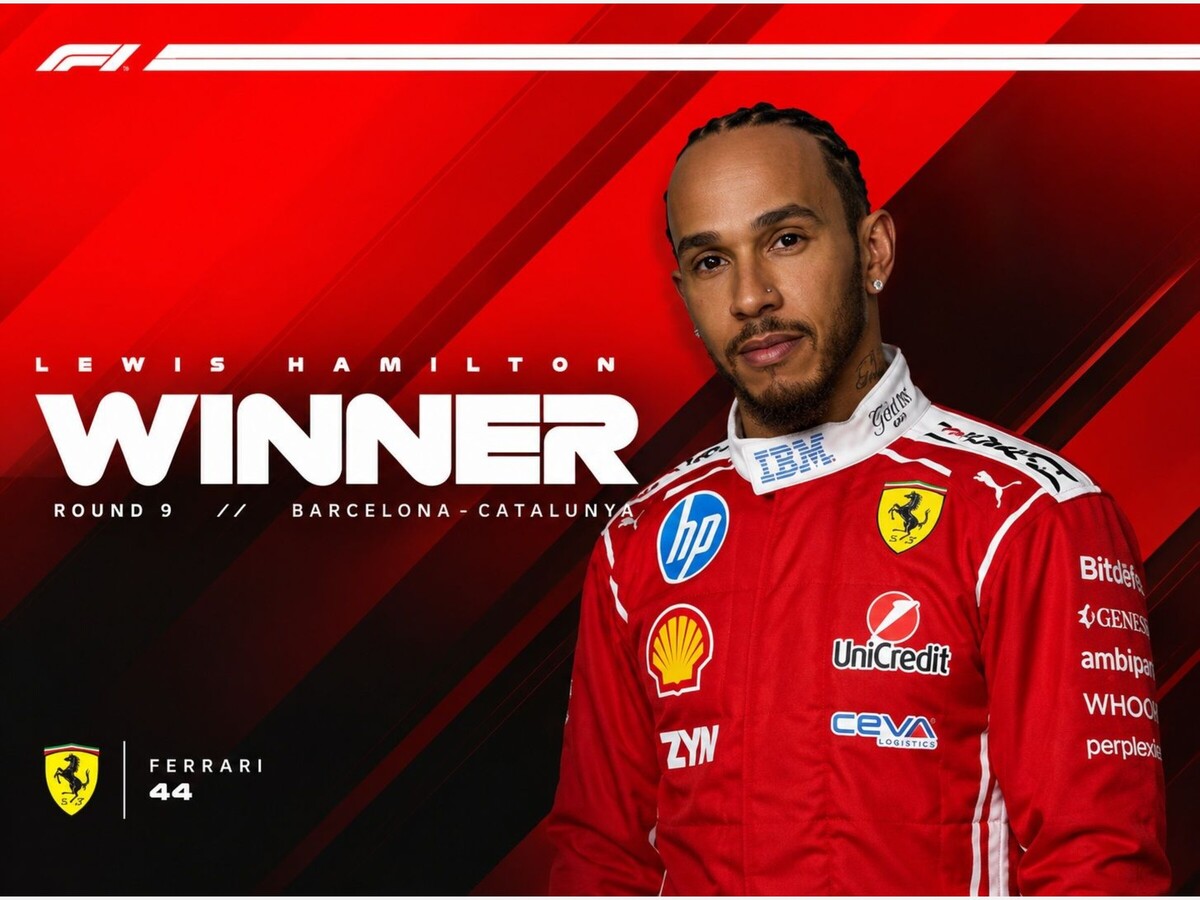



When Hamilton climbed out of his Ferrari SF-26 after securing that historic first triumph in the prancing horse colors, the atmosphere in the pit lane felt distinct. The raw statistics alone could not capture the gravity of the moment. This was not the first victory of his career, nor was it his first championship-defining performance or his introduction to global superstardom. Having already achieved those milestones, this specific moment resonated with millions globally because it delivered something numbers cannot measure: absolute vindication. It was vindication that followed intense disappointment, public criticism, and years of persistent questioning over whether one of the greatest drivers in motorsport history could ever return to the summit.
For some observers, the afternoon was a remarkable sporting achievement, but for others, it felt deeply personal. I count myself among the latter. My own journey into Formula One began entirely because of Lewis Hamilton. I was not drawn to the sport by the allure of Ferrari, complex team strategies, aerodynamics, tire compounds, or shifting technical regulations. I arrived because I saw a man competing in one of the world's most exclusive, closed-off arenas who looked like me. While that reality does not encompass the entirety of Hamilton's importance, it directly explains why his trajectory connects with people completely detached from racing. To understand why this particular breakthrough mattered so deeply, one must trace the long road that led back to Stevenage, England.
Sports history frequently glosses over the realities of greatness, making a legendary career appear retroactively inevitable. The truth is rarely so simple. Born on January 7, 1985, in a town north of London, Lewis Carl Davidson Hamilton was once just a local child fascinated by speed, long before the arrival of world titles, corporate sponsorships, and global celebrity. What separated him from countless other children with similar passions was not merely raw talent, but an extraordinary combination of opportunity and familial sacrifice.
Motorsport remains one of the most financially prohibitive pathways in modern athletics. A young basketball player requires only a ball; a soccer player needs a field; a runner demands only open space and determination. By contrast, an aspiring racing driver requires heavy equipment, reliable transportation, constant mechanical maintenance, entry fees, and extensive travel support. Because these financial barriers emerge at the karting level, many promising drivers are forced to walk away before ever progressing to regional ranks.
Anthony Hamilton understood this stark reality. To keep his son’s ambitions alive, he famously worked multiple jobs simultaneously. While these efforts have become a permanent fixture in Formula One folklore, there was nothing glamorous about the daily grind. It was a story of pure commitment: a father betting heavily on raw potential long before the rest of the world could see it. Every championship and victory that followed carried the distinct imprint of those early family sacrifices.
One of the least discussed aspects of top-tier motorsport is how restrictive its entry pathways have historically been. While the sport celebrates global competition, its developmental pipelines have traditionally favored substantial wealth, specific geographic hubs, and institutional access. For decades, participation at the highest levels remained entirely out of reach for marginalized communities worldwide. Hamilton's swift rise exposed those structural dynamics, not because he intended to become a social icon, but because his very presence challenged status quo assumptions. His success forced the paddock to confront systemic questions it had long avoided regarding representation within the driver ranks, engineering departments, and executive leadership.
His journey was defined by an early, unwavering self-belief. In a well-documented moment from his childhood, a young Hamilton approached McLaren team boss Ron Dennis at an awards ceremony, introduced himself, and confidently stated that he would drive for the team one day. He imagined a specific future before any tangible proof existed. Years later, he converted that declaration into reality, signing with McLaren and launching an extraordinary rookie campaign in 2007. While rookies are typically expected to spend their initial seasons learning the nuances of the grid, Hamilton competed immediately, challenging established champions with a composure that redefined what was possible for a newcomer.
That spectacular introduction set the stage for the dramatic conclusion of the 2008 season in Brazil. Entering the final round with the title within reach, Hamilton endured a chaotic, rain-slicked race where the world championship appeared to slip away and return with every passing lap. His final-lap, decisive overtake to secure his first world title carried immense sporting and cultural weight. He became the sport's first Black world champion, an achievement celebrated because he had proven himself to be the absolute best driver on the grid. For millions of viewers worldwide, that championship fundamentally expanded the boundaries of athletic possibility.
History places a unique, heavy burden on pioneers, as athletes who break deep-seated barriers frequently discover they are expected to represent an entire demographic rather than just themselves. Navigating this reality required a delicate balance throughout Hamilton's career. He had to maintain the razor-sharp focus of an elite competitor while managing his evolution into a global cultural symbol. Over time, rather than deflecting that responsibility, he chose to lean into it.
This commitment evolved past simple public statements in 2020 with the launch of the Hamilton Commission, a collaborative research initiative with the Royal Academy of Engineering. The objective was highly practical: identify the specific socioeconomic and institutional barriers limiting Black participation within British motorsport and engineering pipelines, and propose actionable solutions. By focusing heavily on data and structural access rather than mere corporate awareness, the initiative mirrored the broader pattern of Hamilton’s career. He increasingly directed his hard-earned capital toward creating permanent pipelines for future generations, understanding that while championships define individual seasons, structural adjustments can influence decades.
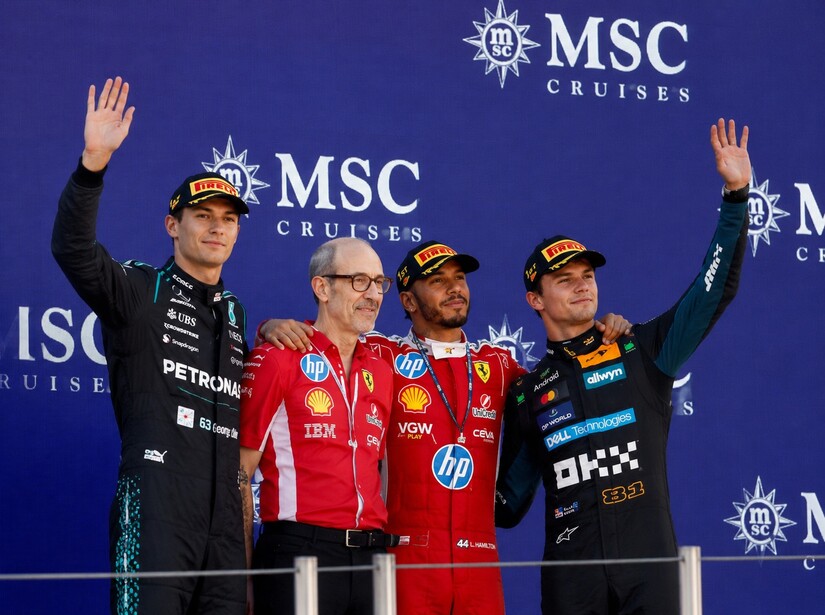
Hamilton's subsequent move from McLaren to Mercedes was met with widespread media skepticism. At the time, McLaren was the established, predictable frontrunner, while Mercedes was still finding its footing as a works team. However, that transition became one of the most consequential decisions in modern sports history, sparking an era of unprecedented dominance. Beginning in 2014, driver and team constructed a historic dynasty that drew natural comparisons to Michael Jordan's Bulls or the New England Patriots.
Sustained dominance requires robust organizational systems alongside individual talent, and together they re-engineered the standards of the sport. By the time that partnership began to run its course, Hamilton had equaled Michael Schumacher’s record of seven world titles and surpassed his total Grand Prix victory count, turning numbers that once seemed completely untouchable into reality.
Yet, every great sporting career contains definitive heartbreak. For Hamilton, that moment arrived at the 2021 Abu Dhabi finale. The intense, season-long championship battle with Max Verstappen ended under highly controversial regulatory circumstances on the final lap, instantly stripping Hamilton of an unprecedented eighth world title. The profound public silence that followed sparked intense retirement rumors, leaving many supporters fearing that the final chapter of a legendary career had been written in the worst possible manner. Ending a historic journey on a note of administrative chaos felt fundamentally wrong to those who had followed him from the beginning. We hoped for another chapter, and Hamilton eventually chose to write one.
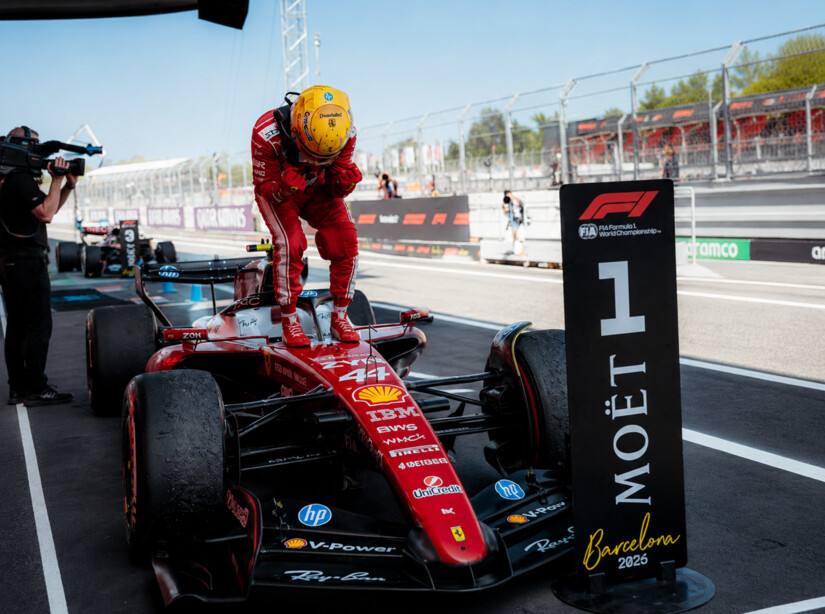
To truly comprehend Hamilton's late-career move to Ferrari, one must understand that the Scuderia is not merely a racing team; it operates as an institution of pure sporting mythology and immense internal pressure. Champions have been broken by the sheer weight of expectation that comes with wearing Maranello red. Hamilton’s decision to leave the relative comfort of his established environment surprised many, yet it aligned perfectly with the instincts of a competitor who prioritizes meaning over comfort. Ferrari represented the final major peak to climb.
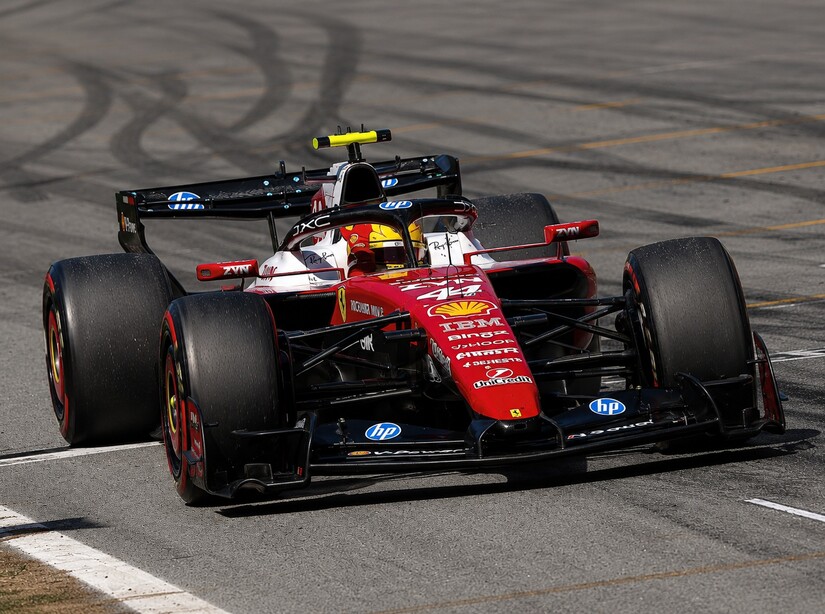
The transition, however, proved exceptionally difficult. Initial victories did not materialize, critics openly questioned whether his best years were behind him at age 41, and constant media speculation created a steady background of doubt. That long, grueling 40-race winless drought only magnified the eventual breakthrough on a blistering afternoon in Barcelona.
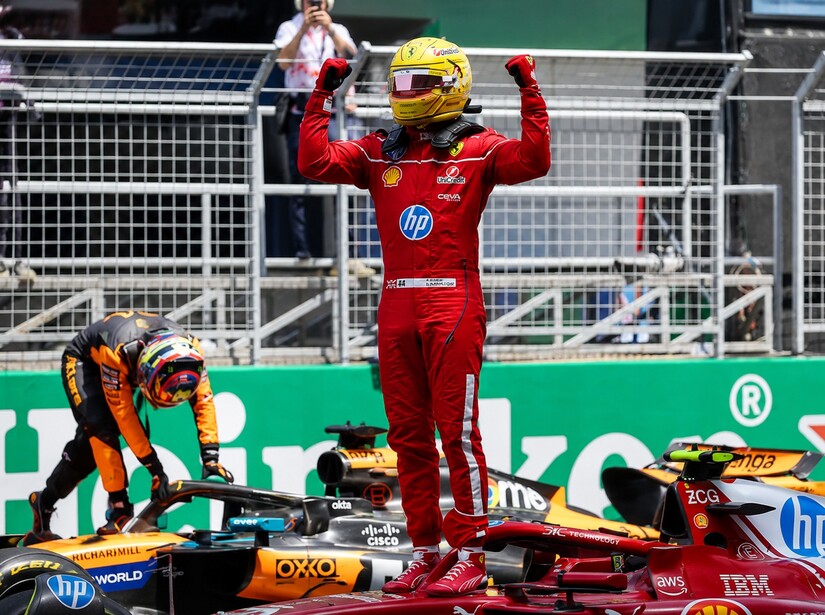
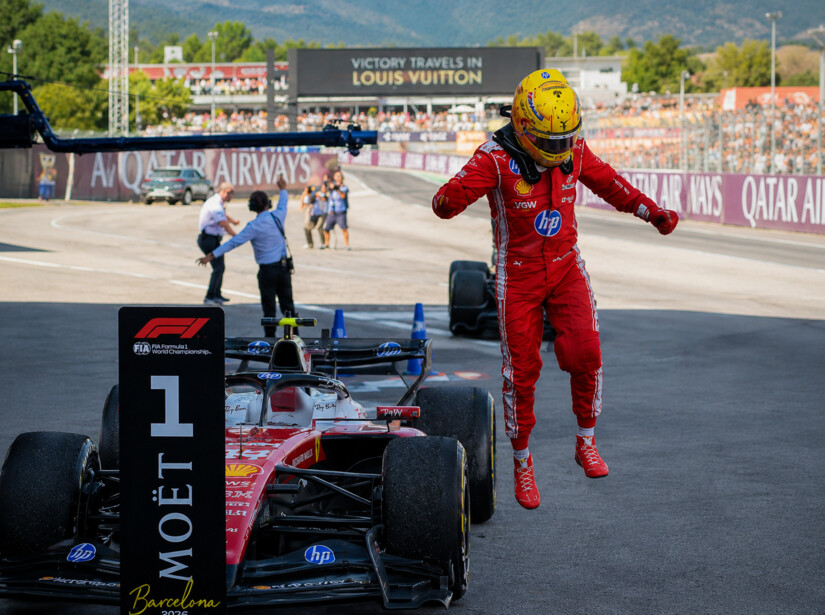
Faced with track temperatures exceeding 50°C, Hamilton and the Ferrari pit wall executed an audacious, high-stakes three-stop strategy with flawless technical precision. When the checkered flag fell, Hamilton crossed the finish line a commanding 19 seconds clear of the field, completely silencing any lingering debate. The image of him shedding years of frustration and leaping directly into a sea of ecstatic mechanics dressed in Ferrari crimson was the visual definition of vindication. It was an enduring reminder that certain achievements gain their deepest meaning precisely because they require immense endurance to attain.
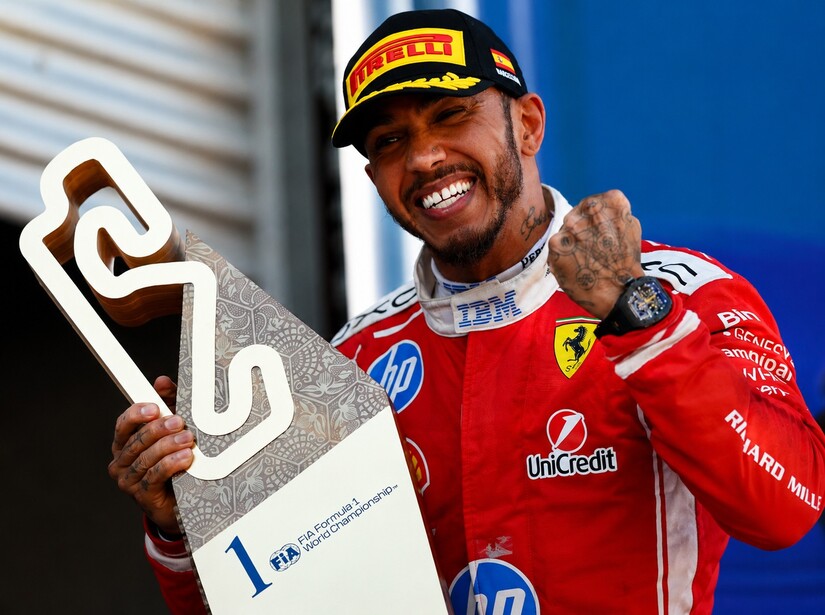
Ultimately, history rarely remembers the most influential athletes solely through their statistical resumes. Figures like Muhammad Ali, Jackie Robinson, Arthur Ashe, and Tiger Woods are preserved in the cultural archive because their athletic dominance intersected directly with broader societal shifts. Hamilton increasingly occupies that exact space. Future generations will easily find his championships, pole positions, and trophies in the digital records. What those numbers will never fully communicate is the human soul of the journey: the belief of a father who defied structural obstacles, the imagination of a young boy from Stevenage, and the loyalty of a global audience that stayed through the heartbreaks, the silences, and the long road back.
MinneapoliMedia | Community. Culture. Civic Life.



Sunny, with a high of 97 and low of 66 degrees. Sunny in the morning, clear for the afternoon and evening,