70° and Clear
Image
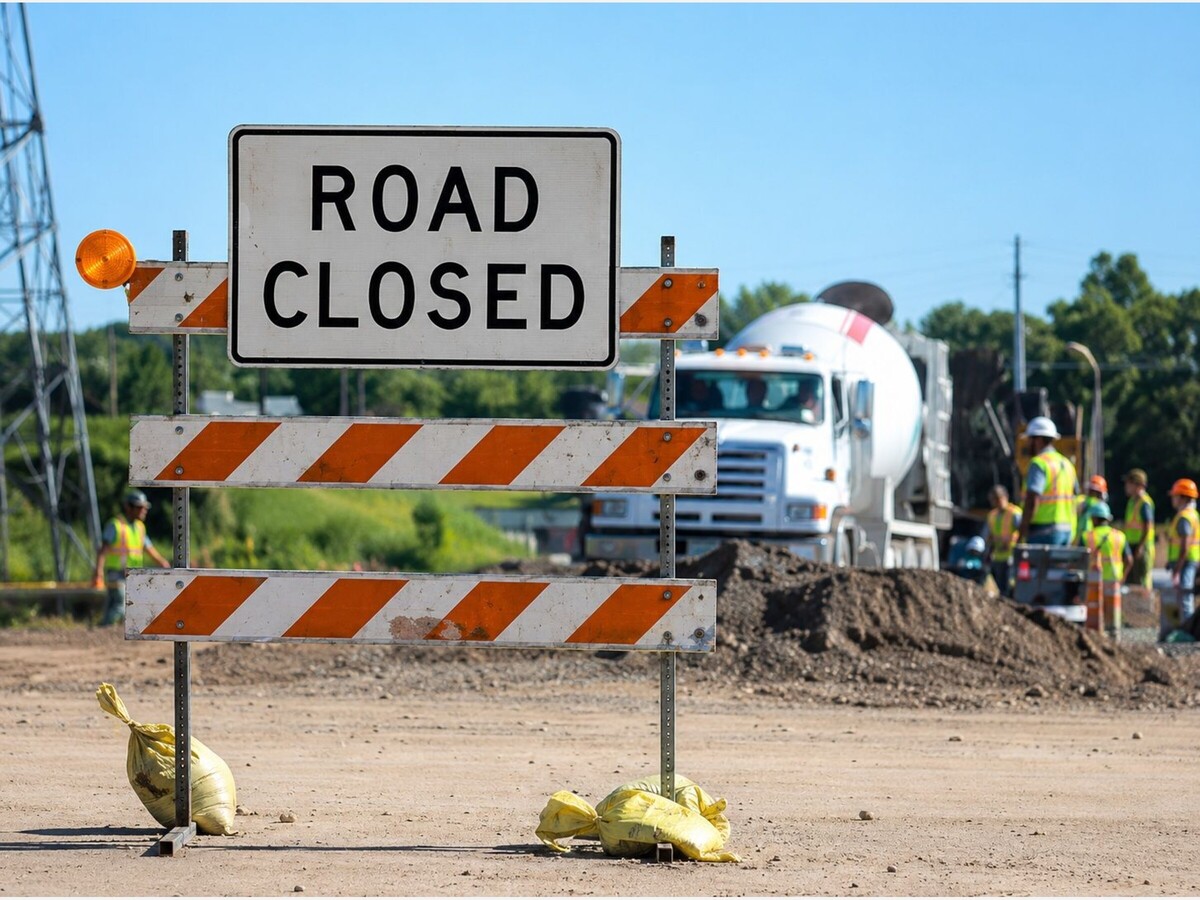



Interchange Reconstruction Along I-35E and Ongoing County Road 10 Rehabilitation Bring Significant Traffic Changes as Regional Growth Pressures Mount
Across Anoka County, major roadway projects are now underway simultaneously, with construction crews rebuilding critical intersections, replacing bridges, improving freeway access, resurfacing heavily traveled highways, and expanding infrastructure for pedestrians and cyclists.
Among the largest of those investments is the reconstruction of the County Road J and Interstate 35E interchange, a multi-jurisdictional project that transportation officials describe as essential to the future movement of people and commerce throughout the northeastern Twin Cities metropolitan area.
Led by Ramsey County in partnership with the Minnesota Department of Transportation (MnDOT), Anoka County, White Bear Township, the City of North Oaks, and the City of Lino Lakes, the project addresses longstanding congestion and accessibility issues that have challenged motorists for years.
Transportation planners have warned that those challenges are expected to intensify as residential and commercial development continues throughout the region.
At the heart of the project is a redesign intended to eliminate one of the corridor's most persistent shortcomings: incomplete freeway access.
Currently, motorists face limitations when attempting to enter or exit Interstate 35E from County Road J. The reconstruction project will complete those missing connections by creating new ramps that allow drivers to exit southbound I-35E onto County Road J and enter northbound I-35E directly from County Road J.
Officials say the improvements will reduce travel inefficiencies, improve emergency response accessibility, and provide motorists with more direct regional connections.

The project's scope extends well beyond freeway access.
Construction plans call for the complete replacement of the existing bridge spanning Interstate 35E, a structure that transportation officials have identified as approaching the end of its optimal service life.
The replacement bridge is scheduled to open to traffic by mid-September 2026. Demolition of the existing bridge will begin shortly thereafter as crews move into subsequent construction phases.
Elsewhere along the corridor, work continues on newly designed roundabouts intended to improve traffic flow and reduce conflict points. Construction crews are actively pouring concrete curbs and truck aprons at both the eastern and western roundabout locations.
Officials say the redesigned intersections are expected to improve safety while reducing long-term maintenance costs compared with traditional signalized intersections.
The project also reflects a broader shift in transportation planning priorities.
Rather than focusing exclusively on vehicle traffic, engineers are incorporating multimodal infrastructure designed to accommodate a wider range of users.
New separated trails, bicycle facilities, and pedestrian connections are being constructed along the County Road J corridor, also known locally as Ash Street. The improvements are intended to provide safer travel options for residents who walk or bike between neighborhoods, parks, schools, and commercial destinations.
Environmental upgrades are likewise a significant component of the project.
New stormwater management ponds and upgraded storm sewer infrastructure are being installed throughout the corridor to capture roadway runoff, improve water quality, and reduce localized flooding concerns. Such systems have become increasingly important as transportation agencies face growing regulatory and environmental requirements regarding watershed protection.
The extensive reconstruction effort is producing substantial traffic impacts.
County officials report that 20th Avenue South remains fully closed at County Road J and is expected to remain closed through Sept. 3 as crews integrate new roundabout infrastructure into the surrounding roadway network.
Additional disruptions are on the horizon.
Beginning July 6, Otter Lake Road will close at County Road J for approximately 45 days, allowing contractors to complete another phase of corridor reconstruction.
While the County Road J project represents a long-term transformation effort, drivers are also encountering immediate disruptions farther west along County Highway 10.
Anoka County, working in partnership with the City of Spring Lake Park, is advancing a significant pavement rehabilitation project stretching from Able Street eastward to the county line near Pleasant View Drive.
The corridor serves as one of the region's primary east-west transportation routes, carrying substantial commuter traffic daily.
According to county engineers, the project involves more than routine resurfacing.
Contractors are performing comprehensive bituminous pavement rehabilitation while removing and replacing deteriorated concrete sections beneath portions of the eastbound lanes where deeper structural wear has been identified.
The work is intended to extend the roadway's lifespan, improve ride quality, and reduce future maintenance demands.
The most noticeable impacts are occurring at the intersection of County Road 10 and Pleasant View Drive, where temporary traffic restrictions remain in effect through June 22.
To protect construction crews and maintain a safe work zone, motorists traveling on Pleasant View Drive are prohibited from crossing County Road 10.
Left-turn movements from Pleasant View Drive onto County Road 10 are also blocked.
Meanwhile, through traffic on County Road 10 has been shifted into outside lanes in both directions, creating a narrower work corridor while allowing construction activities to continue.
County officials have repeatedly urged drivers to follow posted detours, obey temporary traffic controls, and allow additional travel time when traveling through active work zones.
Taken together, the County Road J and County Road 10 projects illustrate the scale of transportation investment currently occurring across Anoka County.
They also reflect the increasingly complex challenge facing local governments: maintaining and modernizing infrastructure systems originally designed for smaller populations while accommodating continued residential growth, expanding commercial activity, evolving transportation habits, and heightened environmental standards.
For commuters, the immediate experience may be measured in slower drives, detours, and temporary frustrations.
For transportation planners, however, the work represents decades-long investments intended to improve safety, increase mobility, strengthen regional connectivity, and prepare the county's transportation network for future growth.
The construction may be temporary.
The infrastructure being built is intended to serve the region for generations.
MinneapoliMedia | Community. Culture. Civic Life.


Sunny, with a high of 97 and low of 66 degrees. Sunny in the morning, clear for the afternoon and evening,