70° and Clear
Image



The Anoka County Board of Commissioners has formally endorsed the inclusion of Senate Bill 2309 in a sweeping federal legislative package known as the Take Care of America's Veterans Act, arguing that the measure would eliminate unnecessary bureaucratic delays that often confront families immediately following the death of a veteran.
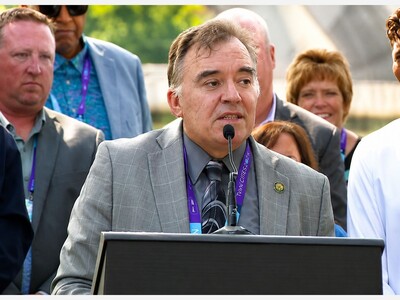
In a statement released by the county, Board Chair Scott Schulte said the legislation would strengthen communication between local authorities and the U.S. Department of Veterans Affairs while helping ensure that surviving spouses and family members are not forced to navigate prolonged administrative obstacles during periods of grief.
At issue is a seemingly simple document that carries enormous consequences: the death certificate.
Without a finalized death certificate, surviving family members may be unable to access veterans benefits, life insurance proceeds, estate settlements, pension adjustments, burial arrangements, and military honors. Delays in obtaining those documents can leave families waiting weeks for assistance while critical financial and legal matters remain unresolved.
Supporters of S. 2309 say those delays occur more frequently than many Americans realize.
The legislation, formally known as the Veteran Burial Timeliness and Death Certificate Accountability Act, seeks to address a recurring administrative bottleneck involving veterans who die outside federal facilities, including private residences, nursing homes, assisted-living centers, and local hospitals.
According to congressional sponsors, families in some cases have experienced waits stretching several weeks before death certificates were completed, delaying access to benefits and creating additional hardships at one of the most difficult moments in a family's life.
Under the legislation, a Department of Veterans Affairs physician or nurse practitioner serving as a veteran's primary care provider would be required to certify and sign a death certificate within two business days after receiving notification of the veteran's death.
The proposal also includes safeguards designed to prevent cases from stalling when a primary provider is unavailable.
If the designated VA clinician cannot complete the certification, the legislation authorizes another qualified medical professional, supervising clinician, or local medical examiner to perform the task, ensuring that paperwork does not languish while families wait.
The bill further requires the Department of Veterans Affairs to modernize its information technology systems to monitor compliance with the new timelines and produce annual reports to Congress identifying where delays continue to occur and why.
Supporters describe the reporting requirement as one of the legislation's most important accountability mechanisms.
Rather than simply imposing deadlines, lawmakers are attempting to create a system that tracks performance, identifies weaknesses, and compels corrective action when deadlines are repeatedly missed.
For county officials, the issue is more than a federal administrative matter.
When a veteran dies in Anoka County, the first interactions often occur not with Washington, D.C., but with local institutions.
County officials, medical examiners, funeral directors, veteran service officers, and local health authorities frequently become the first point of contact for surviving families.
Those local agencies must then coordinate with the Department of Veterans Affairs to complete documentation and initiate benefits processes.
When communication breaks down, county officials say, the consequences are felt locally.
Families are left waiting.
Benefits remain inaccessible.
Records become outdated.
In some instances, federal payments may continue after a veteran's death because notification systems have not been updated in a timely manner, creating overpayments that survivors later must resolve.
County leaders argue that S. 2309 directly addresses that communication gap by establishing clearer responsibilities and faster reporting requirements between local jurisdictions and the federal government.
The proposal has been incorporated into the Take Care of America's Veterans Act, a comprehensive veterans package introduced by Senate Veterans' Affairs Committee Chairman Jerry Moran of Kansas and House Veterans' Affairs Committee Chairman Mike Bost of Illinois.
Spanning more than 500 pages, the omnibus legislation combines over 60 bipartisan veterans-related measures into a single package addressing health care access, benefits administration, caregiver support, housing assistance, workforce development, mental health services, and accountability reforms throughout the Department of Veterans Affairs.
By incorporating S. 2309 into the broader package, lawmakers increase the likelihood that the reforms will advance through Congress as part of a larger veterans initiative rather than as a standalone measure.
For Anoka County commissioners, however, the significance of the legislation extends beyond legislative strategy.
At its core, they say, the bill is about dignity.
It is about ensuring that surviving spouses are not forced to spend weeks chasing paperwork while arranging funerals.
It is about allowing military honors and burial services to proceed without avoidable delays.
And it is about making certain that families who have already sacrificed through military service receive timely assistance when they need it most.
In endorsing the legislation, county officials framed the proposal as a practical reform rather than a partisan issue, one aimed at making government function more effectively for veterans and their families.
If enacted, S. 2309 would establish some of the clearest federal timelines ever imposed on the death certification process for veterans, creating a system intended to move families more quickly from bureaucratic uncertainty toward the benefits, services, and support they have earned through a loved one's service to the nation.
For grieving families, supporters argue, that difference could mean far more than administrative efficiency.
It could mean one less battle to fight.
MinneapoliMedia | Community. Culture. Civic Life.



Sunny, with a high of 97 and low of 66 degrees. Sunny in the morning, clear for the afternoon and evening,