Image
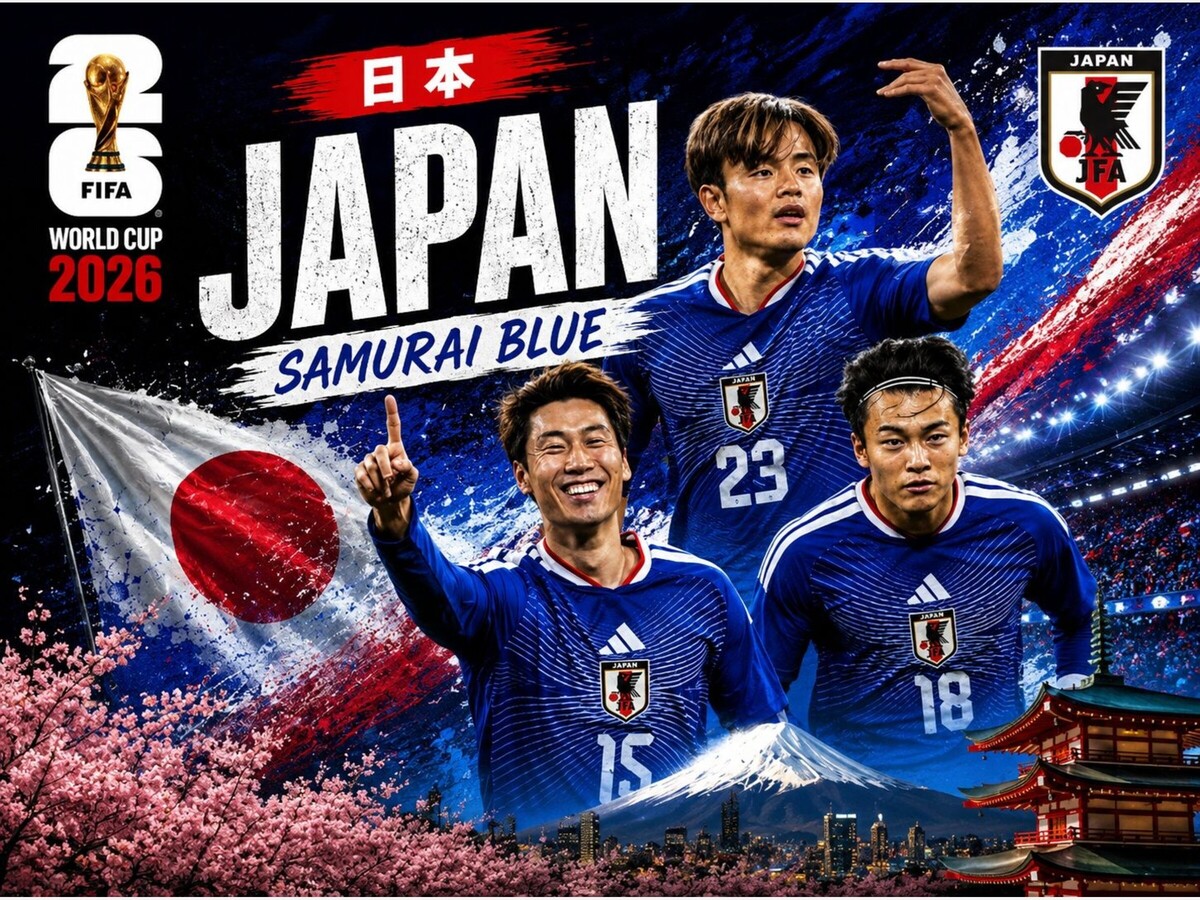



DALLAS, Texas As the 2026 FIFA World Cup enters the decisive stages of the group phase, few national teams have attracted as much admiration from neutral supporters around the world as Japan. Known universally by its nickname, Samurai Blue, the Japan Men's National Football Team has become one of the tournament's most compelling stories. This is not because of a single breakout superstar or a sudden stroke of tournament luck, but rather due to a decades-long transformation that has steadily elevated the country from a peripheral football nation into one of the most respected programs in the global game.
For many casual observers, Japan's prominence appears relatively recent. The victories over Germany and Spain during the 2022 FIFA World Cup in Qatar introduced millions of viewers to a team capable of systematically dismantling traditional football powers. Yet those results were never isolated upsets; they represented the continuation of a national project unfolding for more than three decades. The masterclass performances seen during this 2026 campaign, highlighted by a thrilling 2-2 draw against the Netherlands in Arlington and a clinical 4-0 shutout of Tunisia in Monterrey, are deeply rooted in years of deliberate investment. Japan has engineered an ecosystem of elite youth development, professional infrastructure, rigorous coaching education, and a collective culture emphasizing discipline and technical excellence.
Japan's current campaign illustrates exactly how far the nation has traveled. Entering the tournament as the first country to solidify its place through the Asian confederation's qualification process, the Japanese arrived in North America carrying expectations unlike any previous World Cup squad in the country's history. No longer viewed as ambitious outsiders hoping to catch a giant sleeping, they entered the competition as a legitimate contender capable of advancing deep into the knockout rounds. That evolution represents one of the most significant success stories in modern international sport.
The nickname "Samurai Blue" has become inseparable from Japan's football identity, but its origins are far more recent than many realize. The term was officially adopted by the Japan Football Association in 2006 following a national campaign that invited supporters to help select a moniker for the national team ahead of that year's World Cup in Germany. The winning choice connected two powerful symbols: the word "samurai" evoked Japan's historic warrior tradition (emphasizing discipline, honor, resilience, and absolute commitment), while the word "blue" reflected the color that had defined the national team for generations.
Contrary to popular belief, the team's blue uniforms were not originally selected to mimic the samurai tradition. Historical records trace the color's adoption to the early twentieth century. During the 1930 Far Eastern Championship Games hosted in Tokyo, a team representing Imperial University competed in blue jerseys and captured the title. Several years later, Japan wore blue again during its remarkable victory over Sweden at the 1936 Berlin Olympics, a result often described as one of the greatest upsets in early international football history.
As the story is commonly told within Japanese football circles, the success achieved while wearing blue created a lasting association with good fortune. Over time, blue became the permanent color of the national team, eventually evolving into one of the most recognizable uniforms in international sport. Today, the nickname represents more than mere branding. It serves as a reflection of how Japan demands to be perceived on the football field: disciplined, organized, technically proficient, and relentlessly competitive.
Japan's football history differs significantly from that of traditional powers such as Brazil, Argentina, Germany, Italy, or England. For much of the twentieth century, baseball occupied a dominant position within Japanese sports culture. Football certainly existed, but it lacked the professional infrastructure and national prominence necessary to compete consistently at the highest international levels.
The turning point arrived in the early 1990s. In 1993, the launch of the professional J.League fundamentally changed the trajectory of Japanese football. The new league provided an immediate platform for domestic talent, attracted premium foreign players and coaches, and helped establish football as a mainstream sport capable of inspiring future generations.
The creation of the league coincided with broader strategic planning by the Japan Football Association. Officials understood that sustainable success would require far more than a professional competition; it required a complete ecosystem. This meant building out youth academies, coaching education programs, scouting networks, sports science investments, and clear pathways from youth football to the professional ranks.
The results emerged gradually but clearly. Japan qualified for its first FIFA World Cup in 1998. Four years later, while co-hosting the 2002 tournament alongside South Korea, the country advanced beyond the group stage for the first time. Additional Round of 16 appearances followed in 2010, 2018, and 2022.
Each tournament revealed incremental progress. The nation's technical standards improved, domestic academies began producing more sophisticated and tactically intelligent footballers, and players increasingly secured high-profile transfers to European clubs. By the beginning of the 2020s, Japan had become the dominant force within Asian football, and the 2026 squad represents the absolute culmination of that development cycle.
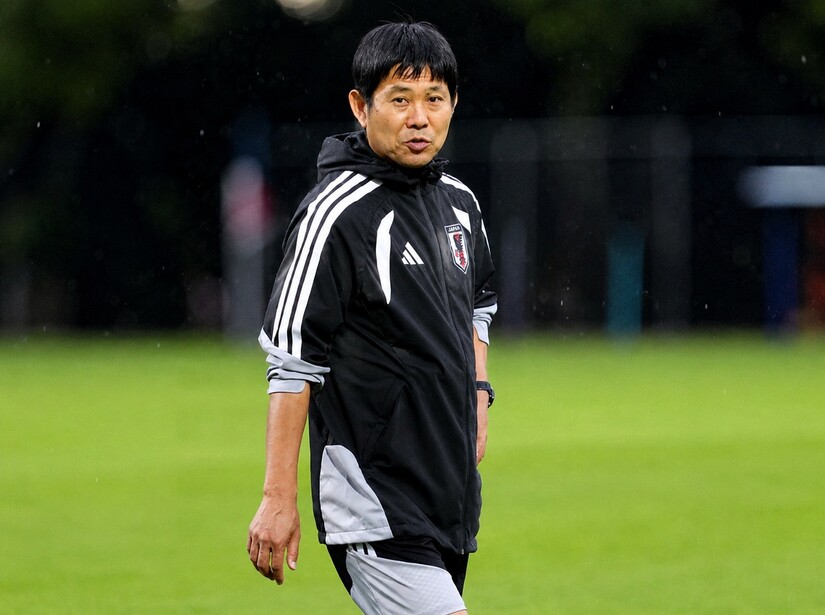
Much of Japan's recent success is tied directly to the leadership of manager Hajime Moriyasu. A former international player himself, Moriyasu assumed control of the national team in 2018 and has overseen one of the most successful periods in the country's football history.
His coaching philosophy reflects the core characteristics associated with Japanese football culture. Organization is prioritized, tactical discipline is non-negotiable, and players are expected to seamlessly adapt to changing match situations. Individual brilliance is welcomed, but it must always serve the broader structure of the team.
The approach has proven remarkably effective. At the 2022 World Cup, Japan defeated both Germany and Spain despite entering those matches as heavy underdogs. Those victories were not the result of defensive desperation or extraordinary luck; they were achieved through detailed preparation, disciplined execution, and an ability to exploit structural weaknesses within elite opponents.
Moriyasu has continued refining that formula throughout the current World Cup cycle. The modern Japanese side can defend compactly when necessary, but it can also dominate possession, press aggressively, and transition rapidly into attack. This immense tactical flexibility has made the team incredibly difficult to prepare for and even more difficult to defeat.
Perhaps the most significant difference between the Japan of previous decades and the Japan competing in 2026 is the profile of its players. Historically, Japanese footballers were admired for their technical quality and work ethic, but they were often perceived as lacking the physical attributes found among elite European and South American squads.
That perception no longer reflects reality. Today's Japanese squad features core players competing regularly in the strongest leagues in the world, and their experience against top-level opposition has accelerated both individual development and collective confidence.
Among the most recognizable figures is Takefusa Kubo, whose creativity and technical skill have made him one of the most influential attacking players in global football. Developed within elite youth systems and refined through intense competition in Spain, Kubo embodies the increasingly global nature of Japanese football.
Forward Ayase Ueda has emerged as another central figure. Combining brilliant off-the-ball movement, clinical finishing ability, and a commanding physical presence, he provides the kind of attacking focal point that previous Japanese teams sometimes lacked. Midfielder Daichi Kamada brings intelligence, versatility, and composure in possession. His ability to arrive in dangerous areas and influence games from multiple positions (exemplified by his clutch goal against the Netherlands) has made him a critical component of Moriyasu's system. Defensively, players such as Takehiro Tomiyasu and Ko Itakura provide immense experience and stability against elite attackers. Together, these players represent a generation that has grown up expecting to compete internationally rather than merely participate.
One reason analysts consistently praise Japan is that the team rarely depends on individual moments. Many national teams experience dramatic fluctuations based on the availability or form of a few star players. Japan, by contrast, has developed a system that remains entirely functional regardless of personnel changes.
This structural consistency was tested during the 2026 World Cup when captain Wataru Endo suffered an injury that removed one of the squad's most influential leaders from the lineup. For many countries, losing a captain of Endo's stature would trigger significant instability. Instead, Japan adapted. Itakura assumed greater leadership responsibilities, midfielders adjusted their positioning, defensive responsibilities were redistributed, and the collective system continued operating effectively. This capacity to absorb adversity reflects years of preparation and a culture that prioritizes team function over individual prominence.
While discussions of modern football often focus on attacking flair, Japan's success is equally dependent on defensive organization. The team's defensive approach is not built around reckless challenges or physical intimidation; instead, it emphasizes positioning, anticipation, and collective movement.
When opponents attempt to attack through central areas, Japanese midfielders frequently close passing lanes before danger develops. Defenders maintain compact spacing that limits opportunities between lines, while fullbacks and wingbacks track runners with remarkable consistency. The result is a defensive unit that often appears calm even under sustained pressure.
Goalkeeper Zion Suzuki has emerged as one of the tournament's breakout performers. At a position where Japan historically struggled to match the physical profile of elite international teams, Suzuki represents a significant evolution. His height, athleticism, and comfort with the ball at his feet provide Japan with capabilities rarely seen in previous generations. His stellar performances during the group stage have reinforced the growing belief that Japan now possesses elite strength throughout the entire roster.
One of the most intriguing aspects of Japan's rise is the extent to which neutral supporters have embraced the team. Part of that admiration stems from style: Japan generally plays attractive football characterized by quick passing, intelligent movement, and technical precision.
Part of it stems from conduct. Japanese players have earned an exemplary reputation for professionalism both on and off the field. Supporters frequently attract international praise for cleaning stadium sections after matches, while players and coaches consistently demonstrate profound respect toward opponents, officials, and tournament organizers.
Yet perhaps the strongest source of admiration is the sense that Japan represents what many football fans value most: a team that maximizes its potential through preparation, discipline, and collective effort. In an era increasingly dominated by commercial narratives and superstar branding, Japan offers a reminder that organization and teamwork remain powerful competitive advantages.
Japan's success carries implications that extend far beyond national boundaries. For decades, conversations about global football were overwhelmingly centered on Europe and South America. Asian teams occasionally produced memorable performances, but deep World Cup runs remained rare.
Japan has played a central role in changing those perceptions. Alongside nations such as South Korea, Australia, Saudi Arabia, and Iran, Japan has helped elevate the standard of football across the Asian Football Confederation. However, among those nations, Japan has established itself as the region's absolute benchmark.
Its development model is now studied by federations around the world. The emphasis on grassroots participation, youth coaching standards, long-term planning, and technical development provides a framework that many emerging football nations seek to emulate. A breakthrough into the World Cup quarterfinals would not simply represent a Japanese achievement; it would also serve as a monumental milestone for Asian football as a whole.
Despite its undeniable progress, one challenge continues to define Japan's World Cup history: the nation has never advanced beyond the Round of 16.
The near misses are well documented. In 2018, Japan held a two-goal lead against Belgium before ultimately losing in dramatic fashion. In 2022, the team pushed Croatia to a penalty shootout before being eliminated. Those defeats remain painful memories within Japanese football, but they also provide immense motivation.
The current generation understands that advancing to the quarterfinals would represent a historic achievement. It would validate years of institutional development and confirm Japan's arrival among the sport's elite competitors. Importantly, that objective no longer appears unrealistic. The quality of the squad, the experience of the players, and the tactical sophistication of the coaching staff have created genuine optimism across the country.
The most revealing measure of Japan's progress may be how opponents now view the team. For much of its World Cup history, Japan entered major tournaments hoping to earn respect. That is no longer the case.
Today, traditional powers prepare specifically for Japan's strengths. Coaches devote significant attention to the team's tactical flexibility, and elite opponents speak openly about the challenges posed by Japan's pressing, movement, and organization. The respect has already been earned. The remaining question is whether Japan can transform that respect into a historic tournament breakthrough.
As the 2026 FIFA World Cup continues, Samurai Blue stands at a pivotal moment in the nation's football history. The foundations have been built over decades, the infrastructure exists, and the talent pool is deeper than ever before. The players possess experience at the highest levels of club football, and the coaching staff has demonstrated an ability to compete strategically with the best managers in the world.
Whether this tournament ultimately ends in the Round of 16, the quarterfinals, or beyond, Japan has already secured a place among the most influential success stories in modern football. The rise of Samurai Blue did not happen suddenly; it was planned, cultivated, and sustained through decades of deliberate work. In a sport often captivated by instant results, Japan's journey offers a different lesson: long-term vision, institutional patience, and an unwavering commitment to development can completely reshape a nation's standing in the world's most popular game.
For supporters watching across North America, Europe, Africa, South America, and Asia, that may be the most compelling story of all. The Samurai Blue are no longer attempting to join world football's elite.
They have already arrived.
MinneapoliMedia | Community. Culture. Civic Life.


Overcast, with a high of 59 and low of 49 degrees. Overcast during the morning,