81° and Moderate rain
Image




ST. PAUL, MN (August 10, 2026) Tierra House remembers what it was like to grow up without seeing enough Black women in positions that allowed her to imagine a wider future for herself.
She remembers something else, too: the messages Black girls could absorb about one another before they were old enough to question where those messages came from. House grew up hearing warnings about relationships among Black women. They were messy. There would be drama. Stay away. Do not expect sisterhood.
Years later, after navigating her own difficult path into adulthood, entering education, and beginning to understand more clearly what young Black girls were experiencing inside schools, House arrived at a different conclusion. What if those messages could be interrupted early? What if girls were deliberately taught that another Black girl was not automatically a competitor or a threat? What if they learned instead that sisterhood could be a resource, that women could open doors for one another, that asking for help was not weakness, and that another girl's success did not diminish their own?
That question eventually became part of the foundation for S.H.I.N.E., Sistahs Helping In Neighborhoods Everywhere, the Saint Paul-based organization House now leads as founder and executive director. S.H.I.N.E. describes its mission as empowering underserved girls, helping them reach their potential, and increasing cultural awareness in their communities. Its programming emphasizes growth, health and wellness, community involvement, higher education, and the development of relationships among girls. The organization says it welcomes girls across backgrounds, ethnicities, and educational levels. Public nonprofit records identify Sistas Helping In Neighborhoods Everywhere Inc. as a Saint Paul-based 501(c)(3).
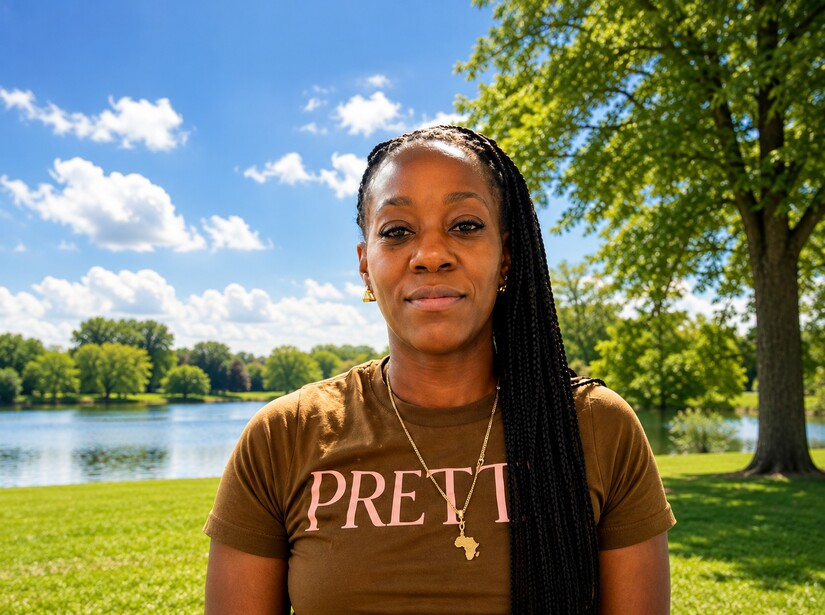
For House, however, the rationale for the organization begins well before incorporation documents, curricula, or program descriptions. It begins with what she lived. “I was once a young girl that didn't see people that looked like me in what I would say successful roles,” House told MinneapoliMedia during an interview for The Power of Her. “I didn't see myself in the people that were teaching me and that was leading in the community.”
House now works professionally in education. Saint Paul Public Schools lists her as an intervention specialist at American Indian Magnet School. During her interview with MinneapoliMedia, she said she has worked in public schools for approximately 13 years, experience that has put her close to students whose needs cannot always be understood through grades, attendance records, or disciplinary reports alone. It has also given her a view of how representation, relationships, and access to information can influence what students believe is possible.
Her own route to that work was not linear. House spoke candidly about being incarcerated in her early twenties, an experience she places within the larger story of how she came to think about women, community, and the cycles that shape lives. She remembered reaching a point when she began wondering what might happen if Black women simply came together and talked honestly about their experiences: being Black women in society, being mothers, building professional lives, navigating relationships, and trying to establish themselves in spaces where they were not always represented.
Those conversations helped expose something House believed began much earlier. Some of the divisions women were trying to overcome as adults had roots in what they had been taught as girls. In 2015, House and other women began meeting. S.H.I.N.E.'s organizational history says it was started that year by three women who believed greater unity among women was necessary for lasting progress. The early effort initially focused on adult women, but its organizers eventually shifted their attention toward girls after concluding that many attitudes carried into adulthood were learned much earlier.
House's own experience reinforced that conclusion. “What if we start young, meeting with girls and planting those seeds of unity, sisterhood and confidence and representation?” she recalled asking. The objective was not to pretend disagreements would disappear or that shared identity automatically produced friendship. It was to challenge the assumption that conflict among Black girls and women was inevitable and to give girls experience building something different. House wanted them to understand that Black and brown women could support one another, create opportunity for one another, and become part of one another's networks.
She had seen that happen in her own life. Some of the opportunities that helped House advance, she said, came because other women saw potential in her and made connections. Those women were not exclusively Black. She recalled women reaching out to tell her about opportunities they believed would suit her. She credits relationships with women with helping her enter the school district and eventually helping S.H.I.N.E. establish a presence in schools.
That includes the relationship that brought House to this MinneapoliMedia series. Mercedes “Mizz Mercedez” Yarbrough, herself previously interviewed for The Power of Her, recommended House and spoke about the importance of her work with girls. House said she and Yarbrough collaborate on community events and remain in regular contact. It is a practical example of the model House wants young women to see operating around them: women recognizing other women, sharing opportunities, and expanding the circle rather than guarding it.
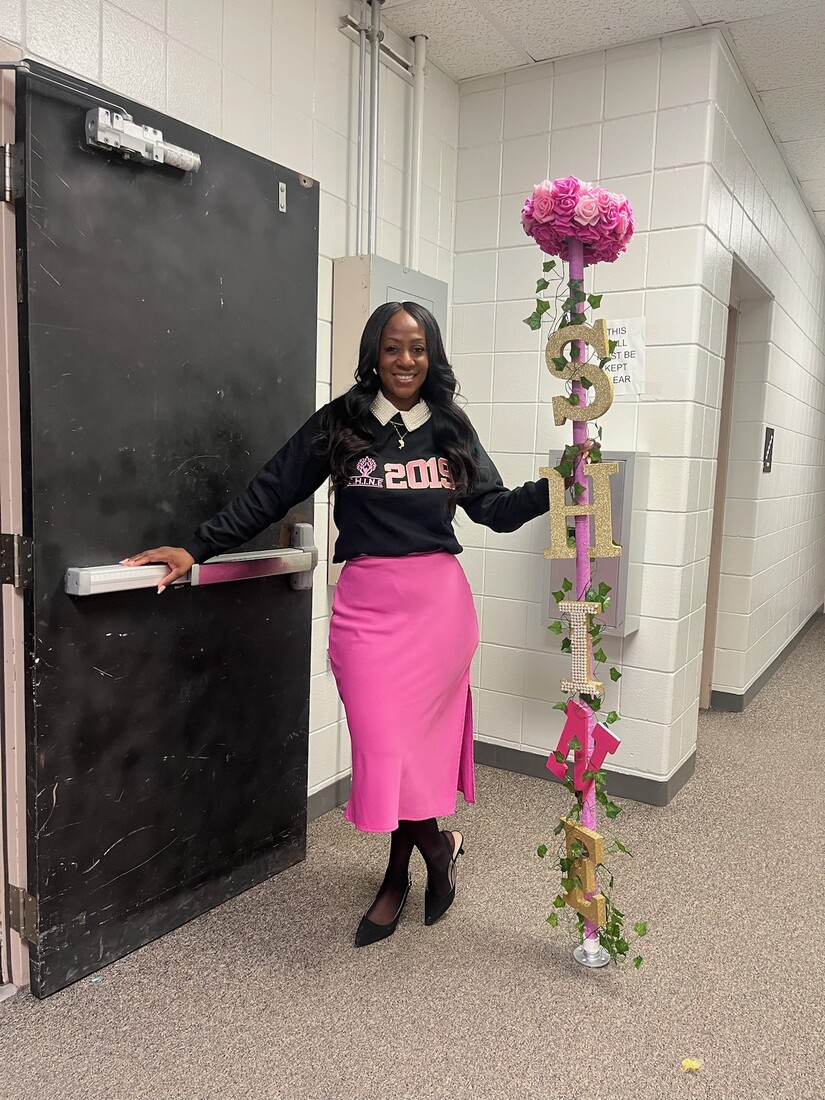
The transition from an idea about sisterhood to direct programming with girls became especially clear for House while working in education. She recalled moving from what she described as a Level 4 special education setting into a mainstream suburban high school outside Saint Paul. She was new to the school and one of relatively few Black women working in its administrative environment.
An assistant principal noticed something quickly: girls were connecting with House. A group of roughly 10 freshman girls had already been meeting with school support staff as part of an effort to help them develop life skills and make the transition from middle school into high school. But the existing sessions were not producing the kind of engagement administrators wanted. House said the girls distrusted the process. They worried that talking openly about their homes or personal lives to school professionals could result in information being used against their families or trigger involvement by child protection authorities. Whether those fears reflected what school staff actually intended was beside the point. The girls did not trust the space enough to speak freely.
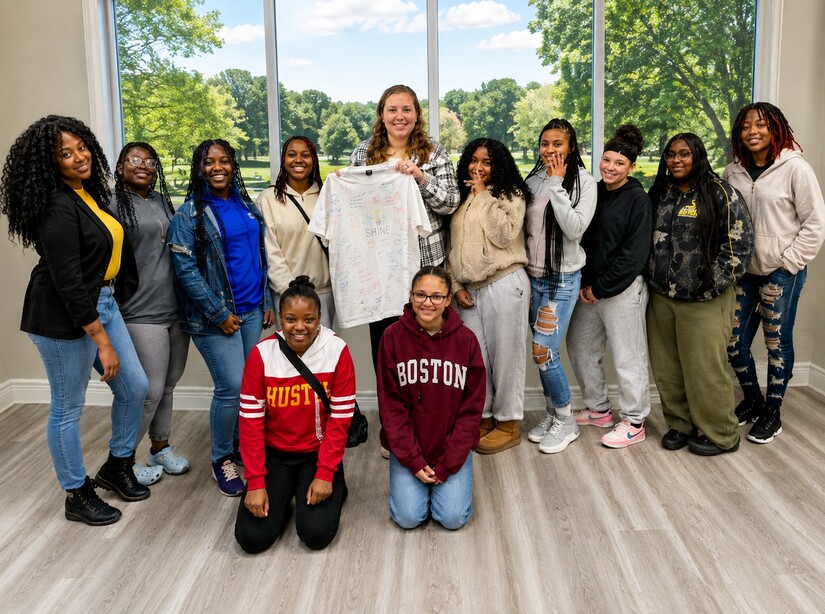
House was asked whether she could work with them, and those girls became her first S.H.I.N.E. group. The experience demonstrated a core belief that continues to shape her approach to mentorship: young people engage when a genuine relationship exists before an adult asks them to disclose what is happening in their lives.
House also began noticing another problem, one less visible than behavioral difficulties. Some Black students were succeeding academically but still lacked information about opportunities that could materially affect their futures. She recalled meeting Black girls with grade-point averages in the 3.0 to 4.0 range who wanted to become nurses, lawyers, and other professionals. Yet some, she said, knew little about Postsecondary Enrollment Options (PSEO), Minnesota's program allowing eligible high school students to take college courses and potentially earn both secondary and college credit tuition-free.
House questioned how students could be performing well academically, expressing ambitions that required higher education, and still not understand pathways already available to them. The issue was not simply whether a program existed. Someone had to build enough of a relationship with students to learn what they wanted. House remembered asking students about their schedules and discovering that some were taking classes with little connection to their stated career goals. Her concern was not with the value of those classes themselves; it was that students who said they wanted particular careers were not necessarily being helped to understand which educational decisions could move them toward those careers.
“You have to build those relationships and get to know our students to figure out what they want to do,” House said.
That distinction is central to S.H.I.N.E. The organization is not designed only for girls already identified as high achievers, nor exclusively for those experiencing the most visible difficulties. House is particularly interested in students she describes as occupying the “middle tier.” In schools, she said, students with significant behavioral problems are noticed because adults must respond to those behaviors, while students involved in athletics and prominent extracurricular activities develop clear identities and connections to their schools.
Another group can remain comparatively invisible. They may not cause trouble, excel in sports, or lead student clubs, but their grades remain steady. House points directly to those students, asking where they fit within the school ecosystem. For some girls, S.H.I.N.E. becomes that place.
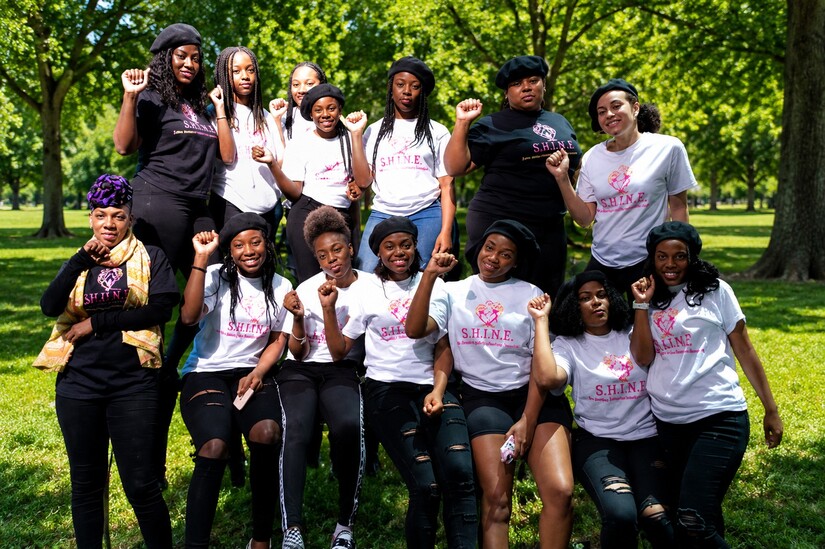
The organization's name grew out of a conversation between House and a close friend she has known since they were 13. House remembered wanting something memorable that could also function as an acronym, and “Shine” felt right. They worked backward from the word, asking what they wanted the organization itself to represent: Sisterhood, Helping, Neighborhoods, and eventually, reach beyond a single neighborhood or city. Sistahs Helping In Neighborhoods Everywhere emerged from those ideas.
The spelling of “Sistahs” varies in some public references to the organization, including “Sistas,” but its central message has remained consistent: girls should understand themselves as part of a larger community of mutual support. House hopes that community will eventually stretch well beyond Minnesota. “We want to create these sisterhoods in neighborhoods everywhere across the globe,” she said, “so that you always have a S.H.I.N.E. sister, no matter where you go.”
S.H.I.N.E.'s published program history describes a six-month curriculum focused on self-awareness, community involvement, and higher education, with topics building from month to month. The organization also says previous participants can remain connected as mentors to girls entering the program. The phrase House uses to summarize that philosophy is simple: “We shine together.”
For House, the “we” matters. The organization is not intended to erase individuality. A girl is expected to develop her own voice, ambitions, and identity. But House rejects the idea that one person must become smaller for another to become more visible. “We all going to shine our light, we all going to have a voice,” she said. “We're all different, but then we're all sisters.”
That philosophy also shapes how House thinks about mentorship. She returns to the familiar idea that raising a child requires a village, but her version of that principle is practical. She asks young people whether they have a trusted adult. Friends matter, but adolescents sometimes need someone outside their peer group who can help them process decisions and think through consequences without immediately taking control of the situation. House remembers being young enough to believe that her mother could not possibly understand what she needed. That memory informs how she approaches girls now. A mentor, in House's view, does not replace a parent; the mentor becomes another trustworthy person on the young person's team. “Any successful person can tell you, you cannot be successful by yourself,” she said. “It takes a team.”
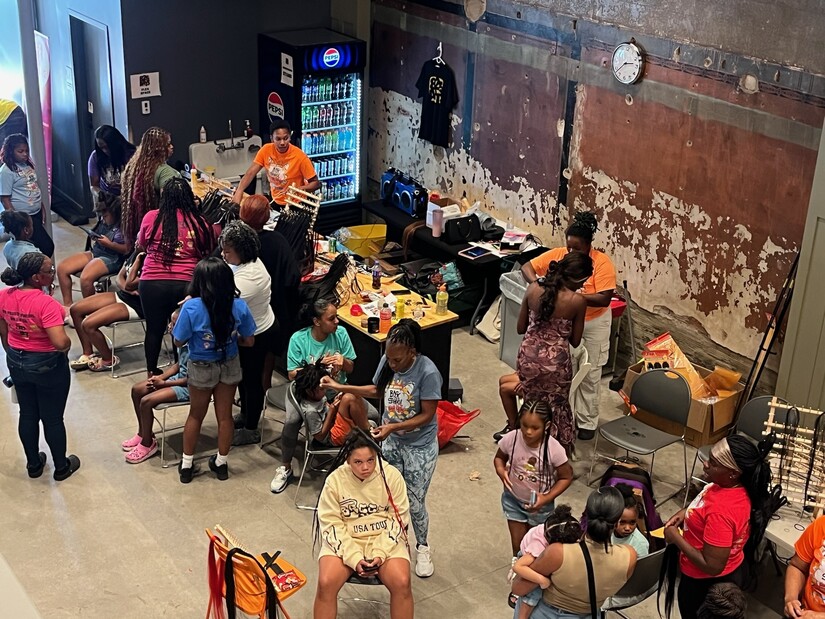
When asked what S.H.I.N.E.'s impact looks like in the life of an individual girl, House did not begin with statistics. She talked about Kamaria Williams. House said Williams was part of one of her early groups and was a student with a strong grade-point average who wanted to pursue higher education but did not initially have a clear understanding of every opportunity available to her. Williams eventually attended Alabama State University, a historically Black university in Montgomery. House said she watched her become involved on campus, develop leadership experience, and continue moving toward a legal career. Williams graduated and, according to House, was preparing for law school in Arizona.
What matters to House is the continuity. A young woman who once needed guidance can return and become part of the support system for girls coming behind her.
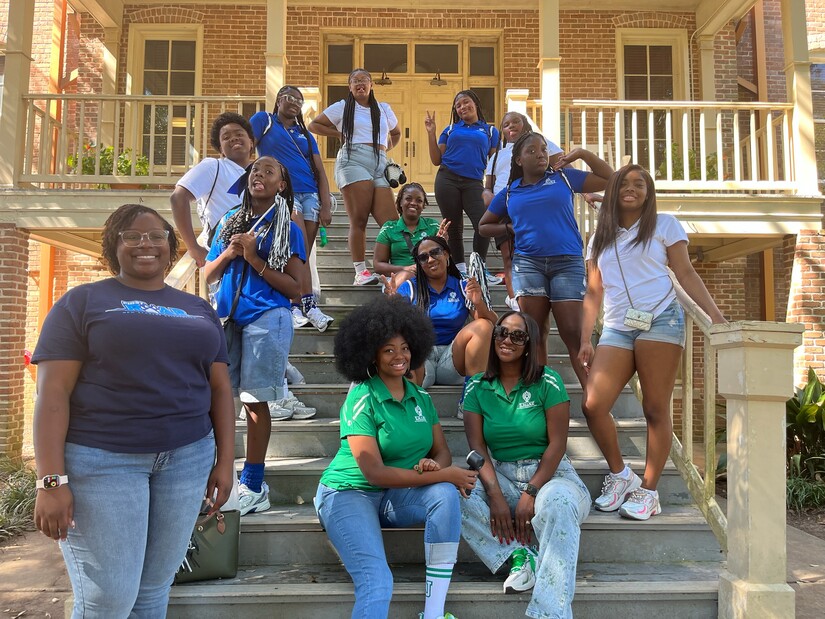
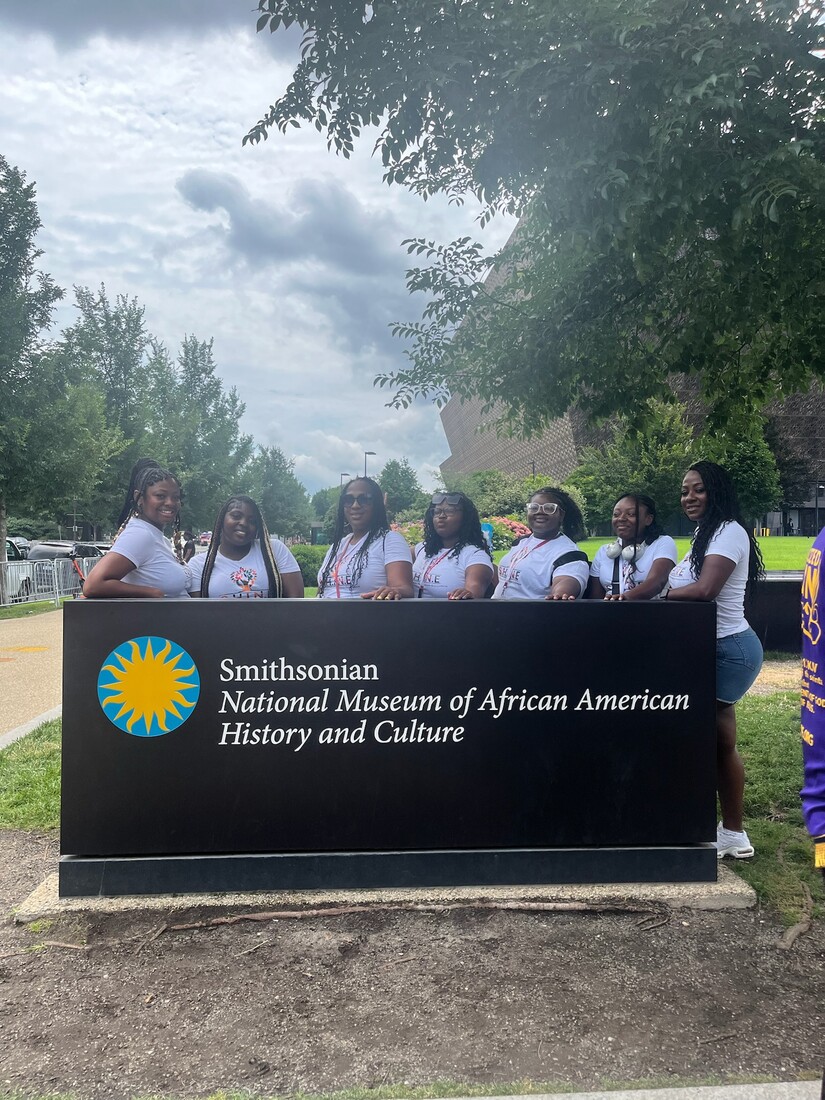
S.H.I.N.E. also organizes HBCU tours, giving girls direct exposure to institutions and environments some may otherwise know only through websites, television, or secondhand accounts. House sees exposure as a way to open possibilities. She remembers traveling to Atlanta herself and being struck by the visibility of successful Black professionals. Growing up, she said, she came from a family of workers and became the first college graduate in her family. The prevailing expectation she remembered was straightforward: pass school and get a job. A career requiring deliberate educational planning was a different proposition. Seeing Black professionals changed what success looked like in concrete terms. That is the experience she wants girls to have earlier.
She also pointed to her goddaughter, who began participating in S.H.I.N.E.'s HBCU tours while still in middle school. House said she has watched the girl's confidence and ability to communicate with adults grow substantially over the years. People now notice how responsive and articulate she is, House said.
For House, those changes matter because they carry into every area of life. A girl who learns to introduce herself, explain what she wants, communicate with adults, ask questions, and navigate unfamiliar environments carries those abilities into college applications, employment interviews, professional relationships, and civic life. S.H.I.N.E. reinforces that confidence through affirmations at the end of sessions. House describes those affirmations as a way of repeatedly naming what girls are working to become, including on days when they do not yet feel it. The goal is not empty praise; it is repetition tied to expectation.
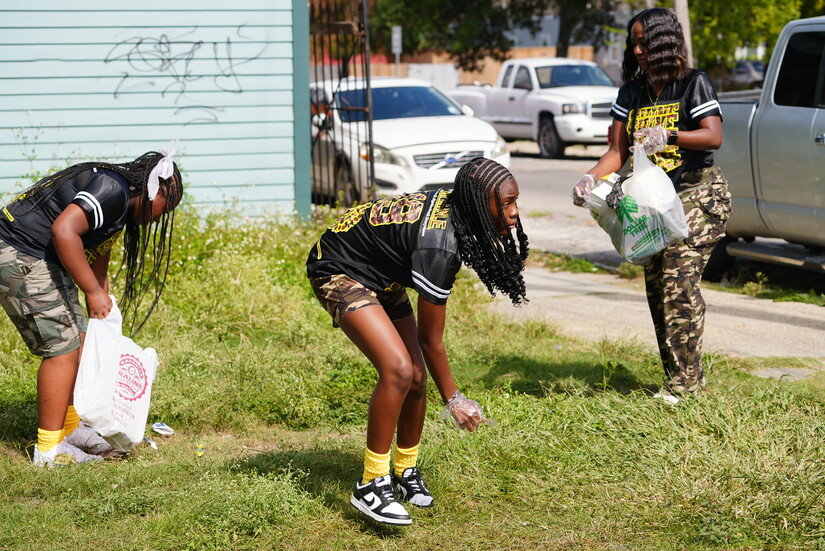

When House considers what she wants girls to carry after their formal participation with S.H.I.N.E. ends, confidence comes first. But confidence alone is not enough. She names integrity, accountability, sisterhood, and respect alongside it. “Always be confident in yourself and yourself, be confident in who you are,” House said.
Integrity, she tells girls, means doing the right thing when nobody is watching. Accountability means recognizing that making a mistake does not end a person's story. A person must be willing to acknowledge the mistake, learn from it, and move forward. Sisterhood means helping another woman when she needs it. Respect extends from the individual outward: respect yourself, respect other people, and respect the community around you. Communication is another skill House repeatedly emphasizes.
These principles are especially significant given House's willingness to discuss her own past. She does not present herself to young women as someone whose life proceeded flawlessly from childhood into professional success. She knows what it means for a person's trajectory to include serious mistakes and consequences. That history gives weight to her emphasis on accountability and possibility. House has spoken publicly in other settings about overcoming incarceration. In February 2025, the Minnesota Spokesman-Recorder reported that she was scheduled to participate in a community panel about breaking generational cycles alongside other women discussing incarceration, resilience, and reclaiming their futures.
Her work with S.H.I.N.E. rests on more than telling girls they can succeed. It offers a direct model for girls whose lives may already feel complicated: a difficult chapter does not have to become the final definition of a person.
The values House teaches are also values she says she has had to practice while building S.H.I.N.E. Funding remains one of the most persistent challenges. House did not enter nonprofit leadership with a family history of running organizations or an inherited blueprint for fundraising, administration, and institutional growth. She described learning how to operate a nonprofit while simultaneously trying to sustain the work that made the organization necessary.
That creates a familiar tension for small community organizations. Programs require resources, staff and facilitators need support, trips cost money, events require planning, and expansion creates additional expenses. Yet the leader must continue making the case for the organization while also delivering the services that demonstrate why it deserves investment.
Publicly available nonprofit information offers a snapshot of that work. Cause IQ, drawing from tax filings, reports that Sistas Helping In Neighborhoods Everywhere had $124,347 in revenue and $85,448 in expenses for the fiscal year ending in 2023, with House listed as executive director and receiving no compensation in that filing. Charity Navigator lists the organization as a Saint Paul 501(c)(3), though it is not currently rated because the platform says it lacks the volume of electronically filed Form 990 data required for a star rating. Those figures do not describe the full organization, but they provide context for House's comments about the realities of sustaining a relatively small nonprofit. “How to keep funding” remains a major concern, she said. There is also the challenge of visibility: ensuring that potential partners and funders understand what the organization does and why it matters.
House sees another lesson in those difficulties. S.H.I.N.E. tells girls to persist when they hear no, so the adults running S.H.I.N.E. have to model the same behavior. When a funding request is rejected or a door closes, House said, the organization has to decide whether it still believes enough in its mission to keep moving. Rejection is not painless, but perseverance becomes part of the organization's credibility with the girls it serves.
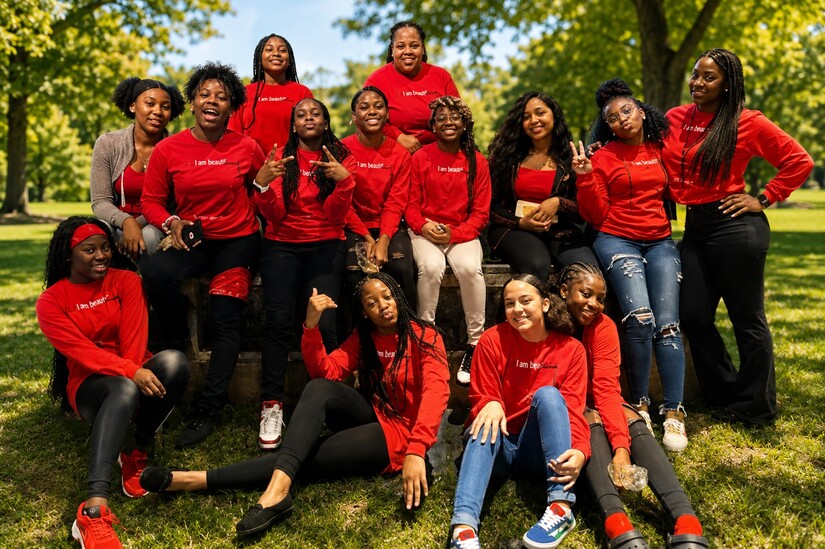
House is deliberate about who girls see around them in S.H.I.N.E. She said the team working directly with participants consists of Black women and other women of color, an intentional decision tied to her own childhood experience. She wants girls to see different possibilities for adulthood across various professions, personalities, and paths to success. Showing up with intention is essential to how the program operates. She knows what it felt like not to see herself reflected in the people teaching and leading around her. Now she has an opportunity to give girls what she lacked. “That fills me up because I know that I'm giving them something that I didn't have growing up,” House said.
Public evidence shows S.H.I.N.E. increasingly entering professional and community conversations beyond its direct youth programming. At the Minnesota Social Service Association's (MSSA) 2025 conference, House, lead facilitator Jasman Myers, and program manager Audrey House presented a session on S.H.I.N.E.'s work. The conference described the organization as empowering girls of color through sisterhood, community involvement, and higher education, with attention to relationships, community initiatives, and academic resources.
That kind of visibility matters for an organization House hopes can eventually move far beyond its current geographic footprint. Her vision is expansive. She wants a girl who travels to Texas, New York, Africa, or Europe to encounter another young woman shaped by the same values and be able to recognize her as a S.H.I.N.E. sister. House does not describe growth simply as adding participants; she describes it as multiplying relationships. “Every girl deserves this S.H.I.N.E.,” she said.
The ambition is for girls to carry the organization's principles into places the organization itself may never directly control: colleges, workplaces, families, neighborhoods, and future organizations of their own. Growth like that is harder to measure, but it reflects the long-term changes House is working to create.
Near the end of MinneapoliMedia's conversation with House, she was asked a question that moved beyond programs, schools, funding, and organizational expansion: when all of the work is finished, what does she want people to remember about her? House did not name an institution she wanted built in her honor, and she did not talk about awards. She returned to the girls.
“I want to be remembered for the person that believed in our girls, believed in our youth, believed that they could be anything that they put their mind to,” House said. She wants a young person to be able to look back at a moment when other people had stopped expecting much from her and remember that one adult had not. “No matter how big your dream is, Miss Tierra believed in you,” she said. “Even when sometimes you didn't believe in yourself, just know that I believed in you.”
Her words connect directly back to the practical details of the program: the school groups, the affirmations, the HBCU tours, the emphasis on trusted adults, and the focus on building strong relationships among girls early on.
House works to turn belief into daily practice. She connects a student's ambition of becoming a lawyer to the specific high school classes required to get there. She builds structured spaces where girls practice supporting one another, surrounds them with role models who represent diverse paths to success, and speaks openly about overcoming difficult chapters in her own life.
Before the interview ended, House pointed right back to the community around her. Asked to identify other women whose work deserves recognition, she immediately named colleagues at S.H.I.N.E. and local leaders, offering to make introductions.
House arrived at The Power of Her because Mercedes Yarbrough pointed toward her work, and she ended the conversation by pointing toward others. For an organization built around the idea that women and girls advance together, it offers a practical demonstration of what “We Shine Together” actually looks like in action.
Tierra House is still building S.H.I.N.E. Funding questions remain, the organization has not reached every girl House hopes to reach, and its broader regional goals take time. Yet its foundation is firmly at work in local classrooms, program circles, college tours, and the mentorship of young women who return to guide those coming behind them.
A girl does not have to build her future alone. Someone can see her potential early, point out an avenue she had not considered, introduce her to a mentor, and hold a door open. The goal for House is simple: ensure that every girl who walks through that door turns around to hold it open for the next. That is the sisterhood Tierra House is building, and that is the legacy she plans to leave behind.

Local stories matter. Subscribe free to MinneapoliMedia and receive independent news, community reporting and important updates from Minneapolis, the North Metro and communities across Minnesota.
SUBSCRIBE FREE: https://minneapolimedia.town.news/subscribe
MinneapoliMedia | Community. Culture. Civic Life


Overcast, with a high of 81 and low of 65 degrees. Don't forget your umbrella! Light rain in the morning, overcast in the afternoon,