Image




Rose and Mary Jane, a mother and daughter determined to be first through the gates, arrived at 7 a.m. Wednesday. They remained outside overnight as other early visitors gradually joined the line, waiting for the moment when Minnesota’s largest annual gathering would begin again.
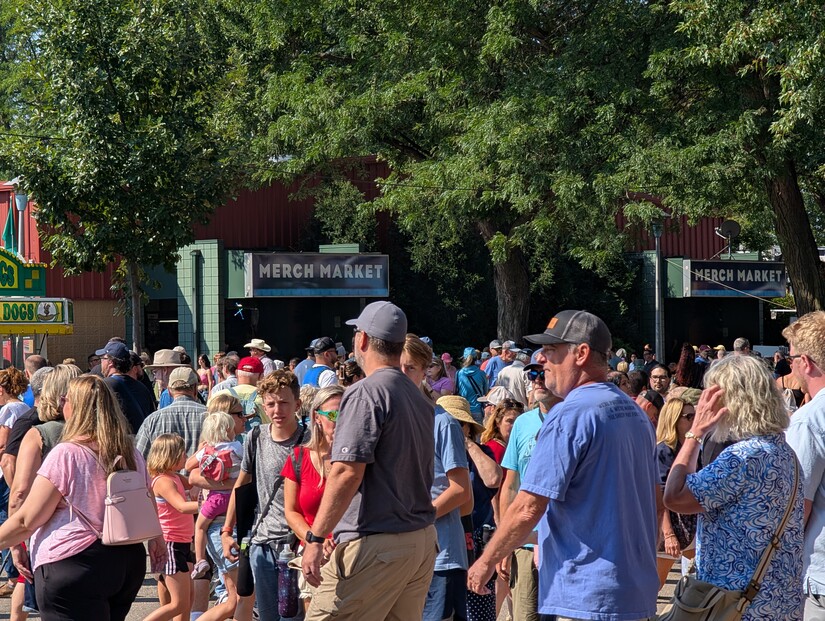
When the gates opened Thursday, the crowd moved into a fair that remained immediately recognizable but carried some of its most substantial physical changes in years.
The 230-foot America Wheel rose above the North End. The Lee & Rose Warner Coliseum reopened following a $24 million renovation. A new Summer Lakes Boat House welcomed its first customers. Thirty-six official new foods joined the corn dogs, cheese curds, cookies and other traditions that have shaped generations of State Fair visits.
By afternoon, the streets had filled with people moving between barns, exhibit halls, rides, food stands and stages. Bonnie Raitt opened the Grandstand concert series Thursday night, bringing the first day to a close before the fair’s nightly fireworks appeared above the grounds.
What unfolded between the morning rush and the evening performance was more than an opening-day schedule. It was the restoration of a yearly rhythm that many Minnesotans measure not in individual visits, but across decades.
On the fairgrounds Thursday, MinneapoliMedia spoke with four friends, John, Justine, Chloe and Nikki. Three are members of the same family. Between them, their relationships with the State Fair extend from 14 years to approximately four decades.
John said he has attended for his entire life, about 40 years. Two members of the group estimated that they had been coming for approximately 20 years, while the youngest had attended for 14.
Their earliest memories differed in detail but shared a common quality: the scale of the fair was almost impossible to absorb at first.
“I was completely overwhelmed,” John recalled. “I was a kid, and it was just colors and sounds and smells. It was incredible. Just excitement.”
Another member of the group remembered little beyond a dog-themed roller coaster. Others recalled the crowds and the sensation of arriving somewhere that seemed larger, louder and more active than anything they had previously experienced.
“It’s very overwhelming if you don’t know what you’re getting yourself into, but really exciting,” one said. “There’s something new every year, so that’s always something to look forward to.”
The group’s experiences illustrate one of the fair’s enduring strengths. Visitors return expecting familiar landmarks, foods and rituals, but they also expect the fair to change enough each year to reward another trip.
“I don’t think I’ve ever had a bad time,” one of the friends said.
That continuity was interrupted in 2020, when the fair was canceled during the COVID-19 pandemic. The group remembered returning afterward with a mixture of eagerness and unease.
“It kind of felt normal, maybe with a little more anxiety,” one said. “You’re like, ‘I don’t want to be really close to people, but I want to go to the fair.’”
The fair’s drive-through food experience provided an alternative during the cancellation year. Still, for longtime visitors, eating fair food from inside a vehicle could not reproduce the full experience of moving among the crowds, buildings, animals, performances and vendors.
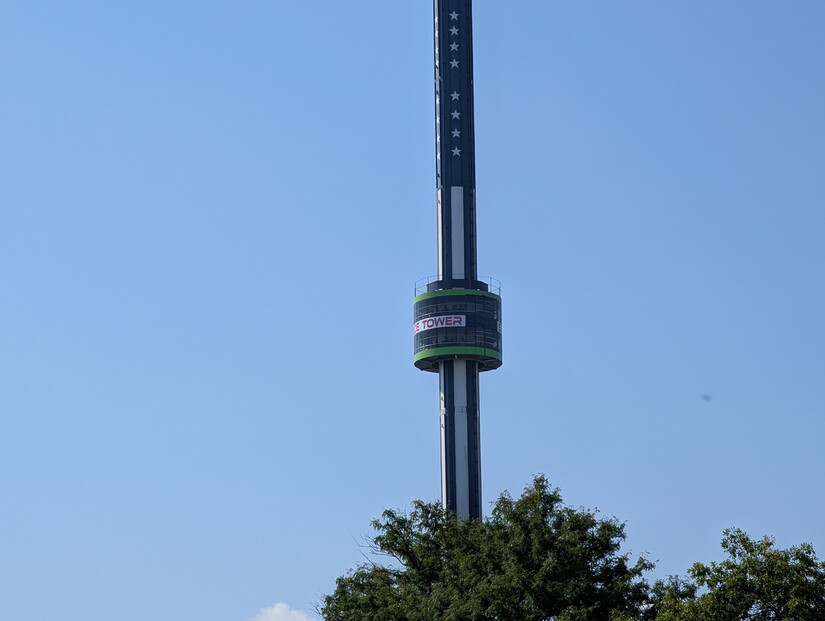
The most visible addition to the 2026 fair is the America Wheel, the world’s largest traveling observation wheel, according to State Fair organizers.
At 230 feet, the wheel stands 75 feet taller than the Great Big Wheel that previously occupied the fairgrounds. Its 45 enclosed gondolas rise above the North End, offering a new view of the 322-acre grounds and the surrounding Twin Cities.
The attraction was introduced in recognition of America’s 250th anniversary and immediately changed the fairgrounds skyline. Minnesota State Fair
Nearby, the Lee & Rose Warner Coliseum began a new chapter during its 75th anniversary year.
A multiyear, $24 million renovation replaced the building’s deteriorating roof, widened aisles, installed new handrails, expanded seating and added ramps and rebuilt wheelchair-accessible areas. Restrooms were also expanded and modernized, and new displays now tell the history of the longtime center of the fair’s livestock and horse programming.
The Summer Lakes Boat House, at the southwest corner of Randall Avenue and Underwood Street, also opened Thursday. The new 2,700-square-foot building occupies a 9,000-square-foot site and combines food, drinks and daily live entertainment in a setting intended to evoke summer life on Minnesota’s lakes.
Its opening-day menu included Dockside Poppers, one of the fair’s 36 official new foods. The dish combines cream cheese, bacon, artichoke hearts and jalapeño peppers in a breaded and fried shell, served with tomato-chili jam.
The Boat House joined a food landscape in which new offerings generated lines, debate and curiosity from the opening hours.
Among the most discussed additions were apple fries, Pickle Pie from Lulu’s Public House, the Dubai Whoopie Pie from Dino’s Gyros and Fried and the Furious: Cubano Drift. Beyond the food stands, pickle-flavored lip gloss emerged as one of opening day’s unexpected novelties.
The Agriculture Horticulture Building’s crop-art exhibition also drew heavy interest. Organizers moved the waiting line outside along Judson Avenue in an effort to reduce crowding inside the building.
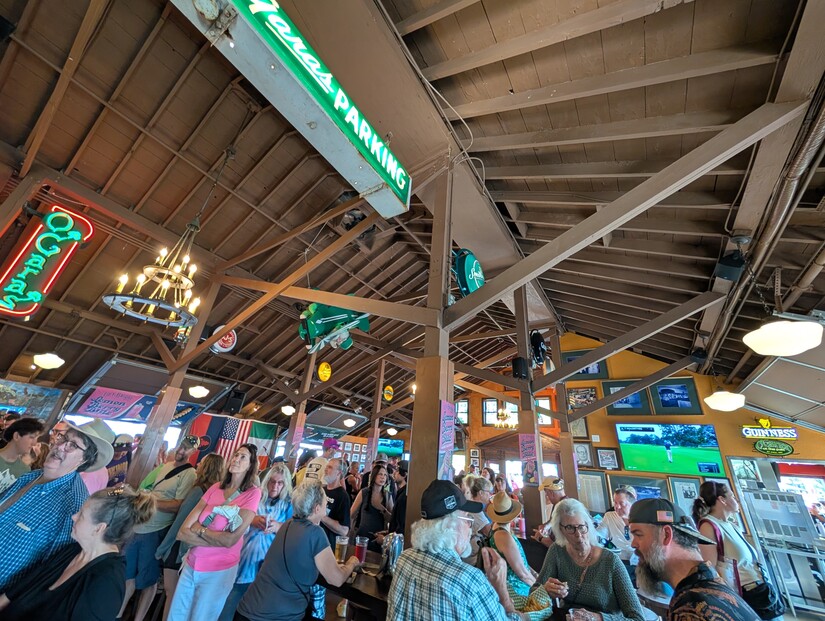
For John, Justine, Chloe and Nikki, the International Bazaar remains one of the fair’s most rewarding destinations.
“The Bazaar, because it’s multicultural,” one member of the group said when asked about a favorite place. “There are a lot of things going on there. Lots of good food.”
The group also recommended the Grandstand and Coliseum to people visiting from outside Minnesota.
“The Coliseum and the International Bazaar would be my places because it’s where so many people come together,” one said. “So many different shops, sights and sounds, food and everything.”
The Grandstand began its 2026 concert season Thursday evening with Bonnie Raitt and special guest Jon Cleary and the Absolute Monster Gentlemen.
Raitt’s performance combined music from her long career with reflections on loss, place and memory. Her set included John Prine’s “Angel from Montgomery” and “I Can’t Make You Love Me,” one of the songs most closely associated with her career. She also acknowledged Minnesota places, including Winona and the Boundary Waters, before the night concluded with fireworks.
The Minnesota Twins launched a new interactive presence near Cooper Street and Judson Avenue, next to the International Bazaar. The Twins Experience will host scheduled appearances by current players and former team members during the fair’s 12-day run.
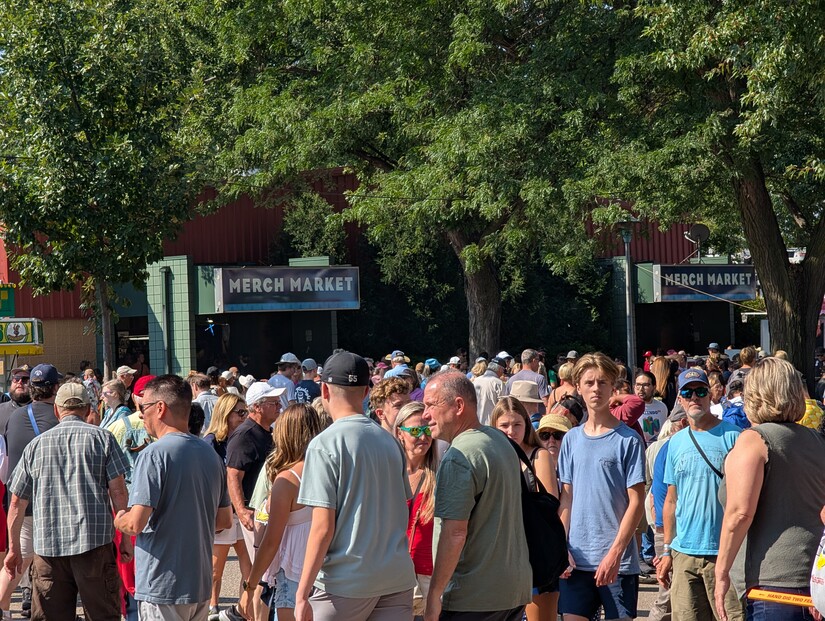
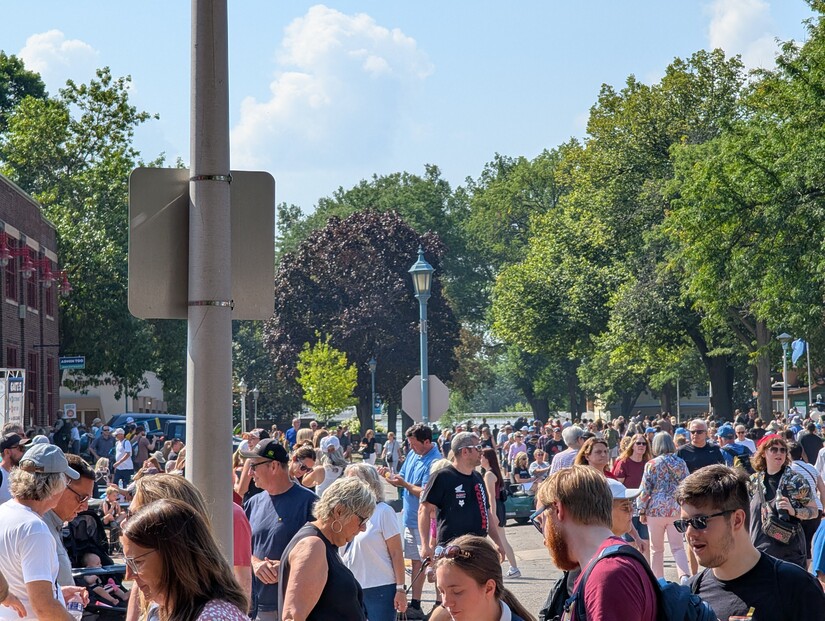
The group’s most consistent criticism concerned transportation, congestion and pedestrian movement.
Getting to the fairgrounds and finding parking remained the first challenge. Once inside, the problem shifted from vehicle traffic to foot traffic.
“If you’re not a patient person, it’s not going to work out well for you,” one member of the group said.
They described visitors stopping without warning in the middle of crowded walkways, creating obstacles for people using wheelchairs or crutches and for parents pushing strollers or wagons.
Their proposed solution was straightforward: establish clearer areas for people who are walking and separate places where groups can stop, gather or decide where to go next.
“Maybe designated walking areas and designated standing areas,” one suggested.
Another agreed that the fair needed more structure for pedestrian movement, particularly late in the day when the streets become heavily congested.
“There’s no consistency,” the fairgoer said. “People do what they want.”
The group also called for better sidewalks, noting uneven surfaces that can make travel more difficult for people with limited mobility and families using wheeled equipment.
The observations point to a tension facing an event built around large crowds. The density of people contributes to the fair’s energy, but the same density can make the experience difficult for visitors who need more space, predictable paths or accessible surfaces.
Opening Day offered discounted admission of $18 for adults ages 13 to 64 and $15 for seniors and children ages 5 to 12. For the remainder of the fair, general admission is $20 for adults and $18 for seniors and children. Children 4 and younger enter free.
Admission gates open at 7 a.m. and stop admitting visitors at 9 p.m. through Sunday, September 6. The fairgrounds remain open until 11 p.m. On Labor Day, September 7, admission will end at 6 p.m. and the grounds will close at 8 p.m.
On-site parking is $25 and is available on a first-come basis. More than 30 free Park & Ride locations offer free parking and transportation to the fairgrounds. Metro Transit and suburban transit providers also operate express buses from several locations, with some round trips priced at $6.
The State Fair had not posted a verified 2026 opening-day attendance total when MinneapoliMedia completed this report. The official attendance page continued to show the 2026 field as blank. The opening-day record remains 138,875, set in 2024. Attendance was 137,148 on opening day in 2025. The fair ordinarily publishes each day’s count between noon and 3 p.m. the following day. Official attendance records
Whatever the final count, the opening-day experience was unmistakably busy.
For the four friends MinneapoliMedia met Thursday, that was not a reason to stay away. It was part of an experience they have learned to navigate across years of returning.
The attractions change. Buildings are renovated. New foods arrive, and old vendors disappear. Children grow into adults who bring friends and families of their own.
Then another August arrives, the gates open at 7 a.m., and they return.

Local stories matter. Subscribe free to MinneapoliMedia and receive independent news, community reporting and important updates from Minneapolis, the North Metro and communities across Minnesota.
SUBSCRIBE FREE: https://minneapolimedia.town.news/subscribe
MinneapoliMedia | Community. Culture. Civic Life

Overcast, with a high of 76 and low of 61 degrees. Overcast in the morning,