65° and Patchy rain nearby
Image
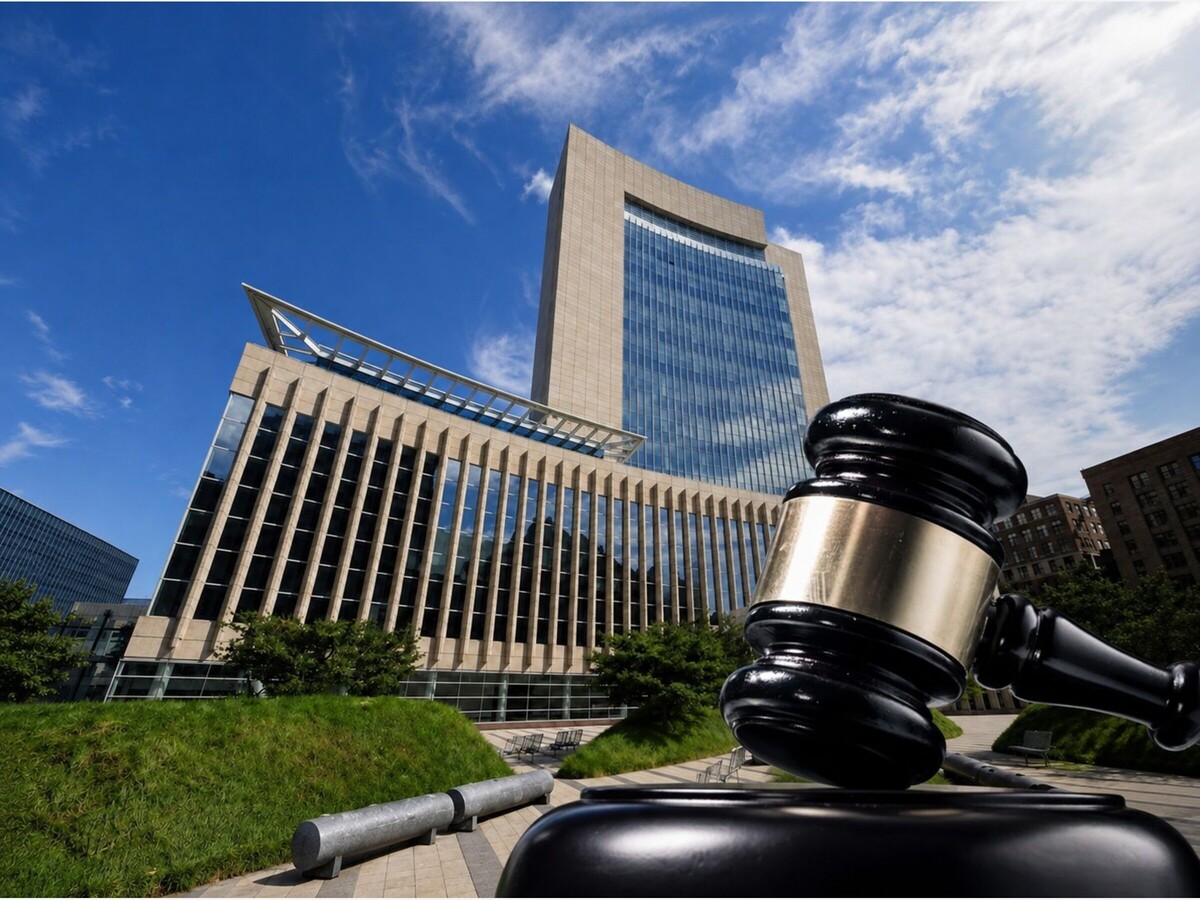



The order applies to facilities used for official business by the Minnesota Supreme Court, Court of Appeals and district courts.
It extends a weapons restriction that has applied since 2003 at the Minnesota Judicial Center and the Supreme Court courtroom inside the State Capitol.
The expanded policy will now reach court-controlled spaces in county government buildings and other facilities where Minnesota courts conduct official business.
The prohibition applies to everyone entering a court-occupied area, including individuals who possess valid permits to carry firearms.
A permit authorizes a person to carry a firearm under state law, but it does not create an unrestricted right to bring the weapon into every government facility.
Under the new judicial order, permit holders must leave firearms and other prohibited weapons outside court-controlled areas.
The statewide approach replaces a system in which restrictions could differ depending on the courthouse, county or building arrangement.
The order provides limited exceptions for licensed peace officers and federally authorized law-enforcement agents.
Those exceptions apply when officers are present in the course of their official duties and are legally authorized to carry the weapon.
The order does not create a general exception for an off-duty officer entering a court facility for personal business unless the officer otherwise qualifies under its terms.
Weapons introduced as evidence during a trial or evidentiary hearing are also exempt when required advance notice and safety procedures are followed.
That exception allows prosecutors, defense attorneys and law-enforcement witnesses to present physical evidence without undermining courthouse security.
People entering court-occupied areas may be required to undergo weapons screening.
Anyone who refuses a required screening may be denied admission.
Screening practices can include security officers, metal detectors, bag inspections or other procedures established for the building.
The order does not require every Minnesota courthouse to use an identical physical screening system. Court operations vary significantly between large metropolitan courthouses and smaller county facilities.
The prohibition applies even when a building lacks permanent screening equipment.
Visitors remain responsible for complying with the order regardless of whether every person is searched.
Chief judges may prohibit weapons in additional portions of a building or government complex when necessary to protect areas used for official court business.
This authority is important because courtrooms frequently share buildings with county administration, licensing offices, public-health departments and other government functions.
A restriction limited only to the courtroom door may not address risks in hallways, waiting areas, judicial chambers or routes used to move jurors and people in custody.
Local decisions extending the restricted area must still be connected to court safety and operations.
Members of the public visiting a multipurpose government building should review posted notices and screening instructions before entering.
Hudson said the statewide policy is part of the Judicial Branch’s continuing effort to strengthen safety.
“The safety and security of the people who work in and use Minnesota’s courts is one of our highest priorities,” Hudson said.
She cited growing threats against judges and court employees as a reason the Judicial Branch must continue evaluating protective measures.
Courthouses bring together people during some of the most difficult moments of their lives. Criminal proceedings, divorces, child-custody disputes, evictions, protection orders and civil conflicts can involve intense emotions and significant personal consequences.
Judges, court employees, attorneys, jurors, witnesses, crime victims, defendants and families may all occupy the same public spaces.
A uniform weapons policy is intended to reduce the possibility that those conflicts become armed confrontations.
Anyone attending court after September 1 should:
People summoned for jury service or required to attend a hearing should not assume that a carry permit creates an exception.
Refusal to comply with screening can result in denied entry, which may cause a person to miss a required court appearance.
The statewide order establishes a single baseline across Minnesota: spaces where justice is administered will also be spaces where weapons are generally prohibited.

Local stories matter. Subscribe free to MinneapoliMedia and receive independent news, community reporting and important updates from Minneapolis, the North Metro and communities across Minnesota.
SUBSCRIBE FREE: https://minneapolimedia.town.news/subscribe
MinneapoliMedia | Community. Culture. Civic Life


Overcast, with a high of 72 and low of 54 degrees. Mist for the morning, cloudy during the afternoon, overcast for the evening,