43° and Overcast
Image
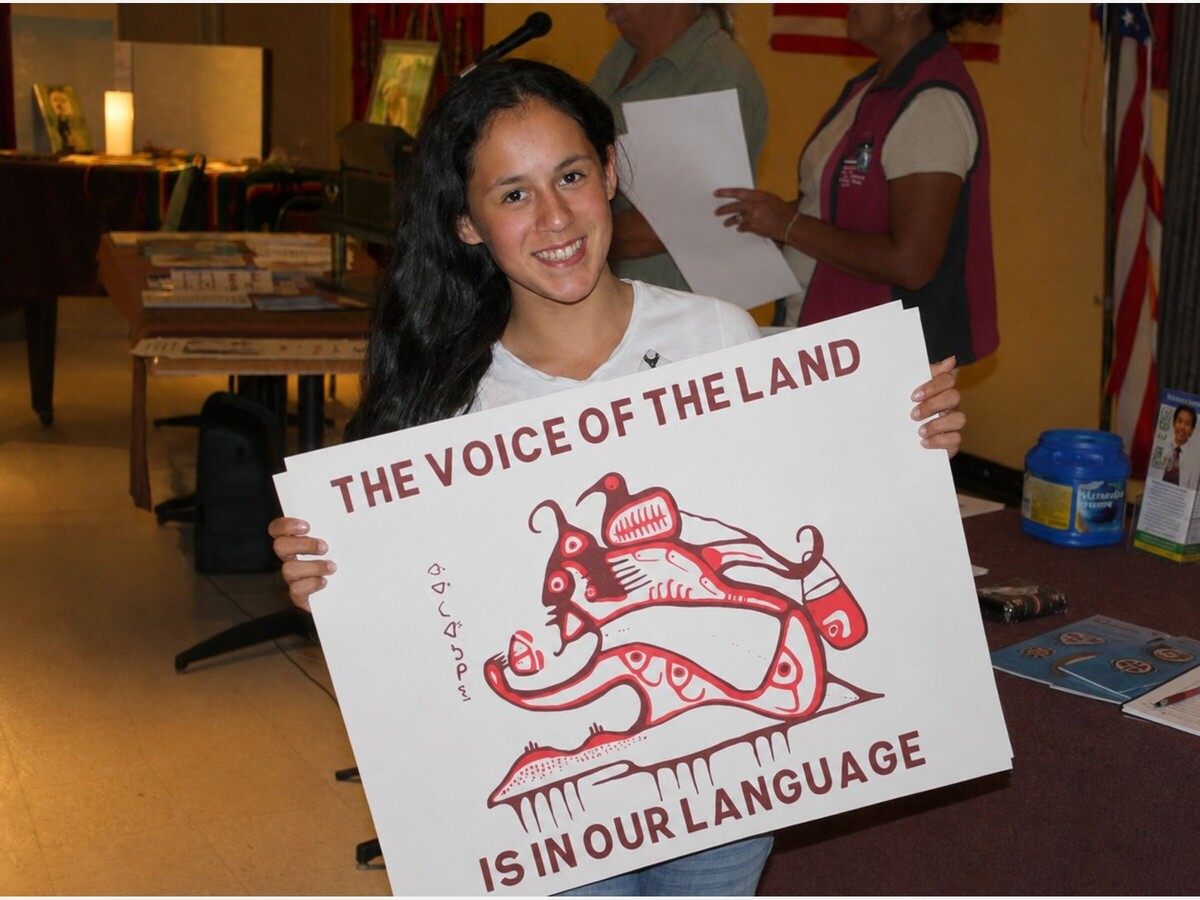



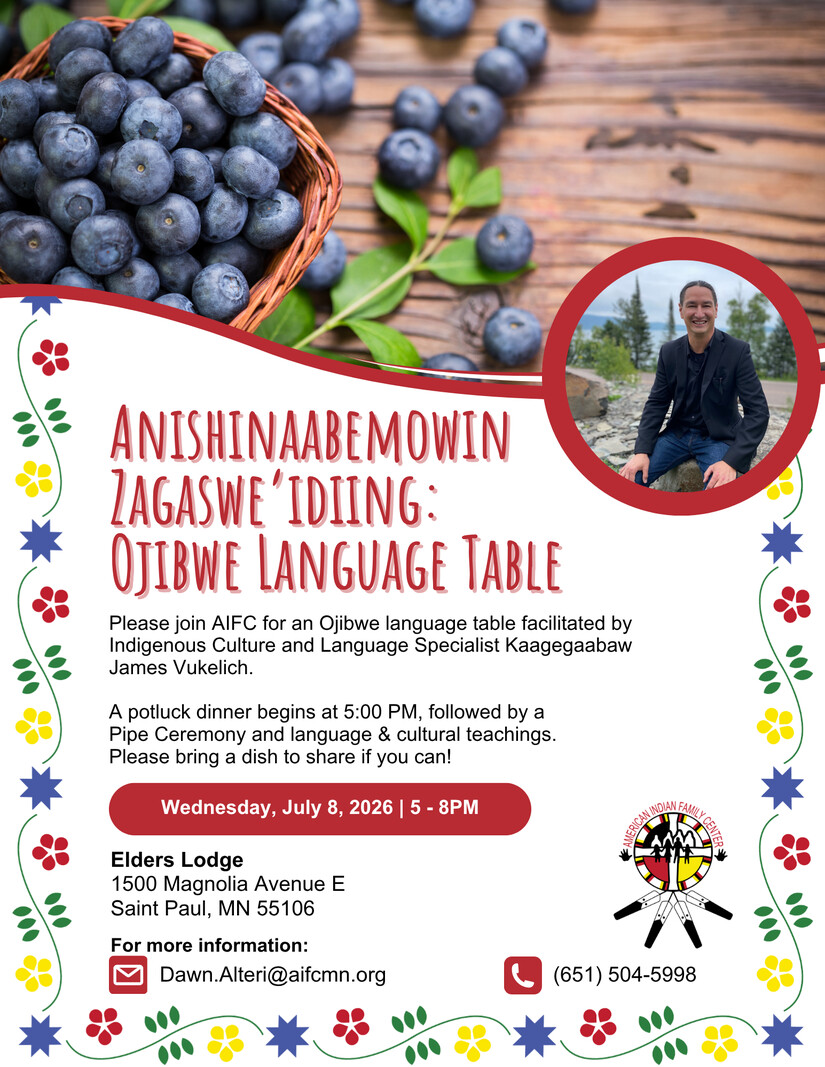
The nonprofit organization will host its Anishinaabemowin Zagaswe'idiing (Ojibwe Language Table) on Wednesday, July 8, from 5:00 p.m. to 8:00 p.m. at Elders Lodge, 1500 Magnolia Avenue East in St. Paul. The free community gathering is designed to immerse participants in Ojibwe language, ceremony, storytelling, and cultural teachings while strengthening connections between Elders, youth, families, and community members.
The event reflects AIFC's broader mission of supporting Native families through culturally grounded programming that promotes healing, wellness, recovery, and community resilience.
Leading the evening will be Kaagegaabaw (James Vukelich), an Indigenous Culture and Language Specialist, educator, and descendant of the Turtle Mountain Band of Chippewa Indians. Vukelich is widely recognized throughout Minnesota and beyond for his work preserving and teaching Anishinaabemowin, the Ojibwe language, through community education, traditional teachings, and his widely followed digital initiative, Ojibwe Word of the Day. Drawing on decades of collaboration with fluent Elders across the Great Lakes region, Vukelich has become one of the most visible advocates for Native language revitalization in North America.
For Vukelich, language is far more than vocabulary.
Embedded within Anishinaabemowin are generations of ecological knowledge, family relationships, spiritual traditions, cultural values, humor, history, and ways of understanding the world that often cannot be fully translated into English. Language revitalization, he and many Indigenous educators argue, is inseparable from cultural survival.
The evening's program has been intentionally structured around traditional community practices that emphasize shared learning and collective care.
The gathering begins with a 5:00 p.m. potluck dinner, where participants are encouraged to bring a dish to share if they are able. Organizers say the shared meal reflects longstanding Indigenous traditions of hospitality and community, creating an informal setting where relationships are strengthened before formal teachings begin.
Following dinner, participants will gather for a traditional Pipe Ceremony, a sacred spiritual practice conducted according to Anishinaabe teachings. The ceremony serves as a time of prayer, gratitude, reflection, and the setting of intentions for individual well-being and the health of the broader community.
The evening concludes with interactive language and cultural teachings led by Vukelich. Participants will explore Ojibwe vocabulary, pronunciation, regional history, storytelling traditions, and the Anishinaabe philosophy of mino-bimaadiziwin, often translated as "the good life" or "living in a good way." Rather than treating language as an academic subject, organizers emphasize learning through conversation, relationships, and shared cultural experience.
The event welcomes participants of every experience level, from fluent speakers to individuals hearing Ojibwe for the very first time.
The importance of gatherings such as these extends well beyond language instruction.
Known traditionally as Anishinaabemowin, Ojibwe remains one of North America's most widely spoken Indigenous languages. Yet the number of fluent speakers declined dramatically during the twentieth century as Native children were separated from their families and placed in federal boarding schools, where speaking Indigenous languages was often forbidden and punished. Those policies disrupted the intergenerational transmission of language throughout much of the Upper Midwest and Canada.
Today, tribal nations, universities, schools, and community organizations across Minnesota are investing heavily in language revitalization through immersion programs, community language tables, digital learning platforms, and cultural education initiatives. Linguists and Indigenous leaders alike note that preserving a language also preserves traditional ecological knowledge, oral histories, ceremonial practices, and cultural identity.
The American Indian Family Center has become an important part of that effort.
Based on St. Paul's East Side, AIFC provides culturally responsive services that include behavioral health and recovery support, housing stabilization, workforce development, youth and family programming, and cultural education. Events hosted at the Elders Lodge intentionally create opportunities for tribal Elders to share knowledge directly with younger generations, helping preserve oral traditions while strengthening community bonds.
Organizers say the Ojibwe Language Table embodies that philosophy by bringing people together not simply to study words, but to participate in a living culture.
Community members interested in attending may contact AIFC Treatment Counselor Dawn Alteri at (651) 504-5998 for additional information.
As Minnesota continues to recognize and celebrate the cultures of the state's First Peoples, organizers hope evenings like this will remind participants that Indigenous languages are not relics of the past.
They remain living languages, spoken in homes, ceremonies, classrooms, and community gatherings, carrying forward histories, teachings, and identities that have endured for generations. Each new learner, each shared conversation, and each gathering around a community table represents another step toward ensuring that Anishinaabemowin continues to flourish across Minnesota for generations to come.
MinneapoliMedia | Community. Culture. Civic Life.



Sunny, with a high of 52 and low of 41 degrees. Overcast for the morning, sunny in the afternoon, clear in the evening, overcast overnight.