Image




The 2026 FIFA World Cup entered its championship weekend Thursday as the quarterfinals officially commenced, reducing the tournament from eight remaining contenders toward the final four. Twenty-nine days after the largest World Cup in football history began across North America with forty-eight competing nations, every remaining fixture now carries historic weight. Every victory extends a nation's pursuit of football's greatest prize. Every defeat permanently closes another chapter in what has already become one of the most dramatic tournaments the sport has witnessed.
The opening quarterfinal showcased two nations whose journeys could scarcely have been more different. France entered Foxborough carrying the expectations that accompany a global heavyweight, an unbeaten squad widely viewed as the tournament favorite after navigating the knockout stage with remarkable composure. Morocco arrived with the confidence of a nation that had already rewritten football history, becoming the first African country ever to reach consecutive FIFA World Cup quarterfinals after building upon its unforgettable semifinal appearance four years earlier.
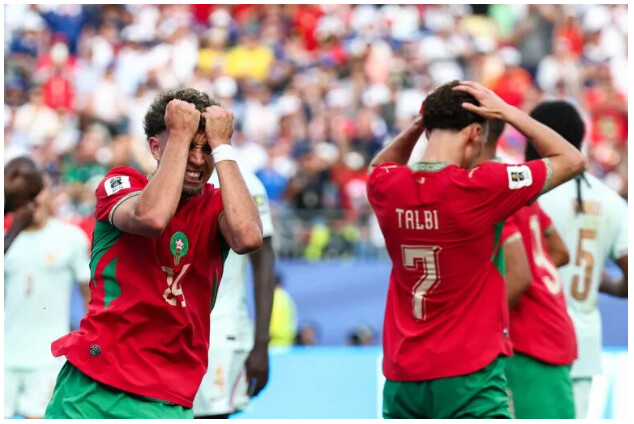
For nearly an hour, Morocco once again demonstrated the extraordinary defensive organization and emotional resilience that have defined its modern football renaissance. Goalkeeper Yassine Bounou produced another unforgettable performance, highlighted by a spectacular penalty save against Kylian Mbappé that temporarily frustrated one of the world's most feared attackers. Yet elite championship football is often decided not by prolonged dominance but by a handful of decisive moments. Once France finally broke through midway through the second half, Didier Deschamps' side displayed the ruthless efficiency expected of a title contender, adding a second goal minutes later before professionally closing out a 2-0 victory.
The result sends France into its third consecutive FIFA World Cup semifinal while respectfully bringing to a close Morocco's remarkable tournament, one that further elevated African football on the global stage and reinforced the Atlas Lions' place among the world's elite national programs.
|
Match |
Score |
Venue |
Status |
|
France vs. Morocco |
2-0 |
Gillette Stadium, Foxborough, MA |
France advances |
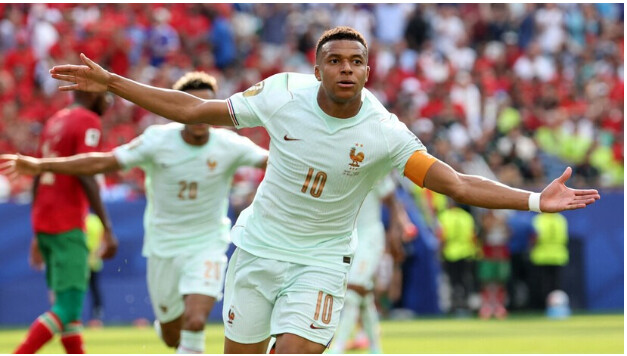
The opening quarterfinal carried significance that extended well beyond the ninety minutes themselves. France sought to continue a remarkable era of sustained international excellence under Didier Deschamps, while Morocco attempted to prove that its historic achievements in Qatar four years earlier represented not an isolated breakthrough but the emergence of a permanent global football power.
The atmosphere inside Gillette Stadium reflected that importance. French supporters arrived expecting another disciplined display from the tournament favorites. Moroccan supporters entered believing another upset remained possible after victories over Canada and a resilient defensive performance throughout the knockout phase.
From kickoff, France attempted to establish authority through sustained possession. Aurélien Tchouaméni controlled the midfield rhythm while Antoine Griezmann drifted between the lines searching for space behind Morocco's disciplined defensive block. Mbappé frequently abandoned the left wing, forcing Achraf Hakimi and Noussair Mazraoui into constant defensive communication whenever France accelerated the tempo.
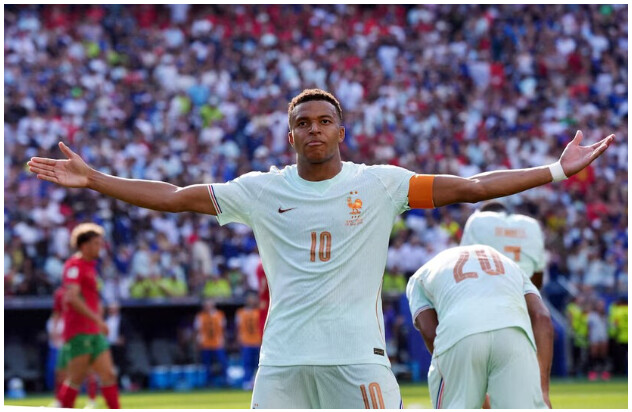
Morocco remained composed.
Walid Regragui once again deployed the compact defensive structure that has frustrated elite opponents throughout consecutive World Cups. Sofyan Amrabat patrolled the central corridor with characteristic intelligence, repeatedly interrupting French passing sequences before they reached dangerous areas. Azzedine Ounahi and Selim Amallah compressed midfield space, forcing France toward wider attacking channels rather than allowing direct penetration through the center.
Despite France's territorial advantage, genuine scoring opportunities remained limited during the opening twenty minutes.
The first major breakthrough nearly arrived in the 22nd minute.
Left-back Lucas Digne collected possession outside the Moroccan penalty area before unleashing a powerful long-range strike that crashed violently against the crossbar. Bounou appeared beaten, but the woodwork preserved the scoreless deadlock and injected renewed belief throughout the Moroccan ranks.
Five minutes later came the defining moment of the first half.
Driving aggressively into the penalty area, Mbappé attempted to split two defenders before going to ground following contact from Mazraoui. Referee immediately pointed toward the penalty spot, handing France an opportunity to seize complete control of the quarterfinal.
The responsibility naturally belonged to Mbappé.
Standing opposite him was Bounou, whose reputation as one of the world's finest penalty specialists had already become legendary.
The Moroccan goalkeeper delivered once again.
Reading Mbappé's intentions perfectly, Bounou exploded low to his left, extending both hands to produce one of the tournament's finest saves. The stop ignited enormous celebrations among Moroccan supporters while momentarily shifting the emotional momentum of the contest.
France continued pressing through the remainder of the opening half, generating several dangerous sequences inside the final third. Morocco, however, refused to surrender its defensive identity. Every French cross encountered determined clearances from the center backs, while Bounou continued commanding his penalty area with complete authority.
When halftime arrived, the score remained 0-0.
Although France had largely dictated possession and created the clearer opportunities, Morocco had once again demonstrated why it remained one of the tournament's most difficult teams to break down.
Second-Half Quality Finally Separates the Sides
The tactical landscape changed dramatically after the interval.
Recognizing Morocco's growing confidence, France increased the speed of its ball circulation, moving possession more quickly between midfield and attack while encouraging Mbappé and Dembélé to attack defenders directly rather than patiently recycling possession.
The sustained pressure eventually produced its reward in the 60th minute.
Receiving the ball near the left edge of the penalty area, Mbappé isolated his defender before cutting inside onto his stronger right foot. Generating just enough separation, he curled a magnificent finish beyond Bounou and inside the far post.
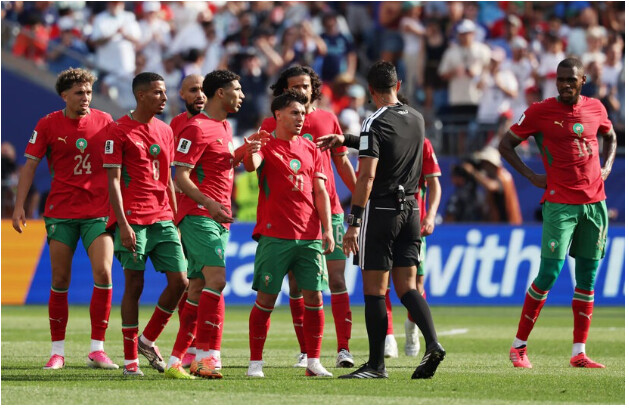
The goal represented both personal redemption and tactical validation.
After watching his penalty denied earlier in the evening, Mbappé responded exactly as elite players so often do, refusing to allow one setback to define his performance.
France finally led 1-0.
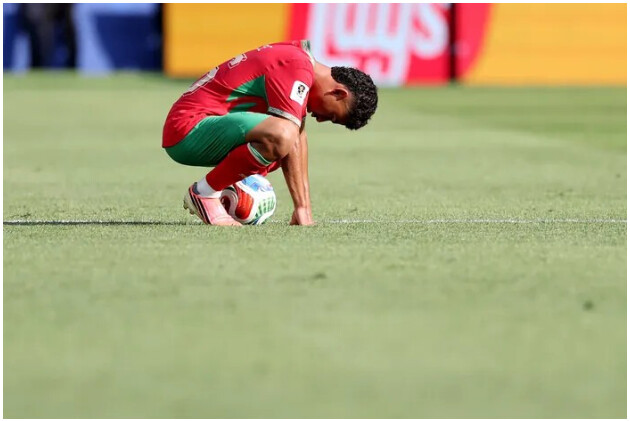
The breakthrough fundamentally altered the strategic equation.
For nearly sixty minutes Morocco had remained patient, content to defend compactly while waiting for transition opportunities. Now trailing, Regragui's side could no longer rely exclusively upon defensive organization. Greater attacking ambition inevitably created additional space behind the midfield.
France exploited it almost immediately.
Just six minutes after opening the scoring, Mbappé again became the catalyst. Drawing multiple Moroccan defenders toward him, he released Ousmane Dembélé into open space near the top of the penalty area. The winger calmly guided a precise low finish beyond Bounou and into the bottom corner.
France 2.
Morocco 0.
Within six decisive minutes, one of the tournament's tightest tactical battles had become firmly controlled by Les Bleus.
Morocco Pushes Forward, France Closes Professionally
Facing elimination, Morocco committed additional players into attack over the final twenty minutes.
Fresh substitutions attempted to inject greater pace and creativity into the final third, while Hakimi advanced more aggressively along the right flank searching for crossing opportunities.
France never appeared unsettled.
William Saliba and Dayot Upamecano controlled aerial deliveries with authority, while Tchouaméni continued shielding the defensive line by breaking up transitions before they developed into meaningful threats.
Goalkeeper Mike Maignan remained composed throughout the closing stages, organizing his back line while limiting Morocco to speculative efforts from distance.
When the final whistle arrived, France had completed another thoroughly professional knockout performance.
A Historic Campaign Concludes for Morocco
Although Morocco's World Cup journey ended in Foxborough, its tournament will be remembered as another landmark achievement for African football.
Four years after becoming the first African nation ever to reach a World Cup semifinal, the Atlas Lions returned to demonstrate that their earlier success represented the beginning of sustained international excellence rather than an isolated breakthrough.
Victories over Canada and an impressive run to another quarterfinal reinforced Morocco's position among football's established powers.
Their disciplined defensive organization, tactical maturity, and unwavering belief again earned worldwide admiration.
The tournament may have ended, but Morocco leaves North America having further expanded the possibilities for African football on the sport's biggest stage.
France Becomes the First Semifinalist
France's victory carries significance beyond simple advancement.
Les Bleus become the tournament's first semifinalists while extending one of international football's most remarkable periods of sustained excellence.
Through five matches, France has combined defensive stability with attacking efficiency, consistently finding decisive moments even against exceptionally organized opponents.
Mbappé once again proved why he remains among the defining players of his generation, overcoming early disappointment to influence both goals that ultimately decided the contest.
With one semifinal berth now secured, attention shifts toward the remaining quarterfinals that will determine which nations join France in the tournament's final four.
Technical Notebook & Tournament Outlook
Thursday's opening quarterfinal reinforced several themes that have increasingly defined the championship phase of the World Cup.
Elite Goalkeepers Can Alter Entire Matches: Bounou's penalty save preserved Morocco's hopes for more than an hour and again demonstrated the extraordinary influence world-class goalkeeping exerts in knockout football.
Championship Teams Respond to Adversity: Mbappé's missed penalty never altered France's attacking conviction. The world's elite players consistently separate themselves by responding immediately after disappointment.
Patience Remains a Competitive Weapon: France never abandoned its tactical structure despite prolonged frustration. Sustained pressure eventually produced the openings that ultimately settled the match.
The Margin Continues to Narrow: Morocco's elimination underscores the unforgiving nature of the quarterfinals. Even one of the tournament's most organized and resilient teams ultimately found itself undone by a brief spell of world-class execution.
One semifinal place now belongs to France. Three quarterfinals remain. By the conclusion of the weekend, only four nations will remain in pursuit of football's greatest prize.
MinneapoliMedia | Community. Culture. Civic Life.



Sunny, with a high of 85 and low of 49 degrees. Sunny for the morning, overcast for the afternoon and evening, clear overnight.