67° and Cloudy
Image
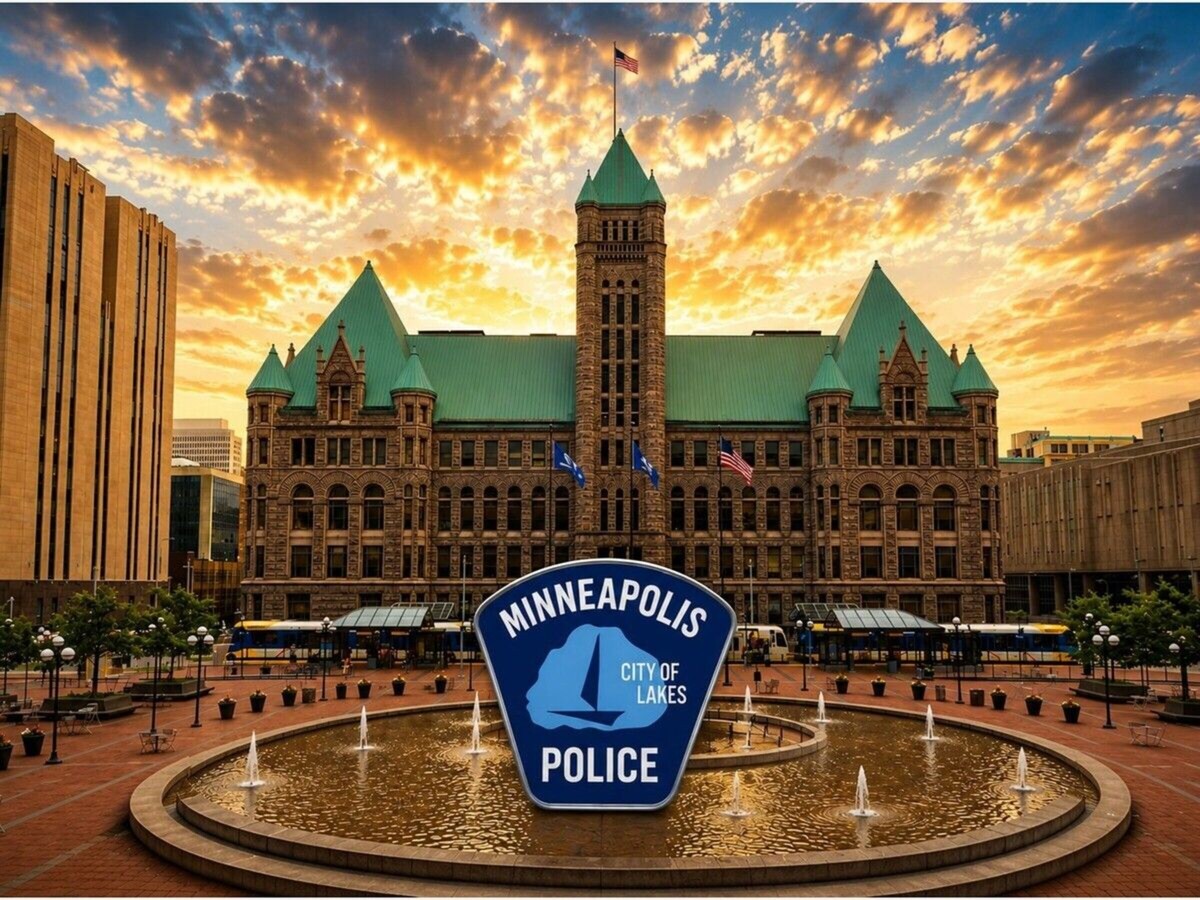



MINNEAPOLIS, MN (July 17, 2026) A proposal to place autonomous police drones above North Minneapolis and send them to selected 911 calls before officers arrive failed Thursday after the Minneapolis City Council deadlocked 6-6 amid forceful community opposition, concerns about government surveillance and objections to the proposed technology provider.
The tied vote prevented the city from moving forward with a 75-day, no-cost “Drone as First Responder” pilot program using equipment and services supplied by California-based Skydio Inc.
The trial would have operated exclusively within the Minneapolis Police Department’s 4th Precinct, which covers much of North Minneapolis. It was designed to test whether remotely operated drones could reach certain emergency scenes faster than police officers and provide live information to responders.
The proposal’s rejection does not end all police drone use in Minneapolis. MPD has operated drones launched by trained personnel from police vehicles since 2022. Thursday’s vote blocked a substantial expansion under which strategically stationed drones could have been dispatched remotely as first responders.
It also does not prevent the administration from returning with another proposal, different vendor or revised set of safeguards.
Council Member LaTrisha Vetaw championed the proposed 75-day pilot as an opportunity to test public-safety technology without requiring the city to pay for the trial.
Under the proposed model, a drone could have been dispatched to certain 911 calls within the 4th Precinct, including reports involving weapons, missing people and other situations where officers might benefit from seeing conditions before reaching the scene.
The aircraft would not have replaced officers, firefighters or emergency medical personnel. Its role would have been to arrive ahead of them, transmit live images and help responders evaluate what they might encounter.
City officials argued that the technology could improve situational awareness, help locate people more quickly and allow emergency dispatchers and officers to make better decisions about the resources required.
The proposal also emerged as MPD continues dealing with severe staffing shortages. Supporters presented drones as a tool that might help a reduced police force respond more efficiently across a large and heavily populated precinct.
But what the administration described as a limited experiment, many residents viewed as the beginning of a permanent surveillance infrastructure.
A no-cost trial still would have required North Minneapolis residents to absorb the potential privacy and civil-liberties consequences. It also could have created momentum for a larger paid program after the testing period ended.
The decision to conduct the pilot exclusively in the 4th Precinct became one of the proposal’s most sensitive elements.
North Minneapolis has long carried the weight of concentrated policing, gun violence, economic disinvestment, housing instability and strained relationships with law enforcement. It is also home to a large Black population and numerous families already concerned about unequal exposure to government monitoring.
For opponents, testing autonomous police drones in that community raised a fundamental equity question: Why should North Minneapolis become the proving ground for a technology capable of observing people, homes, yards, streets and gatherings from above?
The proposed operational area meant that the debate could not be reduced to whether drones are useful in theory. It required council members to consider which residents would live beneath the trial and which neighborhoods would experience its risks first.
Recent federal immigration-enforcement operations intensified those fears. Residents and council members described communities already shaken by surveillance, arrests and federal activity. Against that background, another government camera in the sky did not feel to opponents like an isolated technological experiment.
It felt like an expansion of a wider surveillance system.
Dozens of residents appeared at City Hall to oppose the pilot. The council also received approximately 165 pages of written opposition.
Community members warned that the program could move Minneapolis toward what some described as an “Orwellian police state,” particularly if an initially limited trial eventually expanded in duration, geography or purpose.
Their concerns extended beyond whether drones would be used to respond to serious emergencies.
Residents wanted to know whether the aircraft could record people who were not suspected of wrongdoing, how often they might fly over private property, whether operators could zoom into yards or windows, how long recordings would be retained and which agencies could obtain the footage.
They also questioned whether data collected during a weapons call, missing-person search or other legitimate emergency might later be used for unrelated investigations.
Other unresolved questions concerned facial recognition, automated tracking, license-plate identification, artificial intelligence and future software upgrades. Even if such capabilities were excluded from the 75-day trial, residents worried that the same hardware and operational system could support additional surveillance tools later.
For opponents, promises about how the drones would initially be used were not equivalent to enforceable limits on how the system might evolve.
The proposed vendor became a second major source of opposition.
Skydio manufactures autonomous drones used by public-safety agencies, the U.S. military and other government organizations. Community members and council members raised objections to the company’s reported work with U.S. Immigration and Customs Enforcement and its supply of drone technology used by the Israeli military.
Those relationships transformed what might otherwise have been a debate about local emergency-response equipment into a broader question about city contracting and institutional values.
Some council members opposed the concept of a Drone as First Responder program. Others indicated that they might support the technology but would not approve Skydio as the vendor.
Council Member Jamal Osman drew that distinction directly. He supported exploring the public-safety program but said he could not support a contract involving Skydio. He urged the administration to return with another company.
His position proved decisive in a vote where one additional affirmative vote would have allowed the proposal to advance.
The Minneapolis debate unfolded days after a report revealed that live and archived video from five San Francisco Police Department Skydio drones had been accessible through an unsecured internet link.
Security researchers discovered color and thermal video, flight information, GPS data and other operational details that could be viewed without authentication. The exposed material reportedly included arrests, investigations and footage of people who did not appear connected to criminal activity.
The incident carried obvious relevance for Minneapolis because it demonstrated what could happen when sensitive police-drone footage is not properly secured.
The available reporting does not establish that hackers penetrated Skydio’s systems or that Skydio itself publicly released the information. Rather, someone with access to San Francisco’s Skydio software appears to have generated a ReadyLink without an authentication requirement and gave the link a one-year expiration period.
That distinction identifies the likely technical cause, but it does not eliminate the public-policy concern.
A surveillance system can expose residents through flawed agency practices, inadequate training or a simple configuration mistake even when the underlying technology has not been hacked. Minneapolis would have needed rules governing not only how drones fly but also how employees create links, share video, store recordings and revoke access.
For opponents, San Francisco demonstrated that privacy protections are only as strong as the people, procedures and controls surrounding the technology.
Vetaw and other supporters argued that the pilot could have helped Minneapolis evaluate the technology using real emergency calls rather than speculation.
They emphasized that the 75-day trial would have cost the city nothing and allowed officials to gather information about response times, officer safety, flight frequency and whether drones could reduce unnecessary deployments.
Community Safety Commissioner Todd Barnette expressed disappointment following the vote. He argued that Minneapolis had lost an opportunity to collect real-world data on a technology already being explored or used by neighboring communities.
Edina and Bloomington are among the Twin Cities municipalities that have tested Drone as First Responder technology. Minnetonka has also been identified among Minnesota communities using or implementing similar systems.
Supporters viewed the Minneapolis pilot as a controlled way to determine whether the technology could help a police department operating with fewer officers than it had in previous years.
They also argued that a drone arriving first might occasionally show that an incident did not require the number of officers initially expected, allowing those officers to remain available for other calls.
Opponents countered that public agencies should establish acceptable legal and ethical boundaries before collecting real-world data from a specific community.
The council’s debate revealed competing definitions of public safety.
Vetaw said residents contact her office repeatedly about violence and other neighborhood concerns that the proposed system might help address. She questioned how council members could explain rejecting even a trial to constituents who want faster and more effective emergency responses.
Council Member Soren Stevenson rejected the suggestion that those opposing the proposal had placed distant international concerns above Minneapolis residents.
He connected his position to the experiences of local communities affected by federal immigration operations and government surveillance. His response underscored that residents who fear violence and residents who fear unchecked state power are not necessarily different groups.
Many people may want faster help during emergencies while also demanding limits on how police observe, record and retain information about their communities.
The 6-6 vote showed that the proposal had not reconciled those concerns sufficiently to command a council majority.
The immediate outcome is clear: Minneapolis will not proceed with the proposed 75-day Skydio trial in the 4th Precinct.
No autonomous Skydio drones will be stationed under this agreement to respond ahead of officers to North Minneapolis 911 calls.
The vote does not prohibit MPD from continuing its existing drone program. Since 2022, the department has used drones deployed from police cruisers by authorized personnel for certain operations.
The principal difference is where the aircraft are based and how they are dispatched.
MPD’s existing model generally requires personnel to transport and launch a drone in connection with an incident. A Drone as First Responder system positions aircraft so they can be launched remotely and travel to calls before ground units arrive.
That expanded reach and speed are the program’s principal operational advantages. They are also why residents feared it could create a more pervasive form of aerial surveillance.
Because Thursday’s vote rejected a specific proposal involving Skydio, the city could return with another vendor or a redesigned pilot.
A future proposal would likely face demands for far greater specificity before reaching the council.
Those demands could include:
Officials would also need to explain what standards would determine success. Faster arrival alone would not answer whether the program improved emergency outcomes, reduced unnecessary police encounters or affected particular neighborhoods disproportionately.
The proposal’s failure ultimately reflected more than generalized discomfort with emerging technology.
City officials asked North Minneapolis to host an experiment involving autonomous police aircraft in a community where institutional trust is already fragile. Residents responded with testimony, written opposition and specific concerns about surveillance, vendor relationships and data security.
The administration emphasized speed, situational awareness and staffing efficiency. Opponents emphasized privacy, racial equity, mission expansion and the difficulty of withdrawing a surveillance system once it becomes integrated into public-safety operations.
Neither side’s central concern was imaginary.
Minneapolis does face violence, missing-person cases, dangerous emergency calls and a depleted police force. It also carries a documented history of unequal policing and mistrust that makes technological expansion especially consequential.
Thursday’s tie vote determined that the city had not yet found an acceptable balance between those realities.
MinneapoliMedia | Community. Culture. Civic Life.



Overcast, with a high of 86 and low of 67 degrees. Moderate rain for the morning, overcast in the afternoon,