Image



MINNEAPOLIS, MN (August 26, 2026) Minnesota farmers, food-system advocates and community leaders gathered Tuesday evening at Minneapolis Central Library for a public celebration that carried implications far beyond the farm.
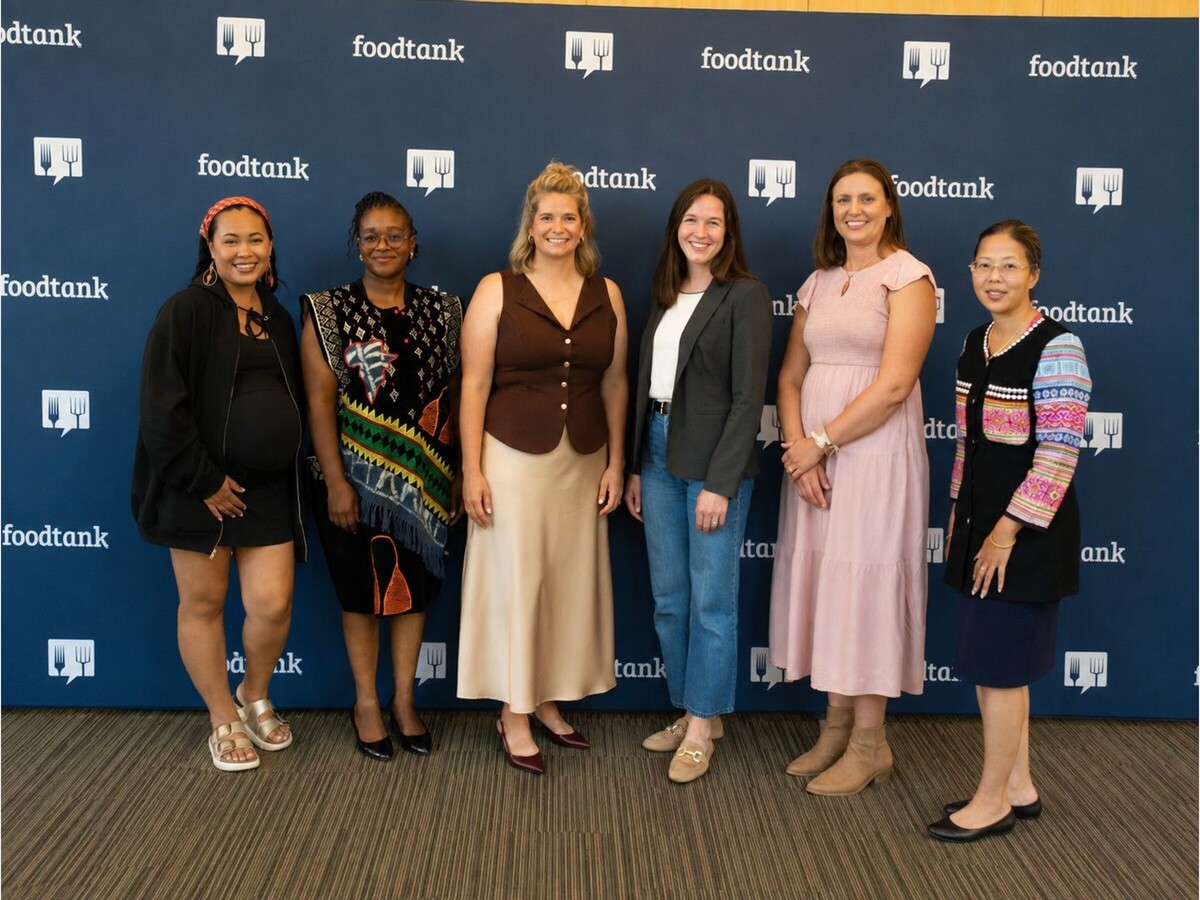
“Celebrating Minnesota’s Farmers: A Love Story” featured the personal and professional experiences of six women whose work reflects the changing face of Minnesota agriculture: Anita Fondikum, Mhonpaj Lee, Sina War, Emily Zweber, Maddie Hokanson and Trisha Zachman.
The program took place from 6 to 8 p.m. August 25 in Pohlad Hall. Food Tank organized the event with the City of Minneapolis, Minnesota Farmers Union and Niman Ranch as Minnesota prepared for the opening of the State Fair.
Celebrity chef and United Nations World Food Programme Goodwill Ambassador Andrew Zimmern participated in a fireside conversation. Singer Rachel Holder provided the evening’s musical performance.
The gathering used personal storytelling, short films, music and conversation to examine farming as a livelihood, family inheritance, cultural practice and public responsibility.
It was part of Food Tank’s “Voices of Farmers: A Love Story” series, which has brought farmers’ experiences before audiences at the Sundance Film Festival, SXSW, Adelaide Fringe, Dublin’s Smock Alley Theatre, London Climate Action Week and other international gatherings.
Bernard Pollack, Food Tank’s cofounder, served as the program’s director and dramaturg. The announced program also included short films produced by Haven Worley.
The six featured farmers represented different regions, commodities, cultural traditions and routes into agriculture. Together, their documented work challenges the idea that Minnesota farming can be represented by one crop, one community or one kind of family.
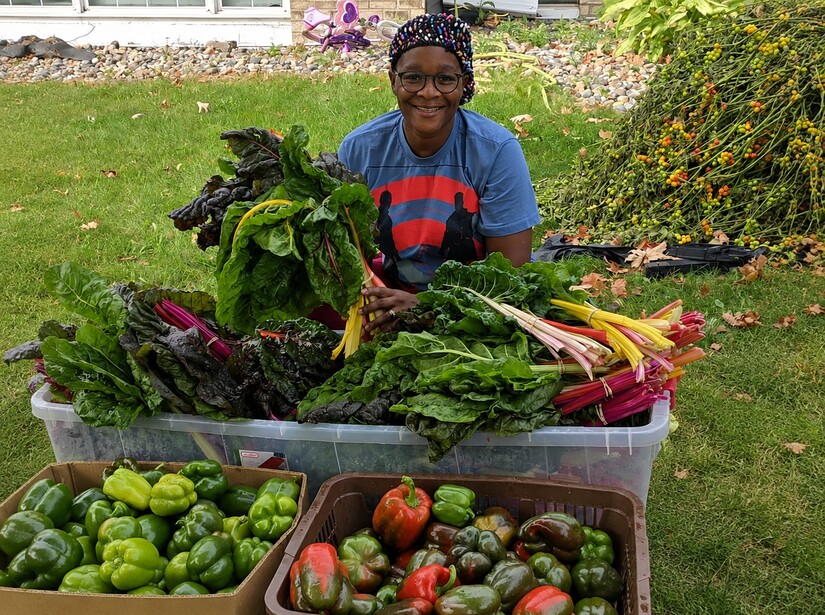
Anita Fondikum is a third-generation farmer who immigrated to the United States from Cameroon in 2014 and later established Shining Lights Farm in Rogers.
The farm grows vegetables with deep cultural importance to African and immigrant communities, including bitter leaf, waterleaf, njama njama, garden eggs, okongbong, habanero peppers, ghost peppers and lemongrass.
Many of these crops can be difficult to find in conventional Minnesota grocery stores. Producing them locally can shorten supply chains, give immigrant families fresher options and create markets for farmers whose agricultural knowledge has historically been underrepresented in state programs.
Shining Lights Farm describes its work as a combination of sustainable production, cultural preservation and community food access. Its customers include families, markets, restaurants and other food buyers.
Learn more about Shining Lights Farm
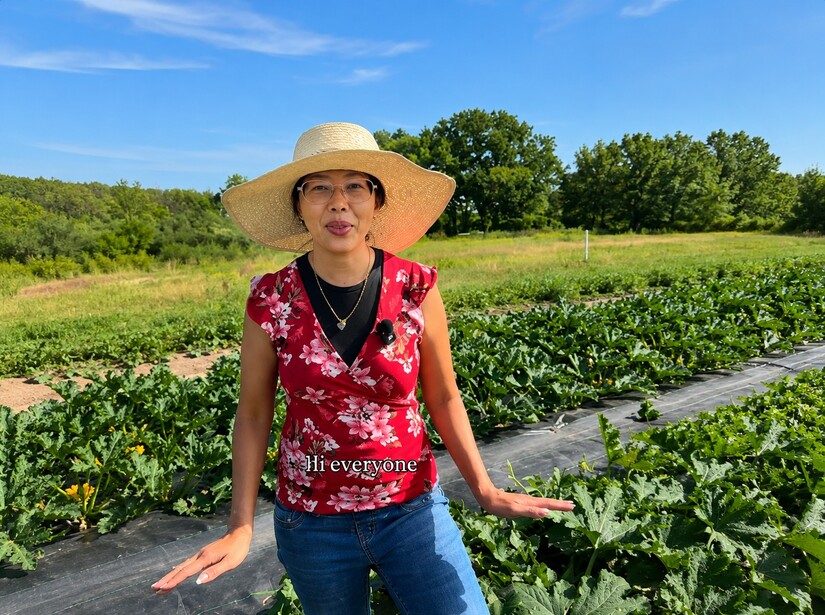
Mhonpaj Lee is an organic farmer and founder of Mhonpaj’s Garden, which became Minnesota’s first certified-organic Hmong-owned farm in 2010.
The family operation, led by Lee and her mother, May Lee, produces vegetables, herbs and bedding plants on agricultural land in the eastern Twin Cities region. Its principal farm is in Hugo, with production connected to additional land in Washington County.
Lee’s route into agriculture developed through immigrant-farmer training and land-access programs. Her work now combines commercial organic farming, community education and advocacy concerning the barriers confronting immigrant and emerging farmers.
Mhonpaj’s Garden sells through farmers markets and community-supported agriculture. Its presence in the local food system also preserves Hmong agricultural knowledge and gives consumers greater access to produce connected to Southeast Asian cooking and culture.
Read the Mill City Farmers Market profile of Mhonpaj’s Garden.
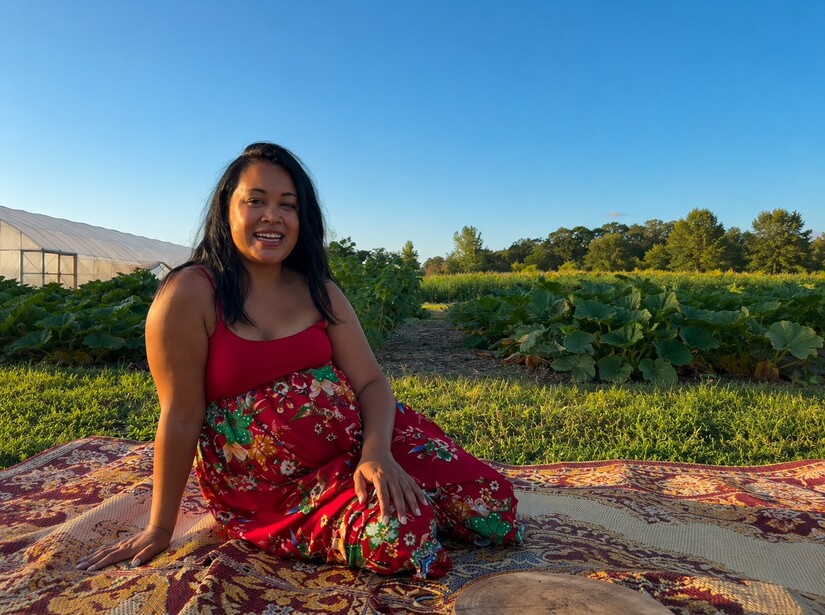
Sina War is the founder of Twin Tiger Farm & Gardens in the Saint Paul area.
Her work connects farming with Cambodian food traditions, culturally important produce and community food education. She has also worked in Minnesota’s farmers-market system, where growers must navigate not only production but also transportation, licensing, marketing and dependable access to customers.
Twin Tiger’s products have included produce and foods inspired by Cambodian flavors, including War’s Sinaracha hot sauce.
Her inclusion in Tuesday’s program placed cultural food preservation within the broader discussion of Minnesota agriculture. Food access is affected not only by whether food exists, but also by whether families can find foods that are familiar, culturally meaningful and appropriate to the way they cook and live.
KSTP’s Minnesota Live previously profiled Twin Tiger Farm & Gardens and its Minnesota-made hot sauce.
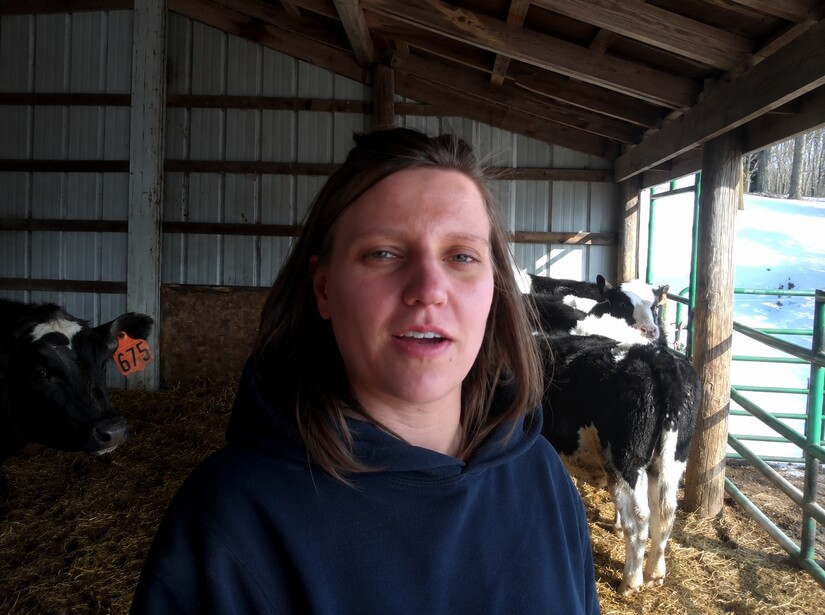
Emily Zweber is part of Zweber Farms near Elko, a multigenerational family operation associated with Organic Valley.
The farm’s history illustrates the importance of succession in Minnesota agriculture. A farm may survive for generations only when families can transfer land, knowledge, equipment and responsibility to the people who follow them.
Zweber has worked to explain organic dairy farming to consumers through agricultural education, public outreach and advocacy. Her work also represents the difficult position of dairy producers, who must manage animal care, feed, labor, land and substantial capital costs while operating within markets where producers do not independently control the prices they receive.
Learn more about Zweber Farms.

Maddie Hokanson represents the seventh generation of her family’s agricultural operation, Schafer Farms in southeastern Minnesota.
She works as the farm’s chief financial officer and is involved in pig and cattle production. She is also connected to Hokanson Family Farms through her husband’s family.
Her role underscores how modern farming requires more than knowledge of animals and crops. Farms must also manage financing, insurance, taxation, environmental requirements, contracts, labor, transportation and volatile production costs.
Hokanson has spoken publicly about agricultural advocacy and the responsibility of preparing another generation to continue farming. Her experience raises a central food-security question: Who will produce food when established farmers retire, and will younger farmers be able to afford the land, equipment and credit required to replace them?
Read more about Hokanson’s agricultural work.
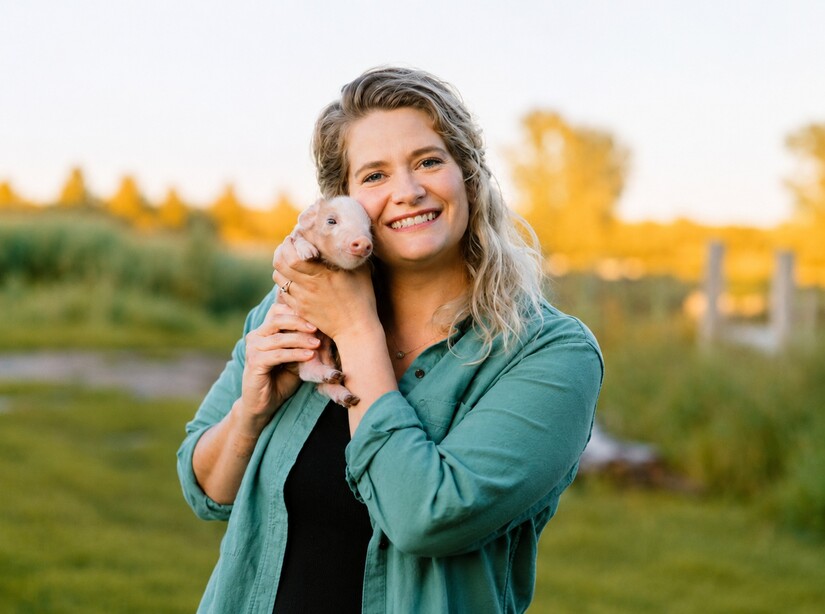
Trisha Zachman and her husband, Nolan, operate Feathered Acres Farm near Belgrade in central Minnesota.
The farm raises pigs for Niman Ranch and also keeps chickens, sheep, ducks, geese and alpacas. Its crop production includes corn, soybeans, rye, wheat, sorghum and peas.
Zachman’s agricultural experience includes a transition away from work connected to the conventional pesticide industry and toward a farming system centered on rotational grazing, cover crops, composting and reduced soil disturbance.
Feathered Acres also operates a farm stay and educational experiences designed to help visitors understand how food is produced. That combination of production, education and agritourism represents one way smaller farms are attempting to diversify their income while reconnecting consumers with agriculture.
Learn more about Feathered Acres Farm and its work with Niman Ranch.
The farmers’ stories were presented at a time when demand for emergency food assistance in Minnesota has reached unprecedented levels.
Minnesotans made approximately 9.03 million visits to food shelves during 2025, according to data compiled from 470 food shelves participating in the federal Emergency Food Assistance Program.
It was Minnesota’s fourth consecutive annual record. The number of visits was approximately two and a half times the total recorded in 2019.
A food-shelf “visit” represents a service encounter, not a unique person. One household may visit a food shelf multiple times during the year. Even with that distinction, the sustained increase shows that emergency food providers are confronting demand far above pre-pandemic levels.
The same groceries that cost $100 in 2019 cost approximately $131 in 2025, according to The Food Group. A statewide survey involving 9,759 food-shelf customers at 308 locations found that 72 percent had faced a choice between purchasing food and paying for another basic expense.
Review The Food Group’s 2025 food-shelf findings.
A separate statewide hunger study conducted for Second Harvest Heartland with Wilder Research estimated that one in five Minnesota households experienced food insecurity. The study also found higher rates among households with children and substantial racial disparities in reliable access to food.
Those figures measure different conditions and should not be treated as interchangeable. Food-shelf visits count service use, while household surveys attempt to determine whether people consistently have enough affordable food. Together, however, they document stress at both the household and emergency-response levels.
Read the Second Harvest Heartland statewide hunger study.
Minnesota’s hunger problem exists alongside an agricultural economy that produces food for local, national and international markets.
The state exports more than $8 billion in agricultural products annually. More than one-third of Minnesota’s approximately $22.1 billion in agricultural cash receipts is connected to exports, according to the Minnesota Department of Agriculture.
Review Minnesota agricultural trade information.
That agricultural strength does not mean every household can afford food, nor does it mean every farmer is financially secure.
Minnesota Farmers Union President Gary Wertish, whose organization participated in Tuesday’s event, has emphasized that rising grocery prices do not necessarily translate into increased income for farmers. Producers also confront higher costs for seed, feed, fuel, fertilizer, equipment, credit, land, labor and insurance.
The distinction is crucial. A state can produce enormous quantities of food while families struggle to buy groceries and farmers struggle to remain financially viable.
Nutrition programs such as the Supplemental Nutrition Assistance Program support eligible families’ purchasing power. Because those dollars are spent at grocery stores, markets and participating food retailers, they also circulate through the food economy that ultimately depends on agricultural production.
The Minnesota Department of Children, Youth and Families has described SNAP as a safety net affecting both families and farmers, while noting that rural grocery closures and transportation barriers can make food access especially difficult outside major population centers.
Read the state’s discussion of SNAP, families and farmers.
Several stories represented at Tuesday’s program also point toward another threat to long-term food security: the difficulty of entering agriculture.
Beginning and emerging farmers frequently face high land prices, limited access to financing and competition from established agricultural operations or nonfarm development.
Minnesota’s Down Payment Assistance Grant provides eligible beginning farmers with assistance of up to $20,000 toward the purchase of farmland. The 2026 application period gives priority consideration to farmers who have experienced limited access to land or agricultural resources.
Review the Minnesota Department of Agriculture’s Down Payment Assistance Grant.
The department is also accepting applications for its Emerging Farmers’ Working Group, which advises state officials about barriers confronting new farmers and agricultural communities historically excluded from programs, capital and land ownership.
Learn about the Emerging Farmers’ Working Group.
These programs do not eliminate the land-access problem, but they show that the state recognizes farm entry and succession as public-policy concerns rather than purely private family matters.
Andrew Zimmern’s participation brought an additional anti-hunger perspective to the gathering.
Zimmern is an Emmy-winning television personality and four-time James Beard Award recipient. The United Nations World Food Programme appointed him a Goodwill Ambassador in 2021, a role involving advocacy against hunger and food waste.
His public work has repeatedly connected culinary culture with the people, labor and natural resources behind food production.
Read the World Food Programme’s announcement of Zimmern’s appointment.
Food Tank’s published program also listed participation from Minnesota Agriculture Commissioner Thom Petersen, Minnesota Farmers Union President Gary Wertish, former Secretary of State Mark Ritchie, state Rep. Pam Altendorf, Zoe Hollomon of Midwest Farmers of Color, Ed Eiffler-Jaramillo from the Minneapolis mayor’s office and Victor Stefanescu of the Minnesota Star Tribune.
Video remarks were announced from Gov. Tim Walz, U.S. Sen. Amy Klobuchar and U.S. Rep. Kelly Morrison.
“Celebrating Minnesota’s Farmers” was not a legislative hearing and produced no formal government action. Its contribution was to place the experiences of working farmers before an urban audience at a moment when Minnesota is confronting record food-shelf use, high household costs, agricultural consolidation, land-access barriers and uncertainty about who will operate the next generation of farms.
The gathering also broadened the public image of a Minnesota farmer.
The featured participants included multigenerational livestock and dairy producers, an organic Hmong farming family, a Cambodian food entrepreneur, a Cameroonian immigrant growing culturally important vegetables and a central Minnesota family rebuilding its operation around regenerative practices.
Their farms differ in size, history, products and business structure. What connects them is their position near the beginning of a food system on which every household depends.
Tuesday’s program celebrated that work. The evidence surrounding it presents a harder question for Minnesota: How can a state that produces so much food protect its farmers while ensuring that every family can afford to eat?
That question is addressed in today's MinneapoliMedia’s editorial, “Securing Our Food, Fighting Against Hunger.”

Local stories matter. Subscribe free to MinneapoliMedia and receive independent news, community reporting and important updates from Minneapolis, the North Metro and communities across Minnesota.
SUBSCRIBE FREE: https://minneapolimedia.town.news/subscribe
MinneapoliMedia | Community. Culture. Civic Life



Sunny, with a high of 74 and low of 49 degrees. Sunny in the morning, clear in the afternoon and evening, smoky haze overnight.