Image
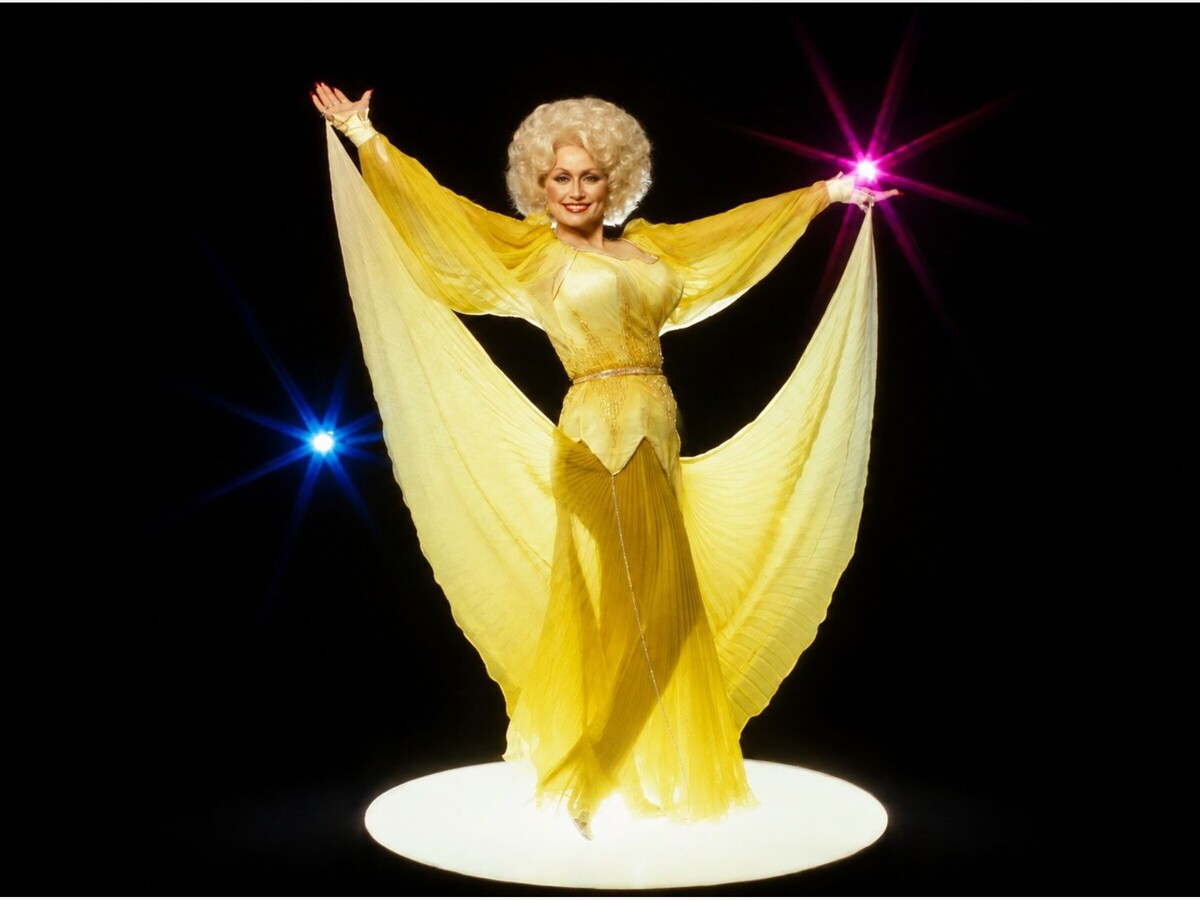



MINNEAPOLIS, MN (August 27, 2026) Dolly Parton spent more than seven decades writing about departures, proving that leaving could contain gratitude rather than defeat. Now, as the nation reckons with her death at 80, the challenge is not simply to remember her catalog of hits, but to understand the rare model of public power she leaves behind.
Parton died peacefully in Nashville on Tuesday, August 25, according to her official organization. Her family requested a small private service and encouraged those wishing to honor her to support Dolly Parton’s Imagination Library. The initial announcement did not disclose a cause of death.
She leaves behind thousands of songs, more than 100 million records sold, enduring performances across music and film, a major East Tennessee business enterprise and one of the world’s largest early-childhood book-gifting programs.
Those achievements explain her stature. They do not fully explain the grief that followed news of her death.
America loved Dolly Parton because she achieved power without treating ordinary people as though they were beneath her. She rose from poverty without making poverty sound like a personal failure, became wealthy without disguising her origins and defended her interests without losing the capacity to recognize the needs of others. In a country where fame routinely creates distance and contempt, she used it to make people feel acknowledged.
Her story began in Sevier County, Tennessee, as the fourth of 12 children born to Robert Lee Parton Sr. and Avie Lee Owens Parton. The family lived in a small Great Smoky Mountains cabin defined by real scarcity, little privacy and constant hardship. Parton never concealed those conditions, but neither did she reduce her childhood to deprivation. She recognized the sharp intelligence of a father who could not read, the resourcefulness of a mother who made clothing from scraps and the music that gave a crowded household its shared language.
Those memories were never simply artistic material. They established the moral foundation from which much of her work emerged.
In “Coat of Many Colors,” she recounted wearing a coat stitched by her mother from discarded pieces of fabric. While classmates mocked her for wearing scraps, Parton understood what they missed: the garment contained her mother’s labor and love. The song did not romanticize poverty or dismiss the sting of ridicule. It rejected the cruel premise that material scarcity determined a person’s worth.
That distinction helped Parton form a lasting relationship with working-class audiences. She did not describe poverty from the safety of someone embarrassed by having once experienced it. She wrote from inside the memory of being the child whose clothes attracted laughter. She knew that a family could possess little money and still contain intelligence, imagination, sacrifice and pride.
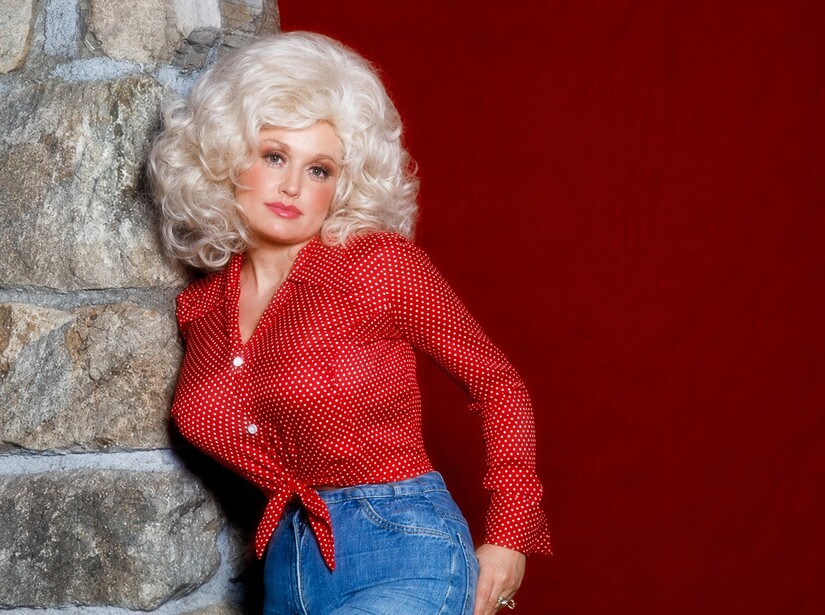
Parton began singing in church and appeared on local radio and television while still a child. At 13, she performed at the Grand Ole Opry. The morning after graduating from high school in 1964, she left for Nashville.
Success did not greet her at the city limits. Early attempts to package her as a pop singer failed to establish her career. She continued writing country songs, recording and looking for an opening. Her breakthrough arrived when Porter Wagoner invited her to join his nationally syndicated television program in 1967.
The partnership gave her access to a broad audience and produced a successful catalog of duets. It also became increasingly restrictive as Parton’s ambitions and identity as a solo artist developed. When the arrangement could no longer contain those ambitions seven years later, she chose to leave.
She communicated that choice through “I Will Always Love You.”
Written as a professional farewell to Wagoner, the song combined gratitude with independence. Parton honored the man who had opened a door for her while reserving the right to walk through it. She demonstrated that appreciation did not require permanent submission and that leaving a relationship could acknowledge what had been meaningful without surrendering the future.
That boundary extended directly to her business operations. When Elvis Presley sought to record the song, his manager, Colonel Tom Parker, required a substantial share of its publishing rights. Parton refused. She admired Presley and wanted to hear him sing her composition, but she would not surrender ownership of the work.
Years later, when Whitney Houston’s recording turned “I Will Always Love You” into an international phenomenon, the publishing income returned to Parton because she had protected the song when doing so meant declining an opportunity involving one of the most powerful figures in entertainment.
The episode revealed the discipline beneath Parton’s public warmth. She could be gracious without becoming compliant. She understood that creative work carried both emotional and economic value, and she recognized that artists, particularly women, could lose control of that value if they confused opportunity with fairness.
Audiences who saw only the wigs, makeup and country humor often underestimated her. Parton understood those social assumptions and converted them into leverage. Her self-directed jokes signaled that she knew what people saw and remained in command of the image. She could invite laughter without allowing the laughter to define her.
Her appearance was deliberately theatrical, but it was not dishonest. Parton spoke openly about wigs, cosmetics, rhinestones and cosmetic procedures. She did not ask audiences to mistake construction for nature. Her authenticity rested in acknowledging the construction while remaining consistent about the person and values beneath it.
Actor Henry Winkler, who directed Parton in the 1986 television movie A Smoky Mountain Christmas, offered one of the clearest explanations of the trust she inspired. Remembering her on Jimmy Kimmel Live! after her death, Winkler said Parton was “everything that you wanted her to be.” His observation carried particular weight because it came from someone who had worked with her away from the concert stage and beyond the public mythology. The elaborate image did not conceal an indifferent celebrity. Those who encountered her professionally repeatedly described the same qualities audiences believed they saw from a distance: preparation, humor, generosity and an unusual ability to make other people comfortable in her presence.
Guest host Jelly Roll, a Tennessee native, used the same appearance to describe Parton as the “Queen of Sevier County.” His words reflected the unusual place she occupied in East Tennessee. She was not regarded merely as a famous person who happened to have been born there. Her name became connected to the region’s employment, tourism, charitable institutions and public identity.
Behind the disarming exterior was an executive who wrote, negotiated, read audiences, maintained firm boundaries and built institutions designed to survive beyond a single hit or season of public attention. She moved successfully through country, pop, film, television, bluegrass, gospel and rock without surrendering the Appalachian identity that shaped her.
Her cultural output consistently centered the dignity of overlooked people. “Jolene” reframed jealousy as an open plea rather than a bitter attack. “Just Because I’m a Woman” confronted the sexual double standards of its era. “Down from Dover” gave attention to an abandoned pregnant woman. “9 to 5” placed workplace exploitation, low wages and corporate arrogance inside a popular song that workers could sing together.
Her writing was effective because it was clear. Parton did not need complicated language to establish complicated emotions. She could place listeners inside a recognizable human conflict and trust them to understand its weight.
Her work in film extended the same sensibility. As Doralee Rhodes in 9 to 5, she played a secretary subjected to harassment and dismissed because of her appearance. As Truvy Jones in Steel Magnolias, she portrayed a beauty shop owner whose warmth never required foolishness and whose place of business became a setting for friendship, grief and mutual care.
Parton understood women like Doralee and Truvy because she understood what it meant to be judged before being heard. She also understood the importance of the informal places where ordinary people share information, offer support and survive difficulties that larger institutions often fail to see.
Her commercial wealth followed the same grounded logic. In partnership with Herschend Family Entertainment, she developed Dollywood near the East Tennessee communities that raised her. The enterprise became a major regional employer and tourism destination, presenting Appalachian music, food, craftsmanship and culture as worthy of investment and public respect.
Parton did not simply speak fondly about her home after becoming successful elsewhere. She connected her name and financial interests to economic activity within the region. Her story was not limited to leaving poverty behind. It included returning with employment, investment and cultural pride.
Her philanthropy mirrored that practicality. In 1995, she created Dolly Parton’s Imagination Library in honor of her father. The program mails free, age-appropriate books directly to enrolled children from birth to age five. It requires no proof of poverty and imposes no bureaucratic humiliation on participating families.
The design carries an important moral choice. The book arrives addressed to the child. It does not present reading as assistance reserved for someone formally classified as disadvantaged. It gives the child ownership of something new and invites the household to build a relationship with reading.
By the time of Parton’s death, the program had distributed more than 300 million books through participating communities in the United States, Canada, the United Kingdom, Australia and Ireland. Its scale reflected her ability to convert a personal memory into durable public infrastructure.
Parton recognized that illiteracy was an obstacle, not a measure of intelligence, because she had witnessed that distinction in her father. She designed a program intended to prevent the same obstacle from limiting another generation of children.
When the 2016 Great Smoky Mountains wildfires destroyed or damaged thousands of buildings, her My People Fund provided direct monthly payments to families who had lost their primary residences. The initiative trusted affected households to understand their own needs and manage their recovery.
She also supported pediatric health care at Vanderbilt University Medical Center, donated $1 million to Vanderbilt research associated with the development of the Moderna COVID-19 vaccine and joined her businesses in committing $2 million to relief following Hurricane Helene in 2024.
These actions strengthened her public reputation because they addressed identifiable needs and produced measurable results. Her generosity did not end with a public announcement. It became books in homes, assistance after disaster, support for medical research and jobs in the region she continued to call home.
Central to her public life was an Appalachian Christian faith that expanded rather than narrowed her empathy. She spoke openly about prayer, scripture and the religious family that raised her, but she generally refused to use her convictions as a weapon of exclusion.
That posture allowed conservative Christians to recognize the traditions that formed her while ensuring that LGBTQ people, religious minorities and nonbelievers felt respected. She did not abandon her faith to become broadly accepted. She emphasized the elements of that faith that called her toward mercy, humility and love.
In an era dominated by partisan hostility, her refusal to turn public life into a permanent political contest preserved her relationship with audiences who had long since stopped listening to one another. She rarely endorsed candidates and resisted efforts to assign her permanently to a political camp.
That did not make her public record empty of values. Her songs and actions addressed women’s inequality, working-class struggle, literacy, disaster recovery, childhood opportunity, public health and the dignity of LGBTQ people. She generally communicated those values through storytelling and sustained action rather than party affiliation.
Her broad public trust was quantifiable. An April 2026 survey by the University of Massachusetts Amherst and YouGov found that 70 percent of respondents viewed Parton favorably while only 5 percent viewed her unfavorably. Her net favorability rating of plus 65 reflected a level of public affection almost extinct in contemporary American culture.
She achieved it without flattening her identity into something vague. She remained openly Southern, Appalachian, Christian, feminine, commercially ambitious and country in musical foundation. People embraced her not because she concealed those identities, but because she inhabited them without using them to belittle anyone else.
That is the lesson America must study now.
Modern public life frequently celebrates kindness as a private virtue while rewarding cruelty as a political and commercial strategy. It praises authenticity while demanding that public figures convert every conviction into partisan warfare. It admires generosity while building systems that require people to submit to humiliation before receiving help.
Parton offered a countermodel. She maintained convictions without treating disagreement as proof of moral worthlessness. She defended her commercial interests without becoming consumed by grievance. She demonstrated that climbing to the top of an industry did not require leaving decency behind.
Her life should not be flattened into saintly myth. She was a shrewd guardian of her image, a sharp entrepreneur and a disciplined controller of her public exposure. Those qualities make her legacy more impressive, not less.
Her kindness was not accidental. It was organized. Her generosity was not impulsive. It was structural. Her humility did not require her to deny her ability. It required her to remember that talent did not render anyone else lower in value.
In the coming weeks, her classic recordings will play across the world. Listeners will hear the desperate plea of “Jolene,” the typewriter-like rhythm of “9 to 5,” the childhood dignity of “Coat of Many Colors” and the soaring gratitude of “I Will Always Love You.”
Yet her most important legacy will continue more quietly: a worker reporting to a job in East Tennessee, a family rebuilding after a disaster, a songwriter retaining control of a catalog and a child opening a mailbox to find a book addressed directly to them.
Parton will not be there to see that child open the cover, but her belief in that child’s worth remains.
America has lost an extraordinary artist. It has also lost its most convincing proof that ambition and decency can coexist. Dolly Parton rose as far as a child from the Tennessee mountains could travel, reaching the highest levels of music, film and business. She did it without teaching the people at the bottom to be ashamed of where they stood.
Goodbye, Dolly. We will always love you, not only for the songs you gave us, but for the people you refused to leave behind.

Local stories matter. Subscribe free to MinneapoliMedia and receive independent news, community reporting and important updates from Minneapolis, the North Metro and communities across Minnesota.
SUBSCRIBE FREE: https://minneapolimedia.town.news/subscribe
MinneapoliMedia | Community. Culture. Civic Life.


Sunny, with a high of 73 and low of 49 degrees. Sunny for the morning, clear for the afternoon and evening, smoky haze overnight.