Image
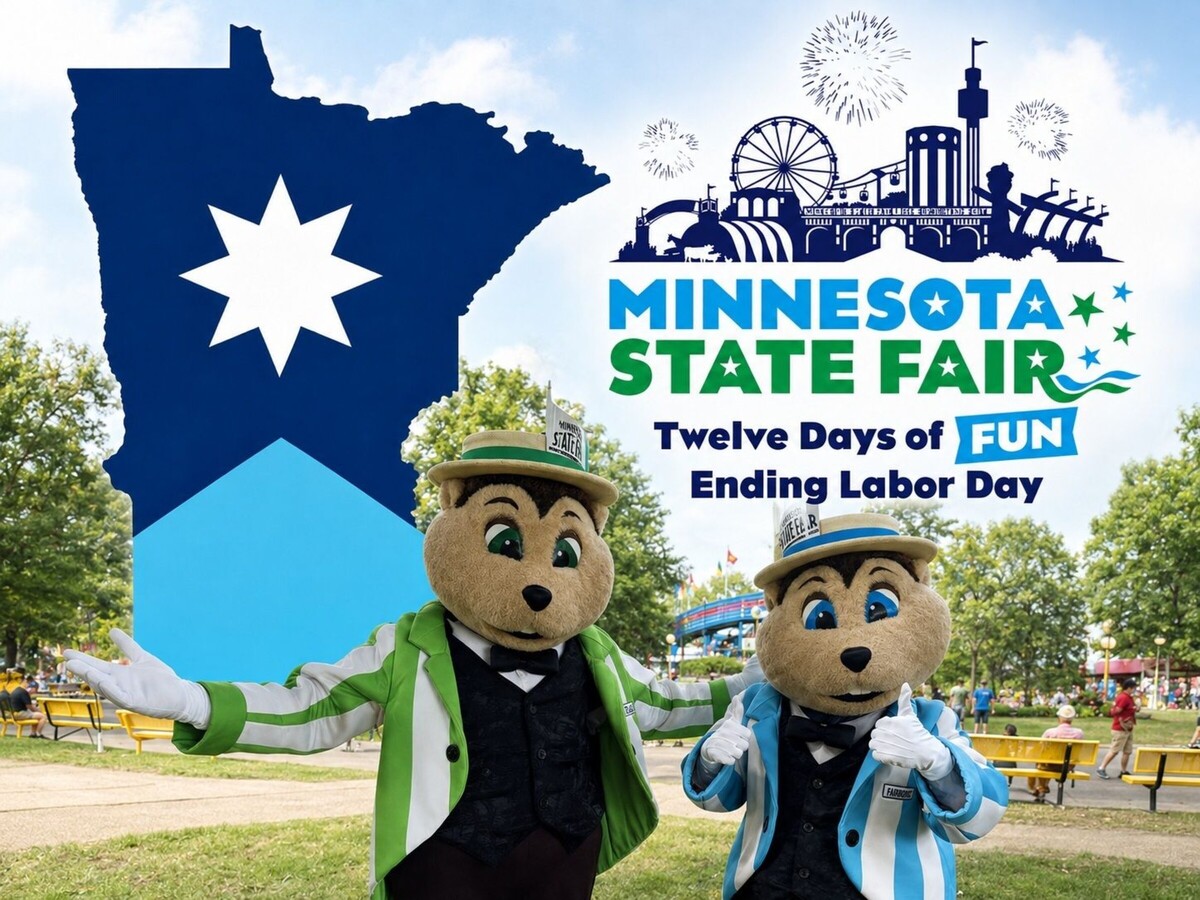



SAINT PAUL, MN (August 27, 2026) At seven o’clock this morning, the gates of the Minnesota State Fair opened, and Minnesota began one of its most familiar journeys.
Families arrived with children still rubbing sleep from their eyes, while farmers checked animals prepared over long months. Vendors lifted windows, tested equipment and counted change. Walkways clear at sunrise would soon disappear beneath thousands of feet. A first-time visitor unfolded a map near the main gate, and nearby, a grandmother led another generation toward the same barn her own parents showed her decades ago.
For the next 12 days, through Labor Day, nearly two million people will move across the fairgrounds. They travel from farms, apartment buildings, tribal lands, city blocks, suburbs and small towns, representing every Minnesota county and states well beyond our borders. They show up for livestock, machinery, art, music, food, rides, ribbons and the rare pleasure of being among neighbors with nowhere more urgent to be.
This year, the gates open upon a Minnesota carrying more than the usual memories of summer.
The state enters this season after a hard year of disruption, fear and loss. Familiar streets became scenes of confrontation. Families withdrew from schools, workplaces, grocery stores and medical appointments when leaving home felt uncertain. Neighbors disappeared into detention, and small businesses lost the customers and workers who kept their doors open.
Operation Metro Surge was no distant dispute over federal policy. It cut directly into daily life. The City of Minneapolis estimated nearly $700 million in community and governmental consequences. Lost wages, missed school days, delayed health care and collapsed business revenue hit hard, with immigrant and refugee communities carrying the heaviest burden before the damage spread outward into classrooms, congregations and workplaces.
Minnesota also carries the grief of lives lost amid that turmoil, the trauma of residents who witnessed violence, and the exhaustion of neighborhoods forced to organize food, legal assistance and transportation when ordinary systems faltered.
Today marks one year since the attack at Annunciation Catholic Church and School in Minneapolis, where eight-year-old Fletcher Merkel and 10-year-old Harper Moyski were killed during the first Mass of the school year. Their families, classmates, teachers and parish enter this anniversary with a weight no public ceremony can measure.
Adding to the week's gravity, the world lost Dolly Parton just as Minnesota prepared for its largest annual gathering. Her death resonated far beyond country music because she never belonged only to one genre. She rose from poverty without disowning where she came from, became famous without looking down on ordinary people, and showed that success grows through generosity.
Minnesota knew her through records and television, but also through four memorable appearances at the Grandstand in 1969, 1975, 1978 and 1993. Over those decades, local audiences watched her grow from a rising performer on multi-artist bills into an international icon. Those who heard her at the fair heard wit without cruelty, confidence without arrogance, and a woman who refused to let early hardship limit her life.
The Grandstand stands firm, the crowds will gather, and new voices will take that stage. Yet public places hold onto the memories created inside them, and Dolly Parton’s music now belongs to the history of those grounds. Her passing gives opening day another layer of reflection, reminding us how the fair constantly balances memory with anticipation.
The exchange between generations explains why the fair endures. Beyond the assembly of end-of-summer attractions, it serves as a practical record of local work, production and changing values.
The barns tell the story of agriculture long before anyone reaches a food stand. Young people lead animals raised through months of patient effort. Farmers compare seasons, feed, rainfall and markets, while exhibitors demonstrate the discipline behind every ribbon and machinery displays track the evolving nature of farm labor.
In surrounding buildings, Minnesotans submit quilts, preserves, photographs, paintings, flowers and inventions for judgment. The fair grants serious space to qualities often rushed past in daily life: craftsmanship, practice and the dignity of building something well. A jar of jam carries a family recipe, a photograph preserves a town before new construction, a teenager’s livestock project shows early responsibility, and a seed reflects generations of agricultural knowledge brought to Minnesota from across the globe.
The grounds also show that Minnesota cannot be captured by a single narrative. The state in 2026 speaks dozens of languages and gathers in churches, mosques, synagogues, temples and community spaces. It holds families rooted here for generations alongside arrivals adjusting to their first local winter, and Indigenous communities whose ancestors walked this land long before it bore its current name.
That diversity takes on clear meaning during the 250th anniversary of American independence. On July 4, the nation marked two centuries and a half since the adoption of the Declaration of Independence. The milestone invited celebration, but it also required plain honesty. The promise that all people are created equal has acted as both an ideal and a standard, inspiring progress while highlighting the distance between national principles and lived realities. A mature country honors its founding by taking responsibility for extending dignity and equal protection to everyone within its borders.
The State Fair cannot resolve national political debates, nor should 12 days of food and competition carry obligations belonging to courts and legislatures. Yet the fair offers a useful practice ground for civic life.
Democracy depends on whether people can occupy shared space without treating each other as threats, allow differences without dehumanizing neighbors, and recognize the person standing next to them before applying a label. At the fairgrounds, people who disagree on major issues share the same lines and tables. They take photos for visiting families, hold doors for strollers, give directions, make room for wheelchairs and point out a spilled drink.
Most visitors will never learn the political party, religion or private struggles of the person next to them in line. For a few hours, they simply navigate the crowd toward the Dairy Building. Civic culture grows out of those small, repeated habits.
Minnesota Nice is often described as simple politeness or conflict avoidance. At its best, it means protecting another person's dignity without expecting credit. This year demands taking that habit a step further toward genuine community care.
That kind of care is practical, not sentimental. It means making room for others, noticing a parent managing three tired kids and offering a hand, respecting workers standing for hours in the heat, and greeting the farmers whose labor built the displays. It means showing patience with older visitors, kindness toward people with disabilities, and open curiosity when hearing an unfamiliar language.
Many visitors from outside the state form their lasting impression of Minnesota right here. They will remember the food, but they will also remember if a stranger offered directions or made space at a crowded table when no cameras were around.
Belonging to a community comes with shared responsibility. Enjoy the event, but respect the work behind it. Celebrate local agriculture while remembering farmers navigating drought, debt and shifting markets. Enjoy the abundance of food while keeping in mind the families visiting local food shelves, and admire the achievements of young exhibitors while considering the state we are building for them.
Keep those who cannot attend in mind today. Remember the grieving families at Annunciation, the households reshaped by Operation Metro Surge, and the small business owners working to recover. Remember Dolly Parton when music fills the Grandstand, along with her example that greatness has plenty of room for humility and humor.
For the next 12 days, Minnesota has the chance to see itself clearly. We can show a state that has faced real hardship without losing its capacity for shared purpose, where grief has not created coldness and fear does not govern how we greet a stranger.
Gather from Minneapolis, Moorhead, Duluth, Rochester, Worthington, Warroad, Coon Rapids and Saint Paul. Come in from the prairie, the Iron Range, river towns, tribal nations, suburbs and neighborhood blocks. Welcome visitors arriving from Iowa, Wisconsin, the Dakotas, Canada and beyond who want to experience this tradition firsthand.
Come hungry, bring good walking shoes, and step onto the grounds ready to put our best community habits into practice. Let everyday politeness open the gate, let real hospitality welcome everyone through, and let these 12 days prove that our tables remain open to all.

Local stories matter. Subscribe free to MinneapoliMedia and receive independent news, community reporting and important updates from Minneapolis, the North Metro and communities across Minnesota.
SUBSCRIBE FREE: https://minneapolimedia.town.news/subscribe
MinneapoliMedia | Community. Culture. Civic Life.



Sunny, with a high of 73 and low of 49 degrees. Sunny for the morning, clear for the afternoon and evening, smoky haze overnight.