58° and Sunny
Image
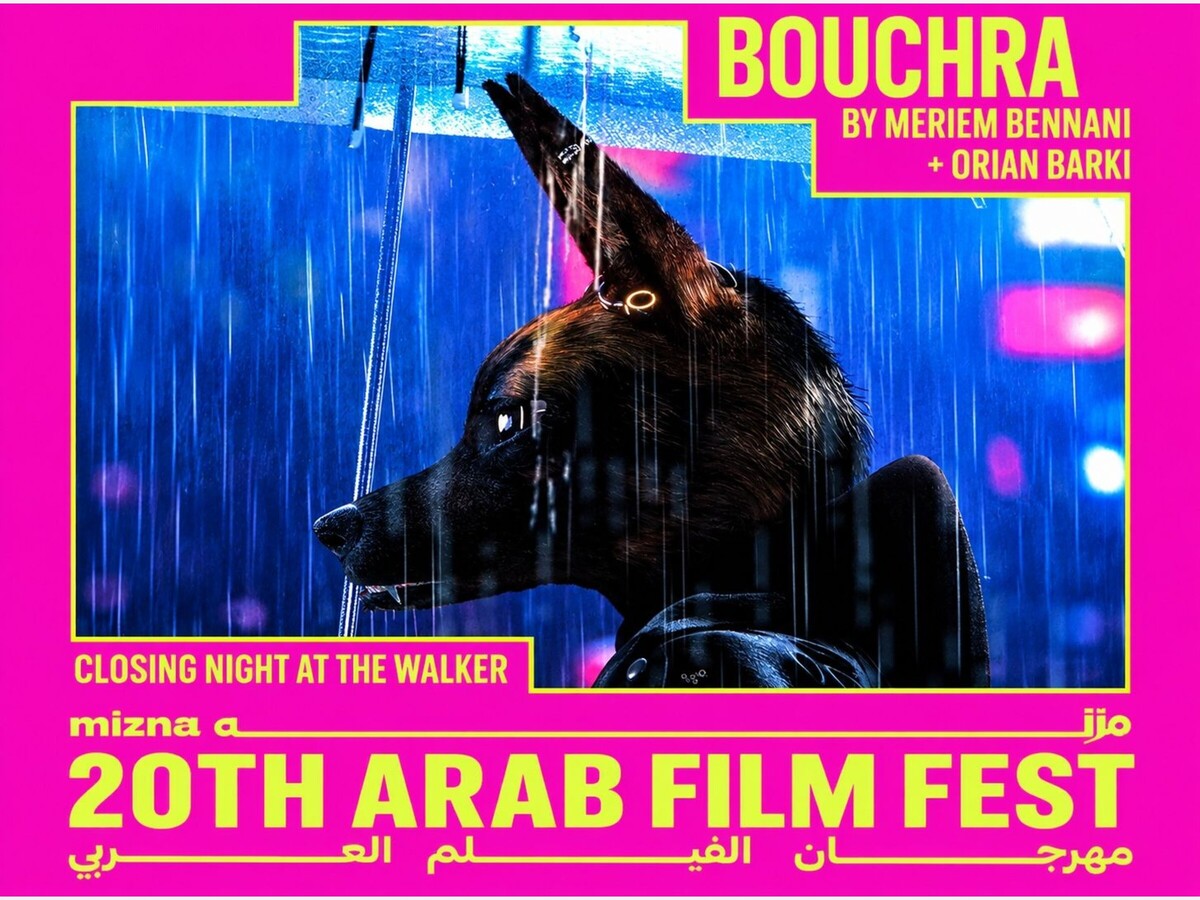



The closing-night program begins with a reception at 5 p.m. Sunday, September 27, in the Walker Art Center lobby. The screening will follow at 7 p.m. in Walker Cinema, 725 Vineland Place in Minneapolis.
A remote conversation with the film’s directors, Meriem Bennani and Orian Barki, is scheduled immediately after the screening.
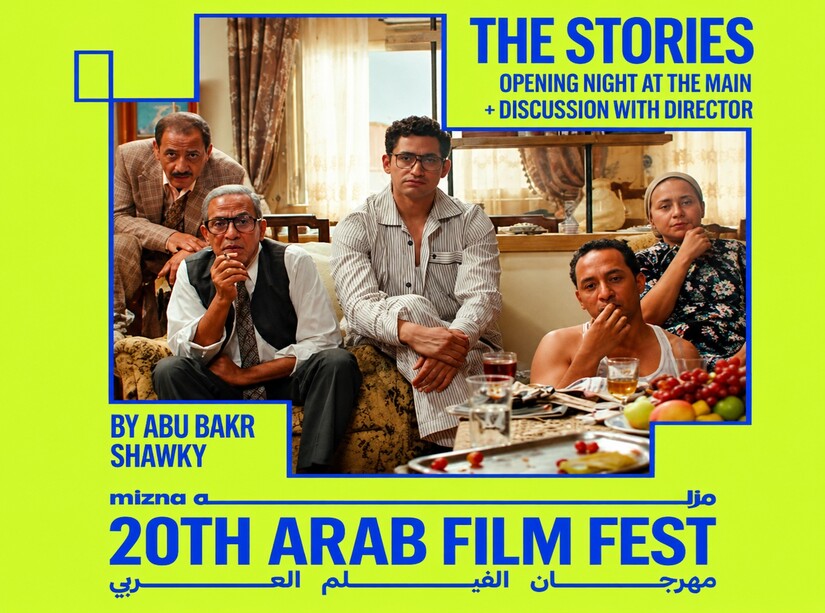
The event closes a five-day festival presented by Mizna, the St. Paul-based contemporary arts organization that centers Arab and Southwest Asian and North African artists. This year’s festival began September 23 and has presented films, conversations, performances and community gatherings at The Main Cinema, Walker Art Center and several other Minneapolis venues.
The 2026 edition carries particular significance for Mizna. It marks the 20th presentation of what the organization describes as the Midwest’s largest and longest-running film festival devoted to Arab and Southwest Asian and North African cinema.
Established in 2003, the festival introduces Twin Cities audiences to independent narrative films, documentaries, experimental works, animation and restored cinema from Arabic-speaking countries and their diasporas. Its programming has included filmmakers connected to Morocco, Palestine, Lebanon, Yemen, Sudan, Egypt, Algeria, Iran and other parts of the region.
Mizna has framed the anniversary through a yearlong program titled “Looking Forward, Looking Back.” Rather than treating the milestone only as a retrospective celebration, the organization has used the program to reconsider how Arab and Southwest Asian and North African people have been represented, how cinematic archives are interpreted and what earlier works can reveal about the political and cultural conditions of the present.
The festival’s 2026 programming has taken place primarily at The Main Cinema in Minneapolis. Additional events have been held beneath the Third Avenue Bridge, at Bryant Lake Bowl, A-Mill Artist Lofts and the Walker Art Center.
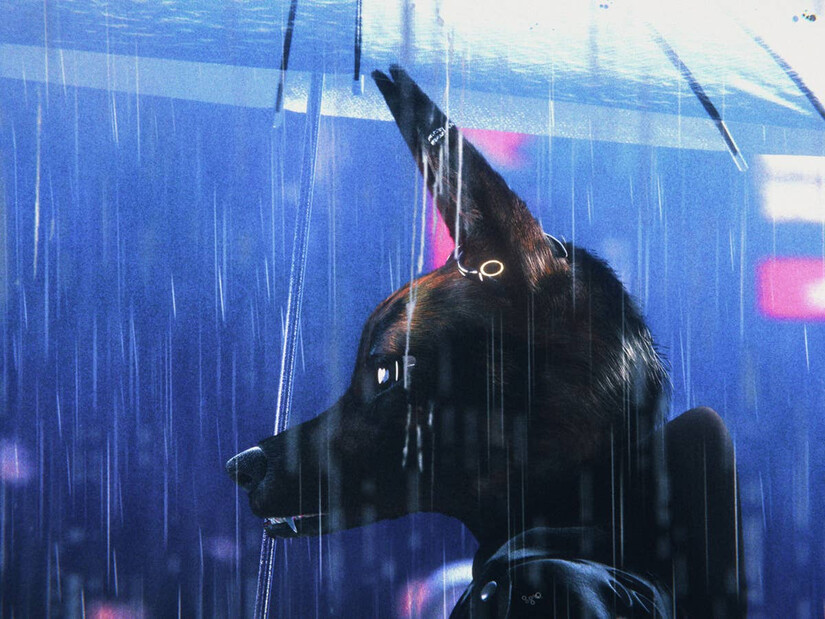
At the center of Sunday’s closing-night film is Bouchra, a 35-year-old Moroccan filmmaker living in New York City. She is represented as an anthropomorphized coyote in a world populated by similarly humanlike animals.
The story begins with a long-distance telephone conversation between Bouchra and her mother, Aicha, who lives in Casablanca. Their exchange moves toward a subject they have largely avoided: Bouchra’s queer identity and romantic life.
The distance between New York and Casablanca is not merely geographic. It represents the emotional separation between a daughter trying to speak honestly about her life and a mother processing that life through her own cultural, personal and generational understanding.
Bouchra is also struggling creatively. She begins turning the conversation with her mother into a screenplay, using art to understand a relationship that cannot be reduced to either complete acceptance or outright rejection.
The film therefore operates on several levels. It is a family drama, a queer coming-of-age story involving an adult daughter, an examination of migration and an account of how artists transform private experiences into public work.
Its narrative was inspired by Bennani’s real conversations with her own mother. Rather than presenting those exchanges as a conventional documentary, Bennani and Barki fictionalized and reimagined them through three-dimensional animation.
The resulting film moves between autobiography and invention. The characters are animated animals, but their conversations, hesitations and emotional tensions are rooted in recognizable human relationships.
Aicha is voiced by Moroccan-French artist Yto Barrada. The film is presented in English, Arabic and French with English subtitles and runs approximately 85 minutes. It is a 2025 production involving Italy, Morocco and the United States.
The central relationship in Bouchra is shaped by queer identity, but the film does not treat the mother and daughter as simple representatives of opposing beliefs.
Instead, it explores how affection, discomfort, humor, silence and misunderstanding can exist within the same relationship.
That complexity is important to the film’s cultural setting. Bouchra is attempting to live openly in New York while remaining emotionally connected to her mother and Moroccan home. Her mother, meanwhile, must respond to a daughter whose life does not fit comfortably within expectations she may have carried for years.
The animated form gives the filmmakers room to approach those tensions indirectly. Turning the characters into animals creates imaginative distance while allowing the conversations to remain emotionally intimate.
The form also reflects Bennani’s broader artistic practice. Her video installations and sculptures frequently combine documentary, reality television, cartoons, science fiction, music videos and internet culture. Much of her work considers Moroccan life, migration, postcolonial identity and the way images circulate across cultural and technological boundaries.
Barki, a New York-based filmmaker, is known for character-centered documentary work that she often films and edits herself. Her projects have appeared through outlets and platforms including PBS, ESPN, Vogue, The Fader, Nowness and Le Cinéma Club.
Their collaboration allows Bouchra to move between the observational qualities of documentary and the visual freedom of animation. Its shifting form reflects a protagonist who is also moving between identities: daughter and independent adult, Moroccan and New Yorker, documentarian and fictional storyteller.
The selection of Bouchra as the festival’s final film is consistent with Mizna’s emphasis on work that complicates familiar descriptions of Arab and diaspora life.
Rather than offering a single definition of Arab identity, the festival brings together works shaped by different countries, languages, political histories, religions, genders and experiences of migration.
That approach challenges film traditions in which Arab and Southwest Asian and North African people are frequently presented through war, terrorism, displacement or political crisis. Those realities remain important to the festival’s programming, but Mizna also creates room for comedy, romance, sexuality, family disagreements, experimentation and everyday life.
The organization describes its film festival as a space in which filmmakers at different stages of their careers can enter into conversation with one another and with Twin Cities audiences.
The screenings are therefore accompanied by discussions, artist appearances, performances and community events. Sunday’s conversation with Bennani and Barki gives viewers an opportunity to hear directly from the filmmakers about their use of personal material, their decision to employ animation and their approach to portraying a queer Moroccan woman’s relationship with her mother.
The directors are scheduled to join that conversation remotely after the screening. The Walker’s official listing does not describe the appearance as an in-person visit.
Bouchra is the second of two films being presented Sunday at Walker Cinema as part of the festival’s closing day.
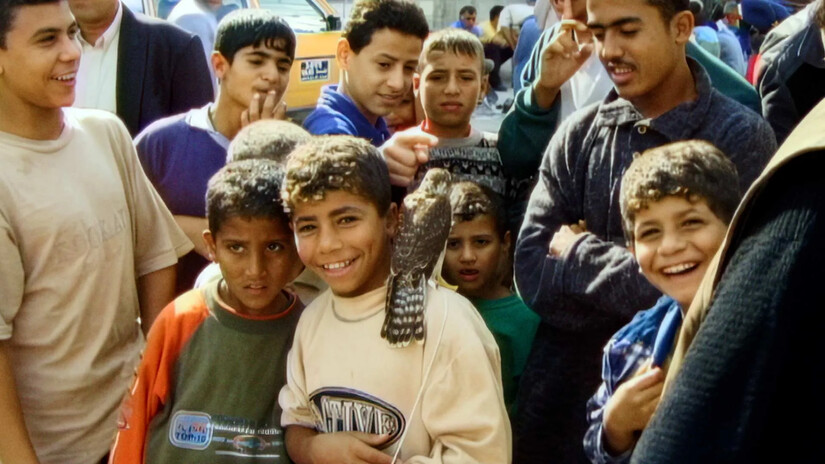
At 3 p.m., the Walker will screen Kamal Aljafari’s With Hasan in Gaza, a 106-minute film constructed from MiniDV footage Aljafari recorded in Gaza in 2001.
Aljafari originally traveled through Gaza with a local guide named Hasan while searching for a man he had known during imprisonment in the first Palestinian Intifada. The footage remained largely unused for more than two decades.
When Aljafari returned to the recordings, he recognized that they contained a film of their own. The images document streets, landscapes and ordinary encounters in a Gaza that has since been profoundly altered.
The film is presented in Arabic with English subtitles. The Walker has advised viewers that it contains images of war and violence.
The reception separating the two screenings begins at 5 p.m. in the Walker lobby. Festival information identifies the gathering as the hosted closing reception. Attendees should consult Mizna or the Walker for the final food-service details.
Tickets for Bouchra are $15 for general admission and $12 for Walker members, students and seniors.
Festival passes include the Walker closing-day programs, but possessing a festival pass does not automatically guarantee admission. Passholders must reserve a seat for the screening in advance.
The Walker also offers a first-film-free program for people who have not previously attended a screening in Walker Cinema. Restrictions apply, and advance booking is required.
The Walker has issued a content notice stating that Bouchra includes depictions of sexual intimacy. Audience members may leave and reenter the cinema when necessary.
Visitors seeking disability-related accommodations may contact Walker Visitor Services at 612-375-7564 or access@walkerart.org. The Walker asks visitors to submit accommodation requests at least two weeks before an event when possible, although people with immediate questions may still contact Visitor Services.
The Walker Art Center is located at 725 Vineland Place, Minneapolis, Minnesota 55403.
Event: Closing-night screening of Bouchra
Directors: Meriem Bennani and Orian Barki
Date: Sunday, September 27, 2026
Closing reception: 5 p.m.
Screening: 7 p.m.
Post-screening program: Remote conversation with Bennani and Barki
Running time: Approximately 85 minutes
Languages: English, Arabic and French with English subtitles
Location: Walker Cinema, Walker Art Center, 725 Vineland Place, Minneapolis, MN 55403
Admission: $15 general admission; $12 for Walker members, students and seniors
Content notice: The film contains depictions of sexual intimacy
Accessibility contact: 612-375-7564 or access@walkerart.org
Tickets and official information: Walker Art Center
Festival information: Mizna
Sources: Walker Art Center; Mizna; MSP Film Society.
STAY CONNECTED
Follow MinneapoliMedia for verified local news, arts coverage, community reporting and consequential developments from Minneapolis, the Twin Cities and communities across Minnesota.

Local stories matter. Subscribe free to MinneapoliMedia and receive independent news, community reporting and important updates from Minneapolis, the North Metro and communities across Minnesota.
SUBSCRIBE FREE: https://minneapolimedia.town.news/subscribe
MinneapoliMedia | Community. Culture. Civic Life

Overcast, with a high of 51 and low of 43 degrees. Don't forget your umbrella! Light drizzle in the morning, light rain in the afternoon, overcast during the evening,