Image
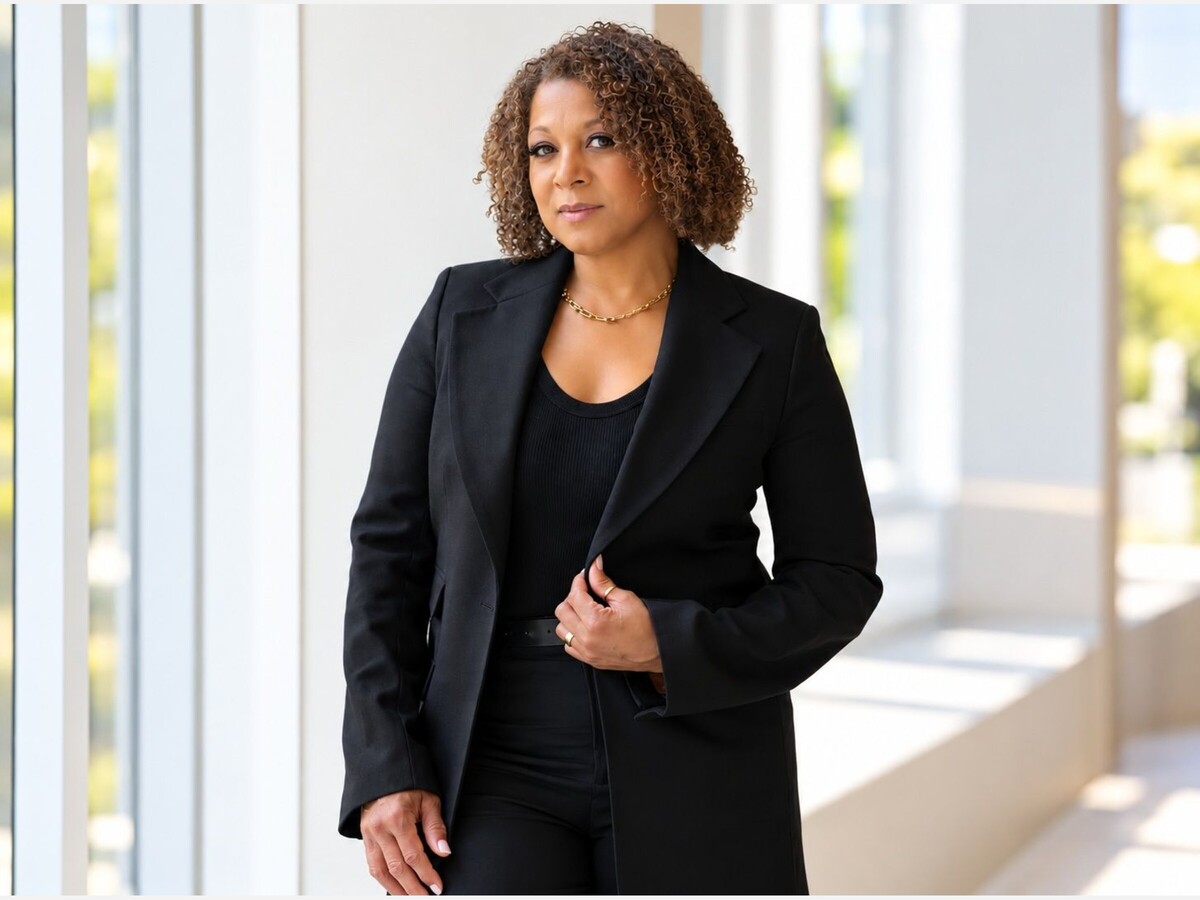



SAINT PAUL, MN (October 6, 2026).
Before Mikeya Griffin became president and CEO of Rondo Community Land Trust, before the real estate work, government service, negotiations, development projects and responsibility of leading an organization with increasingly ambitious plans for Saint Paul, she was Kiki.
Kiki was the little girl surrounded by relatives, church members, cousins and elders in Saint Paul's historic Rondo community. She remembers Sundays organized around church and family, yards where people grew food, houses full of relatives, and adults who did not treat helping other people as a special event requiring recognition.
People going through difficult times sometimes came to the back door. They might need something to eat, clothing or somewhere to stay. Griffin was young enough that she did not fully understand homelessness or the circumstances that brought people there, but she understood that people helped.
"We would help support people, whether that was a meal, a dress, a place to stay," Griffin recalled during a July 28 interview with MinneapoliMedia. "All of those things just were embedded in."
Generosity came with another lesson: everyone had responsibilities. Griffin remembers being expected to wash dishes and contribute. Her great-aunt, the family matriarch, had an expression that stayed with her: "Even the ants have a job to do."
What Griffin witnessed as a child, she would later understand as mutual aid. At the time, it was simply how family and community operated. "Collaborative mutual aid really is how I grew up," she said. "That's really my North Star, really, around community and support."
More than five decades after Interstate 94 cut through Rondo, Griffin now leads an organization concerned with a related set of questions on a much larger scale: Who gets to remain in a community as property values change? Who owns the land beneath homes and businesses? Who benefits from development? How can affordability survive beyond a single subsidy cycle? And how does a neighborhood welcome investment without surrendering the people, businesses and culture that made it valuable in the first place?
Those questions make Griffin's work technical. They involve real estate, financing, land-use policy, housing affordability, commercial property and long-term stewardship. But the work is also personal. Griffin did not arrive in Rondo as an executive encountering someone else's neighborhood problem. She grew up in the community and eventually returned to lead an organization whose mission intersects directly with the history that shaped her family and neighbors.
Griffin describes her childhood first through the language of love and security. "I grew up as a young child just enveloped in love and security in ways that I appreciated until I was much older," she said.
Her family had Southern roots. On her mother's side, relatives came from Port Gibson, Mississippi. Her mother's family practiced the Southern Baptist tradition, while her father's side was Catholic and had roots in Georgia. Faith did not exist separately from family life.
Griffin attended Mount Olivet Baptist Church and also remembers going to St. Peter Claver Catholic Church with her great-grandmother. As a child, she wondered why her great-grandmother attended both churches. Her great-grandmother wanted Griffin to understand that she was loved by her father's family, too. The message was larger than the denominational difference. Family, belonging and faith were being reinforced together.
Griffin also remembers being precocious, and one childhood story still makes the point. Her grandmother loved her indoor plants. Griffin once stripped the leaves from them, placed the leaves in her blanket and was discovered in the middle of the operation.
Her grandmother asked what she was doing.
"I'm picking greens," Griffin answered.
The explanation made perfect sense to a child accustomed to seeing family members go into the yard, pick greens and tomatoes, and bring them inside to cook.
There was considerable freedom in Griffin's childhood, but anonymity was harder to come by. Between relatives, church members and neighbors, someone usually knew her mother, grandmother, aunt, uncle or cousins. Griffin jokingly described herself as the beneficiary of community-wide accountability. Misbehavior was difficult when so many adults knew exactly where a child belonged.
She also read constantly and remembers disappearing into the library long enough that adults wondered where she had gone. Books became another important part of her childhood.
What emerges from those memories is not an idealized account of a trouble-free upbringing. Griffin is careful to acknowledge that families go through problems. Her point is that adults protected children from some of those burdens while surrounding them with structure, expectations and community.
"I saw a lot of strength and purpose and a lot of community," she said.
That distinction matters because Griffin's present-day philosophy of development did not begin in a graduate seminar or government program. Long before she had the professional vocabulary to describe mutual aid, community stewardship or reparative development, she had already experienced those principles through the ever
yday practices of her family and neighborhood.
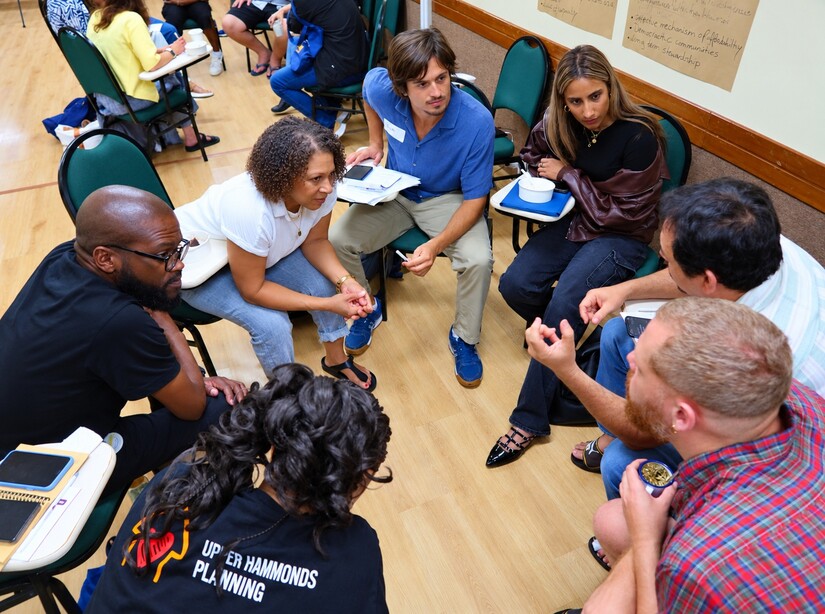
Rondo was once the center of Black life in Saint Paul. The neighborhood stretched roughly from University Avenue to Selby Avenue and from Rice Street to Lexington Avenue. By the 1930s, about half of Saint Paul's Black population lived there. Black churches, businesses, newspapers, social organizations and cultural institutions helped create a community that became one of the most important centers of African American life in Minnesota.
Interstate 94 fundamentally altered that community. Plans to route the freeway through Rondo generated organized opposition as early as the 1950s. Residents fought the proposed route and sought assistance for families who would be displaced, but construction proceeded. The interstate corridor between Saint Paul and Minneapolis opened in 1968, cutting through the neighborhood and disrupting the physical and economic structure that had supported generations of residents.
Griffin's understanding of that history developed over time. "As a kid growing up, no one talked about Highway 94," she said.
Griffin does not retroactively assign her adult understanding of displacement and public policy to her childhood self. What she remembers as a girl is the community that remained: church, relatives, Rondo Days, Hallie Q. Brown, neighborhood gatherings, adults organizing and advocating, and children absorbing conversations even when they did not yet understand their significance.
Her grandmother's home was along the freeway frontage road. The highway was physically present, but the larger meaning of what had happened became clearer as Griffin grew older and entered the workforce. By then she was working in housing and real estate and learning how decisions involving capital, government policy and development could determine who had access to property and who did not.
Her childhood memories of a resilient Black community increasingly existed alongside the knowledge she was acquiring as a real estate professional about the systems governing land and investment. That combination would eventually become central to her leadership.
"I always say [Highway 94 was] the first deep physical lasting wound to the community," Griffin said. "Didn't stop the resilience of the community."
For Griffin, the freeway is therefore not the end of the Rondo story. Nor does she treat the neighborhood's history as something that can be adequately preserved through remembrance alone. Her concern is what happens to the people who remain, the families who want to return, the businesses seeking a foothold and the institutions attempting to retain community control as new investment arrives.
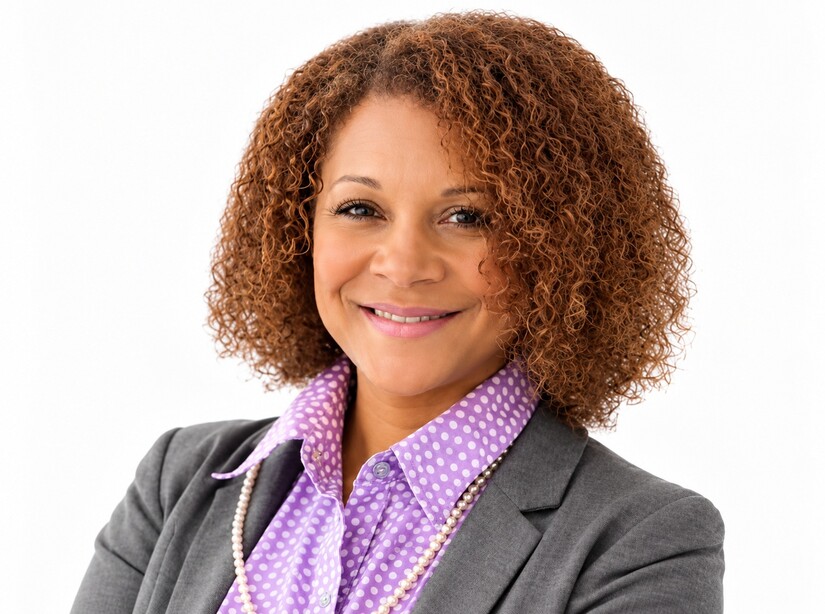
Griffin did not grow up planning to run a community land trust. She once expected to become an attorney and worked as a paralegal while preparing for the LSAT, gaining exposure to mergers and acquisitions, contract law, real estate law and common-interest communities. The legal work interested her, but practicing law eventually did not.
"I realized that, look, I don't know if I like working for attorneys that much," she said with a laugh. "So I don't think I really want to be one."
The legal training nevertheless remained useful as her career moved through the public, private and nonprofit sectors. She worked at the U.S. Department of Housing and Urban Development and later with the Twin Cities Community Land Bank. Public records from 2010 identify Griffin as a paralegal and program manager with the land bank during work involving housing recovery programs. Other professional biographies document later executive and management experience before she joined Rondo Community Land Trust in fall 2021.
Looking backward, Griffin sees those different positions less as detours than preparation. "Each chapter prepared me for something I couldn't see," she told MinneapoliMedia.
She worked with real estate, government programs, small businesses, organizational management and development. She ran her own consulting business. She participated in negotiations and public-private work. She learned what policies could accomplish and, just as importantly, how programs created with good intentions could produce consequences that were not visible at the beginning.
Those experiences also gave Griffin an insider's view of the mechanics of development. She saw the importance of access to capital, professional experience, relationships and decision-making spaces. She also saw how much harder development becomes for people and organizations without those advantages.
Throughout those years, Griffin said she continued advocating for Black businesses, women-owned businesses and minority contractors, even when that advocacy was not formally part of her job. "My aunt says, 'Closed mouth never gets fed,'" Griffin said. "And my mouth is never shut."
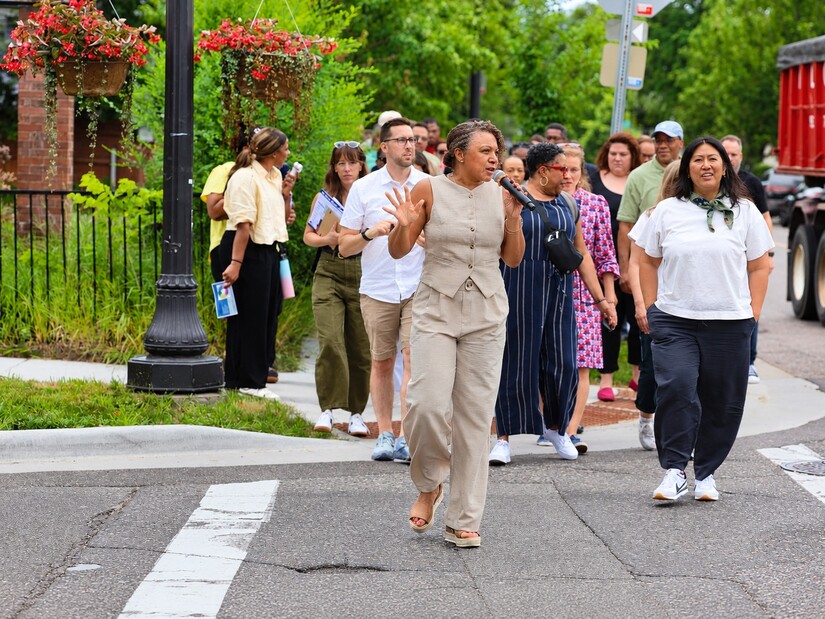
Griffin credits her husband with putting Rondo Community Land Trust directly in front of her. He placed a job description on her desk and asked her to read it with an open mind, although she was not immediately convinced.
Working in community can be difficult, and nonprofit leadership can be demanding. Griffin had already moved through multiple sectors and responsibilities. She joked during the interview that she had imagined eventually retiring and becoming a stay-at-home dog mom.
Then she began talking with members of Rondo CLT's leadership and looking more closely at the neighborhood itself. Her work had required considerable travel, and she had not spent as much time in the neighborhood as she once had. When Griffin returned to Selby Avenue, what she saw disturbed her. The history of Rondo was still being discussed, but Griffin felt the visible presence of Black residents and Black businesses had diminished.
That distinction between remembering a community and maintaining a living community became decisive. "We cannot slide into that good night," Griffin remembered thinking.
She subsequently made her expectations clear to the board: "If you're not willing to go big, don't hire me."
Rondo Community Land Trust hired her in 2021. Today, the organization lists Griffin as president and CEO. She is also chair of the Minnesota Community Land Trust Coalition and serves on the Federal Reserve Bank of Minneapolis Community Advisory Board.
The organization Griffin inherited had already been operating for decades. Rondo CLT was incorporated in 1993 after neighborhood organizations explored ways to preserve housing affordability. It became Minnesota's first community land trust and later expanded its geographic reach beyond its original neighborhoods. Its model separates ownership of land from the structures on it, allowing the trust to steward the underlying land while creating long-term affordability for homes and, increasingly, commercial spaces.
That history matters to Griffin because she does not speak about Rondo CLT as though its work began when she arrived. Her language repeatedly returns to stewardship and to an understanding that the institution existed before her and the community long before the institution. Her responsibility, as she sees it, is to carry that work forward.
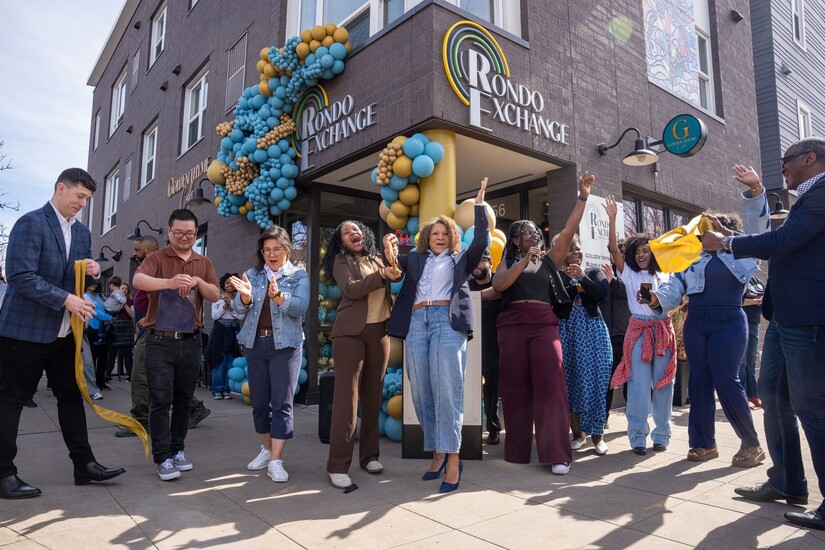
Ask Griffin what reparative development means and she quickly moves beyond construction.
"Development should do more than just build buildings," she said. "It should strengthen people. It should strengthen businesses, it should strengthen culture and it should strengthen community."
That philosophy is increasingly visible in Rondo CLT's portfolio. The organization continues its affordable-housing work, but it has expanded into commercial affordability, entrepreneurship and cultural development. Rondo CLT says it became Minnesota's first commercial land trust in 2022, using long-term stewardship of property as a way to keep commercial space accessible to small businesses.
The approach is especially visible along Selby Avenue. In 2023, Rondo CLT acquired Golden Thyme Coffee & Café from longtime owners Mychael and Stephanie Wright. The institution has since expanded the Golden Thyme name into a restaurant and bar while retaining a café presence, part of a broader effort to preserve a neighborhood institution while creating additional commercial activity.
For Griffin, Golden Thyme is not simply another property. She remembers it as a community gathering place and now talks about walking into the restaurant and encountering people she knows, sometimes with the atmosphere of a family reunion. That personal connection also illustrates the development philosophy she describes: preserving a recognizable community institution means little if the people connected to its history cannot afford to participate in the neighborhood around it.
Likewise, new development can increase economic activity while still displacing the businesses and residents that were there before it. Griffin argues that development and displacement do not have to be inseparable.
"There can be true development without displacement," she said. But that, she added, requires influence over how development happens and long-term stewardship after projects are completed.
That standard requires more than completing projects. It also requires examining who receives the benefits of development after construction is finished and ribbon cuttings are over.
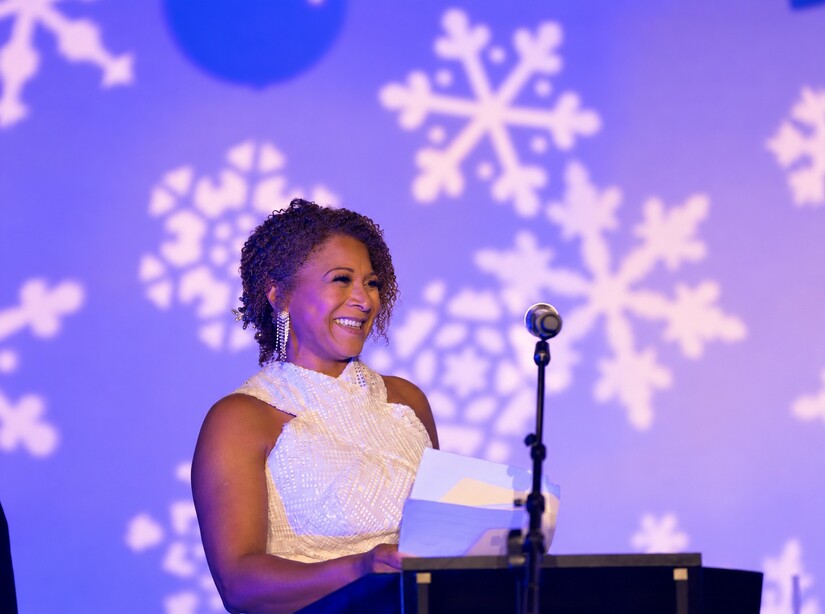
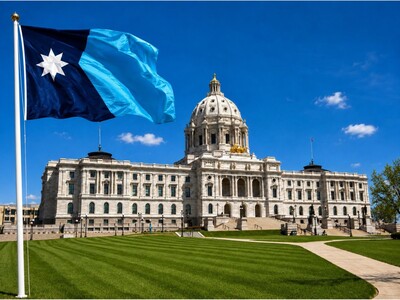
The scale of that question increased dramatically in 2026 when Rondo Community Land Trust acquired the former Sears property near the Minnesota State Capitol, a 17-acre site that had remained vacant since the store closed in 2019. The acquisition was Rondo CLT's largest to date. Public reporting placed the purchase price at approximately $10.8 million.
The property sits in a highly visible part of Saint Paul and carries its own connection to Rondo's history. State records identify Rondo CLT as the site's new owner, while the organization's current development plan calls for a mixed-use project with housing, retail and office space, civic and community areas, a hotel and transit-connected development. Rondo CLT's project page currently envisions approximately 1,300 housing units, including affordable and mixed-income homes.
During her MinneapoliMedia interview, Griffin described the property as an opportunity to bring together housing, business, arts and economic development while expanding the tax base and creating jobs. She also returned to the principle that has become central to her leadership: development should not require a community to disappear in order for a place to prosper.
The Sears project will test that principle at a scale far larger than a single home or storefront. It also places Rondo CLT in a complicated position because community-centered development still requires capital, government approvals, infrastructure, partnerships and financially viable plans.
The organization pursued state infrastructure support during the 2026 legislative session, and its own subsequent account acknowledges that a $43 million capital request was not included in the final package. Rondo CLT says it intends to continue developing a multiyear public-investment strategy for the site. That reality provides important context for Griffin's optimism because the size of the vision is accompanied by substantial work required to finance and execute it.
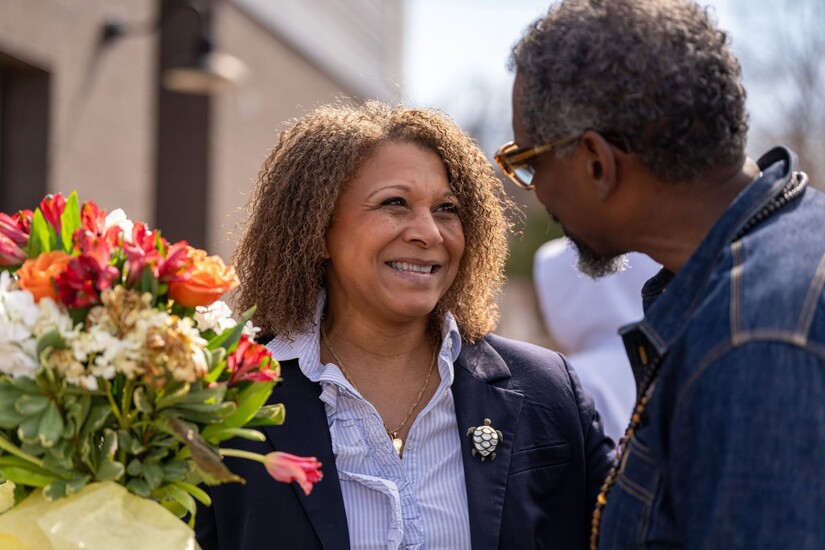
Griffin does not describe leadership as an uninterrupted record of victories. Asked about failure, she paused before answering.
"I have failed at so many things," she said. "And I have won at a lot of things."
Public profiles of executives often compress careers into promotions, accomplishments and awards, but Griffin's description of her own leadership is less tidy. She talks about missed targets, difficult personnel decisions, policies that produced unintended consequences and moments when she had to reconsider what she could have done differently.
Some of the hardest decisions involve people. "If you work here, if I'm with you, if I'm about you, then you are my family," she said.
Having to let someone go or realizing she could not provide what a person needed can feel like a personal failure, Griffin said. Her response is usually self-examination: What could she have done differently? What could she learn? How could she lead better the next time?
She has also encountered the additional scrutiny that can accompany being a Black woman in leadership and in fields historically dominated by men. There are moments, she said, when she becomes frustrated by having her ability questioned even while the work is visible. But Griffin's account of leadership is not organized around grievance. Her emphasis remains on endurance, accountability and continuing the work.
The confidence she has now, she said, was not always there, and she credits the demands and responsibilities of the job with strengthening it.
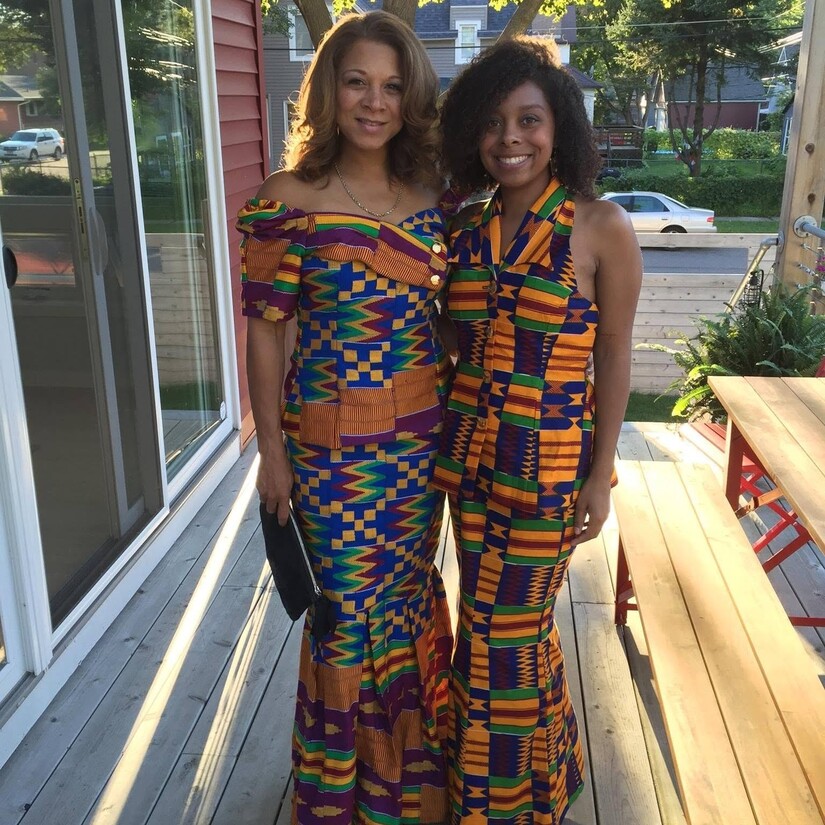
Leading in the community that raised her creates another kind of accountability. Griffin still sees elders who knew her as a child. She can occupy the president and CEO's office and still feel, in their presence, like the little girl sitting on a relative's porch listening to adults talk.
"I still feel like I'm that five-year-old little girl," she said.
There is affection in that observation, but there is also pressure because the people Griffin hopes to serve are not abstractions. Some are relatives, neighbors, elders and people whose histories she grew up hearing. She knows the community will live with the consequences of decisions long after a development presentation has ended.
She measures her responsibility partly against previous generations. "I am standing on some tall shoulders," Griffin said. "And there are expectations."
Her faith has become increasingly important in carrying that responsibility. Griffin spoke openly about Christianity throughout the interview, not as an institutional position for Rondo CLT but as a personal source of direction. She said the intensity of the work has reconnected her with her faith in a way she did not realize she needed.
She attributes some of what the organization has accomplished during her tenure to grace rather than personal ability alone. That belief also influences how she talks about legacy because she does not want the work reduced to her.
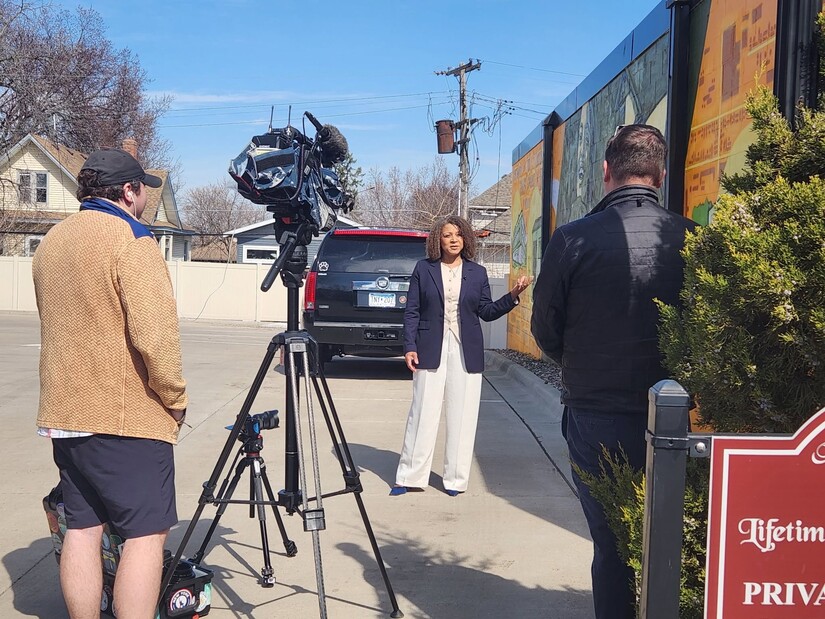
There is another Mikeya Griffin beyond development meetings, policy conversations and organizational strategy, and her husband remains one of her strongest supporters.
"He has ten toes down in support of his wife," Griffin said, laughing.
Family occupies much of the life she is trying to protect outside work. Griffin has two children, a son-in-law whom she includes as a third, and two grandchildren who were living in Texas when she spoke with MinneapoliMedia. Those grandchildren have created a standing commitment in her schedule: every other month, Griffin said, she is going to Texas.
"I don't know who's doing what, but I'm going to see the children."
She enjoys singing and has embraced karaoke nights at Golden Thyme. She spends time at Minnesota lakes during the summer. She reads. She is learning to golf, although she readily concedes that mastery remains some distance away.
"I'm really bad at it," she said.
More important than any particular hobby, Griffin said, is that she has become better at making room for herself and her relationships. That has not always come naturally to someone who describes herself as operating at "100 miles an hour."
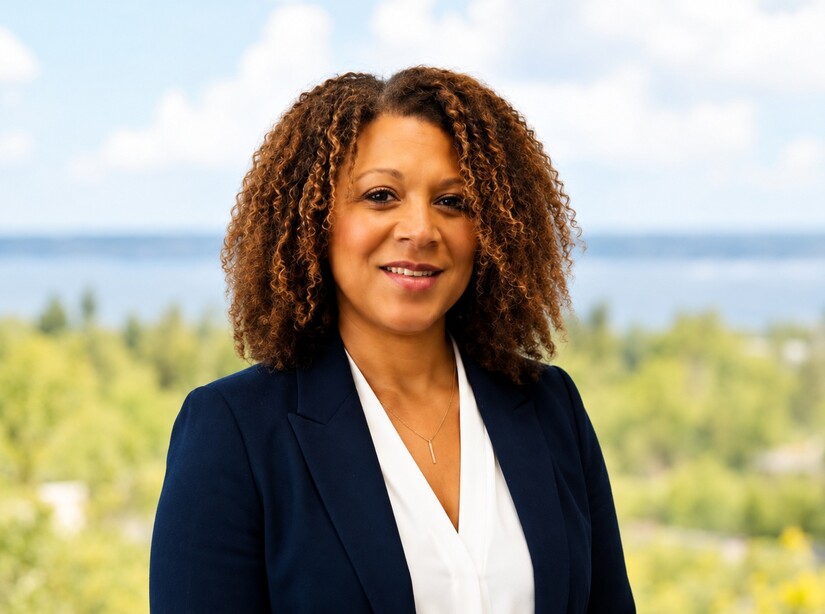
Asked what she would tell her younger self, Griffin did not offer a complicated formula. Her advice was to refuse fear as a governing principle, take chances, take up space, use her voice, find trusted people and allies, and, if there is no place for her at an existing table, create one.
The advice was directed particularly toward young women and young women of color who want to lead and build in their communities, and there is an obvious connection between it and Griffin's own career.
She entered fields where she did not always see people who looked like her holding authority. She learned the technical language of contracts, housing, government programs and development. She worked inside institutions before eventually leading one rooted in the neighborhood that formed her.
Her position today also gives her opportunities to influence the wider community-land-trust movement. Public nonprofit filings identify Griffin as chair of the Minnesota Community Land Trust Coalition, while Rondo CLT says she became the coalition's first Black chair after being appointed in 2022.
Yet the substance of Griffin's advice is not about acquiring a title. It is about developing the confidence and relationships necessary to participate fully in places where important decisions are being made and refusing to assume that exclusion from an existing structure must be permanent.
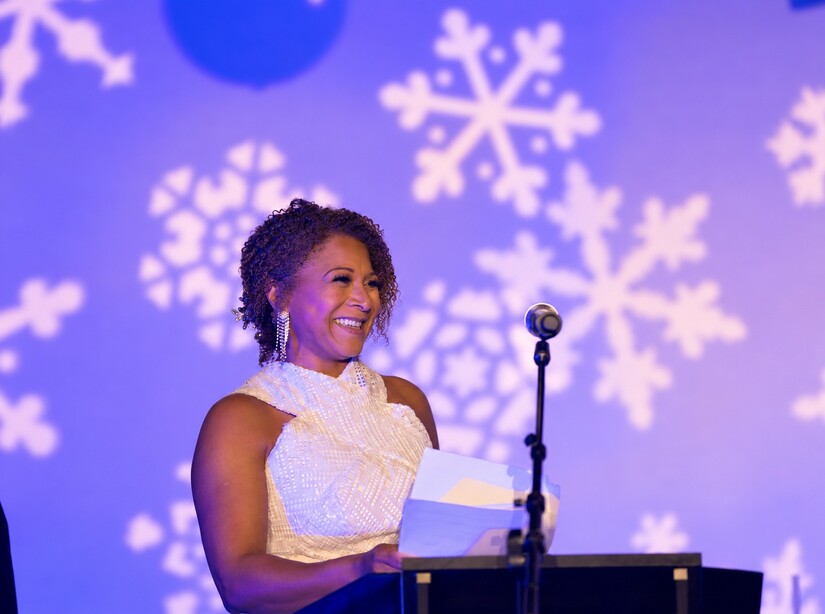
Near the end of the interview, MinneapoliMedia asked Griffin what she wanted her life's work to say about her decades from now. She resisted the premise slightly.
"I do this work not for any of that," Griffin said. "I do this work because I'm called."
What she hopes remains is infrastructure in the broadest sense, including legal and institutional structures capable of protecting community assets after individual leaders are gone. Her background makes her particularly attentive to those rules and protections, but the legacy she describes is also cultural. Griffin wants a community conditioned to take care of one another, to practice mutual aid and to create a place where people can be prosperous and healthy.
She also rejects the idea that such an outcome could belong to one hero. "There are going to be very many heroes in that story," she said.
That view connects the executive Griffin has become with the childhood she described at the beginning of the conversation. Her earliest memories of community were not about one person rescuing everybody else. They were about families and neighbors sharing responsibility for ordinary needs: cooking, working, watching one another's children, opening doors, worshipping together, holding children accountable and helping someone who needed a meal or somewhere to sleep. The principle her great-aunt expressed to her as a child was that everyone had a job to do.
Today, Griffin works with financing, property, policy and institutions rather than greens from a family garden, but the scale and complexity of the work have not eliminated its underlying concern with how communities take care of their people.
For Rondo Community Land Trust, the answers now include permanently affordable housing, commercial space, cultural preservation, small-business development and a 17-acre redevelopment near the State Capitol. The organization Griffin leads has become significantly larger and more ambitious since she arrived, and its projects will continue to face the practical tests that accompany development: financing, public investment, affordability, community trust, execution and time.
Griffin does not claim those challenges have disappeared. She argues instead that communities deserve a meaningful role in deciding what happens to the places they built.
"Communities deserve more than development," she said. "They deserve stewardship."
Before the conversation ended, Griffin was asked to identify another Minnesotan whose story MinneapoliMedia should pursue. She first thought about the women in her own family, women she described as unsung heroes who worked for family and community without expecting recognition. Then she recommended Debbie Montgomery, the longtime Rondo leader who became the first Black woman elected to the Saint Paul City Council and the first Black woman to become a police sergeant in Saint Paul. Griffin offered to make the introduction. Montgomery's trailblazing public record is independently documented.
Griffin then said something about the interview that revealed how accustomed she had become to discussing the organization rather than herself. She had arrived prepared to discuss the work.
"I was totally ready, like, all my talking points about the work," she said. "So it's good to do that. Thank you for asking about me."
For a leader whose professional life revolves around land, housing, businesses, financing and development, asking about the person doing that work produced a different account of what building has meant in Griffin's life. It begins in a Saint Paul childhood shaped by Southern family roots, two church traditions, cousins, elders, books, gardens, meals and an understanding that nobody in a community succeeds entirely alone. It continues through a career that did not unfold according to a predetermined plan and eventually brought her back to the neighborhood where many of those lessons began.
When Griffin was asked what she wanted people to remember after the projects, titles and professional accomplishments had receded, her answer returned neither to a development nor an institution.
"I would just want people to know that I cared and loved deeply and that I fought very hard for the work."

Local stories matter. Subscribe free to MinneapoliMedia and receive independent news, community reporting and important updates from Minneapolis, the North Metro and communities across Minnesota.
SUBSCRIBE FREE: https://minneapolimedia.town.news/subscribe
MinneapoliMedia | Community. Culture. Civic Life


Light drizzle, with a high of 48 and low of 40 degrees. Patchy rain nearby in the morning, light drizzle for the afternoon, light rain for the evening, light drizzle overnight.